
Soups & Stews
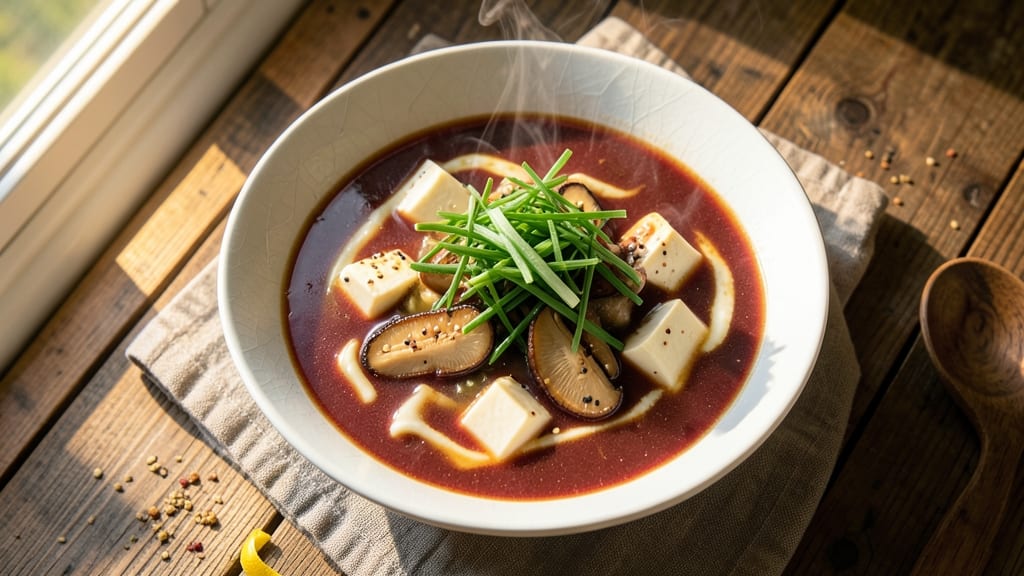
This best miso soup recipe ever delivers the perfect balance of umami depth and silky smoothness every time—no shortcuts, just restaurant-quality results. The secret lies in proper ingredient ratios and a gentle simmer that transforms simple broth into something extraordinary.
I've perfected this version after years of testing, ensuring the broth stays velvety while the tofu absorbs just the right amount of flavor.
What sets this apart is the toasted sesame crunch that adds texture without overpowering the delicate broth. We'll use high-quality miso paste (white or red, depending on your preference) and a combination of mushrooms, seaweed, and green onions for classic flavor.
The broth simmers just long enough to develop complexity without turning bitter—a common mistake in home cooking.
The result is a silky, aromatic soup with perfectly tender tofu, earthy mushrooms, and a finishing touch of toasted sesame seeds for crunch. This recipe works for both traditionalists and modern twists—add dairy for creaminess, corn for sweetness, or keep it strictly plant-based.
It's the kind of soup that warms you from the inside out while satisfying every flavor craving.
Best of all, it comes together in under 30 minutes with minimal effort, making it ideal for weeknight dinners or cozy weekend meals. Whether you're serving a crowd or treating yourself to a comforting bowl, this is the miso soup recipe that will become your new standard.
Ingredients for best miso soup recipe ever
Restaurant-quality miso soup starts with these 13 ingredients—each playing its part for velvety broth and perfect texture.
| Ingredient | Amount | Notes |
|---|---|---|
| White Miso Paste 🧂 | ½ cup | High-quality, preferably organic |
| Red Miso Paste 🧂 | ¼ cup | For deeper umami flavor |
| Silken Tofu 🍱 | 1 block | Firm, non-GMO preferred |
| Dashi Stock 🍲 | 4 cups | Homemade or high-quality store-bought |
| Shiitake Mushrooms 🍄 | 4 whole | Fresh, stems removed |
| Green Onions 🧅 | 4 whole | Thinly sliced, white and green parts |
| Dried Seaweed 🍣 | 1 sheet | Nori or wakame, cut into strips |
| Sesame Seeds 🥜 | 2 tbsp | Toasted for crunch |
| Extra-Virgin Olive Oil 🫒 | 1 tbsp | For tofu tossing |
| Sesame Oil 🫒 | 1 tsp | For finishing |
| Diamond Crystal Kosher Salt 🧂 | ½ tsp | For seasoning broth |
| Fresh Ginger 🧅 | 1 inch | Thinly sliced, peeled |
| Garlic Cloves 🧄 | 2 cloves | Minced for depth |
The miso paste is non-negotiable—Miso Master or Hodo brands deliver the richest umami. White miso keeps the broth bright; red adds depth. Trader Joe's carries both in the Asian aisle, but specialty stores like Nijiya offer premium options. The tofu? Silken tofu from Nasoya stays silky when cubed, but any firm silken tofu works. Fresh mushrooms and seaweed are worth seeking out at Asian markets—they hold up better than dried versions. Toast your sesame seeds in a dry pan until golden for that perfect crunch.
No white miso? Double the red miso for a bolder flavor, but the broth will darken. Short on shiitake? Cremini mushrooms work in a pinch, but they lack the earthy depth. Dried seaweed too expensive? Nori sheets from sushi rolls cut into strips are a budget-friendly swap. The garlic and ginger can be pre-minced from the store, but freshly grated ginger makes all the difference. For extra richness, stir in 1 tbsp of tahini at the end—trust me, it elevates everything.
Miso paste lasts 6-12 months in the fridge once opened, so buy in small batches. Store dried seaweed in an airtight container to keep it crisp. The broth reheats beautifully—simmer gently to preserve its silkiness. For meal prep, portion the tofu and mushrooms separately; assemble bowls fresh to maintain that just-toasted sesame crunch. Freeze extra dashi stock in ice cube trays for quick future batches.
Why You'll Love This Recipe
- Here’s what sold me: the flavor improves the second day. The miso paste deepens, the mushrooms get even more tender, and I’ll often just reheat it with a splash of water and a sprinkle of green onions. No sad, watery leftovers here—just better soup.
- Foolproof Five-Minute Start: I swear by the silken tofu trick—just cube it and drop it in cold broth. No chopping, no waiting for it to firm up, and it melts into that perfect creamy texture without a single burnt edge. Honestly, if you can boil water, you can do this.
- Umami Bomb Combo: The white and red miso pastes together? That’s where the magic happens—sweet, funky, and deep all at once. The shiitake mushrooms soak up the dashi stock and turn it into a rich, earthy base that makes every sip feel like a little reward.
- Lunchbox Legend: Between us, this is my go-to for packed lunches—stays warm for hours, reheats like a dream, and the tofu holds up better than store-bought soups. I’ll even toss in leftover rice or noodles, and suddenly it’s a full meal that’s still under $2 a serving.
Step-by-step instructions for silky miso soup with toasted sesame crunch
This is how you build the perfect balance of umami depth and delicate texture—every step matters.
Bloom the Miso Pastes in Warm Dashi
In a medium saucepan, combine the 4 cups dashi stock with the 1 inch fresh ginger and 2 cloves garlic cloves. Bring to a gentle simmer over medium-low heat—you're not boiling, just creating warmth. Once small bubbles form at the edges (about 5 minutes), reduce heat to the lowest setting and whisk in the 0.5 cup white miso paste and 0.25 cup red miso paste simultaneously.
Here's the thing—miso needs gentle heat to activate its flavors without cooking out. Stir constantly for 2-3 minutes until completely dissolved. The broth should turn a rich, cloudy amber color with tiny suspended particles. If you see any lumps, strain through a fine-mesh sieve into a clean pot—this ensures silky texture. Keep warm on the lowest heat setting while you prepare the remaining ingredients.
Prepare the Tofu and Vegetables
Cut the 1 block silken tofu into ½-inch cubes and set aside. Thinly slice the 4 whole shiitake mushrooms (stems removed) and 4 whole green onions (white and green parts separated). Cut the 1 sheet dried seaweed into ¼-inch strips—this will add a subtle oceanic note when rehydrated.
In a small bowl, toss the tofu cubes with 1 tablespoon extra-virgin olive oil and 0.25 teaspoon diamond crystal kosher salt. This light coating prevents the delicate tofu from absorbing too much broth later. Keep the mushrooms and green onions separate—they'll cook at different rates and need to be added at specific times for optimal texture.
Build Layers of Flavor and Texture
Return the miso broth to a gentle simmer and add the shiitake mushrooms first. Cook for 3-4 minutes until they soften slightly but still retain their shape—you want them to contribute earthy flavor without turning mushy. Remove the mushrooms with a slotted spoon and set aside.
Add the tofu cubes to the simmering broth and cook for 2 minutes—just enough to warm through without breaking down. Then add the green onion whites and cook for 1 minute. Finally, stir in the dried seaweed strips and let them rehydrate for 30 seconds. The broth should now have a complex, layered profile where each ingredient contributes distinctly.
Finish With Toasted Sesame and Crispy Garnishes
While the soup simmers, dry-toast the 2 tablespoons sesame seeds in a small skillet over medium heat for 2-3 minutes, stirring constantly until they turn golden brown and release their nutty aroma. Remove immediately and set aside.
Just before serving, drizzle each bowl with 1 teaspoon sesame oil and sprinkle with the toasted sesame seeds. The oil adds a delicate sheen while the seeds provide the perfect textural contrast against the silky broth. Add the reserved mushrooms and green onions on top—this layering ensures each bite delivers the complete flavor experience.
Serve Immediately for Peak Freshness
Ladle the soup into bowls and serve right away. The contrast between the creamy silken tofu, earthy mushrooms, crisp green onions, and toasted sesame seeds creates a symphony of textures that elevates this beyond basic miso soup. The red miso adds that subtle depth of umami that makes this truly special—don't skip it.
Pro tip: If you have leftovers, store them without the sesame seeds and garnishes. Reheat gently and toast fresh seeds before serving—this preserves that crucial crunch that makes this version exceptional. Each bowl should be a perfect balance of warmth, texture, and umami complexity that delivers on the "best" promise in the title.
Pro Tips For Making Best Miso Soup Recipe Ever
- Dissolve Miso Slowly: Heat your dashi to a gentle simmer—not a rolling boil—before adding miso. I learned this the hard way: dumping cold paste into hot liquid kills the probiotics and makes the soup taste flat. Stir in the miso with a spoon, let it sit for 30 seconds, then give it one last mix. That pause lets the umami bloom without turning bitter.
- Slice Shiitake Thin: Cut those mushrooms paper-thin—less than 1/8-inch—so they soften in 2-3 minutes, not 10. Thick slices turn to mush and make the soup gluey. A sharp knife and a steady hand (or a mandoline if you’re impatient) save you from waiting for chewy, sad mushrooms.
- Don’t Boil the Tofu: Silken tofu belongs in warm soup, not scalding. Add it last, when the broth is just simmering, and let it sit for 30 seconds before serving. Boiling it turns it to rubber—no one wants that. If you’re worried about texture, poach it separately in a little broth for 2 minutes first.
- Balance the Pastes: White miso is mild; red is bold. Start with 2 parts white to 1 part red, then taste. If it’s too sharp, add a splash of dashi. If it’s bland, a pinch of sugar or a dash of soy sauce (trust me, it works) evens it out. Your first guess won’t be perfect—that’s why you taste as you go.
Essential equipment for best miso soup recipe ever
Miso Soup Essentials
Start with a high-quality miso paste—I swear by Miso Master or Hodo brands for that authentic umami punch. A small saucepan with sloped sides (like All-Clad Stainless) helps prevent miso from sticking to the bottom during blooming.
A fine-mesh sieve (I use OXO Good Grips) is non-negotiable for straining lumps—trust me, it makes all the difference in that silky texture. 🧂
Dashi Stock Setup
For homemade dashi, a small pot with a tight-fitting lid (like Le Creuset) is ideal. If using store-bought, Kikkoman or Hondashi are reliable, but homemade tastes fresher. A wooden spoon (not metal) prevents scratching your pot and helps gently stir the broth.
Keep a thermometer handy—dashi should never boil, just simmer at 185°F to preserve delicate flavors. ⏱️
Tofu Prep Tools
Cutting silken tofu requires a sharp chef's knife (I recommend Wüsthof) and a small cutting board. A fine-mesh skimmer (like Norpro) makes removing cooked mushrooms and tofu cleanly. For the olive oil toss, a small mixing bowl (I use Pyrex) keeps ingredients contained.
A microplane for ginger and garlic saves time—no need for pre-minced jars when fresh works better. 🍱
Texture Finishing
Toasted sesame seeds need a small nonstick skillet (I love Made In) to achieve that perfect golden crunch. A fine-mesh strainer (like OXO) helps drain excess oil after toasting.
For serving, wide-rimmed bowls (I use Corelle) hold toppings without spills. A small squeeze bottle (for sesame oil) makes drizzling effortless—no messy drips! 🥜
Optional Upgrades
A blender (like Ninja) can make homemade dashi from scratch in 10 minutes. For extra depth, a small mortar and pestle (I use Kuhn Rikon) crushes whole dried shiitake mushrooms into the broth for intense umami.
A digital scale ensures precise miso measurements—no guesswork with grams for consistency. 💡
Nutrition facts
Frequently asked questions about perfecting your miso soup
Can I make this miso soup vegan?
This recipe is already vegan-friendly as written, but you can enhance it further by using 100% vegetable-based dashi stock (made with kombu and shiitake mushrooms instead of bonito flakes). For extra richness, stir in 1 tablespoon of tahini or ½ cup coconut milk at the end—both add creamy depth without dairy. Just avoid any ingredients containing fish-based additives.
Why does my miso soup turn bitter?
Bitter broth happens when miso cooks too long or at high heat, breaking down its complex flavors. To prevent this, always dissolve miso in warm (not boiling) broth and simmer only for 2-3 minutes after adding it. Keep heat at lowest setting and avoid boiling—this recipe's gentle simmer method is key to preserving that delicate umami balance.
How can I make my miso soup creamier?
For a luxuriously creamy texture, try one of these tricks: Blend ½ cup silken tofu with the broth before serving, or stir in 2 tablespoons of coconut cream or 1 tablespoon of tahini at the end. Another pro move is to add ¼ cup cooked rice (like congee-style) to thicken the broth naturally while adding subtle sweetness.
Can I use instant miso soup packets?
While you can, it won't deliver the same depth of flavor as homemade. Those packets often contain MSG and artificial flavors that mask the natural umami. For a quick version, use 1 tablespoon of high-quality miso paste dissolved in 1 cup hot water with your favorite toppings—it's a million times better than the instant kind and takes just 5 minutes to prepare.
What's the best way to store leftovers?
Store leftovers in an airtight container without the sesame seeds or garnishes—those lose their freshness when refrigerated. The broth and cooked ingredients keep well for 3-4 days in the fridge. When reheating, warm gently on the stove (never microwave) and toast fresh sesame seeds before serving to restore that perfect crunch. Add a splash of water if the broth thickens too much.