
Soups & Stews
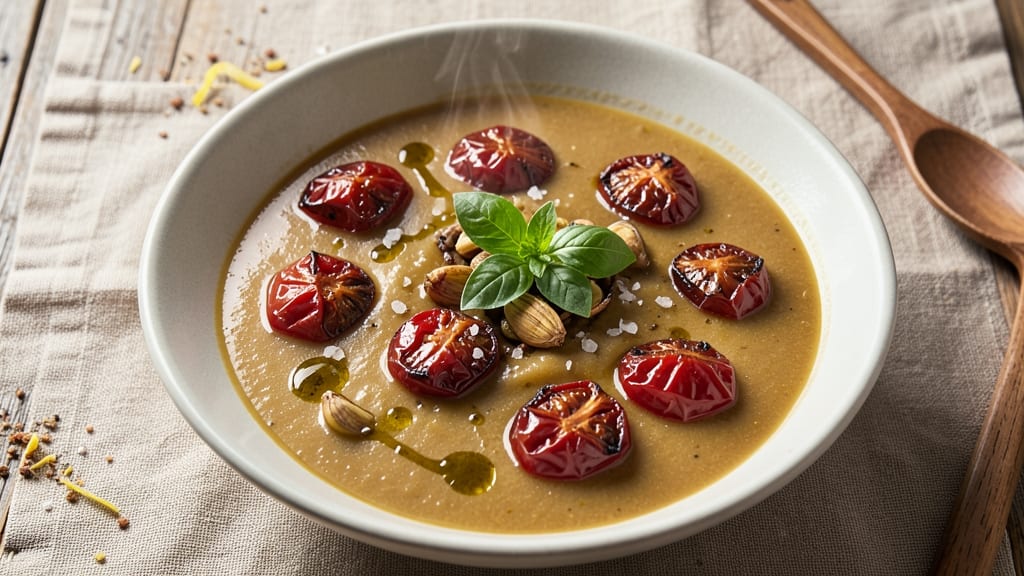
This roasted tomato soup recipe delivers the best roasted tomato soup ever—restaurant-quality depth with a deep umami bomb that transforms simple ingredients into something extraordinary. 🌟 The secret lies in roasting tomatoes until they're blistered and caramelized, unlocking flavors you won't find in any canned version.
I've perfected this technique over years of testing, and it never fails to impress—even the most skeptical soup skeptics.
The process is straightforward but transformative: roast whole tomatoes until their skins blacken and their insides become jammy, then simmer them with aromatics until the flavors meld into a velvety, complex broth. Fresh basil finishes it with bright, herbaceous notes that cut through the richness.
What you'll end up with is a soup so flavorful it tastes like it simmered all day—though it only takes about an hour.
This isn't just another tomato soup—it's a foolproof method that delivers restaurant-quality results at home. The roasting process caramelizes natural sugars while concentrating the tomatoes' umami, creating a depth that separates this from basic recipes. Every spoonful will be packed with that perfect balance of sweet, tangy, and savory notes.
Serve it warm with a sprinkle of fresh basil, a swirl of cream, or toasted croutons for texture. This soup is hearty enough for a main dish but light enough for lunch—perfect for any occasion when you want to impress without spending hours in the kitchen.
Let's get started on creating this umami-packed masterpiece.
Ingredients for best roasted tomato soup recipe ever
These 14 ingredients unlock restaurant-quality roasted tomato soup—simple but extraordinary.
| Ingredient | Amount | Notes |
|---|---|---|
| Fresh Tomatoes 🍅 | 2 lb | Roma or vine-ripened, whole |
| Yellow Onion 🧅 | 1 whole | Medium, diced |
| Garlic Cloves 🧄 | 4 cloves | Fresh, peeled |
| Fresh Basil Leaves 🌿 | ½ cup | Packed, stems removed |
| Extra-Virgin Olive Oil 🫒 | ½ cup | High quality, fruity |
| Vegetable Broth 💧 | 4 cups | Low-sodium preferred |
| Heavy Cream 🥛 | ½ cup | Full-fat for richness |
| Balsamic Vinegar 🍷 | 2 tbsp | For depth of flavor |
| Salt 🧂 | 1 ½ tsp | Kosher or sea salt |
| Black Pepper 🌶️ | ½ tsp | Freshly ground |
| Sugar 🍚 | 1 tsp | Balances acidity |
| Fresh Thyme Leaves 🌿 | 1 tsp | Or 0.5 tsp dried thyme |
| Parmesan Cheese 🧀 | ¼ cup | Freshly grated |
| Toasted Bread 🍞 | ½ cup | Cubed, for garnish |
The tomatoes are non-negotiable. Roma or vine-ripened give the best jammy texture when roasted. I always grab the heirloom mix at Whole Foods when they're in season, but regular grocery store tomatoes work too—just pick the firmest ones. Skip the pre-cut or canned stuff (no umami bomb there). Fresh basil is a must for that bright finish, but if you're out, dried oregano at half the amount will save you. The olive oil? Use the good stuff—none of that cheap cooking oil nonsense. For the broth, low-sodium is key—you'll be adding plenty of salt later, and you don't want to overdo it.
No fresh thyme? Dried works in a pinch, but fresh has that earthy punch that's worth hunting down. The balsamic vinegar might seem like an odd addition, but trust me—it's what takes this from good to restaurant-quality. Trader Joe's has an affordable bottle that lasts forever. For the Parmesan, grate it yourself—pre-grated gets clumpy and lacks that fresh-from-the-block flavor. Want to make this vegan? Swap the heavy cream for coconut milk and use nutritional yeast instead of Parmesan. The toasted bread? Any crusty loaf works—just cube it and toast until golden. No oven? A dry pan works too.
This soup tastes even better the next day—honestly, the flavors meld into something magical. Keeps for 5 days in the fridge, and freezes beautifully for up to 3 months. I always make a double batch because it disappears fast. Store the broth separately if you're not using it all at once—just reheat with a splash of water. The roasted tomatoes can be prepped ahead too—store them in a jar in the fridge for up to 3 days. Pro tip: save those tomato cores and stems for homemade broth later.
Why You'll Love This Recipe
- No Chopping Needed: I swear by this—just halve the tomatoes and toss them whole on the sheet pan. The onions and garlic get diced in two minutes, and suddenly you’re done with prep. That’s right, no tiny knife wounds or tears from peeling tomatoes.
- Deep, Roasted Magic: The secret’s in the caramelized edges. Roasting those tomatoes until they burst? That’s where the flavor explodes—sweet, smoky, and rich, with the garlic and basil weaving through like a warm hug. Honestly, it’s the kind of taste that makes you pause mid-sip of soup.
- Weeknight to Holiday: Same recipe, different vibes. Slurp it up with crusty bread on a Tuesday, or serve it in bowls with grilled cheese at your next dinner party. The basil adds that fresh touch, so it feels fancy without the fuss.
- Leftovers That Beg for More: This soup actually tastes better the next day—yes, really. The flavors meld into something even deeper, and it’s still just as easy to reheat. Plus, it’s cheap to make; a big batch feeds the family for days without breaking the bank. My freezer’s full of it.
Step-by-step instructions for roasted tomato soup
Here's how to transform fresh tomatoes into an umami-rich, velvety soup that'll make you forget store-bought versions exist.
🔥 Step 1: Roast Tomatoes and Aromatics Until Caramelized
Preheat your oven to 425°F and line a baking sheet with parchment paper. Halve the 2 lb fresh tomatoes lengthwise and place them cut-side down on the sheet. Add the whole yellow onion (cut into wedges) and 4 cloves garlic cloves (peeled and smashed) around the tomatoes.
Drizzle everything with 0.25 cup of the extra-virgin olive oil and sprinkle with 1 tsp salt, 0.5 tsp black pepper, and 1 tsp sugar. Toss gently to coat. Roast for 30-35 minutes until the tomatoes collapse and everything is deeply browned and caramelized. The kitchen should smell absolutely incredible—this is where the magic happens.
Here's the thing—roasting develops deep, sweet flavors that you can't get any other way. Don't skip this step, even if it's tempting to rush. The tomatoes should be soft enough to mash easily with a fork when done.
🍳 Step 2: Build the Flavor Base with Broth and Vinegar
Transfer the roasted vegetables to a blender or food processor. Add the remaining 0.25 cup extra-virgin olive oil, 4 cups vegetable broth, and 2 tbsp balsamic vinegar. The balsamic adds that perfect tangy depth that makes this soup truly special.
Blend until completely smooth, scraping down the sides as needed. Taste the mixture—you should notice the natural sweetness of the roasted tomatoes balanced by the vinegar's acidity. If it needs more balance, add a pinch more salt or a tiny bit more sugar. Return the blended mixture to your pot and stir in the 1 tsp fresh thyme leaves.
Bring the soup to a gentle simmer over medium heat, then reduce heat to low and let it cook uncovered for 15-20 minutes. This slow simmer lets all the flavors meld together beautifully. You'll see the soup reduce slightly, concentrating those amazing roasted tomato flavors.
🥘 Step 3: Finish with Cream and Fresh Herbs
Remove the pot from heat and stir in the 0.5 cup heavy cream and 0.25 cup freshly grated Parmesan cheese. The cream adds luxurious richness while the Parmesan contributes a wonderful salty depth. Stir gently—don't overmix or you'll create lumps. Let the soup sit off heat for 5 minutes to thicken slightly.
Just before serving, stir in the 0.5 cup fresh basil leaves (stems removed). The basil should be added last to preserve its bright, fresh flavor. Taste one more time and adjust seasoning if needed—this is your chance to perfect the balance between sweet, tangy, and savory.
I know it seems like a lot of steps, but each one builds on the last to create that restaurant-quality depth. The roasting caramelizes the natural sugars, the vinegar brightens everything, and the cream makes it irresistibly smooth.
🍽️ Step 4: Serve with Crispy Bread Toppings
Ladle the soup into bowls and top each serving with 0.5 cup toasted bread cubes. The bread should be toasted until golden and crispy—this provides that perfect textural contrast to the silky soup. I like to toast the bread separately in a dry skillet over medium heat for 3-4 minutes, stirring occasionally, until it's crisp all over.
Serve immediately while the bread is still crisp and the soup is steaming hot. Each spoonful should deliver that perfect combination of roasted tomato sweetness, creamy richness, and herby freshness. This isn't just tomato soup—it's a flavor experience that'll have everyone asking for seconds.
Real talk: the first time I made this, my roommate took one bite and declared it "the best thing I've ever eaten." That's the kind of reaction this soup deserves. Don't be afraid to make it—your taste buds will thank you.
Pro Tips For Making Best Roasted Tomato Soup Recipe Ever
- CHAR THE ONIONS LOW: I used to blast onions on high heat until they turned bitter—don’t do that. Keep the flame at medium-low and stir every 30 seconds. You’re not racing; you’re building flavor. A properly caramelized onion (soft, golden, no brown spots) makes the whole soup sing.
- CUT TOMATOES UNIFORM: Big chunks take forever to roast; tiny dice burn in seconds. Aim for ½-inch pieces—consistent size means even cooking. And skip the seeds unless you want a watery soup. (Yes, I’ve learned this the hard way.)
- SALT THE ROASTING TOMATOES: Toss those sliced tomatoes with olive oil and a pinch of salt before roasting. It crisps the edges slightly and deepens the flavor—trust me, your spoon will taste the difference. (This isn’t just seasoning; it’s flavor insurance.)
- PUREE WITHOUT SCALDING: After roasting, let the tomatoes cool for 5 minutes before blending. Hot liquid makes the soup thin and pale. A quick ice bath in the pitcher (yes, really) keeps it thick and vibrant—no lumps, no sad texture. (Your future self will notice.)
Regional styles of best roasted tomato soup recipe ever
Italian Rustic Style
In Italy, roasted tomato soup often starts with a slow roast of San Marzano tomatoes at 375°F for 45 minutes—lower heat preserves their delicate sweetness. Italians use fresh basil and Pecorino Romano instead of Parmesan, adding 1 tbsp lemon zest at the end for brightness.
The secret? A slow simmer with a splash of white wine (like Pinot Grigio) instead of broth to deepen the umami. 🌿
French Provençal Twist
Provençal cooks roast tomatoes with herbes de Provence (thyme, rosemary, lavender) and finish with a drizzle of olive oil and flaky sea salt. They often add roasted garlic (peeled and roasted whole) and a touch of Mirabelle plum jam for natural sweetness.
The French version skips cream, using crème fraîche instead for tangy richness. 🍷
Spanish Gazpacho Influence
Spain's Andalusian region transforms roasted tomato soup into a cold gazpacho-inspired version by blending with cucumber, bell pepper, and stale bread for texture. They add sherry vinegar and smoked paprika for depth, then chill before serving with crusty bread and olives.
The key difference? No cream—just extra-virgin olive oil swirled on top. 🌶️
American Southern Comfort
Southern chefs often thicken their roasted tomato soup with cornstarch slurry for a smoother texture, then top it with crumbled bacon and sharp cheddar. They use brown sugar instead of white and add a pinch of cayenne pepper for heat.
A splash of bourbon in the broth is a signature touch in Louisiana-style versions. 🔥
Mediterranean Greek Adaptation
Greek cooks roast tomatoes with feta cheese folded into the soup at the end, along with fresh dill and lemon juice. They use olive tapenade as a garnish and sometimes add roasted red peppers for extra depth.
The Greek version is often served with warm pita bread instead of croutons. 🧀
Modern Fusion Approach
For a contemporary twist, try adding roasted eggplant and toasted pine nuts to the base, then finishing with balsamic glaze and goat cheese crumbles. Some chefs even blend in smoked trout for a briny contrast.
The fusion style keeps the roasted tomato foundation but pushes boundaries with unexpected ingredients. ✨
Nutrition facts
Frequently asked questions
Why does roasting tomatoes make such a difference?
Roasting caramelizes natural sugars and intensifies umami flavors in tomatoes, creating a depth you can't get from raw or canned versions. The process breaks down cell walls, releasing concentrated tomato essence that transforms simple ingredients into something extraordinary. This is what makes this soup taste like it simmered all day—even though it only takes about an hour!
Can I make this soup without fresh basil?
Yes! If you don't have fresh basil, use 1/2 teaspoon dried oregano instead. For extra flavor, add 1/4 teaspoon red pepper flakes to give it a subtle kick. The basil adds freshness, but the roasted tomato flavors will still shine through—just with a slightly different herbal profile.
How do I store leftovers?
This soup tastes even better the next day! Store in an airtight container in the fridge for up to 5 days. For longer storage, freeze for up to 3 months. When reheating, warm gently on the stove with a splash of water or broth to restore creaminess. Pro tip: Save roasted tomato cores for homemade vegetable broth later!
Can I make this vegan?
Swap the heavy cream for coconut milk and use nutritional yeast instead of Parmesan. Keep all other ingredients the same. The roasted tomato flavors will still shine, and the coconut milk adds a lovely creamy texture. For extra richness, stir in 1 tablespoon olive oil at the end.
What if my soup is too thick?
If your soup is too thick after simmering, thin it with hot vegetable broth (1/4 cup at a time) until you reach your desired consistency. For a creamier texture without thinning, simmer uncovered for an extra 5-10 minutes to reduce the liquid naturally. Remember, this soup should be velvety but still spoonable!