
Soups & Stews
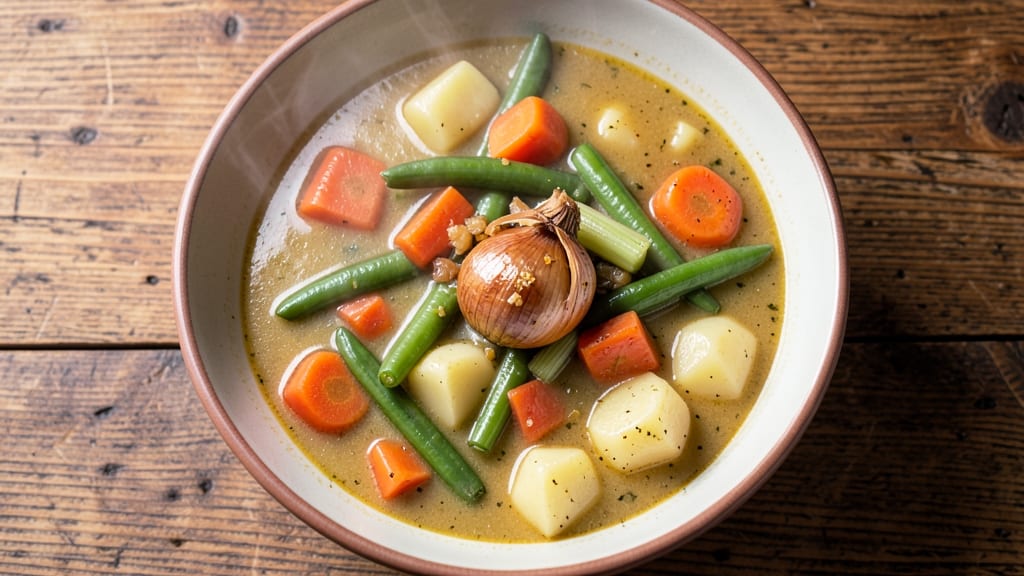
This Betty Crocker vegetable soup recipe brings back the comforting flavors of classic home cooking—creamy, hearty, and packed with garden-fresh vegetables. This recipe delivers the velvety texture and balanced seasoning that made Betty Crocker a household name, using simple ingredients and a foolproof method.
The secret lies in blending the soup just enough to achieve that signature smoothness while keeping the vegetables recognizable.
What sets this recipe apart is its ability to transform basic ingredients into a restaurant-quality bowl of soup in under an hour. The broth simmers long enough to develop deep, savory flavors, while the vegetables retain their natural sweetness and texture.
Whether you prefer a chunkier version or the classic blended style, this method ensures every spoonful is rich and satisfying.
By the time you finish, you'll have a pot of soup that's perfect for chilly evenings or quick weeknight dinners. The addition of cream or milk at the end creates that signature velvety finish, while fresh herbs or a sprinkle of cheese add a touch of brightness.
This recipe is designed to be both approachable for beginners and impressive enough for company.
For added convenience, you can prep the vegetables and broth ahead of time, then blend and finish the soup just before serving. The result is a comforting, flavorful dish that feels like a warm hug in a bowl—exactly what Betty Crocker intended.
Let's get started on making this classic recipe your own.
Ingredients for betty crocker vegetable soup
Garden-fresh vegetables meet classic comfort in this velvety Betty Crocker vegetable soup.
| Ingredient | Amount | Notes |
|---|---|---|
| Chicken Broth 💧 | 6 cups | Low-sodium preferred for balance |
| Carrots 🥕 | 1 ½ lb | Medium-sized, peeled and sliced |
| Celery Stalks 🧅 | 3 whole | Trimmed and chopped |
| Potatoes 🥔 | 1 ½ lb | Yukon gold, peeled and cubed |
| Onion 🧅 | 1 whole | Yellow, chopped |
| Green Beans 🌱 | 1 lb | Trimmed, fresh or frozen |
| Peas 🌿 | 1 cup | Fresh or frozen, thawed |
| Heavy Cream 🥛 | ½ cup | Full-fat for richness |
| Butter 🧈 | 2 tbsp | Unsalted for seasoning control |
| All-Purpose Flour 🌾 | 1 tbsp | For thickening roux |
| Salt 🧂 | 1 ½ tsp | Kosher or sea salt |
| Black Pepper 🌶️ | ½ tsp | Freshly ground preferred |
| Dried Thyme 🌿 | ½ tsp | Or 1 tbsp fresh thyme leaves |
| Fresh Parsley 🌿 | ¼ cup | Chopped, for garnish |
The vegetables should be vibrant and firm—carrots and potatoes are the workhorses here, so don't skimp on quality. Yukon gold potatoes add natural sweetness, while fresh green beans and peas bring brightness. For the best broth, Swanson or Pacific Foods low-sodium options are ideal—they simmer down beautifully without overpowering the vegetables. If using frozen, no need to thaw; just add them directly to the pot. The celery and onion form the aromatic base, so chop them finely for even distribution of flavor.
No fresh thyme? Dried oregano at half the amount works in a pinch, though it lacks the earthy depth. Heavy cream can be swapped for half-and-half or whole milk if you prefer a lighter texture, but the soup will be less rich. For a dairy-free version, use coconut milk or cashew cream. The flour should be all-purpose, not cake flour—it thickens more effectively. If you prefer a chunkier texture, simply omit the blending step entirely. For extra depth, a bay leaf or sprig of rosemary can be added to the broth while simmering, then removed before serving.
This soup keeps beautifully in the fridge for 4-5 days, with flavors deepening over time. For longer storage, freeze portions for up to 3 months. Reheat gently on the stove, adding a splash of broth if needed. The velvety finish comes from the cream and butter—don't skip this step! Garnish with fresh parsley just before serving to brighten the dish. Leftovers make excellent lunches; portion into containers for easy grab-and-go meals.
Why You'll Love This Recipe
- Pantry Staple Power: I swear by this recipe because it uses what I already have—no last-minute grocery runs. Chicken broth, carrots, celery, potatoes, and onion? That’s my fridge’s basic lineup, and together they make something magical with zero extra effort.
- Savory Simplicity: The way the carrots soften just enough while the celery keeps that bright, crisp bite—it’s the perfect balance. Honestly, the first time I tasted it, I thought, "Why didn’t I make this sooner?" The broth soaks up all the flavors, and the potatoes add that creamy texture without needing heavy cream.
- Leftovers That Shine: Between us, this soup only gets better the next day. The flavors meld overnight, and reheating it is a breeze—just a splash of broth if it’s too thick. I’ll often make a big batch on Sunday because it’s my go-to for lunches all week, and no one ever complains.
- Budget-Friendly Warmth: This recipe is my secret weapon for cozy nights without breaking the bank. A single bag of carrots, a bunch of celery, and a few potatoes stretch into multiple servings, and the broth adds depth without costing a fortune. It’s the kind of meal that makes you feel like you’re treating yourself, even when you’re just heating up dinner.
Step-by-step instructions for Betty Crocker vegetable soup recipe
Follow this method for a rich, velvety vegetable soup with perfect texture and balanced flavors.
Sauté the Vegetable Base
In a large pot, melt the 2 tablespoons butter over medium heat. Add the chopped 1 whole onion and cook for 3-4 minutes until softened and translucent. This step builds flavor by caramelizing the onion slightly before adding other vegetables.
Add the sliced 1.5 pounds carrots and chopped 3 whole celery stalks to the pot. Stir to coat in the butter and cook for 5 minutes until the carrots begin to soften and the celery turns bright green. You'll notice the mixture releases moisture—this indicates the vegetables are breaking down and absorbing flavor.
Continue cooking for another 3 minutes, stirring occasionally, until the vegetables release their natural juices and begin to soften. This foundational step ensures your soup develops deep, savory notes before adding the broth and remaining ingredients.
Build the Roux and Add Broth
Sprinkle the 1 tablespoon all-purpose flour evenly over the sautéed vegetables. Stir immediately to prevent the flour from clumping and cook for 1-2 minutes until the mixture turns a light golden color. This creates a simple roux that will thicken the soup beautifully.
Pour in the 6 cups chicken broth all at once, stirring constantly to incorporate the roux completely. Bring the mixture to a gentle boil over medium-high heat. Once boiling, reduce the heat to medium-low and add the peeled and cubed 1.5 pounds potatoes, 1 pound green beans, and 1 cup peas. Stir gently to distribute the ingredients evenly.
Let the soup simmer uncovered for 15 minutes, stirring occasionally. You'll see the potatoes begin to soften and the green beans lose their bright green color, indicating they're cooking through. This simmering time allows the flavors to meld and the vegetables to reach perfect tenderness.
Season and Finish with Cream
After 15 minutes, add the 1.5 teaspoons salt, 0.5 teaspoon black pepper, and 0.5 teaspoon dried thyme to the pot. Stir well to distribute the seasonings evenly throughout the soup. Taste the mixture and adjust the seasoning if needed—this is where you ensure the soup has the right balance of saltiness and peppery heat.
Reduce the heat to low and let the soup simmer for another 10 minutes. During this time, the vegetables will finish cooking and the flavors will continue to develop. The potatoes should be fork-tender, and the green beans should be bright but soft.
Stir in the 0.5 cup heavy cream and let the soup simmer for an additional 5 minutes. This step adds richness and creates that velvety texture that makes this soup so satisfying. The cream will blend seamlessly, giving the soup a luxurious finish without overpowering the vegetable flavors.
Garnish and Serve
Remove the pot from the heat and let the soup rest for 5 minutes. This resting period allows the flavors to settle and the soup to thicken slightly, ensuring a perfect consistency when served.
Ladle the soup into bowls and garnish each serving with 0.25 cup chopped fresh parsley. The parsley adds a pop of color and a fresh, slightly peppery note that brightens the rich flavors of the soup. Serve immediately while the soup is hot, and enjoy the perfect balance of creamy texture and garden-fresh vegetables.
Pro Tips For Making Betty Crocker Vegetable Soup
- SOFTEN THE ONIONS FIRST: I used to toss raw onion into the pot with everything else, and it’d just sit there like a sad, uncooked brick. Instead, give those onions a quick 3-minute head start in a little oil or butter—just until they’re translucent and starting to smell sweet. This melts them into the broth instead of leaving you with chewy chunks.
- CUT POTATOES EVENLY: If you want creamy soup, dice those potatoes into ½-inch cubes—not too big, not too small. Big chunks stay tough; tiny ones turn to mush. I learned this the hard way when I rushed and ended up with a watery, gluey mess. A sharp knife and a steady hand make all the difference.
- SALT THE BROTH EARLY: Don’t wait until the end to season—add half the salt when you first add the broth. This lets the flavors meld properly, and you can adjust later if needed. I skipped this once and ended up with bland soup, no matter how much I stirred in at the end.
- STIR IN THE CARROTS LAST: Carrots cook faster than potatoes and celery, so add them in the final 10 minutes. Otherwise, you’ll end up with overcooked, mushy carrots that turn the soup into a sad, orange pudding. If you’re short on time, just slice them a little thinner—they’ll still taste great.
Essential equipment for betty crocker vegetable soup
Large Pot Essentials
Start with a 6-8 quart heavy-bottomed pot—I swear by my All-Clad Stainless Steel Dutch Oven for even heat distribution and durability. If you don’t have one, a Farberware Classic Stainless Steel Stock Pot (around $30) is a budget-friendly alternative that works beautifully.
The key is choosing a pot with a thick base to prevent scorching during the roux step. 🔥
Immersion Blender
For that signature Betty Crocker smoothness, an immersion blender is a game-changer. My go-to is the Ninja Professional Immersion Blender—it handles thick soups like this with ease and is dishwasher-safe.
If you prefer a budget option, the Oster Classic Immersion Blender (around $20) delivers consistent results. Avoid hand blenders; they struggle with dense vegetable mixtures. ✨
Fine-Mesh Strainer
If you’re making a chunky version, a fine-mesh strainer (like the OXO Good Grips Strainer) helps remove excess starch from cooked vegetables before blending. This prevents a gluey texture.
For the classic blended style, skip this step entirely—just blend directly in the pot. Pro tip: Rinse the strainer immediately after use to prevent residue buildup. 💫
Wooden Spoon
A heat-resistant wooden spoon (I use a Maplewood spoon from Amazon) is perfect for stirring the roux and preventing scorching. Avoid metal spoons during this step—they can react with the butter and flour, altering the flavor. Wood also helps scrape up any stuck bits from the pot’s bottom. 🌟
Measuring Tools
Precision matters in soup-making! Use a stainless steel measuring cup set (like OXO Good Grips) for liquids and a kitchen scale for vegetables like potatoes and carrots. Weighing ensures even cooking—aim for 1.5 lbs each of potatoes and carrots.
For spices, a spice grater (like Penzeys Spice Grater) lets you measure ½ tsp thyme accurately. 💡
Optional Garnish Tools
For the finishing touch, a microplane (like Barcadi) is ideal for zesting lemon or grating fresh herbs if you’re adding them. A small pair of kitchen shears (like KitchenCraft) makes chopping parsley faster. Store-bought parsley works, but fresh adds brightness—just chop ¼ cup finely. 🌿
Nutrition facts
Frequently asked questions
Can I make this soup without dairy for a vegan version?
Replace the 0.5 cup heavy cream with ½ cup full-fat coconut milk or ½ cup cashew cream (blend soaked cashews with water). For extra richness, add 1 tablespoon nutritional yeast after simmering. The texture will be slightly lighter but still velvety. Use vegetable broth instead of chicken broth to keep it fully plant-based.
Why does my soup turn out watery even after simmering?
Watery soup usually means the vegetables released too much liquid or the roux didn't thicken properly. Try these fixes: Use 1 tablespoon cornstarch or flour mixed with 1 tablespoon cold water as a slurry and stir it in during the last 5 minutes of simmering. Also ensure your potatoes are peeled—skin adds bulk. For next time, simmer uncovered to reduce excess liquid.
What vegetables can I substitute if I don't have green beans or peas?
No problem! Swap green beans for 1 cup corn kernels (fresh or frozen) or ½ cup diced butternut squash. Replace peas with ½ cup chopped asparagus tips or ½ cup diced zucchini. The key is maintaining a balance of textures—stick to 1 cup total of substitute veggies. Just adjust cooking time if using denser vegetables like squash (simmer 5 minutes longer).
Can I make this soup in an Instant Pot or pressure cooker?
Yes! Sauté the onion, carrots, and celery in the Instant Pot for 3 minutes on sauté mode. Add flour, broth, and potatoes, then pressure cook for 8 minutes. Quick-release the pressure, stir in green beans and peas, then cook on high pressure for 2 minutes more. Finish with cream and seasonings. The texture will be slightly different but still delicious—just add 1-2 tablespoons cornstarch if you want extra thickness.
How can I make this soup kid-friendly?
For little ones, blend the soup until completely smooth and reduce the salt to ½ teaspoon. Skip the thyme and add ¼ teaspoon garlic powder instead for milder flavor. Let the soup cool slightly before serving, and consider adding ½ cup shredded cheddar cheese or ½ cup cooked elbow macaroni for extra appeal. Always check for proper temperature before serving.