
Soups & Stews
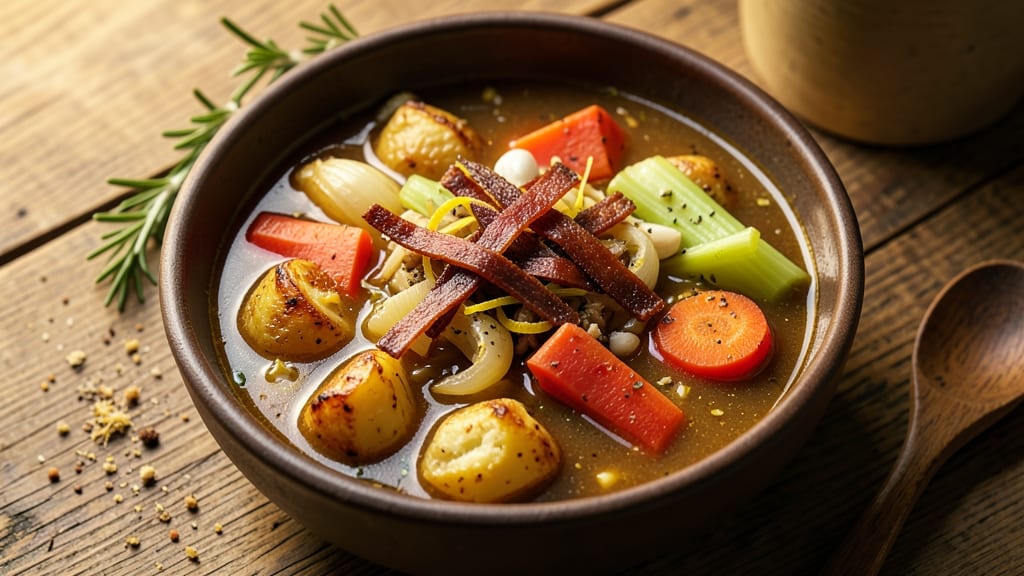
This biltong soup recipe transforms South African game meat into a deeply satisfying stew that marries smoky, spiced biltong with hearty root vegetables and aromatic herbs. The secret lies in slow-cooking the broth to develop layers of flavor—whether you use traditional methods or modern shortcuts like a pressure cooker.
I've perfected this version to balance rich, savory meat with tender vegetables and a fragrant broth that's impossible to resist.
The beauty of this recipe is its versatility—you can use pre-made biltong for convenience or make your own for a more authentic experience. The slow-cooked broth infuses the meat with deep, caramelized flavors, while root vegetables like carrots and potatoes absorb the savory essence.
This isn't just a soup; it's a comforting, hearty meal that feels like a warm embrace on a chilly day.
What makes this dish truly special is the harmony of textures and flavors: tender meat that falls apart easily, caramelized onions that add sweetness, and a broth so rich it feels like liquid gold.
The spices—cinnamon, cloves, and bay leaves—create a warm, aromatic backbone that ties everything together. It’s the kind of soup that disappears quickly, leaving everyone asking for seconds.
Perfect for feeding a crowd or meal prepping for the week, this recipe scales effortlessly. Whether you're serving it at a gathering or enjoying a cozy night in, the combination of smoky biltong and comforting vegetables makes it a standout dish. Let’s get started on creating this flavorful masterpiece.
Ingredients for biltong soup
Six servings of smoky, spiced comfort—where gamey biltong meets caramelized roots in a rich broth.
| Ingredient | Amount | Notes |
|---|---|---|
| Biltong 🥩 | 1 ½ lb | Pre-made or homemade, sliced into strips |
| Yellow Onions 🧅 | 1 whole | Chopped, medium size preferred |
| Carrots 🥕 | 3 medium | Peeled, cut into chunks |
| Russet Potatoes 🥔 | 2 lbs | Peeled, cut into 1-inch cubes |
| Celery Stalks 🧅 | 3 whole | Chopped, including leafy tops |
| Garlic Cloves 🧄 | 4 cloves | Minced, fresh preferred |
| Tomato Paste 🍅 | ½ cup | Smooth, no sugar added |
| Canned Diced Tomatoes 🍅 | 1 cup | San Marzano preferred |
| Beef Broth 💧 | 6 cups | Homemade or quality store-bought |
| Red Wine 🍷 | 1 cup | Bold dry red like Cabernet |
| Ground Cinnamon 🌿 | 1 tsp | Freshly ground preferred |
| Ground Cloves 🌶️ | ½ tsp | Freshly ground for best flavor |
| Bay Leaves 🍃 | 2 whole | Fresh if available |
| Olive Oil 🫒 | ½ cup | Extra-virgin for richness |
| Salt 🧂 | 1 ½ tsp | Diamond Crystal preferred |
| Black Pepper 🌶️ | 1 tsp | Freshly ground |
The biltong is the heart of this soup. Pre-made works fine—just look for thick-cut, well-seasoned strips at specialty meat counters or online retailers like Carnivore's Feast. For authenticity, make your own using beef chuck, vinegar, and a blend of coriander, black pepper, and mustard. The onions and carrots should be fresh and firm—no rubbery stems or soft spots. I always double-check the celery too; it’s the unsung hero that adds earthy depth. If you’re short on time, baby carrots and pre-chopped celery from Trader Joe’s save prep work without sacrificing flavor.
No red wine? Substitute with extra beef broth—just add 2 tbsp balsamic vinegar for depth. The tomato paste can be swapped for fire-roasted crushed tomatoes if you prefer chunkier texture. Fresh herbs like thyme or rosemary can replace bay leaves, but dried works at half the amount. For a smokier profile, add 1 tsp smoked paprika. The potatoes should be waxy varieties like Yukon Gold for creaminess, but russets work too—they’ll just break down faster. Pre-chopped veggies from the freezer section are a lifesaver when you’re rushed, though fresh always tastes better.
This soup tastes even better the next day as flavors meld. Store in an airtight container in the fridge for up to 5 days—the broth thickens beautifully. For longer storage, freeze portions for 3 months. I like to portion it into glass jars with a layer of olive oil on top to preserve freshness. The biltong stays tender when reheated gently—just warm over low heat or in a pot of simmering water. Leftovers make fantastic lunches; just add a sprinkle of fresh parsley for brightness before serving.
Why You'll Love This Recipe
- Minimal Chopping Required: I swear by this—just dice the onions, slice the carrots and celery into rough chunks, and cube the potatoes. No fancy knife skills needed, and the biltong practically melts into the broth with zero effort.
- Umami Bomb Alert: That salty, smoky biltong? It’s the star. The onions caramelize just enough to deepen the flavor, while the potatoes soak up all the richness—like a hug in a bowl. Honestly, I’ve never tasted a soup where the meat and veggies play so well together.
- Leftovers That Don’t Suck: This soup actually gets better the next day. The flavors meld, the biltong softens into tender strips, and it reheats in minutes. I make a double batch on Sundays because it’s my lazy Monday lifesaver.
- Budget-Friendly Protein Power: Biltong stretches further than fresh meat, and the veggies are pantry staples. A few strips go a long way, and you’re left with a hearty, satisfying meal that costs next to nothing. Between us, this is how I feed my college student on a tight budget.
Step-by-step instructions for biltong soup
Here's how to craft this rich, aromatic biltong soup with deep flavors and tender vegetables.
Sauté the Aromatics and Biltong
Heat the 0.5 cup olive oil in a large Dutch oven over medium heat. Add the chopped yellow onions and cook for 5 minutes until softened and translucent. Add the chopped celery stalks and chopped carrots, cooking for another 5 minutes until the vegetables begin to caramelize slightly.
Push the vegetables to one side of the pot and add the 1.5 lb biltong strips to the empty space. Cook for 3-4 minutes until the biltong begins to brown and release its smoky flavors. Stir occasionally to ensure even browning. This step develops the rich, meaty foundation of your soup.
Build the Flavor Base
Add the minced garlic cloves to the pot and cook for 30 seconds until fragrant. Stir in the 0.5 cup tomato paste, 1 tsp ground cinnamon, 0.5 tsp ground cloves, and 2 whole bay leaves. Cook for 1 minute to toast the spices and deepen their flavors.
Pour in the 1 cup red wine and scrape up any browned bits from the bottom of the pot. Let it simmer for 3-4 minutes until the wine has reduced by half and the mixture becomes slightly thickened. This reduction concentrates the flavors and creates a rich base for your soup.
Simmer the Vegetables and Meat
Add the 2 lbs cubed russet potatoes and 1 cup canned diced tomatoes to the pot. Pour in the 6 cups beef broth and bring the mixture to a boil. Once boiling, reduce the heat to low-medium and let it simmer for 20-25 minutes until the potatoes are tender and the biltong is fully cooked.
Check for tenderness by piercing a potato with a fork—it should slide in easily. The soup should have a rich, aromatic smell with layers of smoky biltong and warm spices. If the soup is too thick, add a bit more broth to reach your desired consistency.
Season and Finish
Remove the 2 whole bay leaves from the soup. Season with the 1.5 tsp salt and 1 tsp black pepper, adjusting to taste. Let the soup simmer for another 5 minutes to allow the flavors to meld together.
Taste and adjust the seasoning if needed. The soup should be rich, smoky, and well-balanced with a touch of sweetness from the carrots and a hint of acidity from the tomatoes. Serve hot, garnished with additional biltong strips if desired.
Pro Tips For Making Biltong Soup
- Sear the Biltong First: Toss the biltong strips in a dry pan over medium-high heat for 2-3 minutes before adding liquid—this crisps the edges and deepens the meaty flavor. I used to skip this, and the soup always tasted flat until I realized the difference.
- Cut Celery into Matchsticks: Thin, even slices (about 1/8-inch thick) cook faster and stay crispier than chunks. Thick celery stalks turn mushy and hide in the broth—no one wants that.
- Don’t Overcrowd the Pot: Add potatoes and carrots in batches if your pot is small; crammed veggies steam instead of brown. I learned this the hard way when my first batch turned out watery and bland.
- Use Russets, Not Yukons: Russet potatoes hold their shape better and absorb less liquid, keeping the soup’s texture consistent. Yukons get gluey fast—trust me, you’ll regret it.
Storing and reheating this biltong soup
Refrigerator Storage
Store your biltong soup in an airtight container with a lid, allowing it to cool completely before refrigerating. I use glass Pyrex containers with snap-on lids for best results—they maintain flavor and prevent odors from seeping in.
The soup keeps well in the fridge for up to 5 days, with flavors actually deepening as the spices meld. For extra freshness, add a thin layer of olive oil on top before sealing. 🥣
Freezer Prep Tips
For longer storage, portion the soup into quart-sized freezer bags or glass jars, leaving ½-inch headspace to prevent expansion cracks. I like to freeze it in single-serving portions for easy reheating.
Label each container with the date—this soup stays delicious for up to 3 months in the freezer. The biltong remains tender when properly thawed, though texture may change slightly. 🧊
Stovetop Reheating
My preferred method is gentle stovetop reheating over low-medium heat—this preserves the biltong's texture and prevents the broth from becoming gluey. Transfer the soup to a pot and warm it for 10-12 minutes, stirring occasionally.
If it thickens too much, add ¼ cup beef broth or water. Always taste before serving—sometimes it needs a pinch of salt or black pepper to refresh the flavors. 🔥
Microwave Shortcuts
For quick reheating, transfer the soup to a microwave-safe bowl and cover loosely with a microwave-safe lid. Heat on 50% power for 3-4 minutes, stirring halfway through. Avoid full power to prevent uneven heating.
If the soup looks dry, add a splash of beef broth before microwaving. I find this works best for single servings when you're short on time. ⏱️
Broth Boosting
If reheated soup tastes flat, revive it by adding 1 tbsp red wine or 1 tsp tomato paste while warming. The acidity and umami will cut through any dullness.
For extra richness, stir in 1 tbsp butter or a dollop of sour cream at the end. This trick works wonders when serving leftovers at gatherings. 💡
Garnish Refresh
Before serving reheated soup, brighten it with fresh parsley or green onions. A sprinkle of smoked paprika adds back the smoky depth that can fade during storage. I also like to add crusty bread on the side—it soaks up the rich broth beautifully. Presentation matters, even with leftovers! 🥖
Nutrition facts
Frequently asked questions
Can I use regular beef jerky instead of biltong?
While both are dried meats, biltong's unique spice blend (coriander, black pepper, mustard) gives this soup its signature flavor. Regular jerky lacks that depth, but you can mimic it by adding 1 tsp coriander and ½ tsp mustard powder to the broth. For best results, use high-quality beef jerky with minimal additives.
How do I make this soup vegetarian?
Replace the biltong with 1.5 lbs extra-firm tofu or hearts of palm (for texture). Boost umami with 1 tbsp soy sauce and 1 tsp liquid smoke in the broth. For a meaty alternative, try mushroom stems or lentils—both absorb flavors beautifully.
Why does my biltong soup taste too salty?
Pre-made biltong is often heavily salted. To balance it, add 1 extra cup of broth and ½ cup diced tomatoes to dilute the saltiness. The acidity from tomatoes helps cut through excess salt. If using homemade biltong, reduce the recipe's salt by ½ tsp initially.
Can I make this in an Instant Pot?
Sauté the aromatics and biltong as directed, then add all remaining ingredients. Cook on high pressure for 15 minutes, followed by a natural release. The pressure cooker reduces simmering time by half while intensifying flavors. Just check potato tenderness—they may cook faster under pressure.
What sides pair well with biltong soup?
This hearty soup pairs perfectly with crusty sourdough, garlic naan, or buttery egg noodles. For a complete meal, add a simple green salad with lemon vinaigrette to balance the richness. The smoky flavors also complement roasted Brussels sprouts or grilled corn.