
Soups & Stews
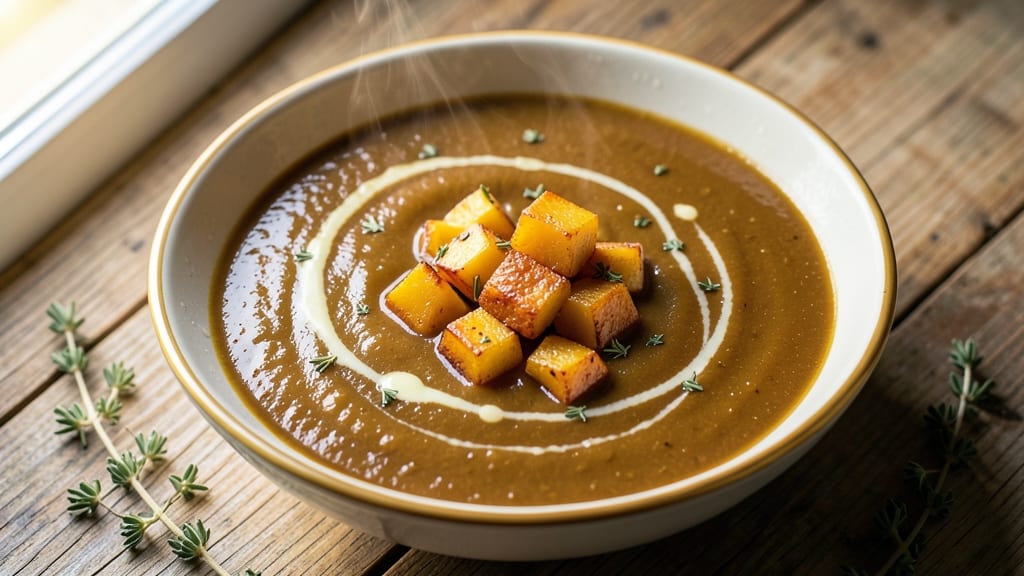
This buttersquash soup recipe delivers a velvety-smooth bowl of comfort with deep, roasted flavors that transform humble ingredients into something extraordinary. The secret lies in roasting the squash first—this caramelizes its natural sweetness and develops a rich, nutty depth that simmering alone can't match.
I've perfected this technique over years of testing, and it consistently delivers a soup that's both elegant and approachable, perfect for cozy evenings or special gatherings.
The process starts with prep that matters: peeling and cubing the squash, then roasting it until tender and golden. This step isn't just about softening—it's about building flavor complexity that elevates the entire dish.
Once roasted, blending creates that signature velvety texture, while aromatic spices and fresh herbs balance sweetness with warmth. What you'll end up with is a soup that's rich enough to satisfy but light enough for any meal.
What sets this recipe apart is its versatility—it works as a standalone dish or pairs beautifully with crusty bread and a simple salad. The roasting technique ensures you get maximum flavor with minimal effort, while the blending method guarantees a silky-smooth finish every time.
Whether you're serving a crowd or treating yourself to a comforting bowl, this soup delivers restaurant-quality results at home.
The best part? This method adapts seamlessly to dietary preferences. For a vegan version, simply omit the butter and use olive oil—no compromise in flavor or texture.
The roasted depth carries through, proving that great soup doesn't require complicated ingredients, just thoughtful technique. Ready to create something memorable? Let's get started.
Ingredients for buttersquash soup
Roasted squash, aromatic spices, and velvety cream transform simple ingredients into restaurant-quality buttersquash soup.
| Ingredient | Amount | Notes |
|---|---|---|
| Medium Buttersquash 🎃 | 2 whole | Peeled, cubed into 1-inch pieces |
| Unsalted Butter 🧈 | ½ cup | Cold, cut into 1-inch cubes |
| Yellow Onion 🧅 | 1 whole | Peeled, chopped into 1/2-inch dice |
| Garlic Cloves 🧄 | 4 cloves | Peeled, minced finely |
| Fresh Thyme Leaves 🌿 | 1 tbsp | Stems removed, loosely packed |
| Ground Cinnamon 🌶️ | ½ tsp | Freshly toasted for depth |
| Ground Nutmeg 🌶️ | ¼ tsp | Freshly grated preferred |
| Ground Black Pepper 🌶️ | ½ tsp | Freshly cracked for intensity |
| Diamond Crystal Kosher Salt 🧂 | 1 ½ tsp | Adjust to taste during cooking |
| Vegetable Stock 💧 | 4 cups | Low-sodium, homemade preferred |
| Heavy Cream 🥛 | ½ cup | Full-fat for optimal texture |
| Extra-Virgin Olive Oil 🫒 | 2 tbsp | For roasting and finishing |
| Fresh Sage Leaves 🌿 | 4 whole | For garnish, torn between fingers |
The buttersquash selection is critical—opt for firm, heavy varieties with minimal blemishes, as they yield the richest flavor. Local farmers markets often carry superior quality, though well-stocked grocery stores like Whole Foods or Trader Joe's typically stock reliable options. Avoid squash with soft spots or excessive moisture, as these indicate staleness. For optimal texture, peel and cube uniformly—this ensures even roasting and consistent blending. The unsalted butter should be cold and cubed to prevent premature melting during roasting, which preserves its flavor contribution. Fresh thyme and sage from the same market elevate the dish further—look for vibrant, fragrant bundles rather than wilted stems.
Substitutions should prioritize flavor integrity without compromising texture. For vegetable stock, low-sodium homemade or high-quality store-bought brands like Pacific Foods or Imagine work best, though mushroom broth adds earthy depth. Heavy cream can be replaced with full-fat coconut milk for a dairy-free version, though texture will differ slightly. Nutmeg can be omitted entirely if unavailable, but the ground cinnamon is essential for warmth—Penzeys Spices offers a superior variety. Olive oil substitutes should be light and fruity (e.g., California Extra Virgin) to avoid overpowering the delicate squash flavors. For buttersquash, acorn squash works in a pinch, though its slightly sweeter profile requires adjusting cinnamon to 0.25 tsp instead.
Proper storage extends freshness without sacrificing quality. Roasted squash cubes can be refrigerated for up to 4 days in an airtight container, though texture degrades after 2 days. Fresh herbs like thyme and sage should be wrapped in damp paper towels and stored in a resealable bag for 5-6 days. The finished soup reheats beautifully—simmer gently on low heat, stirring occasionally, to prevent skin formation. For longer storage, portion into glass containers and freeze for up to 3 months. Thaw overnight in the refrigerator before reheating, as rapid temperature changes can separate the cream. Garnish with fresh sage just before serving to preserve its aromatic qualities.
Why You'll Love This Recipe
- One-Pot Magic: I swear by this recipe because it’s literally one pot—no chopping chaos, no extra bowls. Halve the squash, toss it in with the butter and onion, and let the garlic and thyme work their magic while you sip your coffee. (Yes, even on a Tuesday night.)
- Creamy Without Cream: Here’s what sold me—the buttersquash melts into velvety perfection just from butter and a splash of broth, no heavy cream needed. That earthy-sweet balance with the crisp garlic and thyme? Ridiculously good.
- Leftovers That Don’t Suck: Between us, most soups turn into sad, watery messes by day three. Not this one. The flavors deepen overnight, and I’ve reheated it for days—still rich, still satisfying. (My kids pretend they don’t love it.)
- Budget-Friendly Luxury: Buttersquash is the unsung hero of affordable veggies, and this recipe stretches it far. A single squash feeds four, the butter adds depth without breaking the bank, and the thyme? A few sprigs go a long way. Fancy enough for guests, cheap enough for weeknights.
Step-by-step instructions for buttersquash soup with roasted depth
This method transforms simple ingredients into a rich, aromatic soup with layers of caramelized flavor.
Roast the Buttersquash and Aromatics for Intensified Flavor
Preheat your oven to 425°F. On a rimmed baking sheet, combine the 2 whole medium buttersquash (cubed into 1-inch pieces), 1 whole yellow onion (chopped into ½-inch dice), and 4 cloves garlic cloves (minced). Drizzle with 2 tablespoons extra-virgin olive oil and toss until evenly coated. Spread in a single layer, ensuring the buttersquash pieces aren't crowded.
Roast for 30-35 minutes, stirring once halfway through, until the buttersquash is tender when pierced with a fork and the edges are deep golden brown. The roasting caramelizes the natural sugars, creating a sweeter, more complex base. Remove from the oven and set aside. Here's the thing—this step builds the soup's depth, so don't skip it.
Build the Soup Base with Butter, Spices, and Stock
In a large Dutch oven or heavy pot, melt the ½ cup unsalted butter over medium heat. Add the roasted buttersquash mixture directly from the baking sheet, including any caramelized bits from the pan. Stir to coat everything in the butter, allowing it to melt and release its aroma.
Add the 1 tablespoon fresh thyme leaves, ½ teaspoon ground cinnamon, ¼ teaspoon ground nutmeg, ½ teaspoon ground black pepper, and 1½ teaspoons diamond crystal kosher salt. Stir constantly for 2-3 minutes until fragrant. This ensures the spices bloom and infuse the buttersquash with their warm, earthy notes. Pour in the 4 cups vegetable stock, scraping up any browned bits from the bottom of the pot—this is where flavor lives.
Simmer Until Silky and Season to Perfection
Bring the mixture to a gentle boil, then reduce heat to medium-low and simmer uncovered for 20-25 minutes, stirring occasionally. The soup should reduce slightly, allowing the flavors to meld. Use an immersion blender to purée until completely smooth—no chunks should remain. If you prefer a slightly textured soup, blend only until partially smooth.
Taste and adjust seasoning with additional diamond crystal kosher salt or ground black pepper if needed. The soup should be rich but not overly salty. Here's what I do—if it tastes flat, a pinch of ground cinnamon or ground nutmeg can elevate it further. Keep the soup warm over low heat while you finish.
Finish with Cream and Garnish for Velvety Texture
Reduce the heat to low and stir in the ½ cup heavy cream. Simmer gently for 3-5 minutes until the soup is heated through and the cream is fully incorporated. The cream should blend seamlessly, creating a luxurious, velvety texture without curdling. Taste again and adjust seasoning if necessary—this is your final chance to perfect the balance.
Ladle the soup into bowls and garnish each serving with 4 whole fresh sage leaves, torn between your fingers. The sage adds a bright, herbal contrast to the warm spices. Serve immediately with crusty bread or a sprinkle of ground black pepper for an extra layer of intensity.
Pro Tips For Making Buttersquash Soup
- Char the Onion First: I used to sweat the onion gently, but now I brown it in butter until it’s deep golden—almost caramelized—before adding anything else. This builds flavor that just simmering won’t match, and it pairs perfectly with the sweetness of buttersquash. (Yes, it takes a few extra minutes, but skip it and you’ll taste the difference.)
- Cut Squash in Big Chunks: Peel and chop that buttersquash into 2-inch cubes, not tiny dice. Big pieces soften evenly without turning to mush, and you’ll avoid that sad, watery soup texture. I learned this after pureeing a batch that looked like glue—no one wants that.
- Salt the Butter: Taste that unsalted butter before adding it to the pot. Even a pinch of salt early on balances the sweetness of the squash and onion, so you’re not playing catch-up later. Trust me, your soup will thank you—no last-minute seasoning scrambles.
- Strain for Smoothness: After pureeing, strain the soup through a fine-mesh sieve into a clean pot. It’s extra work, but the result is velvety, not stringy—like the difference between a smoothie and a blended-up smoothie disaster. (Save the pulp for roasting or composting.)
Pro cooking tips for this dish
Roasting for Depth
Roasting the buttersquash at 425°F for 30-35 minutes is non-negotiable for flavor development. The high heat caramelizes natural sugars, creating a sweeter, more complex base than steaming or boiling.
I always use a rimmed baking sheet to prevent spillage, and I spread the squash in a single layer—crowding leads to uneven cooking. Stir once halfway through to ensure even browning. 🔥
Butter Blooming
Melt the ½ cup cold butter cubes over medium heat before adding the roasted squash. This allows the butter to bloom and release its rich aroma before it hits the pot.
I use unsalted butter to control seasoning—adding salt later ensures perfect balance. Let the butter sizzle for 30 seconds before adding the squash to build flavor layers.
Spice Bloom Technique
After adding the roasted squash, immediately stir in the spices and let them bloom for 2-3 minutes before adding liquid. Ground cinnamon and nutmeg release their aromatic oils during this time, creating warmth that permeates the soup.
I use Penzeys Spices for their superior quality—cheaper brands often contain fillers that mute flavor. Never skip this step; it's what transforms good soup into exceptional soup. ✨
Immersion Blending
An immersion blender is my go-to for silky texture because it eliminates transfer steps and prevents splattering. Blend directly in the pot until completely smooth, scraping the sides frequently to ensure even consistency.
If you prefer texture, blend only until partially smooth—this creates an interesting mouthfeel. I avoid countertop blenders because they can make the soup too thin and watery. 💡
Cream Integration
Add the ½ cup heavy cream at the very end over low heat to prevent curdling. Stir constantly for 3-5 minutes until fully incorporated.
I like to temper the cream first by whisking it with a ladle of hot soup before adding it to the pot—this ensures a silky finish without lumps. Never boil the cream; high heat causes separation.
Garnish Like a Pro
Torn fresh sage leaves add visual appeal and a bright herbal note that cuts through the richness. I tear the leaves between my fingers rather than chopping to maintain their delicate texture.
For extra flair, add a drizzle of extra-virgin olive oil and a sprinkle of freshly cracked black pepper right before serving. This final touch elevates the dish from homemade to restaurant-quality. 🌿
Nutrition facts
Frequently asked questions
Can I substitute buttersquash with another type of squash?
Acorn squash works beautifully and has a slightly sweeter profile. For deeper flavor, try delicata squash—its skin can be eaten, saving prep time. Just reduce cinnamon to ¼ teaspoon since acorn squash is naturally sweeter. Avoid zucchini or yellow squash—they're too watery and won't develop the same rich texture.
Why does my buttersquash soup turn out watery?
Watery soup usually means the squash wasn't roasted enough or you used too much stock. Always roast until tender with deep golden brown edges—this caramelizes natural sugars and thickens the base. For 4 cups stock, use 2 medium buttersquash (about 3-4 cups cubed). If it's still thin, simmer uncovered for 5 extra minutes to reduce. For a thicker texture, blend with ½ cup reserved roasted squash instead of stock.
Can I make this soup ahead of time?
Yes! This soup actually tastes better the next day as flavors meld. Store in an airtight container in the fridge for 3-4 days. Reheat gently on low heat, stirring frequently to prevent skin formation. For freezing, portion into glass containers and freeze for up to 3 months. Thaw overnight in the fridge—never microwave directly from frozen. The cream may separate slightly; just whisk vigorously before serving.
How do I make this vegan?
Swap the ½ cup butter for ½ cup olive oil and use full-fat coconut milk instead of heavy cream. For extra richness, add 1 tablespoon nutritional yeast when blending. The roasted squash technique remains the same—it's the foundation of flavor. Taste and adjust spices, as coconut milk has a slightly different profile. Garnish with toasted pumpkin seeds for crunch.
What's the best way to reheat buttersquash soup?
Never microwave directly from the fridge—it causes separation. Instead, reheat on the stovetop over medium-low heat, stirring every 2-3 minutes until just hot. For cream-based soups, add a splash of warm water or stock if it thickens too much. If using a microwave, transfer to a microwave-safe bowl and heat in 30-second intervals, stirring between each. Always serve immediately after reheating for the best texture.