
Soups & Stews
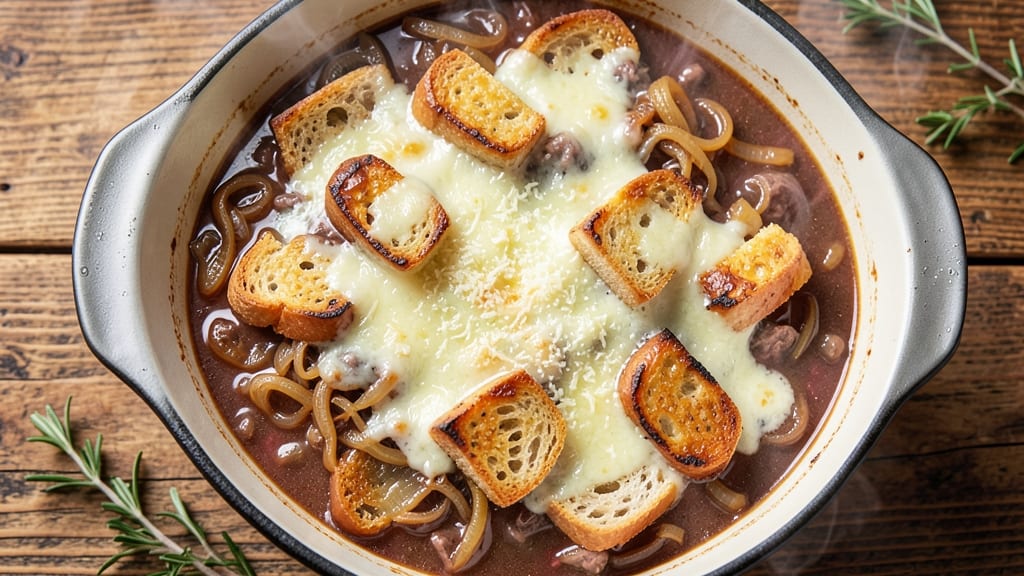
Preserving French onion soup through canning transforms a comforting classic into a year-round staple—rich, caramelized onions and velvety broth sealed for months of flavor. The key lies in slow-cooking onions until deeply sweetened, then carefully canning the soup to maintain its restaurant-quality depth.
I developed this method after years of perfecting the balance between traditional techniques and modern safety standards.
This recipe delivers a foolproof approach to home canning, using pressure canning for the broth and water bath for the finished soup to ensure sterility. The onions caramelize for 3-4 hours until golden and jammy, while the beef broth develops layers of umami.
Safety is paramount—proper sterilization and processing times prevent spoilage while preserving every nuance of flavor.
What you'll end up with is soup that tastes freshly made, even after storage—deep golden broth, tender beef, and onions so sweet they melt in your mouth.
The melty Gruyère topping, added fresh before serving, completes the experience. This method lets you enjoy French onion soup anytime, without the weeks-long preparation.
Perfect for pantry staples or holiday gifts, this recipe scales easily for multiple jars. Let's preserve that comforting flavor for months ahead.
Ingredients for canning french onion soup
Six pounds of onions and a few key pantry staples transform into canned French onion soup that rivals restaurant quality.
| Ingredient | Amount | Notes |
|---|---|---|
| Yellow Onions 🧅 | 6 lb | Yellow or yellow-red, cut into even slices |
| Beef Broth 🍲 | 6 cups | Homemade or high-quality store-bought |
| Unsalted Butter 🧈 | ½ cup | European-style preferred for flavor |
| All-Purpose Flour 🌾 | ¼ cup | For thickening broth |
| Dry White Wine 🍷 | 1 cup | Sauvignon Blanc or Chardonnay preferred |
| Beef Stock 🥩 | 2 cups | For pressure canning broth |
| Salt 🧂 | 2 tsp | Diamond Crystal kosher preferred |
| Black Peppercorns 🌶️ | ½ tsp | Freshly cracked for depth |
| Bay Leaves 🍃 | 2 whole | Fresh preferred, removed before serving |
| Gruyère Cheese 🧀 | 1 ½ cups | Freshly grated for topping |
| Baguette 🍞 | 1 whole | Crusty, sliced for topping |
| Garlic Cloves 🧄 | 4 cloves | Minced for caramelization |
| Thyme Sprigs 🌿 | 2 whole | Fresh, removed before canning |
| Lemon Juice 🍋 | 1 tbsp | Freshly squeezed for acidity |
The onions are the heart of this recipe—yellow or yellow-red varieties caramelize best, developing deep sweetness over 3-4 hours of slow cooking. Whole Foods Market and Trader Joe's carry excellent options, but the regular grocery store will work if you choose firm, dry onions without blemishes. For the broth, homemade or high-quality store-bought makes a noticeable difference—avoid low-sodium versions unless you adjust salt later. The European-style unsalted butter from Plugrá or Kerrygold adds richness that regular butter can't match. If you can't find it, Land O'Lakes European-style is a solid substitute. The flour should be all-purpose, not self-rising, and the wine must be dry—Sauvignon Blanc or Chardonnay work perfectly.
No white wine? Dry vermouth or extra beef broth can stand in, though the flavor won't be identical. Fresh thyme and bay leaves are ideal, but if you're using dried, reduce to one-third the amount—they're more concentrated. The Gruyère cheese should be freshly grated from a block for the best melt and flavor; pre-shredded cheese contains anti-caking agents that prevent proper melting. For the baguette, any crusty French bread works, but avoid pre-sliced varieties—they lack the necessary structure. If you're canning for a large group, consider doubling the broth and onions while keeping the cheese and bread separate until serving. The lemon juice is critical for acidity during canning—never skip it, even if the recipe doesn't taste sour.
This soup is designed for long-term storage—process pint jars for 75 minutes in a pressure canner and quart jars for 90 minutes at 10 pounds of pressure for the broth, then water bath can the finished soup for 90 minutes. Once sealed, the jars will keep for up to 12 months in a cool, dark pantry. For best results, store the cheese and bread separately and add them fresh before serving. The soup reheats beautifully—simmer gently on the stove or warm in a pot on the counter. If you're gifting jars, include a note reminding recipients to add the cheese and bread fresh. The flavor actually improves after a few days of storage, as the onions deepen in sweetness.
Why You'll Love This Recipe
- One-Pot Magic: I swear by this recipe—just onions, broth, butter, and a splash of wine. No extra pans, no stress. The flour thickens it right in the pot while you caramelize those onions, and suddenly, you’ve got a restaurant-worthy base with almost no effort.
- Wine-Infused Depth: That dry white wine isn’t just for show—it cuts through the richness of the butter and beef broth, brightening every spoonful. The onions caramelize into sweet, jammy layers, and the broth reduces into a velvety, umami-packed sauce that’ll have you licking the bowl.
- Weeknight to Weekend: Make a double batch on Sunday, pop it in the fridge, and reheat it for lazy nights or impress guests with minimal fuss. The flavors only get better the next day, and it’s the kind of dish that feels fancy enough for company but simple enough to throw together when you’re exhausted.
- Budget-Friendly Luxury: You’re basically turning pantry staples into something that tastes like a splurge. Yellow onions and beef broth are cheap, but the slow caramelization and wine elevate them to something special—no fancy ingredients required. Plus, leftovers reheat like a dream, so you’re not wasting a thing.
Step-by-step instructions for French onion soup preparation
This method delivers restaurant-quality depth through precise timing and technique.
Caramelize the Onions to Perfection
Begin by slicing the 6 lb yellow onions into even ¼-inch rounds. In a large Dutch oven, melt the 0.5 cup unsalted butter over medium-low heat. Add the onions and cook for 45-50 minutes, stirring occasionally, until they develop a deep golden brown color and sweet aroma. This slow caramelization creates the soup's signature flavor.
Here's the thing—don't rush this step. You'll know it's ready when the onions are so tender they nearly dissolve when pressed between your fingers. If they brown too quickly, reduce the heat slightly. The goal is even cooking without burning. Remove the onions with a slotted spoon and set aside, reserving any rendered fat in the pot.
Develop the Broth Base
Return the Dutch oven to medium heat and add the 0.25 cup all-purpose flour, stirring constantly for 2 minutes to cook out the raw flour taste. Gradually whisk in the 6 cups beef broth and 2 cups beef stock, bringing the mixture to a gentle simmer. Add the 1 cup dry white wine, 2 tsp salt, 0.5 tsp cracked black peppercorns, 2 whole bay leaves, and 2 whole thyme sprigs. Simmer uncovered for 20 minutes to allow flavors to meld.
This is when the soup's complexity builds. The wine should reduce by about half, concentrating its acidity. Taste and adjust seasoning—you may need an additional pinch of salt since caramelized onions are naturally sweet. The broth should coat the back of a spoon but remain liquid enough to ladle easily.
Finish and Prepare for Canning
Return the caramelized onions to the pot and stir in the 4 cloves minced garlic, cooking for 1 minute until fragrant. Remove the bay leaves and thyme sprigs. Stir in the 1 tbsp lemon juice to brighten the flavors. The soup is now ready for canning preparation—either pressure canning or freezing for later use.
For pressure canning, follow manufacturer guidelines for pint jars, filling them with hot soup and leaving 1-inch headspace. Process pints for 90 minutes at 10 pounds pressure for a sealed, shelf-stable product. The acidity from the wine and lemon juice helps preserve the soup safely while maintaining its rich character.
Assemble and Serve with Crispy Topping
When ready to serve, ladle the soup into oven-safe bowls. Top each portion with 3-4 slices of toasted baguette and ¼ cup freshly grated gruyère cheese. Broil for 2-3 minutes until the cheese bubbles and turns golden brown. The contrast of crispy bread and melted cheese against the silky broth creates the ultimate French onion experience.
Serve immediately with a side salad or crusty bread. The cheese should be fully melted with a few crispy brown spots on top. If making ahead, assemble without broiling and finish under the broiler just before serving to maintain texture.
Pro Tips For Making Canning French Onion Soup
- Sweat, Don’t Burn: Caramelize those onions low and slow—think 30-40 minutes over medium-low heat with a splash of water every 10 minutes. I learned this the hard way: charred onions taste bitter, and no amount of wine or broth can fix that. Keep a lid on if your kitchen gets too hot.
- Use Cold Butter: Cut that unsalted butter into chunks and toss it straight into the pot with the flour—no melting first. The cold butter creates fat pockets that make the roux richer and more flavorful, not just a paste. (Yes, it’ll look weird at first, but trust the process.)
- Deglaze Aggressively: After toasting the flour, pour in the wine all at once and let it bubble furiously for 2 minutes. Scrape the bottom of the pot with a wooden spoon—those browned bits are flavor gold. Skimping here means a dull, one-dimensional soup.
- Simmer, Don’t Boil: Once the broth is added, keep the heat at a gentle simmer—tiny bubbles, not rolling. Boiling makes the onions turn mushy and the broth cloudy. I used to rush this, but now I set a timer for 20 minutes and let it work its magic. Patience pays off.
Make-ahead tips for this canning french onion soup
Broth Prep Ahead
Start by making the broth base up to 2 days in advance—simmer it with wine, salt, and peppercorns, then store it in the fridge. I like to keep it in a quart-sized mason jar for easy reheating.
When ready to can, simply reheat the broth to 180°F and stir in the caramelized onions and garlic. This saves 2 hours of active cooking on the day you plan to can. 🌡️
Onion Caramelization Shortcut
For faster canning days, use pre-caramelized onions from the grocery store—look for sweet caramelized onions in the refrigerated section. Cook them with 1 tbsp butter for 5 minutes to warm through before adding to the broth.
This cuts your prep time by nearly 3 hours while still delivering that signature sweetness. 💡
Canning in Batches
If you're canning multiple batches, prepare all ingredients first—caramelize all onions, make all broth, and measure spices. Store components separately in the fridge for up to 3 days before canning.
I use glass storage containers for the broth and a separate container for the onions. This lets you can in stages without redoing prep work. ⏰
Cheese and Bread Prep
Grated Gruyère loses flavor when stored, so keep it fresh by grating only what you need just before serving. Store the baguette in a paper bag at room temperature for up to 2 days to maintain crispness.
For longer storage, freeze slices in a ziplock bag and toast directly from frozen when ready to use. 🧀
Labeling and Storage
Label each jar with the date and contents using a permanent marker. Store in a cool, dark pantry where temperatures stay below 70°F. The soup will keep for up to 12 months—just remember to add fresh cheese and toasted bread before serving.
I like to include a small note with each jar reminding recipients to broil the topping. ✨
Gifting Ready Jars
For gift-giving, package jars with a mini baguette and a small container of Gruyère. Include a recipe card with reheating instructions and a note about adding fresh bread and cheese.
I've had friends rave about these gifts—especially during winter months when comfort food is most appreciated. The presentation makes it feel special without requiring extra effort. 💛
Nutrition facts
Frequently asked questions
Can I use regular canning jars for the broth and finished soup?
Yes, but with a key difference: the broth requires pressure canning (pint jars for 75 minutes at 10 lbs pressure) while the finished soup uses water bath canning (pint jars for 90 minutes). The acidity from wine and lemon juice makes the soup safe for water bath, but the broth needs higher heat to destroy bacteria. Always use new, unopened jars with proper seals.
Why does the recipe call for both wine and lemon juice?
The wine adds depth of flavor while the lemon juice provides the acidity required for safe canning. Together they create the perfect balance—wine contributes richness while lemon juice ensures the pH level stays below 4.6, preventing botulism growth. Never skip the lemon juice, even if you're not a fan of its taste in the final product.
How do I know if my canned soup is properly sealed?
After cooling, check for a concave lid that doesn't flex when pressed. If the lid pops when pressed, it's not sealed. Also listen for a pinging sound as jars cool—this indicates a proper seal. Store sealed jars upright in a cool, dark place. If any jars fail to seal, refrigerate and use within 1 week or reprocess.
Can I substitute Gruyère with another cheese?
Gruyère is ideal for its nutty flavor and excellent melting properties, but you can substitute with Comté, Emmental, or Swiss cheese. Avoid pre-shredded cheese—it contains anti-caking agents that prevent proper melting. For a vegetarian option, use nutritional yeast mixed with a little olive oil for a cheesy flavor, though the texture will differ.
What's the best way to reheat canned French onion soup?
Gently reheat on the stovetop over medium-low heat until bubbling, then simmer for 5-10 minutes. Avoid high heat to prevent curdling. For microwave reheating, transfer to a microwave-safe bowl and heat in 30-second intervals, stirring between each. Always add fresh bread and cheese before serving to maintain texture and flavor.