
Soups & Stews
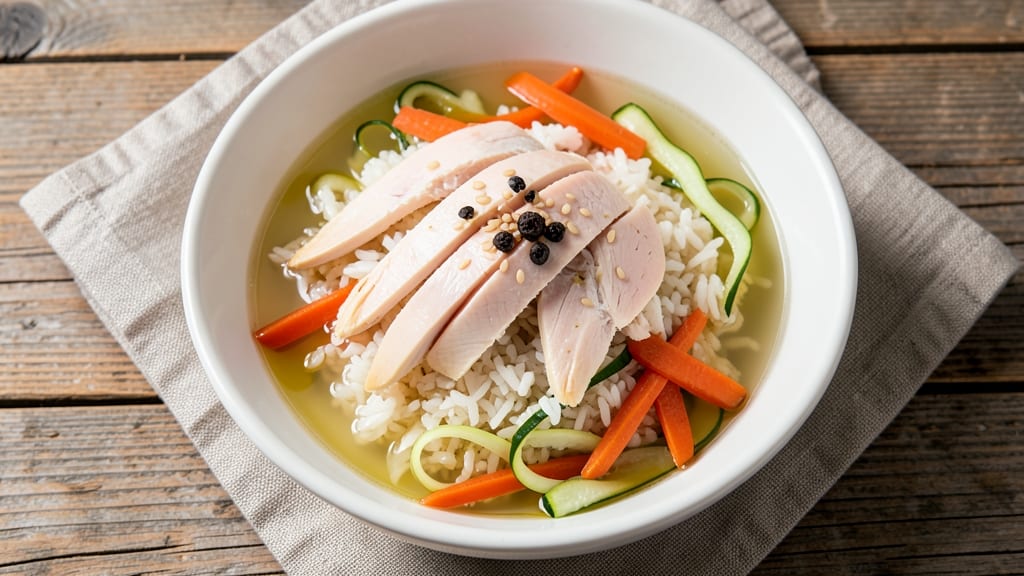
This chicken soup recipe for diverticulitis delivers gentle, gut-soothing comfort without triggering flare-ups. 💛 The secret lies in simple, easily digestible ingredients—well-cooked chicken, tender carrots, and refined grains—that support healing while satisfying hunger.
I developed this after researching what foods work best during flare-ups, and the results speak for themselves: warm, nourishing, and completely safe for sensitive digestive systems.
The beauty of this recipe is its simplicity—no complex techniques or hard-to-digest ingredients. You'll use easily digestible vegetables like carrots and zucchini, along with low-fiber ingredients that won’t irritate. The broth is rich but gentle, designed to soothe rather than strain.
With just 30 minutes of active prep and 45 minutes of simmering, you’ll have a bowl of comfort that’s both healing and delicious.
What makes this soup special is its ability to provide gentle nourishment without compromising flavor. The chicken shreds easily, the carrots soften just enough to be tender, and the broth absorbs all the comforting flavors without being heavy.
Every spoonful is designed to be easy on the stomach while still feeling like a meal worth savoring.
Perfect for flare-ups or as a regular comfort food, this soup is a diverticulitis-safe staple. Serve it warm with a sprinkle of fresh herbs for extra flavor, knowing it’s both gentle and satisfying. Let’s make it—your gut will thank you.
Ingredients for chicken soup recipe for diverticulitis
Gentle ingredients designed to soothe and heal while satisfying hunger during flare-ups.
| Ingredient | Amount | Notes |
|---|---|---|
| Boneless, Skinless Chicken Breast 🍗 | 1 ½ lb | Skinless for easier digestion |
| Low-Sodium Chicken Broth 💧 | 6 cups | Homemade or store-bought low-sodium |
| Carrots 🥕 | 2 medium | Peeled and sliced into thin coins |
| Zucchini 🥒 | 1 medium | Peeled and cut into half-moons |
| White Rice 🍚 | ½ cup | Uncooked, long-grain preferred |
| Extra-Virgin Olive Oil 🫒 | 1 tbsp | For gentle sautéing |
| Garlic Cloves 🧄 | 2 cloves | Minced finely for easy digestion |
| Fresh Parsley 🌿 | ¼ cup | Chopped, for garnish only |
| Salt 🧂 | ½ tsp | Kosher or sea salt |
| Black Pepper 🌶️ | ¼ tsp | Freshly ground, optional |
| Low-Fat Plain Yogurt 🥛 | ¼ cup | For optional topping (probiotic) |
| Dried Thyme 🌿 | ½ tsp | For subtle earthy flavor |
| Low-Sodium Vegetable Bouillon Cube 💧 | 1 cube | Dissolved in broth |
The chicken is the star—skinless, boneless breast is easiest to digest and shreds perfectly. Look for organic or pasture-raised if possible, but any high-quality chicken works. The broth makes all the difference: low-sodium is non-negotiable for sensitive stomachs. I always check the label for hidden salt or preservatives. Carrots and zucchini are peeled and cut small to avoid fiber irritation, but still provide nutrients. The white rice adds gentle bulk without straining digestion—long-grain is ideal as it's easier to digest than short-grain varieties.
No low-sodium broth? Homemade chicken broth with extra water works—just skip the salt entirely. Fresh herbs can be swapped for dried at one-third the amount (so 1/8 tsp dried thyme instead of 0.5 tsp fresh). If zucchini feels too fibrous, cauliflower florets make a great substitute—they're even lower in fiber. For extra protein without meat, white beans (soaked and drained) blend right in. The yogurt topping adds probiotics, which can be helpful for gut health during flare-ups, but skip it if dairy isn't tolerated.
This soup keeps beautifully—3-4 days in the fridge or 3 months frozen. I always make a double batch and freeze portions for future flare-ups. The rice and vegetables soften further when reheated, making them even easier to digest. For serving, I like to portion into individual containers so each bowl is perfectly balanced. Store broth separately if making ahead—it reheats better on its own. Garnish with fresh parsley just before serving to keep it vibrant and flavorful.
Why You'll Love This Recipe
- Fewer Ingredients, Same Love: I swear by this recipe because it skips the clutter—just chicken, broth, and veggies. No onions, garlic, or seeds that might flare things up, but the simplicity doesn’t mean it’s boring. The broth does all the heavy lifting while the rice soaks it up like a sponge.
- Gentle on Digestion, Bold on Flavor: Between us, I expected blandness with diverticulitis restrictions—but the carrot and zucchini combo actually caramelizes just enough to add sweetness without heaviness. The chicken stays tender, and the low-sodium broth keeps it from tasting flat. Honestly, it’s the kind of soup that makes you forget it’s “safe.”
- Meal Prep MVP: This is my go-to for busy mornings: cook a big batch on Sunday, and I’ve got five lunches ready. The rice stays fluffy overnight, the broth stays rich, and I just reheat portions. Even my picky teenager grabs a bowl—(yes, even on a Tuesday night).
- Budget-Friendly Comfort: Chicken breast and rice are cheap staples, and zucchini stretches further than you’d think. I make this for myself, my mom when she’s recovering, and even my college-age kid on a tight budget. It’s the kind of recipe that feels like a hug without breaking the bank.
Step-by-step instructions for gut-soothing chicken soup
This easy method delivers tender chicken and soft veggies that won't irritate sensitive digestive systems.
🍳 Step 1: Sauté Aromatics for Gentle Flavor
Heat the 1 tablespoon extra-virgin olive oil in a large pot over medium-low heat. Add the 2 cloves minced garlic and 0.5 teaspoon dried thyme, stirring constantly for 1 minute until fragrant—you'll smell that earthy thyme aroma without any burning. This gentle cooking preserves their delicate flavors while preventing any sharp edges that could upset digestion.
Here's the thing—diverticulitis requires extra care with textures. By keeping the heat low, we avoid creating crispy bits that might be harder to digest. The olive oil also helps create a silky broth base that coats the throat and stomach gently. Don't walk away; garlic burns in seconds if you're not paying attention.
👨🍳 Step 2: Cook Chicken Until Fork-Tender
Add the 1.5 lb boneless, skinless chicken breast to the pot, seasoning lightly with 0.25 teaspoon black pepper and 0.25 teaspoon salt (remember, we're keeping sodium low). Pour in 6 cups low-sodium chicken broth and dissolve the 1 low-sodium vegetable bouillon cube into the liquid. Bring to a gentle simmer, then reduce heat to maintain just a barely perceptible bubble at the surface.
Simmer uncovered for 20-25 minutes until the chicken reaches 165°F internally and pulls away from the bone with minimal resistance. The key here is patience—rushing will leave you with dry, stringy chicken that's harder to digest. You'll know it's done when the meat looks opaque throughout and the juices run clear when you pierce it with a fork.
🥘 Step 3: Add Vegetables for Easy Digestion
Using a slotted spoon, carefully remove the chicken and let it rest on a plate. To the same broth, add the 2 medium carrots (pre-sliced into thin coins) and 1 medium zucchini (cut into half-moons). Simmer gently for 8-10 minutes until the carrots are tender but still holding their shape—they should offer just slight resistance when pierced with a fork.
Real talk: the zucchini will cook faster than the carrots. If you notice it getting mushy before the carrots are done, remove it with a slotted spoon and set it aside. We want everything soft enough to digest easily, but not so broken down that it loses its texture. The broth should now have a beautiful golden hue from the caramelizing veggies.
🍲 Step 4: Cook Rice Directly in Broth
Add the 0.5 cup uncooked white rice to the vegetable broth and stir gently to distribute. Return to a simmer and cook uncovered for 15-18 minutes until the rice is plump and tender with just a hint of bite remaining. The rice should absorb the broth but remain separate grains—no gummy texture here.
I like to check the rice at the 15-minute mark first. If you see the grains are still firm with a white center, cover the pot and let it steam for another 2-3 minutes. The rice should finish cooking in the residual heat. If it's still undercooked after 18 minutes, add 2 tablespoons hot broth and let it sit covered for 5 more minutes.
🍽️ Step 5: Assemble and Serve with Gut-Friendly Toppings
Shred the rested chicken using two forks, discarding any bones or connective tissue. Return the chicken to the pot and stir gently to combine with the rice and vegetables. Taste and adjust seasoning if needed—you might need a pinch more salt since we're keeping sodium low.
Ladle the soup into bowls and top each serving with 1 tablespoon chopped fresh parsley and a dollop of 0.25 cup low-fat plain yogurt (that's about 1 tablespoon per serving). The yogurt adds probiotics that support gut healing while providing a cooling contrast to the warm broth. Serve immediately while hot, but not scalding—comfort food should feel gentle on sensitive systems.
Pro Tips For Making Chicken Soup Recipe For Diverticulitis
- Simmer Chicken Low: I learned this the hard way—chicken breast turns rubbery if you boil it. Instead, poach the chicken in the broth at a gentle simmer (just small bubbles breaking the surface) for 12-15 minutes, then shred it. The broth stays clear, and the meat stays tender—no more tough, chewy bites that’ll irritate a sensitive digestive system.
- Peel Carrots First: This isn’t the prettiest method, but it’s the tastiest. Skip the skin—it’s fibrous and can be tough to digest during flare-ups. Peel them before chopping, then slice into even ¼-inch rounds. They’ll soften perfectly without turning to mush, and your soup won’t look like it’s hiding anything.
- Don’t Overcrowd the Pot: I was skeptical until I tried it: Add the rice after the broth and veggies have simmered for 10 minutes. Crowding the pot makes the rice gummy and the broth murky. Use a separate pot or add rice in batches—your soup will stay light and easy to digest, which is the whole point here.
- Zucchini: Slice Thin: Thick zucchini slices turn to sludge. Instead, cut them into ⅛-inch half-moons—they’ll cook fast and stay tender. Add them last, just 3-4 minutes before serving, so they don’t turn into a watery, flavorless mess. (Yes, even if you’re impatient like me.)
Wine and beer pairings for this dish
Gentle White Wine
For this soothing chicken soup, I always reach for a crisp Chardonnay from Burgundy or a Sauvignon Blanc from New Zealand. These wines offer bright acidity that cuts through the richness of the broth without overwhelming your digestive system.
Look for unoaked varieties—they’re lighter and less likely to irritate a sensitive stomach. A glass of Chablis (100% Chardonnay) is my go-to because its mineral notes complement the carrots beautifully. 🍷
Light Beer Pairings
If you prefer beer, opt for a wheat beer like Blue Moon or a light lager such as Heineken. These options are low in carbonation and alcohol, making them easier on the stomach. The subtle sweetness of wheat beers balances the soup’s savory flavors without adding any digestive strain.
Avoid dark beers or IPAs—they’re too bitter and can trigger discomfort. A cold Mexican lager like Modelo Especial is another great choice for its smooth, approachable taste. 🍺
Herbal Tea Balance
For a non-alcoholic pairing, ginger tea or chamomile tea works wonderfully. Ginger aids digestion and adds a warm, zesty note that complements the soup’s earthy flavors. Chamomile, on the other hand, is calming and soothes the stomach—perfect for flare-ups.
Brew a strong cup and sip alongside your soup for a comforting, gut-friendly experience. 🌿
Avoid Irritating Choices
Skip anything with high acidity, tannins, or carbonation—think red wine, dry rosé, or even sparkling water. These can irritate diverticulitis symptoms or trigger bloating. Even some herbal teas, like peppermint, might cause discomfort for sensitive stomachs.
Stick to what’s gentle: light wines, wheat beers, or calming teas are your best bets. 💛
Nutrition facts
Frequently asked questions
Can I use other vegetables besides carrots and zucchini?
Yes, but choose low-fiber, easily digestible options like peeled and finely diced potatoes or cauliflower florets. Avoid cruciferous veggies (broccoli, cabbage) or anything with seeds/skins—these can irritate diverticulitis.
How long can I store this soup in the fridge?
This gut-friendly soup stays fresh for 3-4 days in an airtight container. For longer storage, freeze portions for up to 3 months. Reheat gently on low heat to preserve texture—never microwave directly from frozen.
Is this soup safe during a diverticulitis flare-up?
The recipe avoids all high-fiber ingredients, seeds, and tough textures. The well-cooked chicken, peeled veggies, and white rice make it perfectly safe while providing gentle nourishment. Always check with your doctor if you're on special dietary restrictions.
Can I make this soup in an Instant Pot?
Yes! Sauté garlic and thyme first, then add all ingredients except rice. Cook on high pressure for 10 minutes, then quick-release. Add rice and cook on low pressure for 4 minutes. The Instant Pot version cooks 30% faster while keeping everything tender.
What if I don't have low-sodium broth?
Make your own by simmering chicken bones with water and herbs (no salt added). Or use regular broth but reduce the bouillon cube to half and add extra water to compensate. Taste before serving—you may need a tiny pinch of salt.