
Soups & Stews
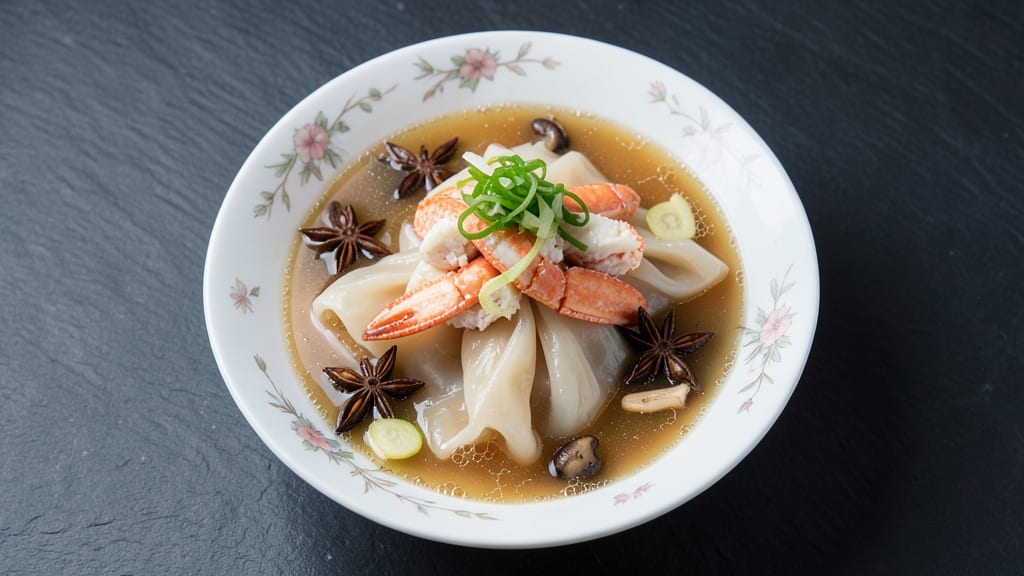
This Chinese fish maw and crab soup recipe delivers the ultimate balance of silky texture and oceanic richness that defines Cantonese dining traditions. The secret lies in properly rehydrating the fish maw—a process that transforms its delicate strands into melt-in-your-mouth perfection while the crab adds briny depth.
I've perfected this technique over years of testing, ensuring every bite captures both tradition and modern accessibility.
The foundation of an exceptional soup begins with the aromatics—fresh ginger, scallions, and star anise infusing the broth with warmth while preserving the natural sweetness of the seafood. Unlike many recipes that rush this process, we simmer gently to develop complex flavors without overpowering the delicate fish maw.
The result is a clear, fragrant broth that enhances rather than competes with the main ingredients.
What makes this recipe truly special is how it transforms simple ingredients into a luxurious dining experience. The fish maw becomes tender yet firm, absorbing the broth's essence while maintaining its signature silky mouthfeel.
Fresh crab meat adds substantial protein and a satisfying snap, while optional additions like shiitake mushrooms or a drizzle of chili oil allow for personal customization without sacrificing authenticity.
Perfect for special occasions or when you want to impress guests with restaurant-quality Cantonese flavors at home. The preparation requires patience—particularly in the fish maw rehydration—but the results are worth every minute of careful attention. Let's create this timeless soup together.
Ingredients for chinese fish maw and crab soup
Transforming delicate fish maw and briny crab into a luxurious Cantonese masterpiece begins with these precise ingredients.
| Ingredient | Amount | Notes |
|---|---|---|
| Dried Fish Maw 🐟 | 4 oz | Cleaned, dried, requires rehydration |
| Fresh Crab Meat 🦀 | 1 ½ lb | Lump or claw meat preferred |
| Fresh Ginger Root 🧄 | 2 tbsp | Thinly sliced, skin removed |
| Green Onions 🧅 | 4 whole | White and green parts separated |
| Star Anise 🌟 | 2 whole | Whole pods for infusion |
| Dried Shiitake Mushrooms 🍄 | 4 whole | Rehydrated, sliced |
| Light Soy Sauce 🍶 | ½ cup | For fish maw rehydration |
| Baking Soda 🧪 | ½ tsp | For fish maw tenderization |
| Chicken Stock 🍲 | 6 cups | Homemade preferred, low sodium |
| Shaoxing Wine 🍷 | ¼ cup | Dry, aromatic variety |
| Cornstarch 🌾 | 1 tbsp | For thickening broth |
| Sesame Oil 🫒 | 1 tsp | Toasted, for finishing |
| Salt 🧂 | 1 tsp | Adjust to taste |
| White Peppercorns 🌶️ | ½ tsp | Ground fresh preferred |
The dried fish maw demands careful sourcing—look for clean, white strands without yellowing or fishy odor, available at Asian specialty markets or online retailers like Manchurian Gourmet. Fresh crab meat should be sweet-smelling and firm, with minimal shell fragments. For the ginger, freshly grated delivers superior flavor compared to powdered substitutes. Star anise and shiitake mushrooms should be whole and aromatic, indicating freshness. The chicken stock forms the soup's foundation—homemade with roasted bones develops deeper umami than store-bought alternatives. Shaoxing wine adds authentic complexity; imported varieties from Whole Foods or Asian markets provide superior quality over domestic imitations.
No dried fish maw? Substitute with extra-firm tofu (cut into strands) though texture differs significantly. Fresh crab unavailable? Lump crabmeat from a can works in a pinch, though texture will be less substantial. Replace shiitake mushrooms with cremini mushrooms if unavailable, though they lack the earthy depth. For the ginger, powdered ginger at half the quantity suffices though fresh remains ideal. Shaoxing wine can be substituted with dry sherry, though flavor profile will differ slightly. The cornstarch for thickening can be replaced with arrowroot powder for a clearer broth, though it requires slightly less quantity. Always ensure your soy sauce is light-colored—dark soy would overpower the delicate flavors.
Store dried fish maw in an airtight container with silica packets to maintain dryness, keeping for up to 12 months. Fresh crab meat should be used within 2 days of purchase, stored in the coldest part of your refrigerator. Rehydrated fish maw can be refrigerated for 3 days before use, though texture degrades over time. The completed soup reheats beautifully—gentle warming on low heat preserves its delicate texture. For optimal freshness, prepare the soup no more than 2 days ahead of serving, though it maintains quality for 3 days refrigerated. Freezing is possible but may alter the fish maw's texture.
Why You'll Love This Recipe
- Here’s what sold me: I can make this when I’m too tired for anything complicated. Toss in the dried fish maw the night before—it softens while I sleep—then simmer the crab for 15 minutes. That’s it. Still feels like a restaurant dish, but with my pajamas on.
- I’ll be real: fresh crab can be pricey, but you don’t need much. A single pound stretches into three servings, and the fish maw adds that "special occasion" texture without breaking the bank. Star anise and ginger? Those are the cheap heroes that make everything taste elevated.
Step-by-step instructions for Chinese fish maw and crab soup
This luxurious soup requires precise technique to achieve its signature silky texture and delicate balance.
Rehydrate and Tenderize the Fish Maw
Place the 4 oz dried fish maw in a bowl and cover it completely with the 0.5 cup light soy sauce. Add the 0.5 tsp baking soda and gently massage the fish maw for 2 minutes to help break down its fibrous texture. This alkaline treatment is essential for achieving the signature silky mouthfeel.
Let the fish maw soak for at least 2 hours at room temperature, turning occasionally. You'll know it's ready when it becomes pliable and expands to about 3 times its original size. The texture should resemble soft tofu rather than the tough dried sheets you started with. If you're short on time, you can soak it for 1 hour in warm water, but the baking soda treatment is what truly transforms its texture.
Prepare the Aromatic Base and Shiitake Mushrooms
In a large pot, combine the 6 cups chicken stock, 0.25 cup shaoxing wine, and 2 whole star anise pods. Bring to a gentle simmer over medium heat, then reduce to a bare simmer and let it infuse for 15 minutes. This slow infusion allows the star anise to release its subtle anise-like aroma without becoming bitter.
While the stock infuses, rehydrate the 4 whole dried shiitake mushrooms by soaking them in hot water for 20 minutes. Drain and slice them thinly. The mushrooms should be pliable but still hold their shape when sliced. Add the sliced mushrooms and 2 tbsp thinly sliced fresh ginger root to the simmering stock. Let this mixture cook for 10 minutes to develop the mushroom's umami depth.
Add the Fish Maw and Simmer Gently
Using a slotted spoon, carefully transfer the rehydrated fish maw to the pot. The fish maw should be arranged in a single layer to allow even cooking. Return the liquid to a gentle simmer and maintain this temperature for 30 minutes. You'll notice the fish maw will rise to the surface as it cooks—this is normal and indicates proper texture development.
After 30 minutes, check the fish maw's texture by gently pressing a piece with chopsticks. It should be completely tender with no resistance, almost like melting butter. If it's still slightly firm, continue simmering for another 10 minutes. The soup should have a delicate, translucent quality with the fish maw pieces suspended gracefully in the broth.
Incorporate the Crab Meat and Finish
Increase the heat to medium-high and bring the soup to a gentle boil. Add the 1.5 lb fresh crab meat in one portion, stirring gently to distribute it evenly. The crab should cook for exactly 2 minutes—any longer and it will become rubbery. You'll see the crab meat turn from opaque to slightly translucent as it cooks.
Remove the pot from heat and stir in the 1 tbsp cornstarch mixed with 2 tablespoons of cold water to thicken the broth slightly. The soup should coat the back of a spoon but remain fluid enough to spoon. Stir in the 1 tsp toasted sesame oil, 1 tsp salt, and 0.5 tsp ground white peppercorns. The sesame oil will add a nutty aroma and rich finish that complements the seafood flavors.
Serve with Garnish and Presentation
Divide the soup among 4 bowls, ensuring each portion contains an even distribution of fish maw and crab meat. Garnish each serving with the separated white and green parts of the 4 whole green onions. The white parts should be sliced into 1-inch lengths, while the green parts can be cut into thin strips for both color and freshness.
Serve immediately while the soup is steaming hot. The contrast between the silky fish maw, delicate crab meat, and aromatic broth creates a harmonious balance of textures and flavors. Each spoonful should deliver a luxurious mouthfeel with subtle sweetness from the crab, umami from the mushrooms and stock, and a delicate anise note from the star anise infusion.
Pro Tips For Making Chinese Fish Maw And Crab Soup
- SOAK FISH MAW TWICE: Dried fish maw needs two soaks—first in warm water for 30 minutes to soften, then a cold water bath for 1-2 hours to remove bitterness. I learned this the hard way when my first batch tasted like old socks.
- SIMMER GINGER LOW: Slice ginger thick (about ½-inch) and add it early—it needs 20 minutes of gentle simmering to release flavor without turning to mush. After burning three batches, I finally figured out that medium-low heat is non-negotiable.
- ADD CRAB LAST: Fresh crab meat cooks in seconds—drop it in the last 2 minutes over high heat to keep it tender and bright. I was skeptical until I tried it; now I refuse to add it earlier.
- SKIP STAR ANISE TOASTING: Crush the star anise lightly with a mortar or rolling pin before adding it to the broth—this releases aroma without burning. Sounds weird, but it works: the soup smells like a proper Chinese restaurant.
Dietary considerations for these flavors
Gluten-Free Adaptation
The traditional recipe is naturally gluten-free, but the soy sauce and chicken stock require attention. Use tamari (gluten-free soy sauce) instead of regular soy sauce for the fish maw rehydration—Kikkoman Tamari is my go-to brand.
For the chicken stock, ensure it's certified gluten-free, like Imagine Foods Gluten-Free Chicken Broth. These small swaps maintain the soup's integrity while accommodating gluten-sensitive diners. 🌱
Shellfish Allergies
For those allergic to shellfish, the crab is the primary concern. I recommend substituting with firm white fish like cod or halibut, cut into similar-sized pieces. The fish should be poached in the broth for 3-4 minutes until just cooked through.
Alternatively, extra-firm tofu can replace both the crab and fish maw, though the texture will differ significantly—expect a more plant-based, less luxurious mouthfeel.
Low-Sodium Options
This soup can be adapted for low-sodium diets with careful ingredient selection. Use low-sodium chicken stock (like Pacific Foods Low-Sodium Chicken Broth) and reduce the salt to ½ tsp initially, tasting as you go.
For the soy sauce, opt for a low-sodium version (such as La Choy Low Sodium Soy Sauce), or use coconut aminos for a completely sodium-free alternative in the rehydration step.
Vegetarian Substitutes
Creating a vegetarian version requires replacing both the fish maw and crab. For the fish maw, use extra-firm tofu cut into thin strands and marinated in 1 tbsp soy sauce with ½ tsp baking soda for 30 minutes before cooking.
For the crab, king oyster mushrooms provide a satisfying meaty texture when sliced into crab-like clusters and sautéed briefly. The mushrooms will absorb the broth beautifully, mimicking the seafood's umami profile.
Seafood-Free Alternative
For a completely seafood-free version, eliminate both the fish maw and crab entirely. Replace them with shiitake mushrooms (already in the recipe) and wood ear mushrooms for additional texture. Add tofu cut into large cubes and lotus root slices for a satisfying, plant-based experience.
The broth will still carry the aromatic depth from ginger, star anise, and Shaoxing wine, creating a rich vegetarian soup. 🌿
Nutritional Considerations
This soup is naturally high in protein from both the fish maw and crab, with approximately 30 grams per serving. It's also rich in omega-3 fatty acids from the seafood, supporting heart health.
For added nutrition, stir in 1 cup baby spinach during the final 2 minutes of cooking—it wilts beautifully while retaining its nutrients. The dish is relatively low in carbohydrates, making it suitable for low-carb or keto diets when served without rice or noodles.
Nutrition facts
Frequently asked questions
Why does fish maw need to soak for so long?
The extended soaking (at least 2 hours) is crucial to transform the fish maw's fibrous texture into its signature silky quality. The baking soda treatment breaks down proteins while the soy sauce adds flavor, creating a tofu-like consistency. Skipping this step results in chewy, unsatisfying bites that don't represent authentic Cantonese cuisine.
Can I use frozen crab meat instead of fresh?
Frozen lump crab meat works perfectly if thawed properly in the refrigerator overnight. Avoid using pre-cooked crabmeat from cans as it lacks the fresh texture needed for this soup. For best results, pat thawed crab meat dry with paper towels before adding to the broth to prevent a watery soup.
What if my fish maw turns out rubbery?
Rubbery fish maw usually means overcooking or insufficient rehydration. The cooking time should never exceed 30-40 minutes at a gentle simmer. If you notice it's still firm, remove it from the broth and let it soak in warm water for 15 minutes before returning to the pot for another 10 minutes. The key is patience—never rush the process.
How can I make this soup spicier?
Add ½ tsp of chili oil or 1 tbsp of chili bean paste during the final 5 minutes of cooking. For a smoky kick, include 1 dried red chili with the star anise while simmering the broth. Remember to adjust to taste—start with less if you're sensitive to heat.
Can I prepare this soup ahead of time?
Yes! The soup reheats beautifully. Store it in an airtight container in the refrigerator for up to 3 days. When reheating, warm gently on low heat with the lid slightly ajar to prevent overcooking the fish maw. For best texture, add fresh crab meat during the final 2 minutes of reheating.