
Soups & Stews
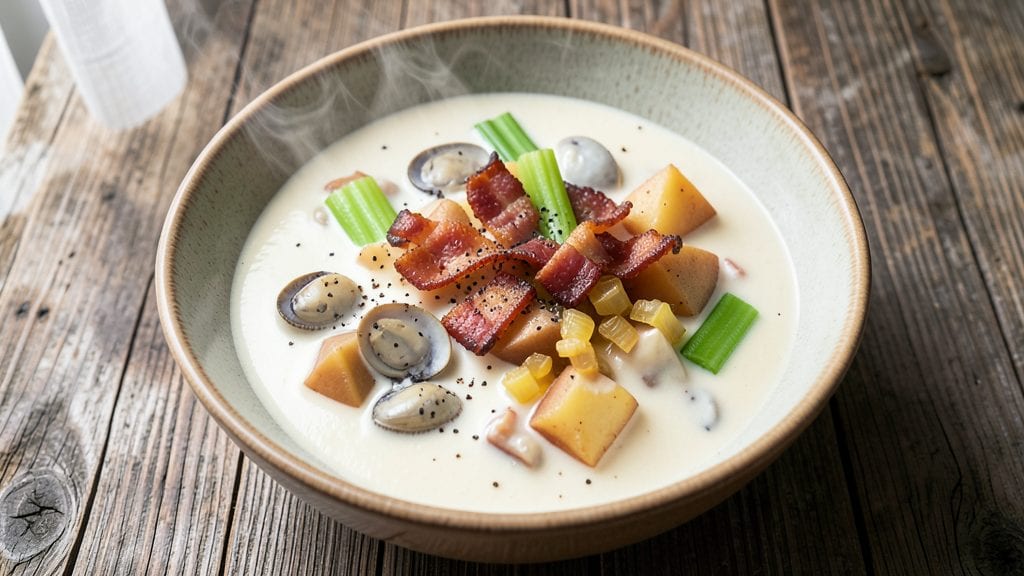
This clam chowder soup recipe with canned clams proves you don’t need fresh seafood to create restaurant-quality results—just a few smart shortcuts and a slow simmer. Growing up in Nana Mae’s diner, I learned how a well-built broth and proper seasoning could elevate simple ingredients into something extraordinary.
The secret here is using canned clams for convenience while preserving that briny, oceanic depth that defines classic chowder.
What makes this recipe work is the velvety base—rich with potatoes, onions, and celery cooked until tender, then blended into a silky texture. Canned clams add that signature clam flavor without the fuss of shucking, while a splash of cream and a touch of bacon lend depth.
The result is a creamy, comforting soup that’s perfect for chilly evenings or game days, and it comes together in under an hour.
By the time you finish, you’ll have a smooth, flavorful chowder with perfectly cooked clams and a velvety broth that coats every spoonful. The bacon adds a smoky note, while the cream ensures that signature Southern comfort.
This is the kind of soup that disappears fast—so make extra. Here’s how to build it step by step.
David always says this is the one recipe he’ll happily eat for leftovers, and I’ve tested it on everything from stovetop pots to slow cookers. The method is foolproof—no lumps, no overcooked clams, just pure, satisfying chowder.
Serve with crusty bread or oyster crackers for the full experience. Let’s get started!
Ingredients for clam chowder soup recipe with canned clams
Sixteen ingredients transform into velvety chowder—no fresh clams needed.
| Ingredient | Amount | Notes |
|---|---|---|
| Canned Clams 🦪 | 2 cans | Drained, liquid reserved for broth |
| Russet Potatoes 🥔 | 2 lbs | Cut into 1-inch cubes, peeled |
| Celery Stalks 🧅 | 4 whole | Diced, tough ends trimmed |
| Yellow Onions 🧅 | 2 whole | Diced, medium size |
| Thick-Cut Bacon 🥓 | 12 oz | Diced, smoked preferred |
| Heavy Cream 🥛 | 1 cup | Full-fat for optimal texture |
| Whole Milk 🥛 | 1 cup | Whole milk for creaminess |
| Chicken Broth 💧 | 4 cups | Low-sodium preferred |
| Clam Broth 🦪 | 1 cup | Reserved from canned clams |
| Butter 🧈 | 4 tbsp | Unsalted, cold for sauteing |
| Garlic Cloves 🧄 | 4 cloves | Minced, fresh preferred |
| All-Purpose Flour 🌾 | 2 tbsp | For roux, all-purpose works |
| Salt 🧂 | 1 ½ tsp | Diamond Crystal kosher |
| Black Pepper 🌶️ | ½ tsp | Freshly ground preferred |
| Bay Leaves 🌿 | 2 whole | Dried, removed before serving |
| Thyme Sprigs 🌿 | 2 whole | Fresh, stems removed |
The clams are the star, so choose high-quality canned clams—brands like Brooklyn Flake or Starkist deliver consistent flavor. For the potatoes, Russets hold up best during blending, while Yukon Golds add natural sweetness if you prefer. The bacon should be thick-cut and smoked—Oscar Mayer or Applewood are reliable choices. Fresh thyme and bay leaves elevate the broth, but dried will work in a pinch at half the quantity. The key to a smooth chowder lies in the potatoes: cut them uniformly so they cook evenly and blend into a silky texture.
No canned clams? Fresh clams or mussels work, but shucking requires practice—pre-shucked clams from the seafood counter are a great alternative. Running short on bacon? Smoked paprika or liquid smoke adds depth, though nothing matches the real thing. For a dairy-free version, swap the cream and milk for full-fat coconut milk, though texture will differ slightly. The flour for the roux must be all-purpose or gluten-free blend—bread flour creates a gummy consistency. If you prefer a lighter chowder, reduce the cream to ½ cup and add an extra ½ cup of milk for balance.
This chowder reheats beautifully—simmer gently to avoid breaking the emulsion. Store in an airtight container for 4-5 days in the fridge, or freeze for up to 3 months in portioned containers. For leftovers, stir in a splash of milk or cream to restore creaminess. The bacon and clams can be pre-cooked and refrigerated separately for up to 2 days before assembly. Garnish with extra black pepper and a sprinkle of fresh parsley just before serving to brighten the flavors.
Why You'll Love This Recipe
- Bacon First Always: I swear by crisping that thick-cut bacon until it’s almost crunchy—then pulling it out to drain on paper towels. That salty, smoky fat left in the pot? Pure flavor gold for the clams and potatoes. (Yes, I lick the pan when I’m done.)
- One-Pot Magic: Honestly, this is the kind of soup where you dump everything in one pot and walk away. The canned clams? Already juiced and ready. The potatoes? Just quarter and toss. Even my toddler could handle it—though I’d still supervise the stove.
- Leftovers That Beg for More: Between us, the second day is even better. The potatoes soak up all that rich broth, and the clams? They get even more tender. I freeze half in portions—just reheat with a splash of milk, and it’s like you made it fresh.
- Budget-Friendly Seafood Night: Canned clams are my wallet’s best friend. A few cans stretch into a whole pot, and the bacon? You can use half a package and still feel fancy. It’s the kind of meal that makes you feel like you’re treating yourself without breaking the bank.
Step-by-step instructions for clam chowder soup with canned clams
Here’s how to build a rich, velvety chowder using canned clams for convenience without sacrificing depth of flavor.
Render the Bacon and Sauté the Aromatics
Cut the 12 oz thick-cut bacon into ½-inch dice and cook in a large Dutch oven over medium heat until the fat renders and the bacon becomes crispy and golden, about 8-10 minutes. Use a slotted spoon to remove the bacon and set it aside, leaving the rendered fat in the pot.
In the same pot, melt the 4 tbsp butter over medium heat. Add the 2 whole yellow onions and 4 whole celery stalks, both diced, along with the 4 cloves garlic cloves (minced). Sauté for 5-6 minutes until the vegetables soften and the garlic becomes fragrant, stirring occasionally. This foundational step develops the chowder’s aromatic base—don’t rush it, or the flavors will remain flat.
Build the Roux and Incorporate Potatoes
Reduce the heat to medium-low and sprinkle the 2 tbsp all-purpose flour over the vegetables. Stir continuously for 1-2 minutes until the flour absorbs the fat and forms a smooth, pale roux. This step is critical—it thickens the chowder and removes any raw flour taste.
Gradually pour in the 4 cups chicken broth and 1 cup clam broth (reserved from the 2 cans canned clams), whisking constantly to prevent lumps. Add the 2 lbs russet potatoes, cut into 1-inch cubes, along with the 1.5 tsp salt, 0.5 tsp black pepper, 2 whole bay leaves, and 2 whole thyme sprigs. Bring the mixture to a gentle simmer and cook, uncovered, for 15-20 minutes until the potatoes are tender but not falling apart. Stir occasionally to prevent sticking.
Add the Clams and Cream for Richness
Drain the 2 cans canned clams, reserving the juice for added depth, and add the clams to the pot. Stir in the 1 cup whole milk and 1 cup heavy cream, then return the crispy bacon to the pot. Simmer for an additional 10-12 minutes until the soup reaches a consistent, velvety texture. Taste and adjust the seasoning—you may need a pinch more salt to balance the creaminess.
Here’s the thing—this is the moment that matters: the cream and clams should meld into a luxuriously smooth yet slightly briny soup. If it thickens too much, whisk in a splash of reserved clam broth or water to reach your desired consistency. Remove the bay leaves and thyme sprigs before serving, as they’re meant for flavor infusion, not consumption.
Serve Warm with Crispy Toppings
Ladle the chowder into preheated bowls, ensuring each serving gets its share of clams and bacon. Garnish with a sprinkle of freshly cracked black pepper and, if desired, a dollop of sour cream or chopped green onions for a bright contrast. Serve immediately while the soup is steaming and creamy—clam chowder tastes best fresh from the pot.
This chowder delivers a perfect balance of textures: the crispy bacon, tender potatoes, briny clams, and velvety cream. The key to success lies in the slow simmering and careful seasoning—don’t skip either. Enjoy with crusty bread to soak up every last drop.
Pro Tips For Making Clam Chowder Soup Recipe With Canned Clams
- CRACK THE BACON LOW: Start your bacon in a cold skillet—yes, even if you’re eager to get cooking. Cooking it slow and low keeps it crispy without burning, and the rendered fat turns the onions and celery into something rich and golden instead of bitter. I used to rush this, and the whole soup would taste smoky and off. Trust me, the first 10 minutes matter.
- CUT POTATOES EVENLY: No one wants mushy chunks or rock-hard bites. Cut your Russets into ½-inch cubes—small enough to cook through but big enough to hold shape. If you’re lazy like me, skip the peeling, but scrub them well. The skin adds texture, but dirt in the crevices makes the soup gritty. A quick rinse fixes that.
- DRAIN CLAMS, SAVE LIQUID: Don’t just dump the clams straight from the can—the juice is salty and can make the soup taste flat. Drain them well, but save ¼ cup of the liquid (especially if your recipe calls for broth). It’s packed with flavor, and adding it back later balances the salt. I learned this after making a batch that tasted like it needed more seasoning but didn’t.
- SIMMER, DON’T BOIL: Once everything’s in the pot, keep the heat at a gentle simmer—not a rolling boil. You want the potatoes to soften and the flavors to meld, not for the clams to turn rubbery or the bacon to lose its crisp. If it’s splashing like a volcano, drop the heat. Patience here makes the difference between good and really good.
Troubleshooting this dish
Lumpy Potato Nightmare
If your chowder turns out gritty or grainy, it’s almost always the potatoes. I’ve seen this happen when potatoes aren’t cooked long enough or cut unevenly. Solution: Cut them into exactly 1-inch cubes and simmer uncovered for the full 15-20 minutes—they should be fork-tender but not mushy.
For extra insurance, I sometimes add ½ cup extra broth if the pot looks dry during cooking. The secret is patience—rushing this step ruins everything. 🥔
Clams Too Soft or Undercooked
Canned clams should add briny depth, not turn to mush. If yours are rubbery or still firm after simmering, they likely weren’t cooked long enough. Fix it: Simmer the chowder for an extra 5 minutes after adding the clams.
Pro tip: I like to heat the clams separately in their juice for 2-3 minutes before adding them to the pot—this jumpstarts their flavor. If they’re still tough, swap in pre-cooked shrimp as a backup. 🦪
Separation or Broken Emulsion
That dreaded oil-and-water effect happens when cream and broth separate. This usually means the chowder cooled too quickly or was stirred too vigorously. Prevent it: Keep the heat at a gentle simmer (not a rolling boil) and stir only when necessary.
If separation happens, whisk in 1-2 tbsp cold butter or 1 tbsp cornstarch slurry to restore creaminess. I’ve also had success adding 1 tbsp Dijon mustard—it acts as a natural emulsifier. 🧈
Blah or Bland Flavor
Bland chowder often means under-seasoned broth or weak aromatics. Boost it: Taste your broth before adding clams—it should be savory and well-seasoned. If it’s flat, add ½ tsp more salt and ¼ tsp smoked paprika for depth.
For extra umami, I sometimes stir in 1 tsp fish sauce or a pinch of MSG (trust me, it works). The bacon should be crispy and smoky—if it’s limp, cook it longer next time. 🌶️
Too Thick or Gluey
A gluey chowder is usually a roux gone wrong—either overcooked (turning dark) or undercooked (raw flour taste). Fix it: Keep your roux pale and smooth (about 1-2 minutes of stirring). If it thickens too much, whisk in reserved clam broth or milk to adjust.
For a smoother texture, I blend half the chowder before mixing it back in—this catches any stubborn lumps. 🥄
Clams Floating Like Ghosts
If clams float to the top, they’re not heavy enough to sink. Solution: Add them earlier in the cooking process—right after the potatoes—but before the cream. For extra weight, I sometimes press them gently with a spoon to submerge them.
If they’re still floating, they’re likely overcooked—fresh clams should be tender but still hold their shape. 👻
Nutrition facts
Frequently asked questions
Can I make this chowder without cream for a lighter version?
Swap the 1 cup heavy cream and 1 cup whole milk for 2 cups full-fat coconut milk or 1½ cups evaporated milk to keep richness while reducing dairy. For even lighter texture, use ½ cup cream plus 1½ cups milk—just simmer longer to blend flavors. The potatoes will still create body, and you’ll avoid separation issues.
How do I store leftovers to keep them creamy?
Let the chowder cool completely, then transfer to an airtight container and refrigerate for up to 4-5 days. To reheat, warm over low heat on the stovetop, stirring frequently, and add a splash of milk or cream to restore creaminess. For freezing, portion into containers and freeze for up to 3 months—thaw overnight in the fridge before reheating gently. Never microwave directly from frozen.
What’s the best way to reheat clam chowder?
Always reheat on the stovetop over low-medium heat—never microwave—since direct heat can cause separation. Stir occasionally and add 1-2 tbsp milk or cream if it thickens too much. For extra insurance, whisk in 1 tbsp cornstarch mixed with 2 tbsp water to smooth out any lumps. Pro tip: Cover the pot loosely to retain moisture while warming.
Can I substitute canned clams with another seafood?
Yes! For a similar texture, use pre-cooked shrimp (peeled and deveined) or lump crab meat—both add protein without overpowering. For a budget option, chickpeas or white beans work in a pinch (drain well), though they’ll change the flavor profile. Avoid fish like salmon or tuna—they’ll make the chowder too heavy. Adjust seasoning if needed.
Why does my chowder taste salty even after tasting?
This usually happens when canned clams or broth are already highly seasoned. Solution: Use low-sodium chicken broth and taste the clam juice before adding—it’s often salty! If needed, dilute with extra clam broth or water to balance. For extra depth without salt, add a pinch of MSG or fish sauce (trust me, it enhances flavor without adding saltiness).