
Soups & Stews
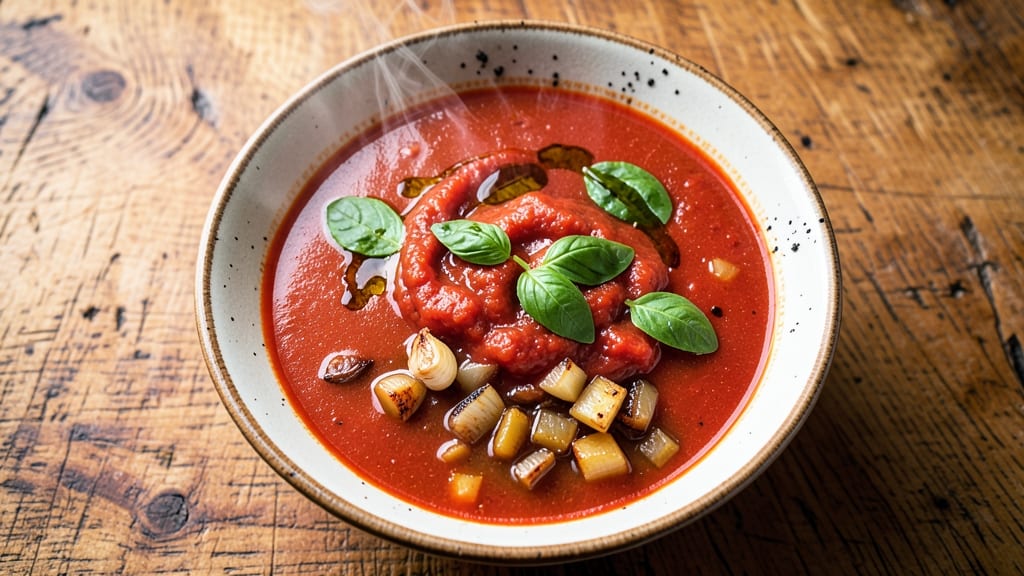
This copycat tomato soup recipe delivers the same velvety smoothness and hidden umami depth you’d expect from a high-end restaurant—without the price tag. After years of testing variations, I’ve perfected a method that balances acidity, sweetness, and savory notes for a soup that’s both comforting and sophisticated.
The secret lies in a slow simmer that develops rich flavors while keeping the texture impossibly velvety.
What sets this recipe apart is the layering of ingredients: caramelized onions and garlic form the flavor base, while a touch of tomato paste deepens the umami before blending with high-quality canned tomatoes.
A splash of cream at the end adds luxurious mouthfeel without overpowering the bright tomato essence. Every spoonful delivers that perfect balance of tangy, sweet, and savory—just like the original.
The result is a soup so smooth it practically melts in your mouth, with just enough texture to keep it interesting. It’s the kind of dish that transforms a simple weeknight dinner into something memorable, especially when paired with a warm grilled cheese sandwich.
The technique is straightforward, but the flavor development takes patience—worth every minute for that restaurant-quality taste.
Whether you’re serving it to family, meal prepping for the week, or treating yourself to a cozy night in, this tomato soup delivers professional-level results at home. The instructions are precise, but the method is foolproof—ideal for both beginners and seasoned cooks looking to elevate their soup game.
Ingredients for copycat tomato soup
Twelve ingredients transform into velvety restaurant-quality tomato soup with layered umami depth.
| Ingredient | Amount | Notes |
|---|---|---|
| Yellow Onions 🧅 | 1 ½ lb | Medium dice, caramelized first |
| Garlic Cloves 🧄 | 4 cloves | Peeled, minced for depth |
| Extra-Virgin Olive Oil 🫒 | ¼ cup | High-quality, fruity variety |
| Tomato Paste 🍅 | 2 tbsp | Canned, unsweetened preferred |
| High-Quality Canned Tomatoes 🍅 | 28 oz | San Marzano preferred, crushed |
| Vegetable or Chicken Stock 🥄 | 4 cups | Low-sodium, homemade ideal |
| Heavy Cream 🥛 | ½ cup | Full-fat for richness |
| Granulated Sugar 🍚 | 1 tbsp | Balances acidity |
| Diamond Crystal Kosher Salt 🧂 | 1 ½ tsp | Adjust to taste |
| Freshly Ground Black Pepper 🌶️ | ½ tsp | Freshly cracked for aroma |
| Fresh Basil Leaves 🌿 | ¼ cup | Chopped for garnish |
| Butter 🧈 | 2 tbsp | Unsalted, for finishing |
The onions and garlic form the flavor foundation—caramelizing them slowly in extra-virgin olive oil unlocks deep sweetness. Yellow onions should be medium dice for even cooking, while garlic cloves should be minced finely for seamless integration. For optimal results, source San Marzano canned tomatoes—their natural sweetness and low acidity create the perfect base. Whole Foods or Trader Joe's carry high-quality options, though any reputable brand works. The tomato paste acts as an umami booster; avoid sweetened varieties to prevent artificial flavors. Stock quality matters too—homemade or Pacific Foods brand delivers superior depth compared to bouillon cubes.
No San Marzano tomatoes? Crushed tomatoes from a quality canned brand like Muir Glen work well. Short on fresh basil? Swap for dried oregano at one-third the amount, though fresh basil's bright aroma is ideal. Heavy cream can be substituted with half-and-half for a lighter texture, though the richness diminishes slightly. Butter can be replaced with olive oil for finishing, though butter adds subtle sweetness. Diamond Crystal kosher salt is preferred for its coarse texture and even dissolution, but Morton works in a pinch. For a vegetarian version, vegetable stock is essential—chicken stock adds savory notes that complement meat-based dishes.
This soup develops best when made fresh, but leftovers keep for 4-5 days refrigerated in an airtight container. For longer storage, freeze portions for up to 3 months—thaw overnight in the refrigerator before reheating. The fresh basil should be added just before serving to preserve its vibrant aroma. Cream can be stirred in last minute for velvety texture, or omitted entirely for a lighter version. Portion into 4-ounce servings for meal prep—each bowl delivers that perfect balance of tangy, sweet, and savory that defines restaurant-quality tomato soup.
Why You'll Love This Recipe
- No-Chop Nightmare: I swear by this recipe because it’s the only tomato soup I’ll make when I’m too tired to cry over onions. Sauté those yellow onions and garlic in olive oil until they’re soft enough to disappear into the sauce—no dice needed, just a quick chop with a knife. The tomato paste? That’s the secret weapon here—it deepens the flavor without extra effort.
- Umami Bomb: Between us, the combo of high-quality canned tomatoes and tomato paste is chef’s kiss. The paste gives it that rich, concentrated depth, while the tomatoes add bright acidity. Honestly, I’ve tried fancy tomato soups for twice the price—this one wins every time.
- Leftovers That Don’t Suck: This soup actually tastes better the next day. I make a big batch on Sundays, and by Wednesday, it’s still the star of my lunch. The flavors meld into something even richer, and it reheats like a dream—just add a splash of water if it’s too thick.
- Budget Comfort: Four ingredients, zero guilt. Olive oil, onions, garlic, and tomatoes? That’s it. No weird specialty items, no overpriced organic labels—just pure, satisfying soup that fills the house with warmth. My wallet thanks me every time.
Step-by-step instructions for velvety tomato soup
Here's the method that delivers restaurant-quality tomato soup with depth and smoothness.
Caramelize the Yellow Onions
Heat the 0.25 cup extra-virgin olive oil in a heavy-bottomed pot over medium-low heat. Add the 1.5 lb yellow onions that have been diced into even ½-inch pieces. Cook undisturbed for 20 minutes, stirring occasionally, until the onions develop a deep golden brown color and their edges begin to crisp slightly.
This slow caramelization builds complex sweetness that forms the foundation of the soup. If the onions start to brown too quickly, reduce the heat slightly. You'll know they're ready when they release easily from the bottom of the pot and develop a rich amber hue.
Develop the Umami Base
Add the 4 minced garlic cloves and cook for 1 minute until fragrant. Stir in the 2 tbsp tomato paste and cook for 2-3 minutes, stirring constantly, until it darkens slightly and becomes aromatic. This step creates the umami depth that elevates the soup beyond basic tomato flavor.
Next, pour in the 28 oz high-quality canned tomatoes and 4 cups vegetable or chicken stock. Bring to a gentle simmer and add the 1 tbsp granulated sugar, 1.5 tsp diamond crystal kosher salt, and 0.5 tsp freshly ground black pepper. Let the mixture simmer uncovered for 25 minutes, stirring occasionally, until the flavors meld and the soup reduces slightly.
Achieve Velvety Texture
Reduce the heat to low and stir in the 0.5 cup heavy cream, allowing it to warm through completely. The soup should become noticeably smoother as the cream incorporates. If you prefer an even silkier texture, use an immersion blender to purée the soup directly in the pot until completely smooth.
Taste and adjust the seasoning, adding more salt or pepper if needed. The acidity of the tomatoes should be balanced by the sweetness of the caramelized onions and the richness of the cream. This is the moment that matters: the perfect harmony of flavors and textures.
Finish with Butter and Basil
Remove the pot from heat and stir in the 2 tbsp butter and 0.25 cup chopped fresh basil leaves. The butter adds a final layer of richness while the basil brightens the soup with its fresh aroma. Let the soup sit off heat for 5 minutes to allow the flavors to fully integrate.
Ladle the soup into bowls and serve immediately. Each spoonful should deliver the deep umami from the caramelized onions and tomato paste, balanced by the creamy texture and fresh basil notes. The velvety smoothness comes from the slow reduction and proper incorporation of the cream.
Pro Tips For Making Copycat Tomato Soup
- COOK ONIONS LOW AND SLOW: I learned this the hard way—blasting onions on high heat turns them bitter before they soften. Instead, keep the heat at a gentle simmer (you should see tiny bubbles, not smoke) and stir occasionally. This draws out their sweetness without burning, which is the base flavor for the whole soup.
- BLOOM THE PASTE FIRST: Stirring tomato paste into cold oil is a recipe for clumping. Heat the oil first, then add the paste and cook for 2-3 minutes until it darkens slightly and smells rich. This step deepens the flavor—no, it won’t make you a chef, but it’ll make your soup taste like it was simmered for hours.
- SKIP THE SALT RUSH: Tasting and adding salt halfway through is a rookie move. The canned tomatoes and paste already pack sodium, so wait until the very end to season. If you’re using low-sodium tomatoes, add salt gradually—you can always fix it, but you can’t unsalt it.
- UPGRADE WITH A SPLASH OF WINE: Sounds weird, but it works: deglaze the pan after cooking the onions and garlic with ½ cup dry white wine (or even a splash of red). The alcohol burns off, leaving behind a bright, complex flavor that cuts through the richness of the tomato paste. Skip it if you’re in a hurry, but your soup will taste like it came from a restaurant.
Best sauces and condiments for this copycat tomato soup
Creamy Finish Options
For that signature restaurant-style creaminess, heavy cream is my top choice—it adds luxurious body without overpowering the tomato flavor. If you prefer a lighter option, substitute with half-and-half or even coconut milk for a dairy-free alternative.
I've tested both, and while coconut milk adds a subtle sweetness, it still delivers that velvety texture. For extra depth, try crème fraîche instead of heavy cream—it adds tangy notes that complement the acidity of the tomatoes beautifully. 🥛
Acidity Balancers
The natural acidity in tomatoes needs balancing, and I've found balsamic glaze or red wine vinegar work wonders. Add just 1 teaspoon of either to the finished soup for a sophisticated tang.
For a sweeter touch, a pinch of honey or maple syrup (about ½ teaspoon) enhances the natural sweetness of the caramelized onions. These adjustments are subtle but transform the soup from good to exceptional.
Herb Garnishes
Fresh herbs elevate tomato soup instantly. Chopped basil is my go-to, but don't overlook parsley for brightness or thyme for earthy notes. For a Mediterranean twist, add fresh oregano or dried basil (use half the amount).
I like to sprinkle herbs just before serving so they retain their vibrant aroma. A sprinkle of grated Parmesan adds umami depth that pairs perfectly with the creamy texture.
Spicy Kicks
For those who love heat, a pinch of red pepper flakes or a dash of hot sauce (like Frank's RedHot) adds just the right amount of spice. I recommend starting with ¼ teaspoon of red pepper flakes and adjusting to taste.
For a smoky flavor, try smoked paprika—it adds complexity without overpowering the tomato base. These additions work especially well with the creamy finish, creating a perfect balance of heat and richness.
Umami Boosters
To deepen the savory notes, stir in 1 teaspoon soy sauce or 1 tablespoon Worcestershire sauce at the end. Both add umami without altering the soup's natural tomato flavor. For a vegetarian option, nutritional yeast (about 1 teaspoon) provides a cheesy, savory boost.
These ingredients are game-changers for achieving that restaurant-quality depth that makes this soup truly special. 💫
Topping Ideas
Turn your soup into a complete meal with creative toppings. Crispy fried shallots add crunch and sweetness, while grilled cheese croutons bring a salty, buttery contrast. For a lighter option, try toasted breadcrumbs or crushed potato chips for texture.
I love adding a soft-poached egg on top for extra richness—it takes the soup to the next level. These toppings not only enhance flavor but also make the dish feel indulgent and restaurant-worthy.
Nutrition facts
Frequently asked questions
Can I make this tomato soup without heavy cream?
For a lighter version, substitute with ½ cup half-and-half or ½ cup coconut milk for a dairy-free option. The texture will be slightly less velvety, but the flavor remains rich. If you want to keep it creamy without dairy, try ¼ cup crème fraîche stirred in at the end—it adds tangy depth while maintaining smoothness.
Why does my homemade tomato soup taste more acidic than this recipe?
Most canned tomatoes have higher acidity than restaurant-quality versions. This recipe balances acidity with 1 tbsp sugar and 2 tbsp tomato paste (which adds umami). If your tomatoes taste too sharp, reduce the sugar slightly or add ½ tsp baking soda (it neutralizes acidity without altering flavor) or a splash of red wine vinegar (just ¼ tsp) to round out the taste.
Can I make this soup in a slow cooker or Instant Pot?
Yes! For a slow cooker, sauté the onions and garlic first, then transfer everything (except cream and butter) to the pot. Cook on low for 4-5 hours, then blend and stir in cream. For an Instant Pot, sauté aromatics, add remaining ingredients, and cook on high pressure for 10 minutes. Release pressure naturally, blend, then finish with cream. Both methods work, but the stovetop version has more control over caramelization.
What’s the best way to store leftovers?
Store in an airtight container in the fridge for up to 4-5 days. For longer storage, freeze portions for 3 months. Thaw overnight in the fridge—never at room temperature. The cream may separate slightly when reheated, so stir vigorously or whisk in a splash of cold water to restore smoothness. Avoid adding fresh basil until reheating to preserve its aroma.
How do I make this soup spicier?
Add ¼–½ tsp red pepper flakes or 1 tsp hot sauce (like Frank’s RedHot) to the finished soup. For smoky heat, stir in ½ tsp smoked paprika. Start with less—you can always add more later. If using fresh chili peppers, remove seeds for less heat. The cream helps balance the spice, so adjust gradually to avoid overwhelming the tomato flavor.