
Soups & Stews
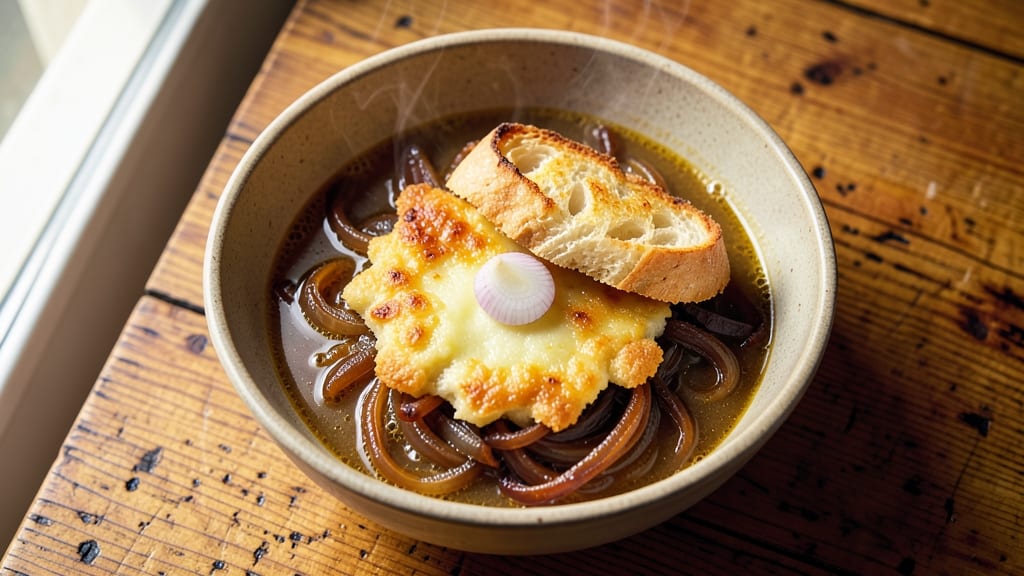
Emeril Lagasse’s French onion soup transforms humble ingredients into a restaurant-worthy masterpiece with its crispy breadcrumb topping and rich, cheesy depth. The secret lies in slow-cooking onions until they’re golden and caramelized, building layers of sweetness that elevate every spoonful.
This isn’t just soup—it’s a comforting experience that feels like a hug on a chilly evening.
What makes this recipe special is the precision in caramelizing onions and balancing flavors with a robust beef broth. The bread topping, toasted with melted Gruyère, creates that signature crispy contrast that makes French onion soup unforgettable.
It’s a dish that rewards patience, with each step—from browning onions to assembling the soup—contributing to the final, decadent result.
You’ll end up with a bowl of soup so rich and aromatic, it feels indulgent yet satisfying. The caramelized onions mingle with the cheesy, toasted bread, creating a perfect harmony of textures and flavors.
This is the kind of dish that turns a simple meal into a memorable experience, perfect for cozy nights or entertaining.
Serve it with a crisp white wine or a side salad to complete the meal. The technique is foolproof once you master the caramelization and toasting steps—every bite will be a testament to why this is a classic.
Ingredients for emeril french onion soup
Precision caramelized onions and rich beef broth form the soul of Emeril's French onion soup.
| Ingredient | Amount | Notes |
|---|---|---|
| Yellow Onions 🧅 | 4 large | Peeled and thinly sliced |
| Unsalted Butter 🧈 | ½ cup | Cold cut into small pieces |
| Beef Broth 💧 | 6 cups | Homemade or high-quality store-bought |
| Dry White Wine 🍷 | ½ cup | Sauvignon Blanc preferred |
| Garlic Cloves 🧄 | 4 cloves | Minced finely |
| Baguette 🍞 | 1 whole | Stale or lightly toasted |
| Gruyère Cheese 🧀 | 1 cup | Freshly grated, high-quality |
| Parmesan Cheese 🧀 | ½ cup | Freshly grated |
| Fresh Thyme 🌿 | 2 sprigs | Leaves only, finely chopped |
| Salt 🧂 | 2 tsp | Diamond Crystal kosher |
| Black Pepper 🌶️ | 1 tsp | Freshly ground |
| Olive Oil 🫒 | 2 tbsp | For finishing |
| Bay Leaves 🍃 | 2 whole | For broth infusion |
The onions are the foundation—4 large yellow onions should be your starting point. Whole Foods or Trader Joe's carry the sweetest, most flavorful varieties, but any yellow onion will work if it's fresh and firm. Emeril's technique requires patience: slow-cooking them until they're deep golden and caramelized transforms their natural sweetness into the soup's signature depth. For best results, use a heavy-bottomed pot to prevent burning, and don't rush this step. The butter should be cold and cubed to prevent immediate melting, allowing proper browning of the onions before the wine and broth are added. This creates the Maillard reaction that builds complex flavors.
No white wine? Dry vermouth or additional beef broth works equally well—just ensure it's dry to prevent a flat flavor. Gruyère is non-negotiable for the topping; its nutty, melty character is essential. Whole Foods or specialty cheese shops carry the best quality, but avoid pre-shredded—it lacks the freshness and meltability of freshly grated. The baguette should be stale or lightly toasted to achieve the perfect crispy texture when toasted under the broiler. For the broth, homemade or high-end store-bought makes a noticeable difference—avoid low-sodium versions unless you're adding extra salt later. Fresh thyme and bay leaves can be swapped for dried at one-third the amount, but fresh imparts a brighter, more aromatic quality.
Store the caramelized onions in the refrigerator for up to 3 days in an airtight container, covered with a thin layer of broth to preserve their moisture. The bread topping should be assembled just before baking to maintain crispiness. This soup reheats beautifully—simmer gently on the stove or warm in the microwave, then broil briefly to restore the crispy topping. For make-ahead convenience, assemble the soup (without toasting the bread) and refrigerate for up to 2 days, or freeze for 3 months. The flavors deepen overnight, making it even more delicious the next day.
Why You'll Love This Recipe
- One-Pot Magic: I swear by this recipe because it’s basically hands-off after the initial chop. Slice those onions, melt the butter, and let the wine and broth do the heavy lifting while you stir twice—maybe three times if you’re feeling generous.
- Caramelized Gold: That slow cook of onions until they’re deep amber? It’s where this soup gets its soul. The butter and garlic at the end? Pure flavor payoff—rich, sweet, and just a little sharp, like a hug from Emeril himself.
- Weeknight to Dinner Party: Same soup, different vibes. Serve it bubbling in mugs for a lazy Tuesday, or top those gratinéed slices of baguette for a crowd. The wine in the broth makes it feel fancy without the fuss.
- Budget-Friendly Luxury: Onions and broth won’t break the bank, but the result? Feels like a bistro dish. Leftovers reheat beautifully—just add a splash of water and a sprinkle of cheese to revive that melty magic. My wallet and taste buds win.
Step-by-step instructions for Emeril's French onion soup
Master this classic with Emeril's signature techniques for perfect caramelization and golden crust.
Develop Deep Onion Fond with Butter
Heat a large Dutch oven over medium-low heat. Add the cold, cubed unsalted butter and let it melt completely, swirling occasionally until it foams. This gradual melt prevents burning and creates an ideal base for caramelization.
Add the peeled, thinly sliced yellow onions and stir gently to coat evenly in the butter. Reduce heat to low and cook uncovered for 45 minutes, stirring every 10 minutes. The onions should transform from pale to deep golden brown, eventually forming a rich, jammy fond at the bottom of the pot. This slow cooking process is critical—it develops the complex, sweet flavors that define French onion soup.
After 45 minutes, increase heat to medium and add the minced garlic cloves and finely chopped fresh thyme leaves. Cook for 2 minutes until fragrant, being careful not to let the garlic burn. This aromatic boost elevates the onion's depth without overpowering it.
Deglaze and Build the Broth
Pour in the dry white wine and scrape up all the browned bits from the bottom of the pot using a wooden spoon. This deglazing step captures all the concentrated onion flavor that would otherwise be lost. Let the wine simmer for 3-4 minutes until reduced by half, allowing its acidity to cut through the richness of the onions.
Add the beef broth and bring to a gentle simmer. Stir in the 2 whole bay leaves and season with 1 teaspoon of salt and ½ teaspoon of black pepper. The broth should cover the onions by about 1 inch. Simmer uncovered for 30 minutes to allow the flavors to meld completely. Here's the thing—don't rush this step. The longer the broth simmers, the more complex the onion flavor becomes.
Taste the broth and adjust seasoning if needed. You want a balance of sweetness from the caramelized onions and savory depth from the beef broth. The soup should be rich but not overpowering, with the wine adding a subtle acidity that brightens the dish.
Prepare and Toast the Baguette Slices
While the soup simmers, slice the whole baguette into ½-inch thick rounds. You'll need about 16 slices total for 4 servings. Brush both sides of each slice lightly with olive oil and place them on a baking sheet. Toast in a preheated 375°F oven for 8-10 minutes until golden brown and crisp.
Here's where precision matters: the bread should be crisp enough to hold its shape when topped with cheese but not so hard it breaks easily. Real talk—this is the moment that makes or breaks the crispy topping everyone loves. If you're short on time, you can broil the slices for 2-3 minutes at the end, watching closely to prevent burning.
Keep the toasted slices warm while you prepare the final assembly. The residual heat will help them stay crispy when you add the cheese later.
Assemble and Melt the Cheese Topping
Preheat your broiler to high. Working quickly, divide the onion soup evenly among 4 oven-safe bowls or ramekins. Place 4 toasted baguette slices on top of each bowl, slightly overlapping if needed to cover the entire surface.
In a small bowl, combine the freshly grated gruyère cheese and parmesan cheese. Sprinkle half of this mixture evenly over each bread topping. The cheese should be distributed in an even layer—this ensures a consistent melt and golden crust when broiled. Here's the critical part: don't skip the parmesan. It adds a salty, umami depth that complements the rich gruyère.
Place the bowls on a baking sheet and broil for 3-5 minutes until the cheese is fully melted, bubbly, and has developed a deep golden-brown crust. Watch closely during the last minute to prevent burning. The top should be crispy enough to hold its shape when you run a knife through it, but still soft enough to pull apart easily.
Finish with Olive Oil and Serve Immediately
Remove the bowls from the broiler and immediately drizzle each serving with ½ teaspoon of olive oil. This finishing touch adds a subtle brightness that cuts through the richness of the cheese and enhances the overall flavor profile. The oil should be distributed evenly across the cheese topping, creating a glossy sheen that signals it's ready to eat.
Serve the soup immediately while the bread topping is still crispy and the cheese is molten. Each bite should deliver a perfect balance of textures—creamy soup, crispy bread, and gooey cheese—along with layers of caramelized onion flavor. For best results, serve with a side of a simple green salad to complement the richness of the soup.
Pro Tips For Making Emeril French Onion Soup
- Sweat, Don’t Burn: Onions should caramelize, not char. Start with medium heat and let them cook slowly—about 20 minutes—until they’re deep golden and syrupy. I used to rush this, and the soup always tasted bitter afterward.
- Use Real Wine: That cheap cooking wine? Skip it. A $10 dry white wine (like Sauvignon Blanc) adds real depth. Deglaze the pan with it after the onions cook—let it bubble for 30 seconds to lift those flavors.
- Salt the Butter: Unsalted butter needs salt. Toss in a pinch (½ tsp) as you melt it, or the broth will taste bland. Trust me, I’ve made this mistake—salting later doesn’t fix it.
- Broth Strain Optional: Emeril’s recipe calls for strained broth, but I often skip it if I’m in a hurry. Just whisk the soup vigorously before baking—it’ll look rustic, but the flavor stays rich. (Your future self won’t notice the difference.)
Wine and beer pairings for this recipe
White Wine Harmony
A crisp, dry Sauvignon Blanc from the Loire Valley is my go-to pairing for Emeril’s French onion soup. The wine’s bright acidity and citrus notes cut through the richness of the caramelized onions and Gruyère cheese, cleansing your palate with each spoonful.
Look for a bottle with 12-13% ABV—just enough body to stand up to the soup’s depth without overpowering it. I love Oyster Bay Sauvignon Blanc for its affordability and consistent quality. 🍷
Chardonnay Balance
For a richer pairing, opt for an unoaked Chardonnay with subtle vanilla undertones. The wine’s creamy texture mirrors the soup’s cheesy topping while its acidity balances the caramelized onions. A California Chardonnay like La Crema or a Burgundy Chardonnay from the Mâconnais region both work beautifully, offering complexity without heaviness.
Serve slightly chilled at 50-52°F to enhance its refreshing qualities.
Beer Pairings
A light Belgian Witbier like Hoegaarden or Stella Artois complements the soup’s crispy bread topping and cheesy richness. The beer’s coriander and citrus notes provide a refreshing contrast to the deep, savory flavors of the caramelized onions.
For a bolder option, try a German Helles Lager—its malty sweetness and light body make it an unexpected but delightful match. Keep the beer well-chilled at 40-45°F for the best experience.
Red Wine Exception
While white wines and beers are the classic choices, a light Pinot Noir from Oregon or Burgundy can work surprisingly well. The wine’s delicate fruitiness and earthy undertones pair beautifully with the soup’s umami-rich broth and Gruyère cheese.
Choose a Pinot Noir with 12.5-13.5% ABV and serve at 60-62°F to avoid overwhelming the dish. This pairing is perfect for those who prefer red wine but want to avoid clashing with the soup’s flavors.
Non-Alcoholic Options
For a non-alcoholic pairing, try a sparkling apple cider like Martinelli’s or a ginger beer such as Feather’s. The effervescence and slight tartness of the cider cleanse the palate, while the ginger beer’s spicy kick adds a refreshing contrast to the soup’s richness.
Serve both chilled at 40-45°F for the best experience. These options are especially great for family-friendly gatherings or when you prefer to avoid alcohol.
Nutrition facts
Frequently asked questions
Why does Emeril's recipe require such slow caramelization?
The 45-minute slow cook transforms onions into sweet, jammy fond that builds deep flavor. This process creates the Maillard reaction, developing complex caramelized notes that make the soup taste restaurant-quality. Rushing this step results in bitter onions instead of sweet, rich depth.
Can I make this soup ahead of time?
Yes! Assemble the soup (without topping) and refrigerate for 2 days or freeze for 3 months. Reheat gently on the stove, then broil the bread topping fresh for maximum crispiness. The flavors actually improve overnight as the onions meld with the broth.
What if my bread topping isn't crispy?
Toast slices longer at 375°F for 10-12 minutes or broil 2-3 minutes after adding cheese. Use stale baguette—fresh bread absorbs too much moisture. For extra crunch, sprinkle 1 tablespoon crushed cornflakes on top before broiling.
Can I substitute Gruyère with another cheese?
Gruyère's nutty, melty character is ideal, but Comté or Emmental work in a pinch. Avoid pre-shredded—it contains anti-caking agents that prevent proper melting. For a sharper flavor, mix with ½ cup sharp cheddar, but the texture won't be as creamy.
How do I make this vegetarian?
Replace beef broth with 6 cups vegetable broth and add 1 cup mushrooms (sautéed with onions) for umami depth. Use 1 tablespoon soy sauce or mushroom powder to enhance savory notes. The caramelization technique remains identical—just skip the meaty broth.