
Soups & Stews
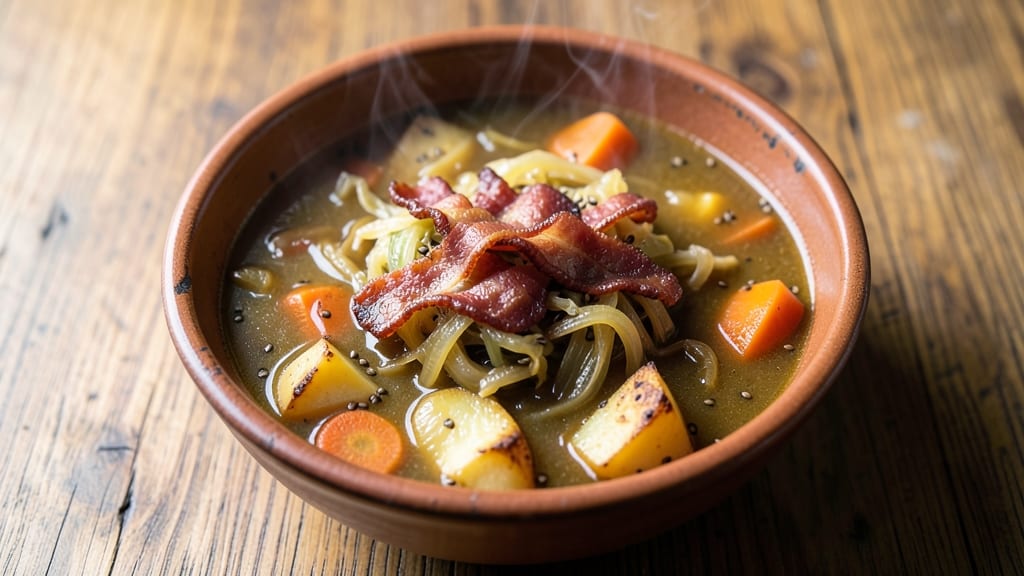
This German sauerkraut soup recipe delivers the hearty comfort of a traditional German kitchen, where smoky bacon and earthy caraway transform simple ingredients into a bowl of soul-warming goodness. The secret lies in slow simmering—allowing flavors to meld while keeping the sauerkraut's tangy crunch intact.
I first discovered this version while traveling through Bavaria, where every home seemed to have their own variation.
What makes this soup truly special is the balance of textures and flavors: tender smoked sausage or bacon adds richness, while potatoes create a satisfying heartiness. Caraway seeds bring that unmistakable German warmth, and a touch of apple cider vinegar brightens the fermented tang of the sauerkraut.
The broth develops depth as it simmers, creating a foundation that holds all the ingredients together.
By the time you serve this soup, you'll have a steaming bowl filled with perfectly cooked potatoes, tender meat, and sauerkraut that's still slightly crisp. The aroma alone will fill your kitchen with comfort, while the first spoonful delivers that perfect harmony of smoky, tangy, and savory notes.
This is the kind of recipe that feels like a hug in a bowl—ideal for chilly evenings or when you need a taste of home.
For extra depth, I recommend adding a sprinkle of fresh parsley before serving, and a side of crusty bread to soak up every last drop. The leftovers actually taste better the next day as the flavors continue to develop. Let's bring some German comfort to your table.
Ingredients for german sauerkraut soup
Simple, hearty ingredients that transform into a bowl of German comfort.
| Ingredient | Amount | Notes |
|---|---|---|
| Smoked Bacon 🥓 | 8 oz | Thick-cut, chopped into small pieces |
| Yellow Onion 🧅 | 1 whole | Medium size, diced |
| Carrots 🥕 | 3 medium | Peeled, sliced into thin rounds |
| Russet Potatoes 🥔 | 2 lb | Peeled, cut into 1-inch cubes |
| Sauerkraut 🥬 | 1 lb | Drained, rinsed if too sour |
| Fresh Caraway Seeds 🌿 | 1 tbsp | Lightly toasted for aroma |
| Apple Cider Vinegar 🍎 | 2 tbsp | For brightness |
| Chicken Broth 💧 | 6 cups | Low-sodium preferred |
| Fresh Parsley 🌿 | ¼ cup | Chopped, for garnish |
| Bay Leaf 🍃 | 2 whole | Removed before serving |
| Salt 🧂 | 1 ½ tsp | Adjust to taste |
| Black Pepper 🌶️ | ½ tsp | Freshly ground |
| Butter 🧈 | 2 tbsp | Unsalted, for richness |
The bacon is where the smoky magic starts. Thick-cut from Costco or your local butcher gives the best flavor—those thin pre-packaged slices just don't cut it. Look for bacon with good marbling, not too lean. The sauerkraut should be vibrant, not brown or slimy—Reinhart or Bubbier's are my go-tos at the grocery store. Caraway seeds are non-negotiable for that authentic German warmth. If you can't find fresh seeds, Penzeys or bulk spice sections usually carry them. The potatoes need to be starchy—Russets or Yukon Golds hold up best during simmering.
No fresh caraway seeds? Ground caraway at half the amount works in a pinch, but it's not the same. Short on bacon? Smoked sausage or thick-cut ham adds similar depth. The apple cider vinegar can be swapped for white vinegar or lemon juice, but it loses that subtle apple note. If your sauerkraut tastes too sour, rinse it well before adding—don't skip this step or the soup will turn vinegary. Prefer low-carb? Swap half the potatoes for cauliflower florets—they'll soak up all the flavor.
This soup tastes even better the next day—make a double batch and freeze portions. Store leftovers in the fridge for 5-6 days, or freeze for up to 3 months. I like to portion mine into containers with a little extra broth on top—prevents drying out. The parsley garnish is optional but adds freshness. Serve with crusty sourdough or rye bread—perfect for soaking up every last drop of that smoky, tangy broth.
Why You'll Love This Recipe
- One-Pot Magic: I swear by this recipe when I’m too tired to wash a million dishes. The bacon renders right in the pot, the potatoes soften without peeling, and the sauerkraut’s tang cuts through everything—no separate pots, no stress.
- Smoky Tangy Bomb: That first bite? Crispy bacon bits floating in a soup where the sauerkraut’s sharpness plays off the sweet carrots and creamy potatoes. Honestly, the onion caramelizes just enough to make it feel like a restaurant dish, but I’m the one stirring the pot.
- Leftovers That Beg for Seconds: Between us, this soup only gets better after a day in the fridge. The flavors meld, the potatoes soak up all the smoky goodness, and I’ve been known to reheat it twice in a row—no shame. Pack it for lunch or freeze portions; it’s that reliable.
- Budget-Friendly Crowd-Pleaser: I make this when my college-aged kids bring friends over. A pound of bacon and a few cheap veggies stretch to feed six, and the sauerkraut adds that "I actually cooked" vibe without breaking the bank. Plus, it’s the kind of dish where everyone picks at the pot, not the salad.
Step-by-step instructions for German sauerkraut soup
Here's how to create a hearty, comforting bowl that balances smoky bacon with tangy sauerkraut.
Cook the Bacon and Sauté the Vegetables
In a large Dutch oven, cook the 8 oz smoked bacon over medium heat until crispy, about 8-10 minutes. Use a slotted spoon to remove the bacon and set it aside on paper towels, leaving the rendered fat in the pot. This bacon fat becomes the flavor base for your soup.
In the same pot, add 2 tbsp butter and swirl to coat the bottom. Add the 1 whole yellow onion and 3 medium carrots, stirring frequently for 5-6 minutes until the onions soften and the carrots begin to caramelize. The onions should turn translucent, and the carrots should develop a slight golden hue. Here's the thing—don't rush this step. Properly caramelized vegetables create the foundation for rich flavor in your soup.
Build the Soup Base with Potatoes and Sauerkraut
Add the 2 lb russet potatoes (cut into 1-inch cubes) to the pot and stir to coat with the caramelized vegetables. Pour in the 6 cups chicken broth, scraping up any browned bits from the bottom of the pot. Bring the mixture to a boil, then reduce heat to medium-low and simmer for 15 minutes until the potatoes begin to soften but aren't fully cooked.
Next, stir in the 1 lb sauerkraut (drained and rinsed if too sour) and 2 tbsp apple cider vinegar. Add the 2 whole bay leaves, 1.5 tsp salt, and 0.5 tsp black pepper. The vinegar brightens the tangy flavor of the sauerkraut while balancing the richness of the bacon. Let the soup simmer for another 10 minutes, stirring occasionally. You'll notice the sauerkraut softens and releases its distinctive flavor into the broth.
Toast the Caraway Seeds and Finish the Soup
While the soup simmers, toast the 1 tbsp fresh caraway seeds in a dry skillet over low heat for 1-2 minutes until fragrant. This step unlocks the caraway's warm, earthy aroma that's essential to authentic German flavor. Immediately add the toasted seeds to the soup and stir well.
Continue simmering the soup for an additional 10-15 minutes until the potatoes are fork-tender and the flavors have melded together. The soup should have a thick, hearty consistency. If it's too thick, you can add a splash of water or broth to reach your preferred texture. Taste and adjust seasoning if needed—this is where you fine-tune the balance between smoky, tangy, and savory flavors.
Garnish and Serve with Confidence
Remove the 2 whole bay leaves from the soup. Ladle the hot soup into bowls and garnish each serving with the crispy bacon pieces and 0.25 cup chopped fresh parsley. The parsley adds a fresh contrast to the rich, smoky flavors while making the soup look inviting. Serve immediately while hot—this soup tastes best straight from the pot, with all its comforting aromas wafting through the kitchen.
Real talk: The first time you make this, you might worry about balancing all the flavors. But trust the process—the smoky bacon, tangy sauerkraut, and sweet potatoes create a perfect harmony. Each spoonful delivers that cozy, homey feeling that makes this soup so special. Enjoy it with crusty bread to soak up every last drop of that flavorful broth.
Pro Tips For Making German Sauerkraut Soup
- CRISP THE BACON LOW: I learned this the hard way—cooking bacon on high heat turns it rubbery and smoky. Instead, keep the pan on medium-low and let it render slowly. You want crispy edges and runny fat, not burnt bits that’ll make your soup taste bitter.
- RINSE THE SAUERKRAUT: Sauerkraut’s tang is good, but too much acid can overpower the soup. Drain and rinse it under cold water for 30 seconds—just enough to mellow the sourness without losing its flavor. (Yes, even if you’re impatient like me.)
- CUT POTATOES EVENLY: Uneven potato chunks mean some will turn to mush while others stay hard. Aim for 1-inch cubes—big enough to hold shape but small enough to cook through. I skip this step sometimes, and the soup ends up gummy.
- SIMMER LIDLESS AFTER 20 MINUTES: The first 20 minutes with the lid on builds flavor, but after that, uncovered simmering lets the liquid reduce and thicken naturally. Skimp on this, and you’ll end up with a watery mess. (Your future self will thank you.)
Regional styles of this dish
Bavarian Heartiness
In Bavaria, this soup is often called "Sauerkraut Suppe" and serves as a staple during cold winters. The key Bavarian touch is using thick-cut smoked sausage instead of bacon—try Bratwurst or Weisswurst for authentic flavor.
Locals add a splash of dark beer (about ½ cup) to the broth for depth, though I prefer chicken broth for a lighter base. The Bavarian version also includes a handful of fresh thyme tied into a bundle with the bay leaves for extra herbal notes. 🌟
Northern German Simplicity
Up north in regions like Schleswig-Holstein, the soup leans simpler with more sauerkraut (up to 1.5 lbs) and less meat. They often swap bacon for smoked pork shoulder (about 1 cup diced) and add a splash of apple juice instead of vinegar to soften the tang.
The potatoes are sometimes replaced with rutabagas for a sweeter, earthier flavor. This version is lighter but still deeply comforting—perfect for a quick weeknight meal.
Silesian Smoked Flavors
In Silesia (now part of Poland but historically German), this soup incorporates smoked kielbasa and a touch of juniper berries (about 5 crushed) for a piney depth.
The broth is often made with beef instead of chicken, and the soup is finished with a sprinkle of crumbled hard cheese (like Tilsiter) before serving.
This heartier version is a Sunday supper classic in the region, where it’s served with dark rye bread to soak up every bit of smoky goodness. 🔥
Modern Twists
For a contemporary take, try swapping half the sauerkraut for fermented green beans (like kimchi-style) and adding a dash of fish sauce for umami. Another fun variation is a spicy kick—stir in 1 tsp smoked paprika and ½ tsp cayenne with the caraway seeds.
Vegetarians can replace bacon with smoked tofu or mushrooms (like shiitake) for a meaty texture. These tweaks keep the soul of the dish while making it fresh for modern palates.
Regional Bread Pairings
Bavarian cooks serve this soup with pretzel bread—the salty crust cuts through the richness beautifully. In northern Germany, pumpernickel is the go-to, while Silesian households reach for dark rye with caraway seeds.
For a lighter option, try focaccia with rosemary. The bread isn’t just a side—it’s part of the experience, soaking up the last drops of that smoky, tangy broth. 🥖
Nutrition facts
Frequently asked questions
Can I make this German-style fermented cabbage soup without bacon?
For a vegetarian version, swap the bacon for smoked tofu or shiitake mushrooms (about 8 oz) to maintain that smoky depth. You can also use thick-cut ham or smoked sausage if you prefer meat but want variety. The key is keeping the fat content to help emulsify the broth and carry the flavors.
Why does my sauerkraut soup taste too sour?
Overly sour sauerkraut happens when the tang isn't balanced by sweet or rich elements. First, check if you rinsed the sauerkraut—if it's too acidic, drain and rinse it thoroughly before adding. Then, adjust with 1 tbsp apple juice or 1 tsp sugar/honey while simmering. The bacon fat and potatoes also help mellow the flavor—don't skip those!
How long can I store leftovers, and can I freeze this soup?
This hearty soup keeps well in the fridge for 5-6 days in an airtight container. For freezing, portion into containers with a little extra broth on top to prevent drying. It stays fresh for up to 3 months. The flavors actually deepen overnight, so reheat gently on the stove or microwave until steaming hot.
What's the secret to keeping the potatoes tender but not mushy?
Cut the potatoes into even 1-inch cubes and add them to the pot when the broth comes to a boil. Simmer at a gentle medium-low heat—never a rolling boil—until they're fork-tender (15-20 minutes). The key is patience: overcooking turns them to mush, while proper timing keeps them firm and flavorful.
Can I make this soup in a slow cooker?
Yes! Brown the bacon and sauté the onions/carrots first, then transfer everything to the slow cooker. Add all ingredients except the caraway seeds (toast them fresh before serving) and cook on low for 6-7 hours or high for 3-4 hours. The slow cooker enhances the flavors beautifully, making it perfect for busy days. Just check the potatoes for doneness at the end.