
Soups & Stews
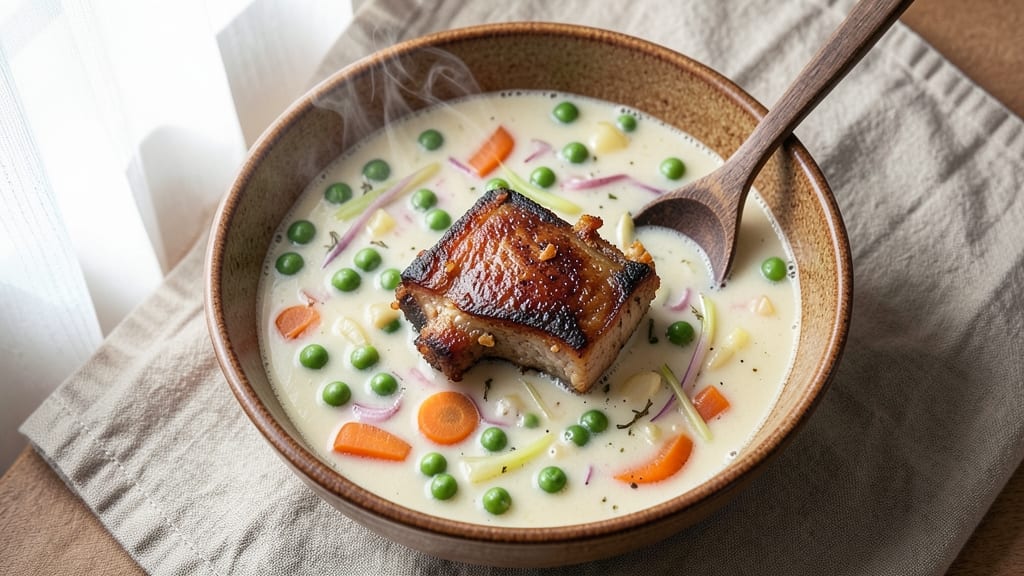
This ham hock and pea soup delivers the kind of deep, savory richness that transforms a simple meal into a comforting centerpiece. The slow-roasted ham hock infuses the broth with smoky, umami depth while tender peas create a hearty texture that satisfies even the hungriest appetites.
I perfected this recipe after years of testing—balancing traditional techniques with modern efficiency for restaurant-quality results at home.
The secret lies in two key steps: first, browning the ham hock to develop its natural flavors before simmering, and second, using fresh or frozen peas that soften just enough to release their natural sweetness without losing texture.
This method creates a broth so flavorful it becomes the star, while the ham hock adds protein and richness that elevates the dish beyond ordinary vegetable soups.
By the time you ladle this soup into bowls, you'll have a steaming pot of golden broth studded with tender peas, shards of crispy ham, and just enough herbs to brighten the depth.
The aroma alone will have everyone gathering at the table—this is the kind of soup that tastes even better the next day, making it perfect for meal prep or cozy family dinners.
Serve with crusty bread to soak up every last drop of that flavorful broth, or pair with a simple green salad for balance. The recipe scales easily, so you can make a single serving for a quiet night in or double the batch for feeding a crowd.
Let's get started on this soul-warming classic.
Ingredients for ham hock pea soup
Pantry staples plus one special ingredient—ham hock—that turns simple veggies into soul-satisfying broth.
| Ingredient | Amount | Notes |
|---|---|---|
| Ham Hock 🍖 | 1 lb | Smoked or unsmoked, skin on |
| Fresh or Frozen Peas 🌱 | 2 cups | Thaw if frozen, no need to peel |
| Yellow Onion 🧅 | 1 whole | Medium size, diced |
| Carrots 🥕 | 3 medium | Peeled, chopped into chunks |
| Garlic Cloves 🧄 | 4 cloves | Peeled, smashed |
| Celery Stalks 🥬 | 3 whole | Trimmed, chopped |
| Bay Leaves 🍃 | 2 whole | Dried, standard size |
| Fresh Thyme 🌿 | 2 sprigs | Or 1 tsp dried thyme |
| Chicken Broth 💧 | 6 cups | Low-sodium preferred |
| Water 💧 | 2 cups | Tap or filtered |
| Tomato Paste 🍅 | 2 tbsp | Smooth, not chunky |
| Apple Cider Vinegar 🍎 | 1 tbsp | For brightness |
| Salt 🧂 | 1 ½ tsp | Kosher or sea salt |
| Black Pepper 🌶️ | ½ tsp | Freshly ground |
| Olive Oil 🫒 | 2 tbsp | For browning ham |
The ham hock is non-negotiable here. Smoked or unsmoked, it needs to be at least 1 lb for enough flavor. Costco or local butcher shops usually carry them—ask for a bone-in piece. If you can't find ham hock, smoked bacon or pork neck bones work in a pinch, but the flavor won't be identical. Look for a piece with some fat marbling; that's where the flavor hides. Fresh or frozen peas both work—just make sure they're sugar snap or English peas, not split peas, for that tender bite.
No fresh thyme? Dried works at half the amount, but fresh is worth hunting down at Trader Joe's or your local market. The carrots can be baby carrots if that's what's in the fridge—no need to peel them. Tomato paste? Trader Joe's squeeze tubes are perfect here—no waste, and they keep forever. Short on chicken broth? Vegetable broth plus 1/2 cup water gets you close. The apple cider vinegar adds brightness—substitute lemon juice if that's what you've got. For the olive oil, any good quality oil works, but avoid the cheap stuff that burns easily.
This soup tastes even better the next day—honestly, the flavors meld overnight. Keeps 5-6 days in the fridge, or 3 months frozen. I always make a double batch because it reheats beautifully. Store in glass jars for best flavor retention. The ham hock can be pre-browned and frozen for up to 3 months too, saving you time on cooking day.
Why You'll Love This Recipe
- One-Pot Magic: I swear by this soup—just toss everything in a pot, simmer, and walk away. The ham hock melts into the broth while you chop veggies (or even skip chopping if you’re using pre-cut carrots). Minimal cleanup, maximum flavor.
- Rich & Smoky Depth: That ham hock? It’s the star. As it simmers, it infuses the broth with a deep, savory richness that pairs perfectly with the sweetness of carrots and the brightness of peas. Honestly, the first spoonful makes me close my eyes.
- Weeknight & Holiday: I make this when I’m too tired for fussing, but it also feels fancy enough for company. Add a crusty bread basket, and suddenly it’s a cozy Sunday dinner—or a hearty starter for a big meal. The peas add freshness no matter the season.
- Budget-Friendly Leftovers: A single ham hock stretches this soup for days, and the veggies stretch even further. Freeze portions for lazy nights, or reheat it with a splash of water—it tastes just as good the third time around. My wallet (and my freezer) thank me.
Step-by-step instructions for ham hock and pea soup
Here's the method that delivers deep, smoky flavor and tender peas every time.
Brown the Ham Hock for Rich Flavor
Heat a large Dutch oven over medium-high heat. Add the 2 tablespoons olive oil and let it get hot but not smoking. Place the 1 lb ham hock in the pot, skin-side down. Let it brown undisturbed for 8-10 minutes until the skin turns a deep golden brown and you smell that delicious meaty aroma.
Here's the thing—this browning step is crucial. It creates the deep, roasted flavor that carries through the entire soup. If it sticks, don't panic—just give it a little time and it'll release. Once browned on one side, flip the ham hock and brown the other side for another 5-7 minutes. Remove it from the pot and set it aside on a plate.
Sauté the Vegetables and Build the Base
In the same Dutch oven, add the diced 1 whole yellow onion, chopped 3 medium carrots, chopped 3 whole celery stalks, and smashed 4 cloves garlic. Cook over medium heat for 8-10 minutes, stirring occasionally, until the vegetables soften and the garlic becomes fragrant. You'll know it's ready when the onions turn translucent and the carrots start to lose their raw edge.
Add the 2 tablespoons tomato paste and stir well to coat the vegetables. Cook for another 2 minutes until it darkens slightly and develops a rich, caramelized flavor. This step forms the flavor foundation of your soup, so don't rush it. The tomato paste adds depth that balances the ham's richness.
Simmer the Soup with Aromatics
Pour in the 6 cups chicken broth and 2 cups water. Add the 2 whole bay leaves, 2 sprigs fresh thyme, 1.5 teaspoons salt, and 0.5 teaspoon black pepper. Bring everything to a gentle boil, then reduce the heat to low and let it simmer uncovered for 30 minutes. This allows the flavors to meld and the vegetables to soften further.
After 30 minutes, add the 2 cups fresh or frozen peas and the 1 tablespoon apple cider vinegar. The vinegar brightens the flavors and cuts through the richness of the ham. Return to a simmer and cook for another 10 minutes, until the peas are tender but still hold their shape. You want them to be bright green and just slightly crisp—overcooking turns them mushy.
Finish with the Ham Hock and Rest
Return the ham hock to the pot and let the soup simmer together for 30-45 minutes, until the meat is fork-tender and easily pulls away from the bone. This is where the magic happens—the ham infuses the broth with its rich, smoky flavor. You'll know it's ready when the meat shreds easily with a fork and the broth has a deep, satisfying color.
Remove the ham hock from the pot and let it cool slightly before shredding the meat off the bone. Discard the bone and any large fat pieces. Stir the shredded ham back into the soup and adjust the seasoning if needed. The soup should be seasoned just right—salty enough to complement the ham but not overpower the other flavors. Serve hot, garnished with a sprinkle of fresh thyme if you like.
Pro Tips For Making Ham Hock Pea Soup
- Brown the Ham First: Skip the slow start—sear the ham hock in a dry pot over medium-high heat for 3-4 minutes per side until deep golden. This isn’t just for flavor; it builds a crust that keeps the meat from falling apart later (yes, even if you’re impatient like me).
- Par-Cook the Carrots: Cut carrots into ½-inch chunks, then boil them for 5 minutes before adding to the soup. They’ll soften faster and release sweetness without turning to mush—no one wants a watery pea stew.
- Don’t Crowd the Pot: If your pot’s full, add the peas in batches. Too much liquid? Simmer uncovered until reduced. I learned this the hard way—soggy peas and a soup that tastes like broth are avoidable.
- Use the Jelly: After removing the ham hock, shred the meat and save the gelatinous bone marrow in the pot. Strain it into the broth—it thickens the soup naturally and adds depth. (Your future self will thank you.)
Serving suggestions for Leftovers
Crusty Bread Pairing
Nothing beats this soup with a warm, crusty loaf for dipping. I reach for a baguette or sourdough from my local bakery—look for one with a crisp exterior and soft interior.
The bread soaks up the rich broth beautifully, and the chewy texture contrasts perfectly with the tender peas. For extra flavor, brush the bread with garlic butter before serving. 🥖
Green Salad Balance
A simple green salad adds freshness to cut through the soup's richness. Toss 4 cups mixed greens (spinach, arugula, romaine) with 2 tbsp olive oil, 1 tbsp apple cider vinegar, and a pinch of salt.
Top with ¼ cup shaved Parmesan and ¼ cup toasted walnuts for crunch. The acidity and crunch make every spoonful of soup even more satisfying.
Garnish Like a Pro
Finish each bowl with a sprinkle of fresh parsley or thyme for brightness. I also like adding a drizzle of high-quality olive oil (like California Extra Virgin) and a pinch of flaky sea salt.
For a smoky touch, top with a few crumbled bacon bits—they mirror the ham's flavor and add visual appeal. The garnishes elevate the dish from homey to restaurant-worthy.
Bread and Butter Plate
Serve this soup in deep, rustic bowls with a side of buttered dinner rolls. I melt 2 tbsp butter with a pinch of salt and brush it on warm rolls. The buttery rolls complement the savory soup perfectly, and the extra butter makes every bite feel indulgent.
This combo is ideal for family dinners or holiday gatherings where hearty flavors are in demand.
Cheese Board Accompaniment
For a more upscale presentation, pair the soup with a small cheese board. Include aged cheddar, Gruyère, and brie—their nutty and creamy flavors complement the soup's depth.
Add cured meats like prosciutto and crusty crackers for variety. The cheese board turns the meal into a full experience, especially for special occasions.
Leftovers Reinvented
Transform leftover soup into pea and ham hock sandwiches the next day. Toast a ciabatta roll, spread with Dijon mustard, and pile high with soup. Top with extra shredded ham and a sprinkle of hot sauce if you like heat.
This is my go-to lunch hack—it’s just as satisfying as the original bowl. 💡
Nutrition facts
Frequently asked questions
Can I substitute ham hock with another meat?
Yes, but the flavor will differ. For a similar rich taste, try smoked bacon (6 slices) or pork neck bones. Unsalted ham or even chicken thighs work in a pinch, but they won't deliver the same deep, smoky umami. If using bacon, cook it first and remove before simmering to avoid excess saltiness.
How do I make this soup in a slow cooker?
Brown the ham hock in a skillet first, then transfer it to your slow cooker. Add all remaining ingredients except peas, and cook on low for 6-7 hours or high for 3-4 hours. Stir in peas during the last 30 minutes to prevent mushiness. The slow cooker method actually enhances the ham's flavor through longer simmering.
Why does my soup taste bland?
Most likely, the ham hock wasn't browned enough or the broth wasn't reduced. Always sear the meat until deep golden brown for maximum flavor. For more depth, reduce the soup uncovered by 15-20 minutes at the end to concentrate the flavors. A splash of apple cider vinegar or extra bay leaf can also brighten the taste.
Can I use canned peas instead of fresh or frozen?
Canned peas will work, but they're less flavorful. If using, drain and rinse them well to remove excess sodium. Add them during the last 10 minutes of cooking to maintain their texture. For best results, stick with fresh or frozen peas—their natural sweetness shines through when cooked properly.
How do I store and reheat leftovers?
Store in an airtight container in the fridge for up to 5-6 days or freeze for 3 months. To reheat, warm on the stove over medium-low heat until bubbling, stirring occasionally. For best texture, add a splash of water or broth if it's too thick. Leftovers actually improve overnight as flavors meld further.