
Soups & Stews
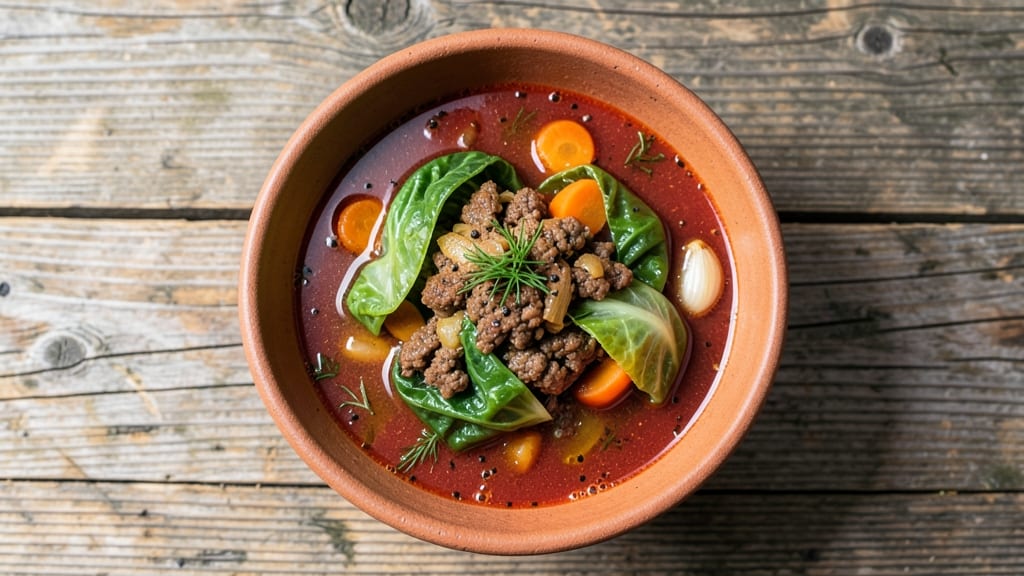
Hungarian stuffed cabbage soup brings the hearty flavors of Eastern Europe to your kitchen in one comforting bowl. This traditional dish transforms tender cabbage leaves into savory parcels filled with seasoned meat or vegetables, simmered in a rich broth until everything melds into perfect harmony.
After years of perfecting this recipe, I've developed a method that delivers restaurant-quality results without requiring advanced skills.
The beauty of this soup lies in its simplicity and depth of flavor. You'll start by preparing the cabbage leaves, then assemble them with a flavorful filling—whether you choose classic ground beef or a vegetarian alternative.
The broth simmers for hours, allowing all the ingredients to develop rich, complex flavors that will fill your home with an inviting aroma. This is the kind of dish that feels like a warm embrace on a chilly day.
What you'll end up with is a steaming bowl of tender cabbage rolls swimming in a savory broth, each bite offering a perfect balance of textures and flavors. The cabbage leaves become tender yet retain their structure, while the filling stays juicy and flavorful.
This soup is hearty enough to satisfy a crowd but simple enough to prepare for a weeknight dinner. The best part? It tastes even better the next day as the flavors continue to meld.
Serve this soup with crusty bread to soak up every last drop of that delicious broth. It's perfect for family gatherings, holiday meals, or any night you crave a comforting, traditional dish. Let's get started on creating this Hungarian classic in your own kitchen.
Ingredients for hungarian stuffed cabbage soup
Sixteen ingredients for a soup that tastes like home. Hearty, comforting, and full of tradition.
| Ingredient | Amount | Notes |
|---|---|---|
| Fresh Cabbage 🥬 | 1 whole | Green or savoy, outer leaves removed |
| Ground Beef 🥩 | 1 ½ lb | 80% lean, finely ground |
| Yellow Onion 🧅 | 1 whole | Medium, finely chopped |
| Garlic Cloves 🧄 | 4 cloves | Fresh, minced |
| Carrots 🥕 | 3 medium | Peeled, finely diced |
| Tomato Paste 🍅 | ½ cup | High quality, no sugar added |
| Beef Broth 💧 | 6 cups | Low-sodium, homemade preferred |
| Red Wine 🍷 | ½ cup | Dry, like Cabernet Sauvignon |
| Bay Leaves 🍃 | 2 whole | Fresh or dried |
| Allspice Berries 🌶️ | ½ tsp | Crushed, or ground allspice |
| Black Peppercorns 🌶️ | 1 tsp | Freshly cracked |
| Salt 🧂 | 1 ½ tsp | Kosher or sea salt |
| White Rice 🍚 | 1 cup | Long-grain, uncooked |
| Sour Cream 🧀 | ¼ cup | Full-fat, for serving |
| Fresh Dill 🌿 | ¼ cup | Chopped, for garnish |
The cabbage is your star—look for firm, heavy heads with vibrant green leaves at Trader Joe's or your local farmers market. The beef should be 80% lean for that perfect balance of flavor and tenderness. I always grab ground beef from the butcher counter—it's fresher than the packaged stuff. For the allspice, Penzeys are your best bet if you want that authentic Eastern European flavor. The bay leaves? Fresh ones have more punch, but dried works in a pinch. Just remember to remove them before serving.
No red wine? Substitute extra beef broth—just add an extra splash of balsamic vinegar for depth. Running low on allspice? Cinnamon and cloves mixed can mimic that warm, earthy note. The tomato paste can be skipped if you're avoiding it, but it adds that rich umami that makes this soup sing. For the rice, jasmine or basmati work wonderfully too—they just need a minute less cooking time. And if you're feeling adventurous, swap the beef for ground turkey or lentils for a lighter version.
This soup gets better with time—2-3 days in the fridge lets the flavors marry perfectly. Freeze portions in airtight containers for up to 3 months. I always make a double batch because it reheats beautifully. Serve with crusty bread to soak up every last drop of that savory broth. The sour cream and fresh dill? Add them just before serving—trust me on this one—they brighten up the whole dish.
Why You'll Love This Recipe
- One-Pot Magic: I swear by this recipe when I’m too tired to scrub pots—just brown the beef, chop the onions and carrots in one go, and let the cabbage leaves fold themselves around the filling. No extra dishes, no fuss, and the flavors meld while you’re doing laundry.
- Meaty Umami Bomb: That ground beef gets seared until it’s crispy at the edges, then simmers in a rich, paprika-spiced broth with garlic that pops when you bite into a stuffed leaf. Honestly, the first time I made it, my husband stole half the pot before I even sat down.
- Lunchbox Hero: Between us, this is my secret weapon for meal prep—it reheats beautifully and keeps for days. Pack the cabbage rolls whole in containers, and they stay intact until lunchtime. (Yes, even on a Tuesday night when you’re still in pajamas.)
- Budget Stretch: Fresh cabbage and ground beef make every penny count—this feeds four for under $10, and leftovers taste just as good the next day. I’ll be real: my college self would’ve cried over this. Now my grown-up self does.
Step-by-Step instructions for Hungarian stuffed cabbage soup
Here's how to create this hearty, one-pot wonder with layers of flavor and texture.
Prepare the Cabbage and Rice Filling
Begin by cutting the 1 whole fresh cabbage in half lengthwise and carefully removing the core. Gently separate the leaves and blanch them in boiling water for 3 minutes to soften slightly. Set aside.
In a large bowl, combine the 1 cup white rice, 1.5 lb ground beef, 1 whole yellow onion (finely chopped), and 4 cloves garlic cloves (minced). Add the 0.5 cup tomato paste, 0.5 tsp crushed allspice berries, 1 tsp freshly cracked black peppercorns, and 1.5 tsp salt. Mix thoroughly until all ingredients are evenly distributed. This filling will form the flavorful core of each cabbage leaf.
Assemble and Parboil the Stuffed Cabbage Rolls
Place 1-2 tablespoons of the filling mixture onto each cabbage leaf, then carefully fold the sides inward and roll tightly to form neat packages. Arrange the stuffed cabbage rolls seam-side down in a large pot.
Pour the 6 cups beef broth over the rolls, ensuring they're completely submerged. Add the 0.5 cup red wine and 2 whole bay leaves. Bring to a boil over medium-high heat, then reduce to a gentle simmer. Cover and cook for 25 minutes, allowing the cabbage rolls to partially cook and absorb the broth.
Build the Flavorful Soup Base
While the cabbage rolls simmer, peel and dice the 3 medium carrots. In a separate pan, sauté the carrots and any remaining chopped onion until softened (about 5 minutes). Add this vegetable mixture to the pot with the cabbage rolls.
Increase heat to medium and bring the entire mixture to a boil. Then reduce heat to low and let it simmer uncovered for 30 minutes. This slow cooking allows all the flavors to meld together beautifully. Stir occasionally to prevent sticking and ensure even cooking.
Finish and Serve with Fresh Herbs
After 30 minutes of simmering, carefully remove the cabbage rolls and set them aside. Strain the broth through a fine-mesh sieve to remove any bay leaves, then return the broth to the pot. Increase heat to medium-high and reduce the broth by half (about 15-20 minutes) until it reaches a rich, concentrated consistency.
Return the cabbage rolls to the pot and gently reheat for 5 minutes. To serve, ladle the soup into bowls, placing 1-2 cabbage rolls in each. Top each serving with 1 tablespoon sour cream and 1 tablespoon chopped fresh dill. The combination of creamy sour cream and bright dill adds a perfect finishing touch to this traditional Hungarian dish.
Pro Tips For Making Hungarian Stuffed Cabbage Soup
- PARBOIL CABBAGE FIRST: Drop whole cabbage wedges into boiling water for 3-4 minutes before stuffing—it softens the leaves without turning them to mush. I used to skip this and ended up with tough, chewy rolls that fought back when I tried to fold them.
- BROWN THE BEEF WELL: Cook the ground beef until it’s deep brown, not just pink, in a hot pan—this builds flavor that won’t dissolve into the broth later. I learned this the hard way after tasting a version where the meat tasted like it was still raw in the middle.
- SALT THE WATER: Add 1 tablespoon of salt to the boiling water when parboiling the cabbage—it crisps the edges and prevents the leaves from absorbing too much liquid. Yes, even if you’re using salted broth later, this step makes a real difference.
- SAUTÉ ONIONS LOW AND SLOW: Cook the onions for the filling over medium-low heat until they’re translucent but not colored—high heat turns them bitter and burns before they soften. I was skeptical until I tried it, and now I swear by it for that sweet, mellow base.
Flavor customization for this dish
Spicy Paprika Boost
For a bold kick, add 1-2 teaspoons of sweet Hungarian paprika directly to the filling mixture. I recommend Penzeys Hungarian Sweet Paprika for that authentic smoky depth. For extra heat, add ½ teaspoon cayenne pepper to the broth while simmering.
This version pairs beautifully with a dollop of spicy sour cream mixed with a pinch of smoked paprika. 🌶️
Smoky Bacon Twist
Swap out half the ground beef for crispy cooked bacon—about 6 ounces—crumbled into the filling. The smoky bacon adds incredible depth, and I like to reserve some bacon fat to sauté the onions and carrots in Step 3.
For extra richness, stir 1 tablespoon bacon fat into the finished soup before serving.
Vegetarian Lentil Filling
Create a hearty vegetarian version by replacing the beef with 1.5 cups cooked brown lentils (or 1 cup dry lentils cooked according to package instructions). Add 1 teaspoon smoked paprika and ½ teaspoon ground cumin to the filling for that savory depth.
I also include ½ cup finely diced mushrooms sautéed with the onions for extra umami. This version works beautifully with a splash of vegetable broth instead of beef broth.
Creamy Sour Cream Swirl
For a luxurious touch, stir ¼ cup sour cream into the finished soup just before serving. The creaminess balances the acidity of the broth beautifully. I also like to add 1 tablespoon crème fraîche to each bowl for an extra-rich finish.
For a tangy twist, mix 1 teaspoon lemon zest into the sour cream before adding it to the soup.
Herb-Infused Variations
Fresh herbs elevate this soup instantly. For a dill-forward version, add 2 tablespoons chopped fresh dill to the filling and garnish with extra dill. For a parsley and tarragon twist, stir 1 tablespoon chopped tarragon into the broth and garnish with parsley.
I also love adding 1 teaspoon chopped chives for a bright, oniony finish.
Creamy Mushroom Addition
For an earthy, umami-rich variation, sauté 8 ounces sliced mushrooms with the onions and carrots in Step 3. Add 1 tablespoon soy sauce to the broth for extra depth.
After simmering, stir in 2 tablespoons heavy cream to create a velvety texture. This version pairs wonderfully with a sprinkle of fresh thyme on top.
Nutrition facts
Frequently asked questions
Can I make this soup without wine?
Simply replace the 0.5 cup red wine with an extra 0.5 cup beef broth and add 1 tablespoon balsamic vinegar for depth. The acidity helps balance the flavors just like wine would. For a non-alcoholic version, you can also use apple cider vinegar instead.
How do I keep the cabbage rolls from falling apart?
Use firm, fresh cabbage leaves and blanch them for only 2-3 minutes to soften without overcooking. Tightly roll each leaf with 1-2 tablespoons filling, keeping the seam side down in the pot. Simmer gently on low heat—never boil vigorously—to maintain their shape. The rice in the filling also helps bind everything together.
Can I prepare this soup ahead of time?
This soup tastes even better the next day! Assemble the rolls and simmer in broth for 25 minutes, then refrigerate for up to 3 days. Reheat gently on low heat, adding a splash of broth if needed. For freezing, cook the rolls fully, cool completely, then freeze in airtight containers for up to 3 months. Thaw overnight in the fridge before reheating.
What's the secret to making the broth flavorful?
The key is simmering uncovered for 30 minutes after adding the carrots, then reducing the broth by half. This concentrates the flavors. Use low-sodium beef broth and enhance it with allspice berries, bay leaves, and a splash of red wine (or vinegar substitute). Skim any foam that rises to the surface during simmering for a cleaner, richer broth.
Can I use frozen cabbage instead of fresh?
Frozen cabbage works in a pinch, but fresh is ideal for texture. If using frozen, thaw it first and blanch the leaves for 4-5 minutes to ensure they soften properly. Fresh cabbage holds its shape better and has a more vibrant flavor. For best results, stick with fresh cabbage when possible—it makes all the difference in the final dish.