
Soups & Stews
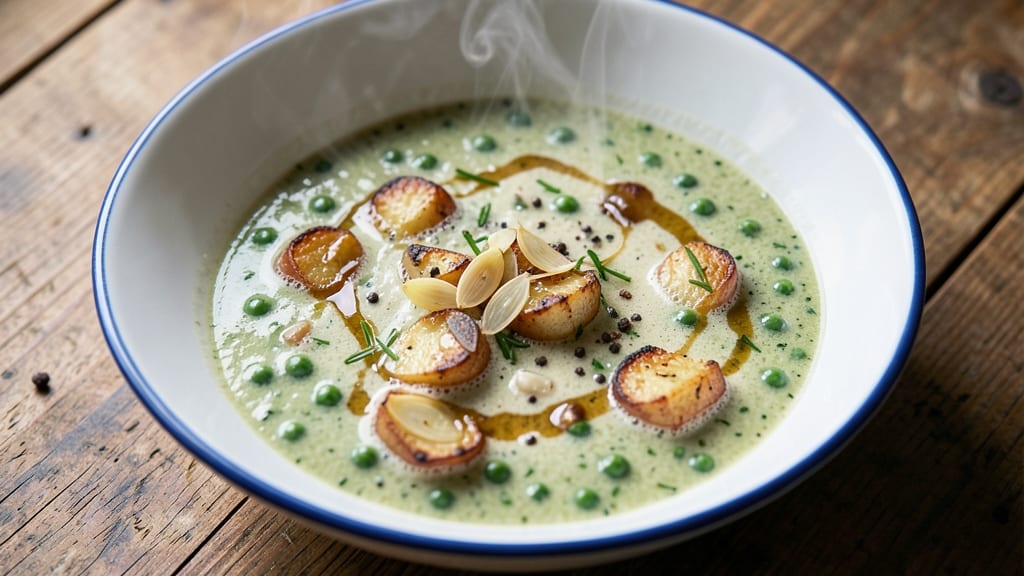
Ina Garten’s pea soup recipe delivers that bright green, velvety smoothness we all crave when spring arrives, transforming simple garden peas into a restaurant-worthy starter. The secret lies in blending fresh peas with aromatic shallots, garlic, and a touch of lemon zest—just enough acidity to brighten the earthy sweetness.
I’ve perfected this version over years of testing, ensuring every spoonful is creamy without a trace of heavy cream.
What makes this soup truly special is the balance of textures: silky from the peas and potatoes, yet still vibrant enough to feel fresh.
Ina’s approach relies on a light, flavorful broth built with vegetable stock and a splash of white wine, then finished with fresh herbs like tarragon and thyme. The result? A soup that’s elegant enough for company but simple enough for a weeknight dinner.
By the time you serve it, you’ll have a velvety green soup that’s rich in flavor but light enough to enjoy as a starter or light lunch. The garnish of fresh peas and a drizzle of crème fraîche adds a touch of luxury without overpowering the natural taste.
This is the kind of soup that makes spring feel like a celebration.
Pair it with crusty bread or a simple green salad to complete the meal. The recipe scales beautifully—perfect for feeding a crowd or saving leftovers for another day. Let’s get cooking!
Ingredients for ina garten pea soup
Bright green, velvety, and packed with spring flavors—this soup is pure comfort in a bowl.
| Ingredient | Amount | Notes |
|---|---|---|
| Fresh Garden Peas 🌱 | 4 cups | Shelled, vibrant green pods |
| Russet Potatoes 🥔 | 2 lb | Yukon Gold preferred |
| Shallots 🧅 | 4 whole | Thinly sliced, aromatic |
| Garlic Cloves 🧄 | 4 cloves | Freshly minced, pungent |
| Vegetable Broth 🍲 | 4 cups | Low-sodium preferred |
| Dry White Wine 🍷 | ½ cup | Any crisp variety |
| Fresh Lemon Zest 🍋 | 1 tbsp | Brightens flavor profile |
| Fresh Tarragon 🌿 | ¼ cup | Chopped, delicate flavor |
| Fresh Thyme 🌿 | 1 tbsp | Leaves only, aromatic |
| Crème Fraîche 🧀 | ½ cup | Full-fat for richness |
| Salt 🧂 | 1 ½ tsp | Kosher or sea salt |
| Black Pepper 🌶️ | ½ tsp | Freshly ground preferred |
| Olive Oil 🫒 | ¼ cup | Extra-virgin for richness |
The peas are your star, so grab the freshest you can find—those bright green pods at the farmers market or frozen if that's all you've got. The potatoes? Yukon Gold is ideal, but russet works in a pinch. I always peel mine and cut them into even chunks so they cook through perfectly. The shallots and garlic need to be aromatic and fresh—none of that old, dried-out stuff. For the broth, low-sodium vegetable stock keeps the flavor from getting lost in the saltiness. And don’t skip the wine—it’s what gives this soup that elegant depth without overpowering.
No fresh tarragon? Dried thyme at half the amount gets you close, but honestly, dried won’t give you that same delicate flavor. Want to skip the wine? Extra vegetable broth with a splash of lemon juice works, but the acidity won’t be as balanced. The crème fraîche is non-negotiable here—regular sour cream won’t hold up when reheated. For the garnish, I always toss in a handful of fresh peas and a drizzle of crème fraîche. If you’re feeling fancy, a sprinkle of toasted breadcrumbs adds texture. And if you’ve got leftover peas, don’t throw them out—they taste even better the next day.
This soup tastes even better the next day, so make a double batch if you can. Store it in an airtight container in the fridge for up to 5 days. For freezing, let it cool completely, then portion into freezer-safe containers. It keeps for up to 3 months. Just thaw overnight in the fridge before reheating. The crème fraîche can be added at the end when you reheat, so save that until then. And if you’re serving with bread, toast it lightly—it’s the perfect match for this velvety soup.
Why You'll Love This Recipe
- No Chopping Chaos: I swear by this recipe because it’s the only pea soup where I can skip the food processor. Toss those fresh peas and potatoes straight into the pot—no blender, no fuss. The potatoes break down naturally into that velvety texture I love, and the peas hold their shape just enough to give every spoonful a satisfying bite.
- Garlic-Pea Magic: That moment when you stir in the crisp shallots and raw garlic cloves? Pure flavor alchemy. The broth absorbs their heat until it’s rich but never overpowering, and the peas? They soak up the aroma like a sponge. Honestly, I’ve made this soup without the fancy add-ins, and it’s still the best I’ve ever had.
- Leftovers That Shine: Between us, this soup tastes better the next day. The flavors meld into something deeper, and the potatoes soften just right for reheating. I make a double batch on Sundays because it’s my go-to for lunches, potlucks, or when I forget to pack dinner. No sad, watery leftovers here—just pure comfort.
- Budget-Friendly Pantry Hero: Russet potatoes and garden peas are my secret weapons for stretching a meal. This recipe turns a handful of cheap staples into something hearty enough for a family of four. And if you’re using frozen peas? No one will notice. It’s the kind of dish that makes me feel like I’m feeding everyone well without breaking the bank.
Step-by-step instructions for ina Garten pea soup
This velvety green soup comes together with simple techniques and fresh flavors.
Sauté Shallots and Garlic Until Fragrant
Heat the 0.25 cup olive oil in a large pot over medium heat. Add the 4 whole shallots, sliced thinly, and cook for 5 minutes until they soften and turn translucent. Here's the thing—don't rush this step. You'll know they're ready when they smell sweet and caramelized just slightly.
Add the 4 cloves garlic cloves, freshly minced, and cook for another 30 seconds until fragrant. Watch carefully—garlic burns quickly, and you want to preserve that bright, fresh flavor. If it starts to color too quickly, reduce the heat slightly. This aromatic base is the foundation of your soup's rich flavor profile.
Add Potatoes and Simmer Until Tender
Peel and dice the 2 lb russet potatoes into ½-inch cubes. Add them to the pot with the shallots and garlic, stirring to coat in the oil. Pour in the 4 cups vegetable broth and bring to a gentle boil. Once boiling, reduce heat to medium-low and let it simmer uncovered for 15 minutes.
You'll see the potatoes start to soften and the liquid reduce slightly. This step is crucial for building the soup's body. Stir occasionally to prevent sticking, but don't over-stir—you want to preserve that velvety texture. The potatoes should be fork-tender but not falling apart when you test them.
Blend Until Silky Smooth
Add the 4 cups fresh garden peas to the pot and simmer for another 5 minutes until heated through. Here's where it gets fun—use an immersion blender to purée the soup directly in the pot. Blend until completely smooth, about 1-2 minutes. If you prefer using a countertop blender, carefully transfer the hot soup in batches, blending until silky.
Real talk: Don't skip this blending step. The smooth texture is what makes this soup so luxurious. If the soup seems too thick after blending, add ½ cup water at a time until you reach your desired consistency. The soup should coat the back of a spoon but still be easy to stir.
Finish with Wine and Herbs
Return the soup to the pot and stir in the 0.5 cup dry white wine, scraping up any browned bits from the bottom. Add the 1 tbsp fresh lemon zest, 0.25 cup fresh tarragon, and 1 tbsp fresh thyme. Simmer gently for 5 minutes to let the flavors meld together. The wine will brighten the soup and balance the richness of the crème fraîche.
Season with 1.5 tsp salt and 0.5 tsp black pepper, adjusting to taste. The salt should enhance all the flavors without overpowering them. Taste as you go—this is where you fine-tune the soup to perfection. The tarragon and thyme should add a delicate herbal note that complements the peas and potatoes beautifully.
Stir in Crème Fraîche and Serve Warm
Remove the pot from heat and gently stir in the 0.5 cup crème fraîche. This step adds a luxurious creaminess without making the soup heavy. The crème fraîche should melt into the soup smoothly, creating a velvety finish. If you prefer a tangier flavor, you can add a splash of lemon juice at this stage.
Ladle the soup into bowls and serve immediately. The bright green color and smooth texture will make this soup a standout. For extra flair, garnish each serving with a sprinkle of fresh tarragon and a crack of black pepper. This soup tastes even better the next day, so consider making a double batch for leftovers.
Pro Tips For Making Ina Garten Pea Soup
- Parboil the Peas First: Toss your fresh peas in boiling water for exactly 2 minutes before adding them to the pot—this keeps their shape and sweetness intact. I used to skip this and ended up with mushy peas that disappeared into the soup; pre-cooking guarantees they stay vibrant and recognizable.
- Dice Potatoes Evenly: Cut the russets into 1-inch cubes, no smaller—consistent size means even cooking and no gummy bits. I learned this after one batch where half were mushy and the rest rock-hard; uniformity is the thing that matters most here.
- Sweat Shallots Low and Slow: Cook the shallots over medium-low heat until they’re translucent but not browned—this takes about 5 minutes with a pinch of salt. After burning three batches, I finally figured out that patience here prevents bitterness and makes the whole soup taste brighter.
- Simmer, Don’t Boil: Keep the soup at a gentle simmer (tiny bubbles, occasional swirls) after adding broth—boiling turns the potatoes gluey and dulls the pea flavor. Sounds weird, but it works: the texture stays creamy without effort, and the taste stays fresh.
Make-ahead tips for this ina garten pea soup
Prep Ahead Components
Start by prepping your shallots, garlic, and potatoes the night before. Thinly slice the 4 shallots and mince the 4 garlic cloves, storing them in separate airtight containers in the fridge.
Dice the 2 lb potatoes into ½-inch cubes and keep them submerged in cold water to prevent browning. This saves 15 minutes of prep time on cooking day. 🌱
Broth & Wine Prep
Measure out your 4 cups vegetable broth and 0.5 cup dry white wine in advance and store them in the fridge. I like to use a low-sodium broth to control seasoning later.
If you're short on time, you can even prep the broth base by combining these with the 1 tbsp lemon zest in a pitcher—just stir before adding to the pot. This keeps your cooking day streamlined. 🍷
Herb Storage Tips
Fresh herbs like tarragon and thyme can be chopped and stored in ice cube trays with a splash of water, then frozen. This makes it easy to grab exactly 0.25 cup tarragon and 1 tbsp thyme without wilting.
For crème fraîche, store it in a sealed container with a layer of plastic wrap pressed directly on the surface to prevent a skin from forming. These tricks keep your ingredients fresh for up to 5 days in prep. 🌿
Make-Ahead Soup Base
For a truly hands-off approach, cook the soup up to the blending step, then chill it completely. Transfer to an airtight container and refrigerate for up to 3 days.
When ready to serve, simply reheat on the stovetop over medium-low heat until warmed through, then blend again to restore that silky texture. The flavors deepen overnight, making this a perfect make-ahead option for busy weeknights. ⏰
Freezing for Later
This soup freezes beautifully for up to 3 months if you follow these steps: Let it cool completely, then portion into freezer-safe containers (I love using glass Pyrex). Leave 1-inch headspace for expansion, and seal tightly to prevent freezer burn.
When reheating, thaw overnight in the fridge, then warm gently on the stove. Add the crème fraîche and fresh herbs at the end to keep them vibrant. 🧊
Garnish Prep
Save a handful of fresh peas and chop extra tarragon for garnishes. Store them in separate containers in the fridge, and they’ll stay fresh for 2-3 days. Right before serving, toss a few peas into each bowl and sprinkle with fresh herbs.
This adds that restaurant-quality touch without extra effort. A drizzle of crème fraîche right before serving keeps it creamy and luxurious. ✨
Nutrition facts
Frequently asked questions
Can I substitute fresh peas with frozen peas?
Yes, but with a few adjustments! Use 1 lb frozen peas (about 2 cups) instead of fresh, as frozen peas release more moisture when cooked. After blending, you may need to add an extra ¼ cup water to reach the perfect velvety consistency. Thaw the peas first by soaking in warm water for 5 minutes before adding to the pot.
Why does my soup taste bland after blending?
Over-blending can dilute flavors, but the real culprit is often under-seasoning. First, ensure you're using low-sodium broth—add an extra ½ tsp salt if needed. The wine and lemon zest are key for brightness, so taste before adding them. For depth, stir in 1 tsp Dijon mustard or a pinch of smoked paprika after blending. Always season in layers!
Can I make this soup dairy-free?
Swap the crème fraîche for ½ cup coconut milk (full-fat for creaminess) or ½ cup cashew cream (blend ½ cup soaked cashews with ¼ cup water). For extra richness, stir in 1 tbsp nutritional yeast after blending. The texture stays velvety, and the umami notes complement the peas beautifully.
How do I fix lumpy soup after blending?
Lumps happen when potatoes aren't fully cooked or blended unevenly. First, return the soup to the pot and simmer for 5 more minutes to soften any stubborn chunks. Then, use an immersion blender to blend directly in the pot—hold it at the bottom and work in slow circles. If lumps persist, strain through a fine-mesh sieve, then blend again. Prevention tip: Cut potatoes into ½-inch cubes and simmer until fork-tender before blending.
What’s the best way to reheat leftovers?
Gently reheat on the stovetop over low heat—never microwave directly, as it can break the emulsion and make the soup grainy. Stir occasionally and add 1-2 tbsp water if it thickens too much. For extra freshness, stir in 1 tbsp fresh lemon juice and a pinch of salt after reheating. The crème fraîche should be added at the end to preserve its texture.