
Soups & Stews
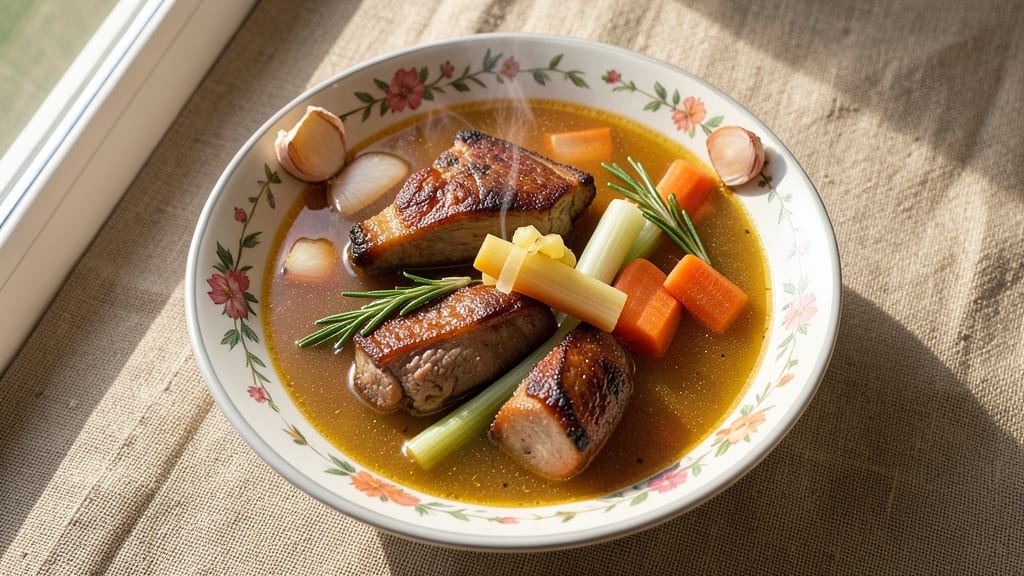
Creating a lamb bone broth soup from scratch transforms simple ingredients into a deeply flavorful, nourishing dish that tastes like comfort in a bowl. The slow simmering process unlocks rich umami notes from lamb bones, vegetables, and aromatic spices, resulting in a broth so robust it elevates any meal.
I’ve refined this recipe over years to balance tradition with practicality—whether you simmer for hours or use a pressure cooker for speed.
The foundation of great lamb broth lies in proper bone preparation and simmering time. Roasting the bones first deepens their flavor, while a long, gentle simmer extracts collagen for natural thickening.
This method yields a clear, golden broth with layers of savory depth that store-bought versions can’t match. For beginners, I’ve included clear steps to ensure foolproof results without sacrificing authenticity.
What you’ll end up with is a velvety soup that’s both hearty and light—ideal for cold weather or as a healing meal. The broth’s richness pairs beautifully with vegetables, grains, or even fresh herbs for garnish.
Every spoonful delivers warmth and nutrition, making it worth the effort. Let’s get started on creating this deeply satisfying dish.
This recipe adapts effortlessly to dietary needs—vegetarian versions use mushrooms and seaweed, while protein additions like shredded chicken or lamb turn it into a complete meal. The beauty of homemade broth is its versatility, so feel free to customize it to your taste. Ready to begin?
Ingredients for lamb bone broth soup
Six lamb bones and simple vegetables unlock deep umami in slow-simmered broth.
| Ingredient | Amount | Notes |
|---|---|---|
| Lamb Bones 🐑 | 3 lb | With some meat attached, roasted first |
| Yellow Onions 🧅 | 2 whole | Chopped, medium size |
| Carrots 🥕 | 4 whole | Medium, peeled, chopped |
| Celery Stalks 🌿 | 4 whole | With leaves, chopped |
| Garlic Cloves 🧄 | 8 cloves | Peeled, smashed |
| Fresh Rosemary 🌿 | 2 sprigs | Woody stems removed |
| Fresh Thyme 🌿 | 4 sprigs | With leaves only |
| Bay Leaves 🍃 | 4 whole | Dried, standard size |
| Black Peppercorns 🌶️ | 1 tbsp | Crushed, whole berries |
| Sea Salt 🧂 | 2 tsp | Kosher or coarse |
| Apple Cider Vinegar 🍎 | 2 tbsp | For acidity balance |
| Fresh Parsley 🌿 | ¼ cup | Chopped, for garnish |
| Extra-Virgin Olive Oil 🫒 | ½ cup | For roasting bones |
| Water 💧 | 12 cups | Filtered preferred |
The lamb bones are the heart of this recipe—look for femur or neck bones with some meat still attached for richer flavor. Most butchers will roast them for you if you ask, but if you're doing it yourself, pat them dry first and roast at 425°F until deeply browned (about 30 minutes). Costco and Whole Foods often have lamb bones in the meat section, but call ahead to confirm availability. Fresh herbs like rosemary and thyme should have vibrant green leaves and no wilting—these are non-negotiable for authentic depth. The bay leaves add subtle earthiness, but don’t overlook them; they’re a classic for a reason.
No lamb bones? Beef marrow bones or chicken backs work in a pinch, though the flavor will differ slightly. Fresh herbs wilt fast—dried thyme at one-third the amount is fine if you’re short on time, but fresh is ideal. The apple cider vinegar might seem odd, but it brightens the broth and prevents cloudiness during simmering. For the vegetables, organic carrots and celery are best—they’re less likely to need peeling, saving you time. If you’re using a pressure cooker, you can skip the roasting step entirely, but the flavor will be less developed.
This broth keeps beautifully—5 days in the fridge or 6 months in the freezer. Let it cool completely before storing to prevent ice crystals. I like to portion it into 1-cup containers for easy use in future recipes. The longer it sits, the richer it becomes—don’t be afraid to let it simmer overnight if you have the time. For extra richness, strain out the vegetables and bones after simmering, then blend the solids with a little broth and strain back through. That’s the secret to restaurant-quality depth.
Why You'll Love This Recipe
- Throw-in-the-Bones Easy: I swear, this soup requires less effort than ordering takeout. Toss the lamb bones, onions, carrots, and celery into a pot—no fancy prep, just a quick chop—and let the slow simmer do the work. Honestly, I’ve made it while scrolling through my phone.
- Umami Bomb: That first sip? Rich, deep, and unfairly satisfying. The lamb bones melt into the broth, while the garlic and onions caramelize into something so flavorful it turns even basic meals into a cozy feast.
- Leftovers That Shine: Make a big batch—it’s perfect for meal prep. Reheat the broth for instant soup, or use it as a base for stews, grains, or even a fancy risotto. (Yes, even on a Tuesday night.)
- Budget-Friendly Goldmine: Lamb bones are cheaper than you think, and they stretch into so much broth. One pot feeds a crowd, and the leftovers? Freezer-friendly for weeks. My wallet and my freezer thank me.
Step-by-step instructions for lamb bone broth soup
Here's how to transform simple ingredients into rich, umami-packed homemade lamb broth.
Roast the Lamb Bones for Deep Flavor
Preheat your oven to 425°F. Place the 3 lb lamb bones on a baking sheet lined with parchment paper. Drizzle with the 0.5 cup extra-virgin olive oil and rub it evenly over the bones, including any meat still attached. This creates a golden crust that releases rich flavors during roasting.
Roast for 30-40 minutes until the bones develop a deep brown color and the meat begins to brown. The aroma should be intense and savory—this is your first flavor layer. Remove from the oven and let cool slightly before transferring to a large stockpot. The residual heat will continue rendering fat and juices into the pot.
Sauté Aromatics to Build Complexity
In the same stockpot (no need to clean it—the browned bits are flavor gold), add the 2 whole chopped yellow onions, 4 whole chopped carrots, and 4 whole chopped celery stalks with leaves. Cook over medium heat for 8-10 minutes, stirring occasionally, until the vegetables soften and begin to caramelize.
Add the 8 smashed garlic cloves, 2 sprigs fresh rosemary, 4 sprigs fresh thyme, 4 whole bay leaves, and 1 tbsp crushed black peppercorns. Stir for 1-2 minutes until fragrant. The garlic should smell pungent and the herbs should release their essential oils—this is where the soup's aromatic foundation forms. Don't let the garlic burn; it should be golden, not dark brown.
Simmer the Broth for Maximum Extraction
Pour in the 12 cups water and add the roasted lamb bones. Bring to a boil over high heat, then immediately reduce to a gentle simmer. The liquid should bubble softly with occasional small bubbles breaking the surface—this indicates proper simmering, not a rolling boil.
Add the 2 tsp sea salt and 2 tbsp apple cider vinegar. The vinegar helps extract collagen from the bones, creating a richer broth. Skim any foam or impurities that rise to the surface during the first 30 minutes of simmering. This ensures a clear, clean broth. Cover and simmer for 3-4 hours, maintaining a gentle simmer the entire time.
Strain and Finish the Broth
After simmering, strain the broth through a fine-mesh sieve or cheesecloth-lined colander into a clean stockpot. Press gently on the solids to extract every last bit of flavor—this is where the broth's depth comes from. Discard the solids in the sieve.
Return the strained broth to the stockpot and stir in the 0.25 cup chopped fresh parsley. Taste and adjust seasoning—you may need to add more salt depending on your taste preferences. The broth should be rich, slightly sweet from the carrots, and deeply savory from the lamb. If it's too thin, simmer uncovered for 10-15 minutes to reduce slightly and intensify the flavor.
Pro Tips For Making Lamb Bone Broth Soup
- Char the Bones First: Toss those lamb bones in a screaming-hot pot for 10 minutes before adding water—this isn’t just for smell, it’s for flavor. I learned this the hard way when my first batch tasted bland; the Maillard reaction on the bones is where the depth starts.
- Cut Onions in Half: Skip the chopping—just quarter those yellow onions and leave the skins on. They’ll soften beautifully without turning to mush, and you’ll save 5 minutes of prep while keeping the broth’s texture cleaner.
- Don’t Crowd the Pot: If your pot’s too full, the broth will simmer sluggishly and taste flat. Aim for 2–3 inches of water above the bones, and resist the urge to add more veggies—this isn’t a stew.
- Save the Garlic: Peel and smash those cloves flat with the side of your knife, then wrap them in cheesecloth before dropping them in. This keeps the broth silky smooth and stops you from fishing out burnt bits later.
Storing and reheating this dish
Fridge Storage Tips
Let your lamb broth cool to room temperature before transferring to airtight containers—I use glass Pyrex containers for best results. Store in the fridge at 40°F or below for up to 5 days.
The broth will continue developing flavor as it sits, so I often make a double batch to have ready for future meals. Always leave 1-inch headspace to prevent spills and ensure proper cooling. 🥶
Freezer Preservation
For long-term storage, freeze the broth in 1-cup portions using quart-sized freezer bags or silicone molds. Squeeze out excess air to prevent freezer burn, and label with the date. This broth keeps for 6 months without losing quality.
When ready to use, thaw overnight in the fridge or place the sealed bag in a bowl of cold water for a quicker thaw. 🧊
Reheating Methods
For stovetop reheating, transfer the broth to a pot and warm over medium-low heat until steaming. I recommend adding 1 tbsp water or broth per cup to prevent scorching.
If using a microwave, heat in 1-minute intervals on 50% power, stirring between each interval to ensure even heating. Always bring to at least 165°F for safety. 🔥
Reviving Flavor
If your broth tastes flat after reheating, it likely needs a flavor boost. Add 1 tsp apple cider vinegar or a pinch of sea salt to restore brightness. For extra richness, stir in 1 tbsp butter or olive oil before serving.
Freshly cracked black pepper and a sprinkle of chopped parsley also elevate the dish. This is my go-to trick for restaurant-quality results at home. ✨
Using Leftovers
Transform leftover broth into a quick meal by adding cooked lamb or chicken, diced potatoes, or fresh vegetables. I love turning it into a hearty stew by simmering with carrots, celery, and onions for 20 minutes.
For a lighter option, strain the broth again and use it as a base for a cold lamb soup with cucumber and mint. The possibilities are endless! 🌟
Nutrition facts
Frequently asked questions
Why roast the lamb bones before simmering?
Roasting creates a deep, caramelized crust that releases rich, savory flavors into the broth. This step develops umami compounds that water alone can't extract, giving your soup a restaurant-quality depth.
Can I use a pressure cooker instead of slow simmering?
Yes! Skip the roasting step and add all ingredients to your pressure cooker with 12 cups water. Cook on high pressure for 90 minutes, then strain. The result will be faster but slightly less developed in flavor than traditional simmering.
What if my broth looks cloudy after simmering?
Cloudiness usually means fat or impurities weren't skimmed properly. Strain through cheesecloth for a clearer broth, or blend the strained solids with a little broth, then strain again. For prevention, skim foam for the first 30 minutes of simmering.
How do I make this vegetarian?
Replace lamb bones with 2 lb portobello mushrooms and 1 sheet kombu seaweed. Add 1 tbsp soy sauce for umami depth. Simmer for 4-5 hours to extract maximum flavor from the mushrooms. The broth will be lighter but still deeply savory.
What's the best way to serve this soup?
Pair with crusty bread, a sprinkle of toasted pine nuts, or fresh herbs like parsley. For extra heartiness, add shredded lamb or chicken and diced potatoes before serving. The broth works beautifully as a base for grain bowls too!