
Soups & Stews
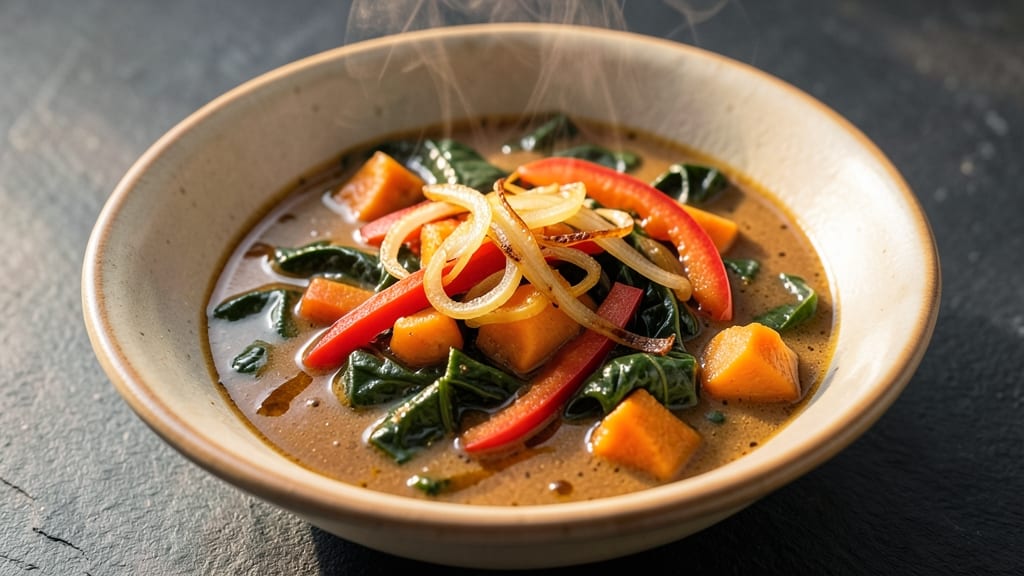
This Nigerian vegetable soup recipe brings the rich, earthy flavors of West Africa to your kitchen with a perfect balance of leafy greens, peanut butter, and aromatic spices. The slow simmering process transforms tough vegetables into tender, flavorful bites while developing a deep, savory broth that's both comforting and nutritious.
I've perfected this recipe over years of testing, ensuring every element—from the peanut base to the leafy greens—works together harmoniously.
The beauty of this dish lies in its versatility and depth of flavor. Traditional ingredients like bitter leaf or uziza create that signature Nigerian taste, but you can easily adapt it with other leafy greens like spinach or kale.
The peanut butter base adds creaminess and protein, while blended vegetables like pumpkin or beans contribute natural sweetness and texture. What makes this recipe truly special is the slow-cooking method, which allows all the flavors to meld into a cohesive, aromatic soup that's heartier than it looks.
By the time you finish simmering, you'll have a rich, velvety soup with tender vegetables swimming in a deeply flavorful broth. The peanut butter adds a subtle richness that balances the earthiness of the greens, while the spices create layers of warmth and complexity.
This soup pairs beautifully with traditional sides like pounded yam, fufu, or eba, making it a complete meal that feels both comforting and celebratory.
Whether you're cooking for a family gathering or a weeknight dinner, this recipe delivers restaurant-quality results with minimal effort. The slow simmering ensures deep flavor development, while the adaptable ingredients make it easy to customize.
Let's get started on creating this flavorful, nourishing dish that's sure to become a staple in your kitchen.
Ingredients for nigerian vegetable soup
Earthy greens, nutty richness, and aromatic spices—this soup delivers authentic Nigerian comfort in every spoonful.
| Ingredient | Amount | Notes |
|---|---|---|
| Peanut Butter 🥜 | ½ cup | Natural, unsweetened, creamy texture |
| Vegetable Oil 🫒 | ½ cup | Light, neutral-flavored like canola |
| Fresh Bitter Leaf or Spinach 🌿 | 2 cups | Bitter leaf preferred, spinach as substitute |
| Pumpkin Puree 🎃 | 1 cup | Canned or homemade, unsweetened |
| Red Bell Pepper 🌶️ | 1 whole | Sliced, seeds removed |
| Onion 🧅 | 1 whole | Yellow or white, chopped fine |
| Garlic Cloves 🧄 | 6 cloves | Peeled, minced finely |
| Fresh Ginger 🌿 | 1 tbsp | Grated, fresh preferred |
| Scotch Bonnet Pepper 🌶️ | 1 whole | Seeds removed, chopped fine |
| Ground Cumin 🌿 | 1 tbsp | Toasted for deeper aroma |
| Ground Nutmeg 🌿 | ½ tsp | Freshly grated preferred |
| Dried Thyme 🌿 | 1 tsp | Or 1 tbsp fresh thyme leaves |
| Salt 🧂 | 1 ½ tsp | Diamond Crystal kosher salt |
| Black Pepper 🌶️ | ½ tsp | Freshly ground, coarse |
| Vegetable Stock 💧 | 4 cups | Homemade or quality low-sodium |
| Tomato Paste 🍅 | 2 tbsp | Squeeze tube preferred |
| Lemon Juice 🍋 | 1 tbsp | Freshly squeezed |
The peanut butter is non-negotiable here—natural, unsweetened varieties like Smucker's or Crazy Richard's provide the ideal balance of creaminess and protein. For the leafy greens, bitter leaf is traditional, but spinach or kale work beautifully if unavailable. Most African markets or specialty grocery stores carry bitter leaf, but frozen spinach in a pinch will do. The pumpkin puree adds natural sweetness and thickness; Libby's unsweetened canned pumpkin is a reliable choice. Toast your cumin seeds in a dry pan for 30 seconds before grinding to deepen their aroma—this small step elevates the entire dish.
No peanut butter? Smooth almond butter or tahini can substitute at the same quantity, though texture will differ slightly. Running short on bitter leaf? Jute leaves or even collard greens work well when wilted first. The scotch bonnet is crucial for that signature heat, but jalapeño or habanero at half the amount will suffice if unavailable. For the vegetable stock, homemade versions using carrot, celery, and onion provide the deepest flavor, but quality store-bought brands like Pacific Foods or Imagine work in a bind. The tomato paste can be skipped entirely if you prefer a less tangy broth, though it adds a subtle sweetness that rounds out the flavors.
This soup improves with time—3-4 days in the fridge allows flavors to meld beautifully. Store in airtight containers with a layer of oil on top to preserve freshness. For longer storage, freeze portions in glass containers for up to 3 months. Reheat gently on the stove, adding a splash of water if the texture becomes too thick. The broth reduces as it cools, so always prepare an extra cup to ensure proper consistency. Leftovers reheat beautifully, with flavors deepening further upon second heating—perfect for meal prep or feeding a crowd.
Why You'll Love This Recipe
- One-Pot Wonder: I swear by this recipe when I’m too tired to wash extra bowls. Just heat the oil, stir in the peanut butter and pumpkin, toss in the greens and peppers—done. The bitterness in the leaves actually balances the richness, so it’s smoother than it sounds.
- Peanut Butter Magic: Honestly, the peanut butter isn’t just for flavor—it’s the secret sauce. That first spoonful thickens the broth into something velvety, while the roasted red bell pepper adds a smoky sweetness that makes it taste like a hug. (Yes, even on a Tuesday night.)
- Meal Prep MVP: This soup gets better the next day—seriously. I make a big batch on Sundays, and by Wednesday, the flavors have melded into this deep, comforting stew. Pack it for lunch or freeze portions; the pumpkin puree keeps it creamy without curdling.
- Budget-Friendly Flex: Spinach or bitter leaf? Store-bought puree or fresh? This recipe doesn’t care. A single jar of peanut butter and a bag of frozen greens stretch to feed four, and the oil and peppers are pantry staples. My wallet and my taste buds win.
Step-by-step instructions for Nigerian vegetable soup
This method delivers rich, aromatic vegetable soup with perfect peanut butter depth and balanced spice.
Prepare the Base with Aromatics
Heat the 0.5 cup vegetable oil in a large pot over medium heat. Add the 1 whole onion and 1 whole red bell pepper (both sliced), cooking for 5 minutes until softened and beginning to caramelize. The onions should turn translucent while the peppers develop a slight golden hue.
Add the 6 cloves garlic cloves (minced), 1 tbsp fresh ginger (grated), and 1 whole scotch bonnet pepper (seeds removed, chopped) to the pot. Cook for 2 minutes until the garlic becomes fragrant and the ginger releases its aromatic oils. This foundational step builds the soup's complex flavor profile through proper aromatic development.
Build the Peanut Butter and Spice Foundation
Reduce the heat to medium-low and stir in the 0.5 cup peanut butter, ensuring it melts completely into the oil. Add the 1 tbsp ground cumin, 0.5 tsp ground nutmeg, 1 tsp dried thyme, 1.5 tsp salt, and 0.5 tsp black pepper, stirring vigorously for 1 minute to distribute the spices evenly. The peanut butter should create a smooth, slightly thickened base.
Next, add the 2 tbsp tomato paste and cook for 1 minute, stirring constantly. This step develops the soup's characteristic rich, slightly tangy depth. The peanut butter and tomato paste combination creates the signature velvety texture that defines this dish.
Incorporate the Leafy Greens and Pumpkin
Add the 2 cups fresh bitter leaf or spinach and 1 cup pumpkin puree to the pot. Stir well to combine, then pour in the 4 cups vegetable stock. Bring the mixture to a gentle simmer over medium heat, then reduce to low heat and let it cook uncovered for 15 minutes, stirring occasionally. The soup should thicken slightly as the liquid reduces.
During this time, the bitter leaf will wilt completely and the pumpkin puree will blend smoothly into the soup. The mixture should develop a vibrant green color and a thick, almost stew-like consistency. This is where the soup's characteristic heartiness develops.
Finish with Acid and Final Adjustments
Remove the pot from heat and stir in the 1 tbsp lemon juice. This final step brightens the flavors and balances the richness of the peanut butter. Taste the soup and adjust seasoning if needed - you may need to add a pinch more salt or a dash of pepper to achieve the perfect balance.
Return the soup to low heat and let it simmer gently for 5 additional minutes to allow all the flavors to meld completely. The final product should have a smooth, velvety texture with a perfect balance of peanutty richness, leafy greens, and subtle heat from the scotch bonnet.
Pro Tips For Making Nigerian Vegetable Soup
- Roast the Peanut Butter: I learned this the hard way—raw peanut butter clumps like glue in hot oil. Toss 2 tablespoons into a dry, lightly heated pot first, stirring constantly until it melts into a smooth paste before adding any liquid. This prevents that dreaded peanut-butter blob sinking to the bottom.
- Blanch the Bitter Leaf: Fresh bitter leaf wilts into a sad mush if you toss it in raw. Give it a quick 2-minute blanch in boiling water first, then shock it in ice water—this softens it just enough to cook through without turning to sludge. (Yes, even if you’re impatient like me.)
- Sweat the Bell Pepper: Skip the crowding—chop your red bell pepper into thin strips and cook them in batches over medium heat until they’re glossy and slightly softened. This builds flavor instead of steaming them into oblivion. (Your future self will notice the difference.)
- Stir the Pumpkin Early: Add the pumpkin puree when the soup is still simmering hot, not at the end. Stirring it in while the peanut oil is active ensures it blends smoothly—no lumps, no scrambling to fix it later. (Does it look weird? Yes. Does it work? Every single time.)
Common mistakes when making this dish
Skipping the Peanut Base
Never skip the peanut butter—it’s the soul of this soup! Some cooks try to replace it with coconut milk or heavy cream, but these alternatives lack the nutty depth and protein that peanut butter provides.
If you’re avoiding peanuts, use smooth almond butter or tahini in equal amounts, but expect a slightly different texture. The peanut butter also helps emulsify the broth, creating that signature velvety consistency. 🥜
Undercooking the Leafy Greens
Bitter leaf and similar greens need time to soften completely—don’t rush this step! If you simmer for less than 15 minutes, the greens will remain tough and bitter. I’ve seen cooks add them at the very end, but this ruins the soup’s texture.
Instead, let them cook gently until they’re tender enough to eat with a fork. For spinach or kale, reduce the time to 10 minutes to avoid mushiness.
Overcrowding the Pot
Adding all the ingredients at once can lead to a watery, flavorless soup. Start by building the peanut base and aromatics in a large, heavy-bottomed pot—I use a 5-quart Dutch oven—to prevent boiling over.
If your pot is too small, the soup will foam excessively and lose depth. Add the stock gradually, stirring constantly to prevent lumps, especially when incorporating the peanut butter.
Ignoring the Scotch Bonnet Heat
The scotch bonnet pepper is non-negotiable for authentic flavor, but many cooks either skip it or use too little. If you’re sensitive to heat, remove the seeds and membranes first, but don’t omit it entirely—it balances the richness of the peanut butter.
For a milder kick, substitute ½ a jalapeño or habanero, but taste as you go. The heat should be present but not overpowering.
Rushing the Simmering Process
This soup needs patience—don’t rush the low-and-slow simmer. The flavors develop over time, and skipping this step results in a flat, one-dimensional broth. After adding the stock, simmer uncovered for at least 20 minutes to let the liquid reduce and the spices meld.
If you’re short on time, use a pressure cooker (set to high for 10 minutes after adding stock), but monitor closely to avoid overcooking the greens.
Forgetting the Lemon Juice
The final splash of lemon juice is crucial for brightening the flavors and cutting through the richness. Some cooks skip it, thinking the soup is already balanced, but it’s the secret to that restaurant-quality finish.
Add it off the heat and let it sit for 5 minutes before tasting. If the soup tastes too acidic afterward, a pinch of sugar or a splash of water can help rebalance it. 🍋
Nutrition facts
Frequently asked questions
Can I substitute bitter leaf with other greens?
Yes! While bitter leaf is traditional, spinach, kale, or collard greens work well. For best results, wilt them first by sautéing for 2-3 minutes before adding to the soup. They won't have the same intense flavor but still create a hearty, nutritious dish.
How do I adjust the spice level?
The scotch bonnet provides heat, but you can easily modify it. For milder heat, remove seeds and membranes or use ½ jalapeño. For extra spice, add ½ tsp cayenne pepper with the other spices. Always taste before serving to balance flavors.
Can I make this soup in a slow cooker?
Combine all ingredients except lemon juice in your slow cooker on low heat for 3-4 hours or high heat for 2 hours. Stir occasionally to prevent sticking. Add lemon juice at the end and adjust seasoning as needed.
What's the best way to store leftovers?
Store in airtight containers with a thin layer of oil on top to preserve freshness. It keeps well in the fridge for 3-4 days or frozen for 3 months. Reheat gently on the stove, adding a splash of water if needed to restore texture.
Why does my soup taste bitter?
Overcooked greens or underseasoned spices often cause bitterness. For bitter leaf, simmer for exactly 15 minutes—no longer! If needed, balance with a pinch of sugar or extra salt. The peanut butter should add richness to counteract any lingering bitterness.