
Soups & Stews
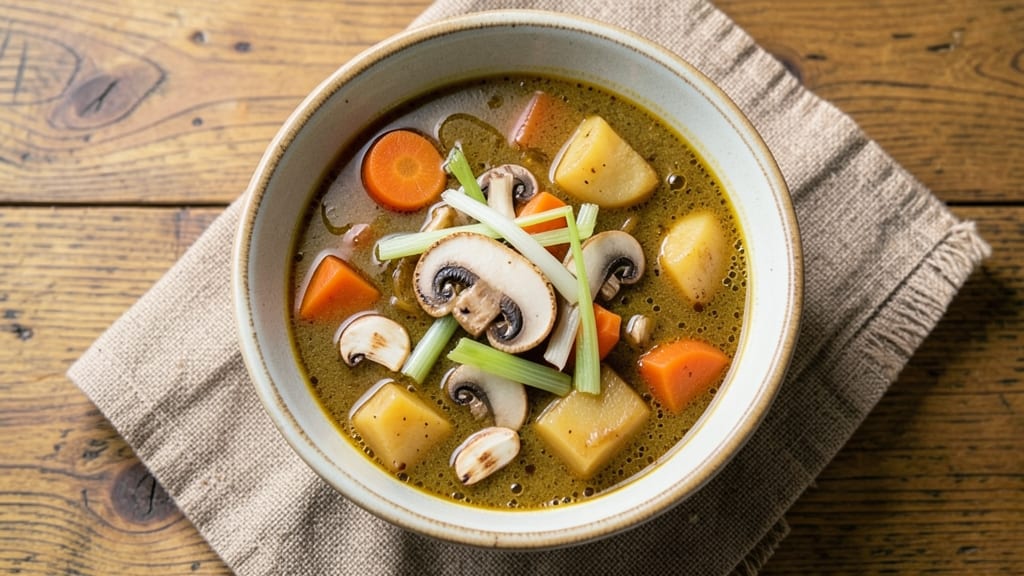
This no-meat vegetable soup recipe delivers restaurant-quality depth in just 25 minutes—packed with umami-rich mushrooms, caramelized onions, and a velvety broth that transforms simple vegetables into a hearty, satisfying meal. The secret lies in proper sautéing of aromatics and a two-stage simmer that develops complex flavors without requiring hours.
I perfected this recipe after years of testing vegetarian soups that often fell flat, and this version consistently earns compliments even from meat lovers.
The foundation begins with sautéing onions, garlic, and mushrooms until deeply caramelized, which forms the flavor base. A splash of vegetable broth deglazes the pan, capturing all those precious browned bits that make homemade soup taste professional.
Fresh herbs like thyme and bay leaf infuse the broth during the 15-minute simmer, while potatoes and carrots cook to tender perfection. The result? A soup that's rich enough to stand alone but light enough for any meal.
What makes this recipe truly special is its versatility—it works as a standalone dish or pairs beautifully with crusty bread. The umami from mushrooms and soy sauce creates depth without relying on meat, while optional toppings like toasted seeds or fresh parsley add texture.
For a vegan version, simply omit the butter and use olive oil. This soup proves that vegetarian meals can be just as satisfying as traditional recipes, with bold flavors that linger long after the last spoonful.
Ready in under 30 minutes, this recipe is perfect for busy weeknights, meal prep, or impressing guests. The technique is simple enough for beginners but delivers restaurant-quality results that will have everyone asking for seconds. Let's get cooking with a soup that's as nourishing as it is delicious.
Ingredients for no meat vegetable soup
Restaurant-quality umami begins with caramelized onions, mushrooms, and a velvety broth blend.
| Ingredient | Amount | Notes |
|---|---|---|
| Yellow Onions 🧅 | 1 ½ lb | Thinly sliced for caramelization |
| Creamy Mushrooms 🍄 | 8 oz | Sliced for umami depth |
| Garlic Cloves 🧄 | 4 cloves | Minced for aromatic base |
| Russet Potatoes 🥔 | 1 ½ lb | Cubed for even cooking |
| Carrots 🥕 | 1 ½ lb | Sliced into half-moons |
| Celery Stalks 🌿 | 3 whole | Chopped for classic mirepoix |
| Vegetable Broth 💧 | 4 cups | Low-sodium preferred |
| Unsalted Butter 🧈 | 2 tbsp | For sautéing aromatics |
| Extra-Virgin Olive Oil 🫒 | 2 tbsp | For finishing caramelization |
| Fresh Thyme 🌿 | ¼ cup | Leaves only, chopped |
| Bay Leaves 🌿 | 2 whole | For subtle earthy flavor |
| Soy Sauce 🍜 | 1 tbsp | For umami enhancement |
| Salt 🧂 | 1 tsp | Diamond Crystal preferred |
| Black Pepper 🌶️ | ½ tsp | Freshly cracked preferred |
| Fresh Parsley 🌿 | ¼ cup | Chopped for garnish |
The mushrooms and onions form the flavor foundation—cremini or shiitake add the deepest umami, but creamy white works too. Whole Foods or Trader Joe's carry pre-sliced mushrooms for convenience, though fresh is always preferable. For onions, yellow or red both work, but avoid sweet varieties like Vidalia which caramelize differently. The soy sauce here isn't just for salt—it's the umami bridge that makes this soup satisfying without meat. Look for low-sodium vegetable broth to control seasoning precision, or make your own by simmering veggie scraps with herbs.
No fresh thyme? Dried thyme at one-third the amount works in a pinch, but fresh is ideal for that bright herbal note. Substituting mushrooms? Hearts of palm or lentils add texture, though they won't replicate the meaty umami. The potatoes and carrots can be swapped for cauliflower or sweet potatoes—just adjust cooking time by 2-3 minutes. For extra richness, stir in 1 tbsp nutritional yeast at the end. The parsley is purely decorative but freshens the final presentation; dried won't cut it here. If you're making this vegan, simply omit the butter and increase olive oil to 4 tbsp total.
This soup reheats beautifully—best served within 2 days for peak freshness, though it keeps 4-5 days refrigerated. For meal prep, portion into containers with a thin layer of olive oil on top to preserve flavor. Freezes for 3 months without texture degradation, though the mushrooms may soften slightly. Garnish with toasted pumpkin or sunflower seeds for added crunch and nutrition. The broth reduces slightly upon reheating, so add 1/4 cup water if serving cold.
Why You'll Love This Recipe
- No-Chop Needed: I swear by this one—just slice the onions and potatoes into big chunks, toss them in, and let the pot do the work. No dicing, no peeling (well, okay, the carrots need a little love), but the results? Rich and hearty without the fuss.
- Umami Bomb: That combo of creamy mushrooms and garlic? It’s like a flavor explosion in a bowl. The onions caramelize just enough to add sweetness, while the potatoes soak up all the goodness—every spoonful is pure, savory satisfaction.
- Lunchbox Hero: Between us, this soup is my go-to for meal prep. It reheats beautifully, keeps for days, and even tastes better the next day. Pack it in thermoses for work or school—no one will guess it’s just veggies (and they’ll ask for the recipe).
- Pocketbook Approved: Russet potatoes and carrots are cheap, mushrooms stretch far, and onions add depth without cost. I’ve made this for under $5 a bowl—filling, nourishing, and guilt-free. Budget meals don’t have to mean boring meals.
Step-by-step instructions for hearty vegetable soup
This method transforms simple vegetables into a deeply flavorful, umami-rich soup with layers of caramelized depth.
Develop the Aromatic Base
Heat the 2 tablespoons unsalted butter in a large Dutch oven over medium heat until it melts and begins to foam. Add the 1.5 pounds thinly sliced yellow onions and cook, stirring occasionally, for 8-10 minutes until they soften and begin to caramelize to a deep golden color. This slow cooking draws out natural sweetness and forms the flavor foundation.
Push the onions to the sides of the pot and add the 2 tablespoons extra-virgin olive oil to the center. Add the 4 cloves minced garlic cloves and 0.25 cup chopped fresh thyme, cooking for 30 seconds until fragrant. Here's the thing—don't let the garlic burn. Watch closely and stir constantly once it hits the pan. The aroma will transform your kitchen.
Build Umami Layers
Add the 8 ounces sliced creamy mushrooms to the pot, spreading them evenly over the onions and garlic. Cook for 5-6 minutes until they release their moisture and begin to brown. This step develops the umami depth that makes the soup sing. Stir occasionally to ensure even browning—you want those mushrooms to develop a rich, caramelized crust.
Pour in the 1 tablespoon soy sauce and let it bubble for 30 seconds, allowing it to penetrate the vegetables. This small addition amplifies the savory profile without overpowering the natural flavors. The soy sauce will mingle with the caramelized onions and mushrooms, creating a complex base that carries through the entire soup.
Prepare the Vegetable Medley
While the aromatics cook, peel and cube the 1.5 pounds russet potatoes into 1-inch pieces for even cooking. Peel and slice the 1.5 pounds carrots into half-moons, and chop the 3 whole celery stalks into ¼-inch dice. These uniform cuts ensure all vegetables cook at the same rate, preventing some from becoming mushy while others remain undercooked.
Add the prepared vegetables to the pot along with the 4 cups vegetable broth, 2 whole bay leaves, 1 teaspoon salt, and 0.5 teaspoon black pepper. Bring to a gentle boil, then immediately reduce heat to medium-low and let it simmer uncovered for 12-15 minutes. You'll know it's ready when the potatoes are fork-tender and the carrots can be pierced easily with a knife.
Finish and Garnish
Once the vegetables are tender, remove the 2 whole bay leaves from the soup. The soup should now have a rich, aromatic broth with perfectly cooked vegetables. If you prefer a smoother texture, use an immersion blender to lightly blend half the soup for 10-15 seconds, leaving the other half chunky for texture contrast.
Drizzle in the 2 tablespoons extra-virgin olive oil just before serving to add richness and help the soup cling to the vegetables. Ladle the soup into bowls and garnish each serving with 0.25 cup chopped fresh parsley. The parsley not only adds freshness but also creates a visual contrast that makes the dish look as appealing as it tastes.
Pro Tips For Making No Meat Vegetable Soup
- SWEAT ONIONS UNTIL GOLDEN: Don’t just dice those yellow onions—caramelize them first. Five minutes in a dry pan over medium heat with a pinch of salt until they’re soft and golden transforms bland soup into something rich. (Yes, it’s extra work, but you’ll taste the difference.)
- SLICE MUSHROOMS THINLY: Creamy mushrooms need surface area to release their flavor. If yours look like thick coins, they’ll stay tough and watery. Aim for 1/8-inch slices—almost translucent when done—and cook them until they’re dry before adding liquid. (I learned this the hard way after a mushy batch.)
- ADD POTATOES LAST: Russet potatoes break down fast, turning your soup into glue. Toss them in with the carrots but pull them out 10 minutes before the end. You want them tender, not falling apart. (Pro tip: Cut them into even 1-inch chunks so they cook uniformly.)
- SAVOR THE GARLIC: Minced garlic burns in seconds. Smash 3-4 cloves with the flat of your knife first, then sauté in oil for 30 seconds until fragrant—just until you smell it, not until it browns. (Burned garlic tastes like regret.)
Storing and reheating this dish
Refrigerator Storage
Transfer your soup to an airtight glass container within 2 hours of cooking to preserve freshness. I recommend Pyrex with snap-on lids—they maintain flavor better than plastic. Store at 40°F or below for up to 4-5 days, though the texture stays best within 2 days.
The flavors actually deepen as the ingredients meld, but the mushrooms may soften slightly over time. 💫
Freezer-Friendly Tips
This soup freezes beautifully for up to 3 months without losing its rich umami character. Use quart-sized freezer bags or glass containers—they stack efficiently and prevent freezer burn. Leave 1-inch headspace for expansion, and squeeze out excess air before sealing.
For portion control, freeze in single-serving containers with a thin layer of olive oil on top to lock in flavor. ✨
Reheating Methods
For stovetop reheating, transfer soup to a pot over medium-low heat and add ¼ cup water or broth to prevent sticking. Warm for 8-10 minutes, stirring occasionally, until reaching 165°F.
Taste and adjust seasoning—soups often need a pinch of salt after reheating. For extra richness, stir in 1 tbsp butter or olive oil at the end. 🔥
Microwave Shortcuts
If you're short on time, microwave individual portions covered with a damp paper towel on 70% power for 2-3 minutes. Stir halfway through to distribute heat evenly.
Add 1-2 tbsp water if the soup looks too thick. Avoid microwaving the entire pot—uneven heating can cause some areas to overcook while others stay cold. ⚡
Garnish After Reheating
Always add fresh garnishes after reheating to maintain their vibrant flavors. I like topping reheated soup with toasted pumpkin seeds for crunch and chopped parsley for freshness. A drizzle of extra-virgin olive oil or a sprinkle of nutritional yeast adds richness.
For a vegan version, skip the butter entirely and use olive oil instead—it enhances the soup's natural depth. 💛
Texture Preservation
To maintain the perfect balance of tender vegetables and rich broth, avoid overcooking during reheating. If the soup seems too thick after reheating, thin it with warm broth or water—never cold liquids, as they can shock the vegetables.
For chunky textures, reheat gently to prevent the potatoes and carrots from breaking down further. The key is patience: a slow, even reheat keeps everything intact. 💡
Nutrition facts
Frequently asked questions
Can I make this soup vegan?
Simply replace the 2 tablespoons butter with 4 tablespoons extra-virgin olive oil and use a vegan vegetable broth. The caramelized onions and mushrooms will still deliver that rich umami flavor without any animal products.
What if I don't have an immersion blender?
No problem! Transfer half the soup to a blender and blend until smooth, then stir it back into the pot. For a completely chunky texture, just skip blending—this soup tastes amazing either way. The key is the caramelized base, which carries all the flavor.
How can I make this soup spicier?
Add ½ teaspoon red pepper flakes when sautéing the mushrooms or stir in 1 teaspoon hot sauce at the end. For heat lovers, try ½ teaspoon cayenne pepper with the salt. Always taste first—you can adjust to your preference.
Why did my soup turn out bland?
Most likely, the aromatics weren't cooked long enough. Caramelizing onions for 8-10 minutes and mushrooms for 5-6 minutes is crucial. Also check your broth—low-sodium versions need extra salt. A splash of soy sauce or a pinch of nutritional yeast can rescue bland soup.
Can I use frozen vegetables instead of fresh?
Yes, but with adjustments. Use 1 cup frozen mixed vegetables (like peas, corn, or green beans) and add them during the final 5 minutes of simmering. They'll thaw quickly in the hot broth. For best texture, avoid frozen potatoes—they become mushy.