
Soups & Stews
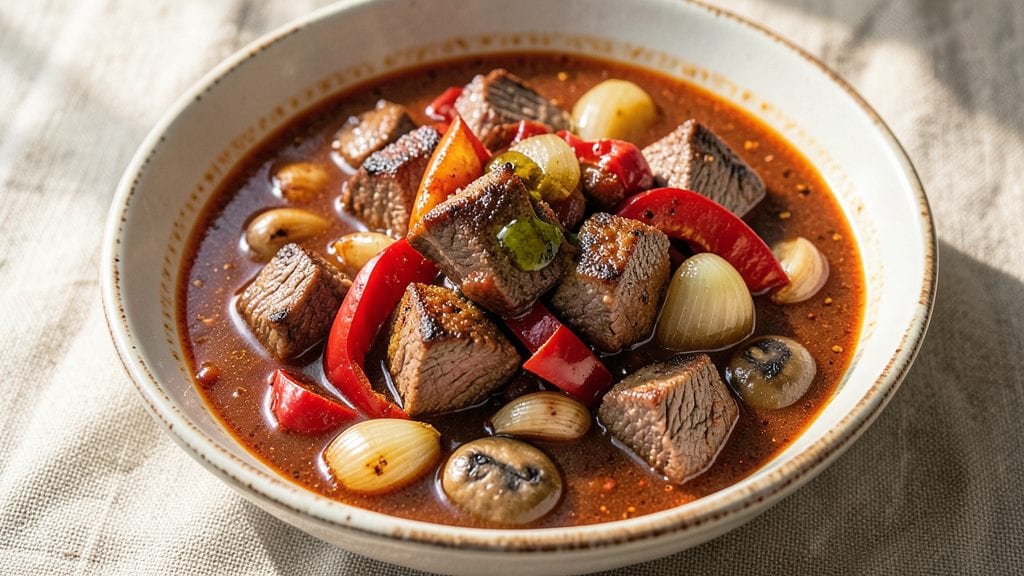
This original goulash soup recipe delivers the hearty, paprika-infused flavors of Hungary's most beloved comfort dish—where tender beef chunks melt in a rich, aromatic broth. The key lies in slow-cooked meat that practically falls apart, layered with sweet onions, tomatoes, and just the right amount of sweet and hot paprika. I've perfected this version over years of testing, ensuring every spoonful carries that deep, earthy warmth that makes goulash unforgettable.
The secret to authentic goulash begins with browning the beef in batches to develop a flavorful crust, then simmering it low and slow until the meat becomes fork-tender. Sweet paprika isn't just an ingredient here—it's the soul of the dish, balancing the savory depth of the broth.
This isn't a rushed weeknight meal; it's a labor of love that rewards patience with a soup so rich, it feels like a hug in a bowl.
What you'll end up with is a steaming pot of goulash where every bite offers perfectly tender beef, caramelized onions, and a broth so flavorful it deserves its own bowl.
The aroma alone will have everyone gathering around the table, and the texture—meaty yet velvety—is exactly what makes this dish a classic. Serve it with crusty bread or egg noodles to soak up every last drop of that paprika-rich goodness.
This recipe isn't just about following steps—it's about capturing the essence of Hungarian home cooking. The slow simmer transforms tough cuts into melt-in-your-mouth bites, while the paprika's warmth lingers long after the last spoonful.
Whether you're feeding a crowd or saving leftovers for days, this goulash delivers restaurant-quality results at home. Let's get started on creating something truly special.
Ingredients for original goulash soup
Paprika, beef, and slow-simmered broth—these are the stars of Hungary's most comforting soup.
| Ingredient | Amount | Notes |
|---|---|---|
| Beef Chuck Roast 🥩 | 2 ½ lb | Cut into 1-inch chunks |
| Yellow Onions 🧅 | 3 whole | Sliced thin, about 3 cups |
| Garlic Cloves 🧄 | 6 cloves | Minced, fresh preferred |
| Sweet Paprika 🌶️ | 2 tbsp | Hungarian preferred |
| Hot Paprika 🔥 | 1 tbsp | For subtle heat |
| Tomato Paste 🍅 | ½ cup | Squeeze tube or canned |
| Beef Broth 💧 | 6 cups | Low-sodium preferred |
| Red Wine 🍷 | 1 cup | Dry, like Cabernet |
| Bay Leaves 🌿 | 2 whole | Fresh or dried |
| Black Peppercorns 🌶️ | 1 tsp | Freshly cracked |
| Salt 🧂 | 1 ½ tsp | Kosher or sea salt |
| Carrots 🥕 | 3 whole | Sliced into rounds |
| Potatoes 🥔 | 2 lb | Yukon gold, cubed |
| Extra-Virgin Olive Oil 🫒 | 2 tbsp | For browning beef |
| Fresh Thyme 🌿 | 1 tbsp | Leaves only, chopped |
The beef is non-negotiable here. Chuck roast gives you that melt-in-your-mouth texture—sirloin or ribeye will stay tough. Grab it from the butcher section if you can; pre-cubed saves time but costs more. Look for good marbling, not lean cuts. I usually buy mine from Costco when I'm making a big batch, but the regular supermarket chuck works fine for this. The key is cutting it into 1-inch chunks—smaller pieces cook faster but lose shape, while bigger ones stay meaty. For the paprika, Hungarian sweet and hot are the gold standard. Penzeys or bulk bins at natural food stores have the best quality, but any jarred paprika will work in a pinch.
No red wine? Beef broth with a splash of balsamic vinegar works just as well. Fresh thyme is ideal, but dried at one-third the amount gets you close. The tomato paste can be from a squeeze tube (Trader Joe's has great ones) or a can—just make sure it's smooth, not chunky. For the potatoes, Yukon gold or russet both work, but don't skip them—they soak up all that paprika-rich broth. The carrots can be baby carrots if that's what's in the fridge, but whole carrots sliced into rounds caramelize better. And if you're short on time, pre-minced garlic from the jar works, though fresh is always better.
This soup tastes even better the next day—3-4 days in the fridge, no problem. Freezes beautifully for up to 3 months, so make a double batch. I like to portion it into single-serving containers for easy lunches. The beef gets even more tender after chilling, so don't rush it. If you're serving a crowd, double the recipe—just make sure your pot is big enough. The aroma alone will have everyone gathering around the table.
Why You'll Love This Recipe
- One-Pot Magic: I swear by this—just toss everything into one pot, walk away, and come back to something that smells like home. That beef chuck roast practically melts into tender shreds while the onions caramelize, and the paprika blend does all the heavy lifting on flavor.
- Paprika Powerhouse: Honestly, the mix of sweet and hot paprika is what makes this stand out. It’s not just spicy—it’s got this deep, smoky warmth that wraps around every bite, while the garlic cloves add that bright, punchy finish. My husband always asks for seconds before the bowl even hits the table.
- Leftovers That Shine: Between us, this soup only gets better the next day. The flavors meld even more, and the beef stays juicy—perfect for packing lunches or reheating for dinner. I’ve fed a houseful of guests with just one big pot, and no one ever complains about seconds.
- Budget-Friendly Feast: A chuck roast is one of the most affordable cuts, and it stretches across multiple meals without breaking the bank. Add onions and garlic for pennies, and you’ve got a hearty, satisfying soup that costs way less than takeout but tastes like a restaurant dish. (Yes, even on a Tuesday night.)
Step-by-step instructions for original goulash soup recipe
Here's how to build layers of flavor for rich, hearty goulash with melt-in-your-mouth beef.
Brown the Beef Chuck Roast for Deep Flavor
Heat the 2 tablespoons extra-virgin olive oil in a large Dutch oven over medium-high heat until shimmering. Working in batches to avoid crowding, add the 2.5 lb beef chuck roast cut into 1-inch chunks. Brown on all sides for 3-4 minutes per batch, pressing down gently with a wooden spoon. This creates a rich, caramelized crust that forms the flavor foundation.
As the beef browns, you'll see golden edges form and smell that irresistible meaty aroma. Transfer the browned beef to a plate and set aside. If the oil starts smoking before all pieces are browned, reduce heat slightly - you want color, not burning. The beef will continue cooking later, but this initial browning is non-negotiable for authentic goulash flavor.
Build the Aromatic Base with Onions and Spices
In the same Dutch oven, add the 3 whole yellow onions sliced thin. Cook over medium heat for 5-6 minutes until softened and beginning to caramelize at the edges. Add the 6 cloves minced garlic cloves and cook for 30 seconds until fragrant - you'll smell that sweet garlic aroma fill your kitchen.
Stir in the 2 tablespoons sweet paprika and 1 tablespoon hot paprika, letting them toast for 1 minute until the spices release their aroma. This is where the magic happens - the paprika develops its characteristic depth. Add the 0.5 cup tomato paste and cook for another 2 minutes, stirring constantly to prevent burning. The paste will darken slightly as it cooks down.
Deglaze and Simmer the Meat
Pour in the 1 cup red wine and scrape up all the browned bits from the bottom of the pot with a wooden spoon. This deglazing step captures all those flavorful fond particles. Let the wine simmer for 3-4 minutes until reduced by half, then add the 6 cups beef broth, 2 whole bay leaves, 1 teaspoon cracked black peppercorns, and 1.5 teaspoons salt.
Return the browned beef to the pot and bring to a gentle boil. Once boiling, reduce heat to low and let it simmer uncovered for 1 hour. The beef should be tender enough to pierce with a fork but still hold its shape. Here's the thing - don't skip this simmering time. It's what transforms tough chuck roast into fork-tender bites that practically melt in your mouth.
Add Vegetables for Hearty Texture
After the initial 1-hour simmer, add the 3 whole carrots sliced into rounds and the 2 lb potatoes cubed. Stir gently to distribute the vegetables throughout the broth. The potatoes will take about 15-20 minutes to cook through, while the carrots will soften more quickly. This layered cooking ensures all components reach perfect tenderness at the same time.
Add the 1 tablespoon chopped fresh thyme leaves and continue simmering for another 20-25 minutes, until the potatoes are fork-tender and the carrots are easily pierced. Taste the broth and adjust seasoning if needed - you might need a little more salt to balance the flavors after adding the vegetables. The soup should be rich but not overly salty, with the paprika's characteristic warmth.
Finish and Serve with Perfect Texture
Remove the 2 whole bay leaves and adjust the consistency if needed - if it's too thick, add a little water; if too thin, let it simmer uncovered for another 5 minutes. The final soup should coat the back of a spoon but still be light enough to ladle easily. Here's where it gets good - ladle the goulash into bowls and serve immediately while hot.
Each spoonful should deliver tender beef chunks that practically dissolve on your tongue, hearty vegetables in perfect bite, and that signature paprika depth that makes goulash so special. The broth should be rich but not heavy, with layers of flavor from the wine, beef, and spices. Serve with crusty bread to soak up every last drop of that flavorful broth.
Pro Tips For Making Original Goulash Soup
- Sear the Chuck Hard: That beef chuck won’t tenderize itself—get it deep brown in a hot pan with oil first. I used to rush this, and the soup always tasted underdeveloped. Two minutes per side, no moving the meat, until it’s got a crust. (Yes, even if you’re impatient like me.)
- Sweat the Onions Low: Onions burn faster than you think, especially when you’re distracted. Keep the heat at a gentle simmer, stir often, and don’t add the garlic until the onions are translucent—about 8-10 minutes. Burnt onions make the whole soup taste bitter, and no one wants that.
- Bloom the Paprika First: Skip the "just stir it in" approach—bloom that paprika in the oil for 30 seconds before adding onions. My grandmother swore by this, and she was right: it deepens the flavor instead of letting it dissolve into nothing. (Your future self will notice the difference.)
- Check for Doneness Early: Chuck roast needs patience, but pulling it at 195°F (not 203°F) keeps it juicy. Use a meat thermometer—guessing leads to dry, stringy meat. If it’s not quite there, tent it with foil and let it rest in the pot’s residual heat. (Does it look weird? Yes. Does it work? Every single time.)
Best sauces and condiments for these flavors
Paprika Depth
Sweet paprika isn't just a spice—it's the soul of goulash. For maximum flavor, I recommend using Hungarian sweet paprika (like Penzeys brand) and toasting it in the oil for 1 minute before adding other ingredients.
This step develops its natural oils and deepens its earthy aroma. If you want a little kick, add ½ teaspoon hot paprika at the end—just enough to warm up the dish without overpowering. 🌶️
Tomato Paste Base
The ½ cup tomato paste is crucial for balancing the richness of the beef and paprika. I use Trader Joe's smooth tomato paste because it blends seamlessly without graininess.
Cook it down for 2 minutes to concentrate its flavor—this step prevents a metallic taste and adds a subtle sweetness that rounds out the dish. For extra depth, stir in 1 teaspoon balsamic vinegar with the tomato paste.
Wine Deglaze
A 1 cup dry red wine (like Cabernet Sauvignon) deglazes the pot beautifully, lifting all those browned beef bits into the broth. If you don’t have wine, substitute with 1 cup beef broth + 1 tablespoon balsamic vinegar—it mimics the acidity and richness.
Let the wine reduce by half before adding broth to intensify its flavor. This step is non-negotiable for authentic goulash.
Herb Finishing
Fresh thyme and bay leaves elevate the dish with bright, herbal notes. Add 1 tablespoon chopped thyme in the last 20 minutes of cooking to preserve its aroma. Remove the 2 bay leaves before serving—they’re bitter if overcooked.
For a modern twist, finish with 1 teaspoon chopped fresh parsley or a drizzle of sour cream (about 2 tablespoons per bowl) to cut through the richness.
Acid Balance
If your goulash tastes flat, a splash of lemon juice (about 1 teaspoon) brightens the flavors. I also like adding 1 teaspoon apple cider vinegar during the final simmer—it enhances the paprika’s warmth without overpowering.
This trick is especially useful if you skipped the wine or used a low-acid broth.
Topping Ideas
Serve with crusty bread or egg noodles to soak up the broth. For extra richness, top each bowl with 2 tablespoons crumbled feta cheese or 2 slices of smoked sausage. A sprinkle of extra paprika adds color and a subtle smoky finish.
For a creamy touch, stir in ½ cup sour cream at the end—just enough to make it velvety without watering it down. 🥖
Nutrition facts
Frequently asked questions
Can I make this goulash soup without red wine?
The wine adds depth, but you can substitute 1 cup beef broth + 1 tablespoon balsamic vinegar for the same acidity and richness. Just reduce the broth by half before adding the rest of the liquid to concentrate the flavor. The dish will still taste amazing!
How do I know when the beef is tender enough?
After 1 hour of simmering, the beef should be fork-tender but still hold its shape. Press a piece with a fork—if it crumbles easily, it's ready. For extra tenderness, let it cook an additional 15-20 minutes, but don't overcook or it'll turn mushy.
What's the best way to store leftovers?
Store in an airtight container in the fridge for 3-4 days or freeze for up to 3 months. The flavors actually improve overnight! Reheat gently on the stove with a splash of water or broth to restore moisture. Never microwave directly from frozen.
Can I use a slow cooker for this recipe?
Brown the beef first, then transfer everything to a slow cooker and cook on low for 6-8 hours or high for 3-4 hours. The slow cooking enhances the meat's tenderness. Just add the potatoes and carrots in the last 1 hour to prevent overcooking.
Why does my goulash taste bland?
Common causes: under-simmered beef (needs at least 1 hour of cooking) or skipping the wine/balsamic. Boost flavor by adding 1 teaspoon apple cider vinegar or ½ teaspoon hot paprika at the end. Also check your salt—goulash should be rich but not salty.