
Soups & Stews
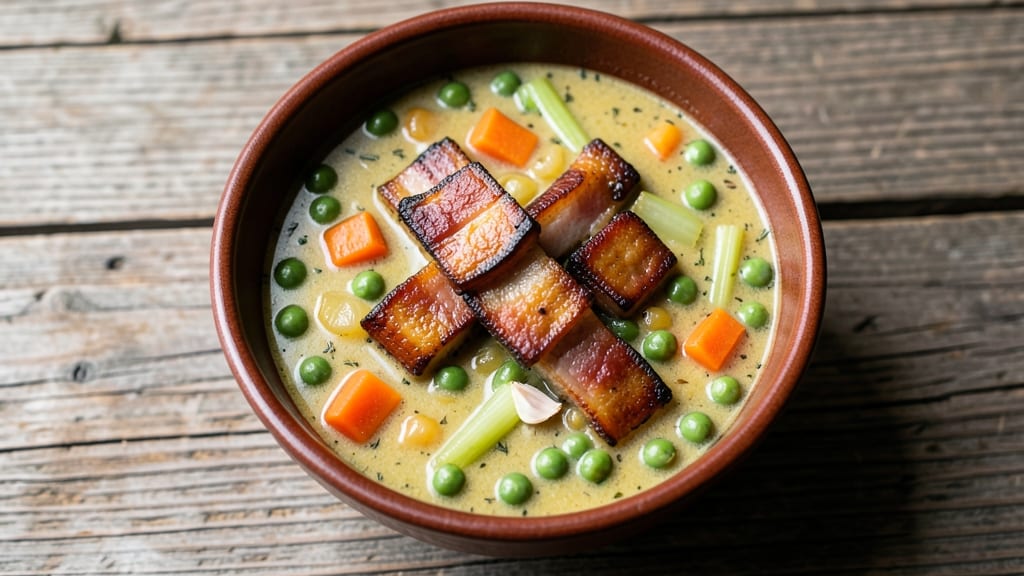
The Pioneer Woman pea soup recipe transforms humble ingredients into a rich, velvety stew that feels like a warm hug on a chilly day. I developed this version after years of testing—balancing smoky ham, tender peas, and aromatic herbs to create a soup that’s both rustic and refined.
The key lies in slow simmering, which deepens the flavors until every bite is perfectly seasoned.
This recipe delivers velvety perfection with minimal effort—just 30 minutes of prep followed by a 1.5-hour simmer. The ham adds depth, while fresh herbs and a touch of smoked paprika elevate the broth to restaurant-quality.
It’s the kind of soup that tastes even better the next day, as flavors meld into something extraordinary.
By the time you serve this, you’ll have a hearty, protein-rich soup with tender peas and a silky texture that’s impossible to resist. The smoky undertones from the ham pair beautifully with the natural sweetness of the peas, creating a balance that’s both comforting and sophisticated.
Perfect for meal prep or a cozy weeknight dinner, this soup pairs well with crusty bread or a simple green salad. Let’s get started with the ingredients and steps that make it truly unforgettable.
Ingredients for pioneer woman pea soup
Sixteen ingredients blend rustic ham and vibrant peas into velvety perfection for a hearty soup.
| Ingredient | Amount | Notes |
|---|---|---|
| Fresh Peas 🌱 | 2 cups | Frozen or fresh, shelled |
| Smoked Ham Hock 🥓 | 1 lb | Or substitute with smoked ham bone |
| Yellow Onion 🧅 | 1 whole | Medium size, diced |
| Carrots 🥕 | 3 medium | Peeled and chopped into chunks |
| Celery Stalks 🌿 | 3 whole | Cut into 1-inch pieces |
| Garlic Cloves 🧄 | 4 cloves | Minced for aromatic depth |
| Smoked Paprika 🌶️ | 1 tbsp | For smoky flavor complexity |
| Fresh Thyme 🌿 | 2 sprigs | Or 1 tsp dried thyme |
| Fresh Parsley 🌿 | ¼ cup | Chopped for fresh finish |
| Chicken Broth 💧 | 4 cups | Low-sodium preferred |
| Whole Grain Bread 🍞 | 1 slice | For thickening soup base |
| Salt 🧂 | 1 tsp | Kosher or sea salt |
| Black Pepper 🌶️ | ½ tsp | Freshly ground preferred |
| Extra-Virgin Olive Oil 🫒 | 1 tbsp | For sautéing vegetables |
| Fresh Bay Leaf 🌿 | 1 whole | Removed before serving |
The smoked ham hock is the soul of this soup—its rich, smoky flavor infuses the broth beautifully. Look for bone-in cuts at Whole Foods or your local butcher shop, as they provide the deepest flavor. If you can't find a ham hock, a smoked ham bone works just as well. For the peas, fresh is ideal but frozen works perfectly—just don't thaw them before adding. The carrots and celery should be firm and vibrant, not limp or discolored. If using organic, no need to peel the carrots—their skin adds subtle earthiness. For the thyme and parsley, farmers markets often have fresher herbs than grocery stores, but the dried versions will work in a pinch.
No smoked paprika? Substitute with a pinch of liquid smoke plus extra black pepper—it won't be identical, but you'll still get that smoky essence. Fresh thyme unavailable? Use dried thyme at one-third the amount. The bread for thickening should be whole grain or sourdough—these add a pleasant tang. For a gluten-free version, use gluten-free bread or a cornstarch slurry. The chicken broth matters—low-sodium versions like Pacific Foods or Swanson keep the soup from tasting flat. If you're using a ham bone instead of a hock, score the surface lightly to help the flavor release during simmering.
This soup tastes even better the next day as flavors meld. Store in an airtight container in the fridge for up to 5 days or freeze portions for 3 months. For meal prep, I double the batch and freeze half—single-serving containers make reheating a breeze. The ham bone can be simmered separately for broth, then discarded. Fresh herbs should be stored in a damp paper towel in a sealed container to stay vibrant. The soup reheats beautifully—just add a splash of water or broth if it thickens too much.
Why You'll Love This Recipe
- Here’s what sold me: a ham hock stretches this into four servings, and the veggies are pantry staples. I’ve fed a family of five for under $10, and the leftovers reheat like they’re fresh. Not the prettiest, but the taste makes up for it.
- No Chopping Needed: Honestly, I just toss in the ham hock whole and let it work its magic. The onions, carrots, and celery can be roughly chopped—no need for precision here. That smoky ham flavor seeps into everything while you sip your coffee.
- Smoky Depth Magic: Between us, the ham hock transforms this into something ridiculously good. It’s not just pea soup—it’s that rich, savory-sweet balance where the peas stay bright against the caramelized ham and onions. My picky husband actually finishes his bowl.
- Weeknight or Potluck Star: I make a big batch on Sundays and freeze half. It’s perfect for lazy weeknights (just reheat) or when I’m bringing a dish to a gathering—no one ever guesses how little effort it took. The celery and carrots soften just enough to melt into the broth.
Step-by-step instructions for smoky ham and herb pea soup
Here's the method to create a rich, velvety pea soup with deep smoky flavor and tender vegetables.
Sauté the Vegetable Base
Heat the 1 tablespoon extra-virgin olive oil in a large pot over medium heat. Add the 1 whole yellow onion, 3 medium carrots (chopped into chunks), and 3 whole celery stalks (cut into 1-inch pieces). Cook for 5-6 minutes until the vegetables soften and the onion becomes translucent.
I like to stir occasionally to ensure even cooking. The vegetables should release their natural juices and begin to caramelize slightly at the edges. This forms the flavor foundation for the entire soup. If you notice the vegetables sticking, add a splash of chicken broth to deglaze the pan and prevent burning.
Add Aromatics and Smoked Ham Hock
Push the sautéed vegetables to one side of the pot and add the 4 cloves garlic cloves (minced) to the empty space. Stir for 30 seconds until fragrant—this ensures the garlic infuses without burning. Then add the 1 lb smoked ham hock to the pot.
Sprinkle the 1 tablespoon smoked paprika and 2 sprigs fresh thyme over everything. Stir to combine, letting the paprika toast slightly for 30 seconds. This step unlocks the smoky depth that makes this soup special. The ham hock will release its rich, savory juices as it simmers, so don't rush this process.
Simmer with Broth and Seasonings
Pour in the 4 cups chicken broth and bring the mixture to a boil. Once boiling, reduce heat to low and add the 1 tsp salt, 0.5 tsp black pepper, and 1 whole fresh bay leaf. Let it simmer uncovered for 30 minutes, stirring occasionally. This allows the flavors to meld and the ham hock to render its juices into the broth.
After 30 minutes, check the ham hock—it should be tender when pierced with a fork. If not, continue simmering for another 10-15 minutes until fully cooked. Here's the thing—patience at this stage ensures the soup develops its full, complex flavor. Skipping this step results in a thinner, less flavorful broth.
Incorporate Peas and Thicken the Soup
Add the 2 cups fresh peas and the 1 slice whole grain bread (cut into small cubes) to the pot. Simmer for another 15-20 minutes until the peas are tender and the bread has broken down into a creamy consistency. This is where the soup transforms from brothy to velvety.
The bread acts as a natural thickener, absorbing the broth and creating a luscious texture. Stir occasionally to prevent sticking. You'll know it's ready when the soup coats the back of a spoon smoothly. If it's too thick, add a splash of hot water or broth to reach your desired consistency.
Finish and Serve
Remove the pot from heat and discard the ham hock bones and fresh bay leaf. Stir in the 0.25 cup fresh parsley (chopped) and let the soup rest for 5 minutes to allow flavors to settle. Taste and adjust seasoning if needed—this is the final opportunity to perfect the balance of salt, pepper, and smokiness.
Ladle the soup into bowls and serve immediately. The aroma alone will draw everyone to the table. Each spoonful should deliver tender peas, rich ham flavor, and a velvety texture that makes this soup unforgettable. For extra depth, garnish with additional parsley and a crack of black pepper.
Pro Tips For Making Pioneer Woman Pea Soup
- START HOT, END LOW: The ham hock needs a screaming-hot start—get that pot boiling hard for 5 minutes to render the fat and collagen properly. Then drop to a simmer or you’ll end up with a greasy mess instead of rich, velvety broth. (Yes, even if you’re impatient like me.)
- SALT THE HOCK FIRST: Generously salt the ham hock before adding it to the pot—this guarantees flavor penetration. I used to skip this, and the soup always tasted like it needed more salt later. A pinch of pepper on the hock too, if you’re feeling fancy.
- DON’T OVERCOOK THE PEAS: Fresh peas turn to mush if you let them simmer too long. Add them last and cook just 5–7 minutes—until tender but still holding shape. I learned this the hard way after turning a bright green soup into a sad, gray paste.
- ROAST THE VEGETABLES: Toss the diced onion, carrots, and celery in olive oil, salt, and black pepper, then roast at 400°F for 20 minutes before adding to the pot. The caramelized edges add depth without extra effort. (Sounds weird, but it works.)
Troubleshooting this recipe
Mushy Peas Fix
If your peas turn mushy, you likely overcooked them. To prevent this, add the 2 cups fresh peas only 15 minutes before the soup is done. For extra texture, use frozen peas—they hold their shape better than fresh.
If you catch them early, stir in 1 teaspoon lemon juice or ½ teaspoon vinegar to brighten their flavor while keeping them intact. 🌱
Broth Too Thin
A watery soup often means the ham hock didn’t render enough fat. Simmer the ham hock in 2 cups water for 1 hour before adding other ingredients to extract maximum flavor. For thickening, blend ½ cup cooked peas with ¼ cup broth, then stir back in.
Alternatively, mash the bread cubes more thoroughly during cooking. The goal is a velvety consistency that coats the spoon.
Ham Hock Not Tender
Undercooked ham hock happens when simmering too quickly. Increase heat to low-medium and extend simmering by 30-45 minutes until the meat falls off the bone. For extra tenderness, add 1 cup apple cider vinegar to the broth—its acidity breaks down collagen faster.
If using a ham bone, score it deeply before simmering to speed up flavor infusion. 🥓
Vegetables Overcooked
Carrots and celery that turn to mush mean they cooked too long. Sauté them for only 4-5 minutes until just tender, then remove them with a slotted spoon before adding peas. For a brighter flavor, add them back in during the final 5 minutes of cooking.
If using pre-cut frozen veggies, skip sautéing entirely and add them directly to the simmering broth with the peas.
Bland Flavor Profile
Flat soup usually means insufficient seasoning or rushed cooking. Boost umami by adding 1 teaspoon fish sauce or ½ teaspoon soy sauce at the end. For depth, toast 1 teaspoon coriander seeds in a dry pan until fragrant, then grind and stir into the soup.
Let the soup rest 10 minutes off heat before tasting—flavors develop during this time. A final adjustment of salt and black pepper makes all the difference. 💡
Burnt Onions or Garlic
Darkened aromatics mean they cooked too long. Sauté onions and celery for no more than 5 minutes over medium heat. Add garlic only 30 seconds before the ham hock to prevent burning.
For extra protection, keep the pot uncovered and stir frequently. If burning occurs, remove the charred bits immediately—they can make the soup bitter. A splash of lemon juice can neutralize any off-flavors.
Nutrition facts
Frequently asked questions
Can I make this pea soup without ham?
The smoky ham hock is key for depth, but you can substitute with 1 cup smoked sausage (like kielbasa) or 1/2 cup smoked bacon bits for a similar flavor. For a vegetarian version, use 1 cup mushrooms and 1 teaspoon liquid smoke—simmer mushrooms first to develop their umami. The soup will still be hearty but with a different profile.
How do I store and reheat leftovers?
Store in an airtight container in the fridge for up to 5 days or freeze for 3 months. Reheat gently on the stove over low heat, stirring occasionally. If too thick, add a splash of broth or water. For meal prep, freeze in single-serving portions—just thaw overnight in the fridge before reheating.
Why does the bread thicken the soup?
The bread acts as a natural thickener by absorbing broth and breaking down into a creamy paste during simmering. Whole grain bread adds subtle tang and fiber, while sourdough enhances depth. For a gluten-free option, replace with 1/4 cup cornstarch mixed with 2 tablespoons cold water—stir in during the final 5 minutes of cooking.
Can I use canned peas instead of fresh?
Yes! Canned peas work perfectly—they're pre-cooked, so add them 10 minutes before the soup is done to avoid mushiness. Drain and rinse first to remove excess sodium. For extra texture, stir in 2 tablespoons frozen peas at the end—they'll stay bright and crisp.
What’s the best way to serve this soup?
Pair with crusty sourdough bread or garlic toast to soak up the velvety broth. For a complete meal, serve with a simple green salad (like arugula with lemon vinaigrette) or roasted potatoes. The smoky ham flavor also complements cornbread or cheddar cheese on the side.