
Soups & Stews
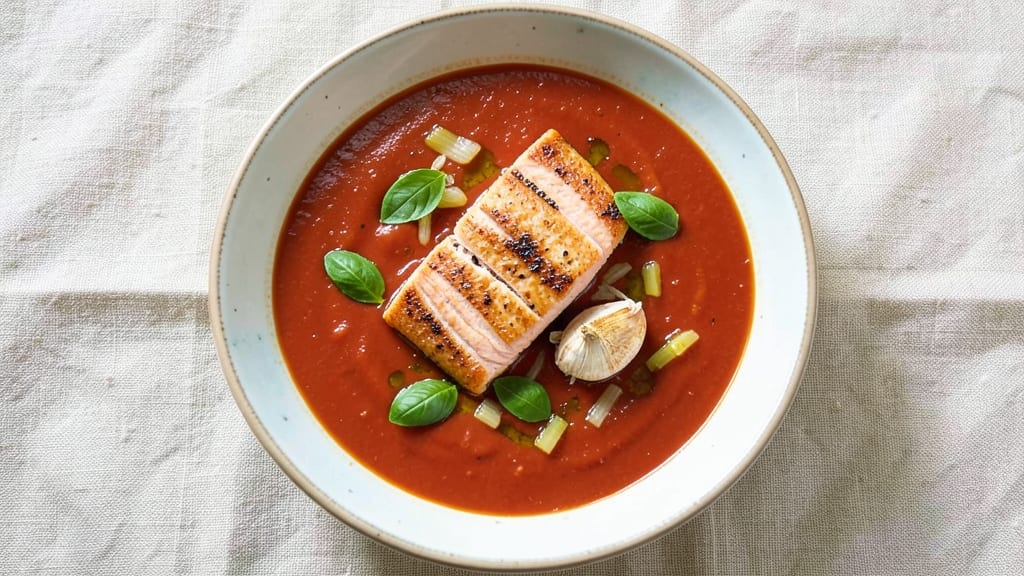
This salmon tomato soup recipe combines the rich depth of a smoky tomato base with delicate, flaky salmon chunks that melt in your mouth. 🌟 The secret lies in poaching the salmon separately to preserve its texture, then folding it into a velvety soup that balances acidity and richness—perfect for chilly evenings or when you crave something comforting yet refined.
The foundation starts with a slow-simmered tomato base, where onions, garlic, and celery develop into a fragrant, caramelized base before blending with canned tomatoes and broth.
A touch of smoked paprika adds depth without overpowering, while a splash of cream (or coconut milk for a lighter version) rounds out the texture. The salmon, poached just until tender, is flaked and added last to maintain its delicate structure.
What you’ll end up with is a soup that’s restaurant-quality at home—silky smooth with pockets of tender salmon, brightened by fresh basil and finished with a drizzle of olive oil.
The smoky tomato flavor carries through every spoonful, while the salmon adds a luxurious touch that makes this more than just a weeknight meal. It’s the kind of dish that feels special without requiring hours in the kitchen.
Serve with crusty bread to soak up every last drop or pair it with a simple arugula salad for a complete meal. The recipe scales easily, too—whether you’re feeding one or a crowd, the balance of flavors stays perfect. Let’s get cooking!
Ingredients for salmon tomato soup
Fourteen ingredients. One luxurious bowl. Smoky, creamy, and packed with flaky salmon.
| Ingredient | Amount | Notes |
|---|---|---|
| Fresh Salmon Fillets 🐟 | 1 lb | Skin-on, boneless for flaky texture |
| Yellow Onion 🧅 | 1 whole | Diced, about 1.5 cups |
| Celery Stalks 🥬 | 3 whole | Diced, about 1 cup |
| Garlic Cloves 🧄 | 4 cloves | Minced, fresh preferred |
| Canned San Marzano Tomatoes 🍅 | 2 cans | 28 oz each, crushed by hand |
| Vegetable Broth 💧 | 4 cups | Low-sodium preferred |
| Heavy Cream 🥛 | ½ cup | Full-fat for richness |
| Smoked Paprika 🌶️ | 1 tsp | Adds depth without heat |
| Fresh Basil Leaves 🌿 | ¼ cup | Chopped, stems removed |
| Extra-Virgin Olive Oil 🫒 | 2 tbsp | High quality, fruity |
| Lemon Juice 🍋 | 1 tbsp | Freshly squeezed |
| Salt 🧂 | 1 ½ tsp | Kosher or sea salt |
| Black Pepper 🌶️ | ½ tsp | Freshly ground |
| Coconut Milk (Optional) 🥥 | ½ cup | Full-fat for lighter version |
The salmon is non-negotiable—skin-on fillets give you that melt-in-your-mouth texture. Grab the freshest you can find at Whole Foods or your local fishmonger, or Trader Joe's has great pre-portioned packs. For the tomatoes, San Marzano is worth the splurge—sweeter, less acidic, and the flavor sings. The broth? Low-sodium is key so you control the saltiness. I always double-check the celery isn’t stringy (toss those ends) and the onion isn’t sprouting. Fresh basil? Farmers market leaves are brighter than grocery store ones, but use what you’ve got—just make sure they’re perky.
No heavy cream? Coconut milk works perfectly—just use full-fat for that same velvety finish. Short on smoked paprika? Regular paprika plus a pinch of cayenne gets you close, but the flavor’s different. The salmon can be swapped for firm white fish like cod if you’re not doing pescatarian, but trust me on the salmon—it’s worth the extra few bucks. The lemon juice is optional but brightens everything up. Want even more depth? Add a pinch of sugar to the tomato base while simmering—balances the acidity beautifully. And if you’re prepping ahead, the tomato base keeps for 5 days in the fridge—just reheat and add the salmon fresh.
This soup tastes even better the next day—4-5 days in the fridge, 3 months frozen. I like to portion it into containers so I can grab a bowl for lunch without reheating the whole thing. The salmon stays flaky if you reheat gently—just warm through on the stove, no boiling. For serving, a drizzle of that extra-virgin olive oil and extra basil make all the difference. Pair with crusty bread or a simple salad, and you’ve got a restaurant-worthy meal without the fuss.
Why You'll Love This Recipe
- Here’s what sold me: the San Marzano tomatoes caramelize into something sweet and deep, while the garlic—oh man—roasts until it’s fragrant and mellow. The salmon adds this bright, buttery finish that feels like a hug.
- One-Pot Magic: I swear by this—just toss everything into one pot, simmer, and walk away. No straining, no extra bowls, just that rich, smoky tomato base with flaky salmon right in the mix.
- Tomato-Garlic Love: Here’s what sold me: the San Marzano tomatoes caramelize into something sweet and deep, while the garlic—oh man—roasts until it’s fragrant and mellow. The salmon adds this bright, buttery finish that feels like a hug.
- Weeknight to Dinner Party: Honestly, this works for both. Throw it together on a Tuesday with crusty bread, or dress it up with a drizzle of cream and fresh basil for guests. The soup’s rich enough for company but unfussy enough for a lazy night.
Step-by-step instructions for smoky tomato base with flaky salmon chunks
Here's how to build a rich tomato base that cradles tender salmon perfectly.
🍳 Step 1: Sauté the Aromatic Vegetable Base
Heat the 2 tablespoons extra-virgin olive oil in a large pot over medium heat. Add the diced yellow onion and diced celery stalks, cooking for 5-6 minutes until softened and translucent. You'll notice the onions release moisture and the celery becomes tender—this is your signal to add the 4 minced garlic cloves.
Cook the garlic for 30 seconds until fragrant—don't let it brown or it'll turn bitter. Here's the thing: this vegetable trio forms the flavor foundation. If it smells sweet and earthy at this stage, you're on the right track. Stir in the 1 teaspoon smoked paprika immediately after the garlic, letting it toast for 10 seconds to deepen its smoky aroma.
🍳 Step 2: Build the Tomato Broth
Pour in the 2 cans crushed San Marzano tomatoes and stir to combine with the vegetables. Let this mixture simmer uncovered over medium heat for 10 minutes, allowing the raw tomato acidity to mellow. You'll see the mixture reduce slightly and develop a rich, glossy sheen—this indicates the natural tomato sugars are caramelizing.
Add the 4 cups vegetable broth and 1.5 teaspoons salt, then increase heat to medium-high until the soup reaches a gentle boil. Once boiling, reduce heat to medium-low and let it simmer uncovered for 20 minutes. This slow simmering develops depth of flavor while preventing the soup from becoming too acidic. Taste occasionally—you want the base to be balanced between sweet and tangy.
🔥 Step 3: Poach the Salmon for Perfect Flakiness
While the soup simmers, pat the 1 lb fresh salmon fillets dry with paper towels. This step is crucial—any moisture will prevent proper searing. Cut each fillet into 1-inch chunks (leave the skin on if using skin-on fillets). The skin will help protect the delicate salmon as it cooks.
In a separate small saucepan, bring 2 cups of the hot soup base to a gentle simmer over medium heat. Add the salmon chunks and poach for 3-4 minutes until they're just opaque in the center. You'll know they're ready when they release easily from the spoon and flake apart with gentle pressure. Remove the salmon with a slotted spoon and set aside—don't overcook or they'll turn rubbery.
🥘 Step 4: Finish and Combine
Return the poaching liquid to the main pot and stir in the 0.5 cup heavy cream and 0.5 teaspoon black pepper. If using, add the 0.5 cup coconut milk now for a lighter version. Let the soup simmer gently for 2 minutes to warm through—this prevents the cream from curdling. The soup should be velvety with just a hint of smokiness from the paprika.
Gently fold in the poached salmon chunks and stir in the 0.25 cup chopped fresh basil leaves. Add the 1 tablespoon fresh lemon juice and taste—adjust seasoning with more salt if needed. The lemon brightens the dish while cutting through the richness of the cream. Serve immediately while the salmon is still flaky and warm.
⏰ Step 5: Rest and Serve for Maximum Flakiness
Let the soup rest for 5 minutes before serving. This brief resting period allows the salmon to absorb any remaining flavors from the broth and ensures each bite remains perfectly flaky. I know it's tempting to serve immediately, but those extra minutes make all the difference in texture.
Ladle the soup into bowls and garnish with additional basil leaves if desired. The perfect bowl should have tender salmon chunks that melt in your mouth against a rich, smoky tomato broth. Serve with crusty bread to soak up every last drop of that flavorful liquid.
Pro Tips For Making Salmon Tomato Soup
- Cook Salmon Skin-Side Down: Flip the fillets skin-side down first, then press gently with a spatula to render the crispy skin—it’ll add flavor and texture to the soup. I learned this the hard way when I skipped it and ended up with bland, flaky salmon that dissolved into the broth.
- Sweat Onions Low and Slow: Don’t rush the onions—cook them over medium-low heat for 8-10 minutes until soft and translucent, not browned. My grandmother swore by this, and it works: caramelized onions later? Sure, but here, you want them to melt into the soup without adding bitterness.
- Blend in Batches: If your blender’s small, split the soup into two batches—overfilling it risks a messy explosion. I know, I know, but trust the process: a clean, smooth finish is worth the extra 30 seconds.
- Reserve Some Tomato Juice: Before blending, scoop out ½ cup of the tomato liquid and set it aside—stir it back in at the end to brighten the color and cut the richness. Sounds weird, but it works: the soup tastes lighter and more balanced, not like a heavy stew.
Troubleshooting this recipe
Salmon Too Dry?
If your salmon chunks turn out dry or rubbery, you likely overcooked them. Poach the salmon in the soup base for no more than 3-4 minutes—it should be just opaque in the center.
I’ve found that skin-on fillets protect the delicate flesh better, so leave the skin attached if possible. For extra insurance, poach the salmon in a separate small pot with 2 cups of broth instead of the full soup base—this gives you more control over the temperature. 🔥
Soup Too Acidic?
If your soup tastes overly tangy, it’s likely because the tomatoes didn’t mellow enough during simmering. Always let the tomato-vegetable mixture simmer uncovered for 10 minutes before adding broth.
For extra balance, stir in ½ teaspoon sugar while simmering or add a pinch of salt to the broth before pouring it in. I also like to taste the base before adding cream—if it’s too sharp, a splash of lemon juice later can help, but it’s better to adjust early.
Broth Too Thin?
A watery soup usually means the broth wasn’t reduced enough. After adding the broth, simmer the soup uncovered for at least 20 minutes to let excess liquid evaporate.
If it’s still too thin, remove the pot from heat and let it sit for 5-10 minutes—the residual heat will continue to thicken it. For a quicker fix, stir in 1 tablespoon cornstarch mixed with 2 tablespoons water and simmer for another 2 minutes.
Just don’t overdo it, or the soup will turn gluey.
Salmon Falling Apart?
If your salmon disintegrates when added to the soup, it was likely overcooked or handled too roughly. Always use a slotted spoon to remove poached salmon from the liquid—never drain it in a colander, as the weight will break it apart.
For extra stability, poach the salmon in the coldest part of the simmering broth (usually the outer edges of the pot) to ensure even, gentle cooking. And remember: flaky doesn’t mean fragile—handle it like you would delicate eggs.
Cream Curdling?
Cream curdling happens when it’s added to a soup that’s too hot. Always stir in the heavy cream or coconut milk over low heat and let the soup simmer gently for just 2 minutes after adding it.
For extra insurance, temper the cream by mixing a spoonful of the hot soup into it first, then slowly whisking it back into the pot. If it still curdles, strain the soup through a fine-mesh sieve to remove any lumps—your guests will never notice the difference. 💫
Flavor Too Mild?
A lackluster flavor usually means the vegetables weren’t cooked long enough or the seasoning was off. Always sauté the onions and celery until they’re soft and translucent (about 5-6 minutes), and let the garlic toast just until fragrant—not browned.
For extra depth, add a pinch of red pepper flakes or a splash of fish sauce (just ½ teaspoon) to the soup base. I also like to finish with a drizzle of high-quality olive oil and a sprinkle of flaky sea salt—it elevates everything instantly.
Nutrition facts
Frequently asked questions
Can I use canned salmon instead of fresh?
Drain and rinse 2 cans (5 oz each) of high-quality canned salmon and pat dry before folding into the soup. For extra flakiness, gently flake it with a fork. The texture will be slightly different but still delicious. Just reduce the poaching step since canned salmon is already cooked.
How do I make this soup vegan?
Swap the salmon for extra-firm tofu cubes (pressed and baked for 10 minutes at 400°F) or hearts of palm. Use vegetable broth and replace heavy cream with full-fat coconut milk. The smoky tomato base remains the same—just omit the salmon entirely or use vegan fish substitutes like hemp hearts for texture.
Can I prepare this soup ahead of time?
Yes! The tomato base keeps for 5 days in the fridge or 3 months in the freezer. Reheat gently on the stove, then add the salmon last to keep it flaky. For best results, poach the salmon fresh and fold it in just before serving. The flavors actually improve overnight as the ingredients meld.
What if I don't have smoked paprika?
Use regular paprika plus a pinch of cayenne for heat, or liquid smoke (¼ teaspoon) for depth. For a smoky flavor without spice, try ½ teaspoon of chipotle powder (mixed with the tomatoes). The key is toasting the spices briefly to release their aromas.
Is this soup kid-friendly?
With a few tweaks! Omit the smoked paprika (or reduce to ¼ teaspoon) and use whole milk instead of cream. Cut the salmon into smaller pieces and serve with buttered noodles on the side. Kids often love the mild tomato flavor and creamy texture—just watch for any fish allergies.