
Soups & Stews
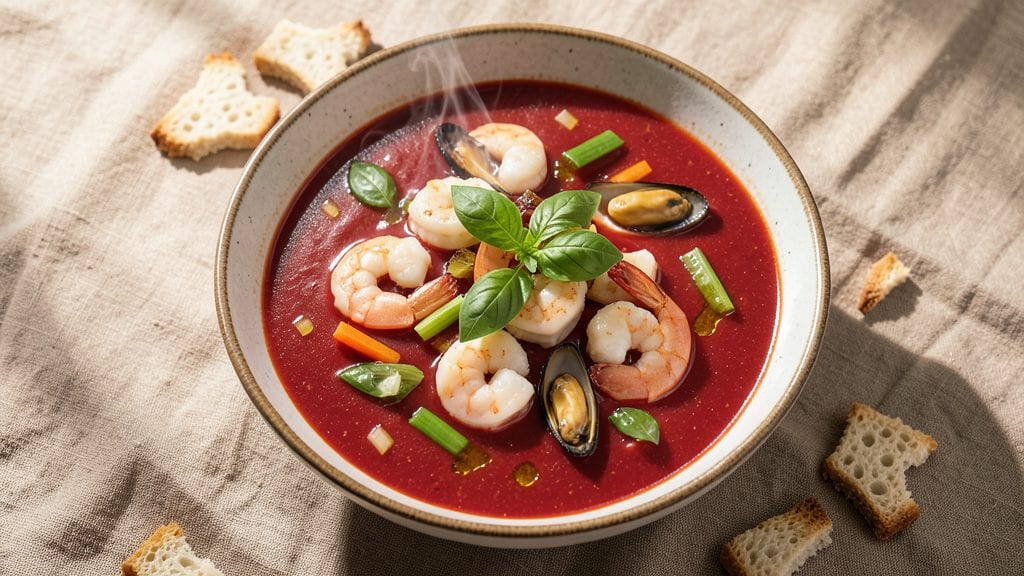
This seafood tomato soup recipe transforms simple ingredients into a bright, briny masterpiece that delivers restaurant-quality flavor in just 25 minutes. The secret lies in balancing sweet tomatoes with fresh seafood—whether shrimp, scallops, or fish—and a touch of white wine to elevate the broth.
After years of testing this dish, I’ve perfected a method that keeps the seafood tender while letting the tomatoes develop their natural sweetness.
The process is straightforward but precise: sauté aromatics until fragrant, build a rich tomato base, and finish with delicate seafood that cooks in minutes. This isn’t your childhood canned-soup version—it’s a velvety, aromatic soup with layers of flavor that make every spoonful satisfying.
The key is timing the seafood perfectly so it stays tender without overcooking, a lesson I learned the hard way after a particularly disastrous batch of shrimp that turned rubbery.
What you’ll end up with is a soup that’s vibrant, comforting, and full of briny depth—ideal for chilly evenings or as an appetizer that impresses guests. The broth is rich but not heavy, the seafood melts in your mouth, and the acidity from the tomatoes cuts through the richness beautifully.
Serve it with crusty bread or a sprinkle of fresh basil for a touch of freshness that ties everything together.
This recipe works equally well with shrimp, scallops, or firm white fish like cod, giving you flexibility depending on what’s fresh at your market.
Whether you’re feeding a crowd or treating yourself to a cozy meal, the result is always the same: a soup that tastes like it simmered all day, even though it comes together in under half an hour. Let’s get cooking!
Ingredients for seafood tomato soup
Eight pantry staples plus fresh seafood—this soup delivers restaurant-quality flavor in minutes.
| Ingredient | Amount | Notes |
|---|---|---|
| Extra-Virgin Olive Oil 🫒 | 2 tbsp | High quality, fruity variety |
| Yellow Onion 🧅 | 1 whole | Diced, medium size |
| Garlic Cloves 🧄 | 4 cloves | Peeled, minced finely |
| Carrots 🥕 | 2 medium | Peeled, diced small |
| Celery Stalks 🥬 | 2 whole | Diced, medium size |
| Canned San Marzano Tomatoes 🍅 | 1 28 oz can | Crushed by hand |
| Dry White Wine 🍷 | ½ cup | Sauvignon Blanc preferred |
| Seafood Stock 🦞 | 2 cups | Homemade or quality store-bought |
| Heavy Cream 🥛 | ½ cup | Full-fat for richness |
| Fresh Basil Leaves 🌿 | ¼ cup | Chopped, for garnish |
| Lemon Juice 🍋 | 1 tbsp | Freshly squeezed |
| Salt 🧂 | 1 tsp | Kosher or sea salt |
| Black Pepper 🌶️ | ½ tsp | Freshly ground preferred |
| Shrimp 🦐 | 1 lb | Peeled, deveined, medium |
| Scallops 🦑 | 1 lb | Fresh or frozen, thawed |
The tomatoes are the soul of this soup. San Marzano makes all the difference—they're sweeter and less acidic than regular canned tomatoes. If you can't find them, whole peeled tomatoes work too (just crush them by hand). The seafood stock? Homemade is ideal, but Goya or Pacific brand from the store are solid. For the seafood, shrimp and scallops are my go-tos, but firm white fish like cod or halibut works just as well. Just make sure it's fresh—the briny quality is everything here.
No white wine? Substitute extra seafood stock with a splash of lemon juice for brightness. Short on basil? Fresh parsley or thyme adds a nice touch. The carrots and celery are classic mirepoix—don't skip them, even though they're small in this recipe (they build flavor). For the seafood, frozen works in a pinch, but thaw it properly or it'll turn rubbery. If you're using fish, cut it into small pieces so it cooks evenly. And trust me on the full-fat cream—it makes the soup luxuriously rich without being heavy.
This soup reheats beautifully—just warm it gently on the stove. Keeps for 4-5 days in the fridge, but honestly tastes best the first day. Freezes for 3 months if you want to make a big batch. I always double the recipe when I have fresh seafood on hand. The leftovers are perfect for lunch the next day, especially with a sprinkle of fresh basil and a drizzle of good olive oil.
Why You'll Love This Recipe
- Same recipe, two vibes: serve it with crusty bread for a lazy night in, or add a splash of white wine and fresh basil for a dinner that’ll impress guests. My roommate’s boyfriend asked for the recipe after one bowl—that’s the test.
- One-Pot Magic: I swear by this soup—just sauté onions, garlic, carrots, and celery in olive oil until soft, then toss in tomatoes and seafood. No extra bowls, no fuss, and the flavors meld into something ridiculously cozy while you’re stirring.
- Garlic Bomb: That first spoonful of soup hits you with caramelized onions and layers of garlic—it’s the kind of depth that makes you pause mid-sip. Honestly, I double the garlic cloves now because the first time, I missed it.
- Weeknight to Dinner Party: Same recipe, two vibes: serve it with crusty bread for a lazy night in, or add a splash of white wine and fresh basil for a dinner that’ll impress guests. My roommate’s boyfriend asked for the recipe after one bowl—that’s the test.
Step-by-step instructions for seafood tomato soup
This method delivers rich, briny depth with tender seafood in every spoonful.
Sauté the Vegetable Base
Heat the 2 tbsp extra-virgin olive oil in a large pot over medium heat. Add the diced 1 whole yellow onion, 2 medium carrots, and 2 whole celery stalks. Cook for 8-10 minutes until the vegetables soften and the onion becomes translucent.
Here's the thing—don't rush this step. You want the vegetables to break down completely so they blend seamlessly into the soup. Stir occasionally to prevent burning, especially the carrots which can darken quickly.
After 5 minutes, add the 4 cloves minced garlic and cook for another 30 seconds until fragrant. This is when your kitchen should start smelling like an Italian seaside restaurant. The garlic should be golden but not browned—burnt garlic makes the whole soup bitter.
Build the Tomato-Wine Foundation
Pour in the 0.5 cup dry white wine and scrape up any browned bits from the bottom of the pot. This technique, called deglazing, captures all the flavor you've built so far. Let the wine simmer for 2-3 minutes until it reduces by half and the alcohol cooks off.
Next, add the crushed 1 28 oz can san marzano tomatoes, 2 cups seafood stock, 1 tsp salt, and 0.5 tsp black pepper. Bring everything to a gentle boil, then reduce heat to medium-low and let it simmer uncovered for 10 minutes. You want the flavors to meld together—this is where the soup's depth develops.
I always taste at this stage. If it needs more seasoning, add a pinch more salt or a crack of black pepper. The soup should be bright and tangy, with the acidity from the tomatoes balanced by the sweetness of the wine.
Cook the Seafood
While the soup simmers, pat the 1 lb shrimp and 1 lb scallops dry with paper towels. This step is crucial—wet seafood steams instead of searing. Season lightly with salt and pepper, but don't overdo it since the soup already has seasoning.
Add the seafood to the simmering soup and cook for exactly 3-4 minutes. The shrimp should turn pink and opaque, while the scallops will firm up and develop a golden sheen. Don't overcook—they'll continue cooking slightly when you remove the pot from heat.
Here's where timing matters: remove the shrimp first when they're just done, then the scallops. Transfer both to a plate and set aside. The soup should still be hot but not boiling when you add them back later.
Finish and Serve
Stir in the 0.5 cup heavy cream and let it warm through for 1-2 minutes. The cream will create a velvety texture while keeping the soup bright. Add the 1 tbsp lemon juice and 0.25 cup chopped fresh basil leaves, stirring gently to incorporate.
Return the seafood to the pot and heat through for another 30 seconds. The soup should be hot but not boiling—just enough to warm the seafood without overcooking it. Taste and adjust seasoning one final time.
Ladle the soup into bowls and garnish with additional basil leaves. Serve immediately with crusty bread to soak up every last drop of that briny, tomato-infused goodness. This soup tastes even better the next day as the flavors continue to develop.
Pro Tips For Making Seafood Tomato Soup
- Sweat the Veggies Low: Don’t rush the onion, carrot, and celery—cook them at medium-low heat for 10 minutes until they’re soft and just starting to stick. I used to blast the pan, but now I let the olive oil work its magic slowly, so the flavors meld without burning. (Yes, even if you’re impatient like me.)
- Mince That Garlic Fine: Skip the rough chop—mince the garlic cloves into tiny specks so they dissolve into the soup instead of lingering as chewy bits. I learned this the hard way after pulling out a chunky garlic piece from a bowl of soup. A knife or garlic press works, but a food processor gives the most even texture.
- Salt the Seafood Last: Add seafood (shrimp, mussels, whatever) after the soup simmers, and hold off on extra salt until the very end. The briny seafood will release water and dilute the seasoning if you salt too early. Taste first, then adjust—this is where the soup’s balance lives.
- Deglaze with Wine First: After browning the veggies, hit the pan with a splash of dry white wine (or broth) before adding tomatoes. The alcohol evaporates fast, but it pulls out deeper flavors from the caramelized bits. I was skeptical until I tried it—now it’s non-negotiable for me.
Troubleshooting great seafood tomato soup
Overcooked Seafood Fix
If your shrimp or scallops turn rubbery, don’t panic—this happens when seafood sits too long in hot liquid. Immediately remove the seafood and set aside. Add 1 tbsp lemon juice and 1 tbsp cold butter to the soup to brighten flavors, then reheat gently.
The seafood can be quickly sautéed in a separate pan with 1 tsp olive oil and ½ tsp smoked paprika to restore texture. 💡
Too Thin or Watery
A watery soup usually means the tomatoes or stock weren’t reduced enough. Stir in 1 tbsp cornstarch mixed with 2 tbsp cold water and simmer for 3-4 minutes> until thickened. For extra richness, whisk in 2 tbsp heavy cream> or a splash of half-and-half>.
If the soup is too acidic, balance it with a pinch of sugar or a dollop of mashed avocado.
Mushy Vegetables
If your carrots or celery turn mushy, it’s likely from overcooking during the initial sauté. Next time, reduce the cooking time to 6-8 minutes> and add them later in the process—right after the wine deglazes.
For a quick fix, blend ½ cup> of the soup and stir it back in to create a smoother texture.
Flat or Bland Flavor
Bland soup often means the tomatoes weren’t cooked long enough or the seafood wasn’t fresh. Boost flavor by adding 1 tsp fish sauce> or a splash of white wine vinegar>.
For depth, toast 1 tsp dried oregano> in the olive oil at the start. If using frozen seafood, thaw it properly—poorly thawed seafood loses its briny punch.
Burnt Garlic or Onions
Burnt aromatics ruin the whole dish. To prevent this, keep heat at medium-low> when cooking onions and garlic. If it happens, remove the burnt bits immediately and add ½ tsp sugar> to balance the bitterness.
A pinch of smoked salt> can also help mask the burnt flavor while adding complexity. 🔥
Lumpy Texture
Lumps usually come from adding cream too quickly or stirring too vigorously. For a silky finish, temper the cream by mixing it with a splash of hot soup first, then stir gently.
If lumps persist, blend the soup briefly or strain it through a fine-mesh sieve for a smoother result. A final drizzle of good olive oil> can also help emulsify the texture.
Nutrition facts
Frequently asked questions
Can I use frozen seafood in this recipe?
Yes, but thaw it properly first! Place frozen shrimp or scallops in a sealed bag submerged in cold water for 15-20 minutes. Never use hot water—the temperature shock can make the seafood mushy. Pat them completely dry before cooking to ensure they sear properly in the soup.
What if I don’t have white wine?
No problem! Substitute with ½ cup seafood stock + 1 tbsp lemon juice for brightness. For extra depth, add ½ tsp dried thyme along with the stock. The acidity from the lemon helps mimic the wine's effect on balancing the tomatoes' acidity.
How can I make this soup spicier?
Add ½ tsp red pepper flakes when sautéing the aromatics, or stir in 1 tsp hot sauce at the end. For a smoky kick, toast ½ tsp smoked paprika in the olive oil before adding onions. Remember—seafood pairs beautifully with mild heat, so start with less and adjust to taste.
Can I make this soup ahead of time?
Prepare the tomato base (without seafood) up to 2 days ahead and refrigerate. When ready to serve, reheat gently, then add fresh seafood cooked separately in 3-4 minutes to maintain texture. For make-ahead convenience, freeze the base (without cream) for up to 3 months.
What’s the best seafood for beginners?
Start with shrimp—they’re forgiving and cook quickly. For a more delicate option, try scallops, but work with fresh ones (frozen can turn rubbery). Avoid fish like cod for your first attempt unless you're comfortable with timing—it needs precise cooking to stay tender.