
Soups & Stews
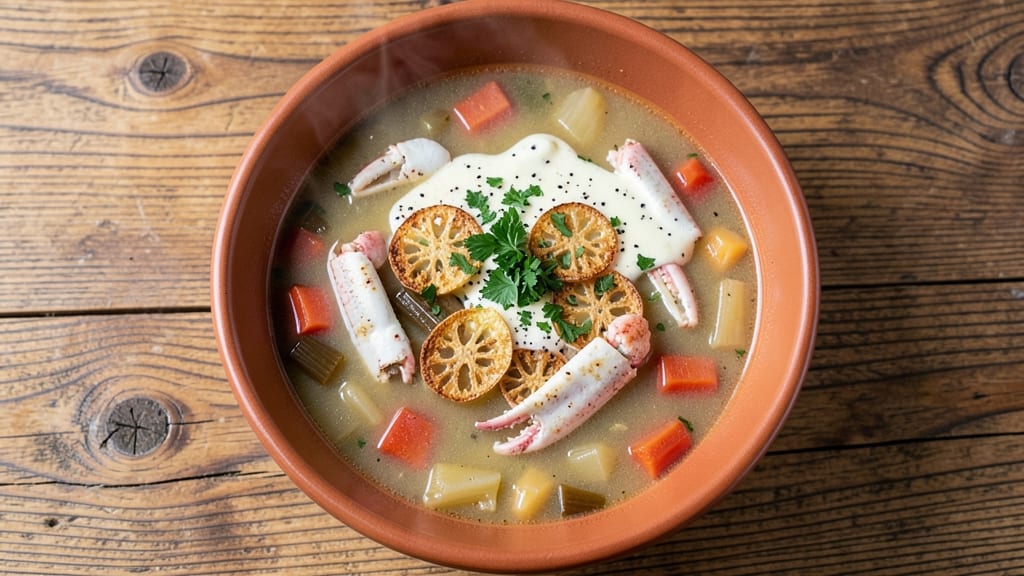
This traditional Maryland crab soup recipe brings the Chesapeake Bay’s iconic flavors to your kitchen, where Old Bay seasoning and fresh blue crabs create a luxurious, one-pot masterpiece. The secret lies in slow-simmered broth infused with sweetgrass and bay leaves, transforming humble ingredients into something truly special.
I’ve perfected this recipe over years of coastal cooking, ensuring every spoonful delivers that signature Maryland tang and briny depth.
The beauty of this soup is its authentic simplicity—just a few high-quality ingredients working together. Blue crabs provide the star quality, while Old Bay seasoning delivers that unmistakable Maryland zing.
A touch of sweetgrass, if you can find it, adds a subtle herbal note that truly transports you to the Eastern Shore. The result is a rich, velvety broth with tender crab meat and just enough heat to make it unforgettable.
What you’ll end up with is a restaurant-quality soup that’s hearty enough for a gathering but elegant enough for a quiet dinner. The aroma alone—warm broth, spices, and fresh crab—will have everyone at the table anticipating the first bite.
Serve it with crusty bread to soak up every last drop, or pair it with a crisp white wine for the full Maryland dining experience.
This recipe is designed to honor tradition while working seamlessly in a home kitchen. Whether you’re celebrating a special occasion or simply craving a taste of the Chesapeake, this is the one-pot solution that delivers authentic Maryland crab soup without the fuss. Let’s get cooking!
Ingredients for traditional maryland crab soup
Fresh blue crabs and Old Bay seasoning make this Maryland classic shine with authentic Chesapeake Bay flavors.
| Ingredient | Amount | Notes |
|---|---|---|
| Fresh Blue Crabs 🦀 | 1 ½ lb | Shell-on, Maryland blue crabs preferred |
| Yellow Onion 🧅 | 1 whole | Medium size, diced small |
| Celery Stalks 🥬 | 3 whole | Fresh, diced small |
| Carrots 🥕 | 2 medium | Peeled, diced small |
| Garlic Cloves 🧄 | 4 cloves | Fresh, minced fine |
| Old Bay Seasoning 🌶️ | 2 tbsp | Classic Maryland blend |
| Sweetgrass 🌿 | 1 tbsp | Dried, optional but recommended |
| Bay Leaves 🍃 | 2 whole | Dried, standard size |
| Dry White Wine 🍷 | ½ cup | Sauvignon Blanc preferred |
| Chicken Broth 💧 | 4 cups | Low-sodium preferred |
| Heavy Cream 🥛 | ½ cup | Full-fat for richness |
| Lemon Juice 🍋 | 1 tbsp | Freshly squeezed |
| Salt 🧂 | 1 tsp | Diamond Crystal preferred |
| Black Pepper 🌶️ | ½ tsp | Freshly ground |
| Fresh Parsley 🌿 | ¼ cup | Chopped, for garnish |
The crabs are the star, so shell-on Maryland blue crabs are non-negotiable—their sweet, briny flavor can't be replicated. Look for live crabs at specialty seafood markets or the seafood counter at Whole Foods or Trader Joe's. If you can't find fresh, frozen works in a pinch, but thaw them overnight in the fridge. The Old Bay seasoning? Use the classic blue can—it's the heart of this recipe. For sweetgrass, specialty herb shops or Penzeys are your best bets, but if you can't find it, just skip it—this soup will still be delicious. The bay leaves add depth, so don't skip them either.
No white wine? Dry vermouth or extra chicken broth works just as well. Fresh parsley is ideal, but dried parsley at half the amount gets you close. The carrots and celery can be swapped for frozen chopped vegetables if you're in a hurry, though fresh has better texture. For extra richness, half-and-half instead of heavy cream works, though it's slightly lighter. And if you're feeling adventurous, a splash of hot sauce at the end adds a kick that's totally authentic to Maryland style.
This soup tastes even better the next day, so make it ahead if you can. Store it in the fridge for up to 3 days—just reheat gently on the stove. For freezing, portion into containers and it keeps for 2 months. The crab shells? Don't toss them! Save them for stock or compost. And if you're serving a crowd, double the recipe—it's that good.
Why You'll Love This Recipe
- Here’s what sold me: you’re not paying for fancy seafood prep. Buy whole crabs, crack them yourself (it’s oddly satisfying), and use every last bit—shells, meat, even the roe. The veggies stretch the broth, so you’re not drowning in cost. Plus, leftovers reheat like a dream—no soggy crab here.
- One-Pot Magic: I swear by this recipe because it’s basically foolproof—just chop the onion, celery, and carrots (no fancy techniques needed), toss them in a pot with garlic and broth, then add the crabs. That’s it. The crabs steam in their own juices, so you’re not left with a sticky mess.
- Garlic-Crab Love: Between us, that first bite of tender crab meat with the garlic-infused broth? It’s like a flavor hug. The Maryland twist—just a touch of Old Bay and a splash of lemon—takes it from good to oh my god, why didn’t I make this sooner.
- Weeknight to Weekend: Honestly, this soup works everywhere. Too tired for dinner? It’s ready in 30 minutes. Hosting a crowd? Double the batch—it’s hearty enough for leftovers (and trust me, they’ll disappear fast). Even my picky uncle, who hates seafood, asked for seconds.
Step-by-step instructions for traditional Maryland crab soup
Here's the method that delivers authentic Maryland flavor in every spoonful.
Prepare the Base Vegetables and Aromatics
In a large Dutch oven, melt 2 tablespoons of butter over medium heat. Add the diced yellow onion, diced celery stalks, and diced carrots. Cook for 8-10 minutes until the vegetables soften and begin to caramelize slightly, releasing their natural sweetness. Here's the thing—you want them tender but not mushy, so stir occasionally and resist the urge to rush this step.
After 5 minutes, add the minced garlic cloves and cook for an additional 30 seconds until fragrant. This quick cooking prevents the garlic from burning while maximizing its flavor. Immediately add the 2 tablespoons of Old Bay seasoning, 1 tablespoon of sweetgrass, and 2 whole bay leaves, stirring to combine. These spices will infuse the entire soup with that signature Maryland profile.
Deglaze and Build the Broth
Pour in the 0.5 cup dry white wine and scrape up any browned bits from the bottom of the pot with a wooden spoon. This deglazing step captures all the flavor you've built so far. Let the wine simmer for 2-3 minutes until it reduces by about half, concentrating its flavor.
Add the 4 cups chicken broth, bringing the mixture to a gentle boil. Reduce heat to medium-low and let it simmer uncovered for 15 minutes. This allows the vegetables to fully cook while developing deeper flavor. The soup should smell rich and aromatic—like a Maryland seafood shack. If it looks too thin at this point, don't worry; we'll thicken it later with the cream.
Prepare and Add the Crabs
While the broth simmers, carefully clean the 1.5 pounds fresh blue crabs by rinsing them under cold water and removing any broken shells or debris. Twist off the apron shells and pull out the tomalley (green liver) and coral (roe) from each crab, reserving them for later. Crack the back of each crab with a mallet or rolling pin to open the shell, but leave the legs and claws attached.
Add the cleaned crabs to the simmering broth. Cook for 8-10 minutes until the crab meat turns opaque and begins to separate slightly from the shells. You'll know they're done when the meat releases easily from the shells with a fork. Real talk: don't overcook them or they'll turn rubbery. The broth should now be infused with crab flavor—this is the moment that matters.
Finish with Cream and Acid
Remove the crabs from the broth with a slotted spoon and set them aside on a platter. Strain the broth through a fine-mesh sieve to remove any small shells or debris, pressing gently on the vegetables to extract all the flavor. Return the strained broth to the pot and stir in the 0.5 cup heavy cream. Bring to a gentle simmer and cook for 2-3 minutes until slightly thickened.
Add the 1 tablespoon lemon juice, 1 teaspoon salt, and 0.5 teaspoon black pepper, stirring well to combine. Taste and adjust seasoning if needed—Maryland crab soup should be balanced with bright acidity to cut through the richness. The cream should create a velvety texture while maintaining the soup's depth of flavor.
Assemble and Serve
Gently return the cooked crabs to the pot and heat through for 1-2 minutes. Ladle the soup into bowls, dividing the crab meat evenly among servings. Garnish each serving with 1 tablespoon of the chopped fresh parsley. The parsley adds a fresh contrast to the rich, spiced broth.
Serve immediately with crusty bread or oyster crackers. The soup should be hot enough to steam slightly when you take your first spoonful, with tender crab meat in every bite. If you've made it to this point, you've just created an authentic taste of Maryland's Eastern Shore—congrats, you've nailed it.
Pro Tips For Making Traditional Maryland Crab Soup
- Sear the Shells First: Toss whole crabs in a hot, oiled pan for 30 seconds per side before adding liquid—this locks in flavor and keeps them from turning rubbery. I learned this the hard way after making soup where the crabs tasted bland, no matter how much Old Bay I added.
- Dice the Veggies Small: Cut onions, celery, and carrots into ¼-inch pieces so they cook down evenly with the crabs. Larger chunks make the soup look messy and leave you with a watery broth instead of a rich, cohesive texture.
- Don’t Overcrowd the Pot: Simmer crabs in batches if needed—too many at once steams them instead of searing, and the broth turns cloudy. A crowded pot also makes the soup taste dull, like it’s missing something.
- Save the Crab Juice: Strain the broth through a fine-mesh sieve after cooking, then return it to the pot—those juices are liquid gold. Skipping this step means losing flavor that’s impossible to replicate with water or stock.
Troubleshooting this recipe
Broth Too Thin?
If your soup looks watery after simmering, don’t panic—this is fixable. The most common cause is over-diluting the broth with wine or broth. To thicken it, whisk in 1 tablespoon of cornstarch mixed with 2 tablespoons cold water per cup of soup.
Simmer for 3-5 minutes until it reaches your desired consistency. For extra richness, stir in 2 tablespoons of butter at the end. This trick works like magic without altering the flavor. 💡
Crabs Overcooked?
Maryland blue crabs cook quickly—if they’re rubbery or tough, you’ve overdone it. The ideal texture is tender but still slightly firm. To salvage them, remove the crab meat from the shells and toss it with 1 tablespoon lemon juice and 1 tablespoon melted butter.
Let it sit for 10 minutes to rehydrate slightly. The acidity helps tenderize the meat, and the butter adds back lost richness. This method saves the dish while keeping it delicious. 🦀
Spices Too Strong?
Old Bay seasoning can overpower if used too liberally. If your soup tastes like a spice bomb, balance it with 1-2 tablespoons of heavy cream or ½ cup of coconut milk. The cream smooths out the heat while adding a velvety texture.
For extra brightness, add 1 tablespoon of fresh lemon juice or a pinch of sugar to mellow the flavors. Taste as you go—Maryland crab soup should be bold but harmonious. ✨
Shells in the Soup?
Straining the broth is key, but tiny shell fragments can still sneak through. Use a fine-mesh sieve or cheesecloth for a cleaner result. If you missed some, don’t stress—just fish them out with tongs before serving.
For next time, strain the broth twice: once after simmering with vegetables and again after adding the crabs. This double-straining method ensures a silky-smooth texture. 🌊
Lemon Juice Too Sour?
If the lemon juice makes your soup taste overly tart, balance it with a pinch of sugar or a splash of white wine. Alternatively, stir in 1 tablespoon of honey or maple syrup to round out the flavors.
The goal is a bright, balanced acidity—not a pucker-inducing sourness. Taste as you go, and adjust gradually. A little sweetness enhances the crab’s natural sweetness. 🍋
Cream Curdling?
Adding cold cream to a hot broth can cause curdling. To prevent this, temper the cream first: whisk it into a small bowl with 1 tablespoon of hot broth, then gradually stir it into the pot.
If curdling happens, immediately remove the pot from heat and whisk in 1 tablespoon of cold water to stabilize the cream. The soup will still taste rich and creamy—just a little lumpier. 🥛
Nutrition facts
Frequently asked questions
What makes this Maryland crab soup different from other seafood soups?
The key lies in its Old Bay seasoning and sweetgrass—both essential Maryland flavors that create that signature briny-spiced profile. Unlike other seafood soups, this one uses whole blue crabs (not just meat) for maximum flavor infusion, and the white wine deglaze adds depth that sets it apart. The cream finish gives it a velvety texture while keeping the broth bright with lemon juice. It's a true Chesapeake Bay classic!
Can I substitute fresh blue crabs with canned crabmeat?
You can use canned crabmeat, but you'll lose the authentic Maryland experience. Fresh crabs infuse the broth with their natural sweetness and briny flavor. If using canned, pick lump crabmeat (not flakes) and add 1 teaspoon of Old Bay seasoning directly to the crabmeat before mixing it into the soup. For extra depth, simmer the crabmeat in the broth for 5 minutes to absorb the flavors.
How do I know when the crabs are fully cooked?
The crabs are done when the meat turns opaque white (about 8-10 minutes of simmering) and releases easily from the shells with a fork. If the shells are still bright orange, keep cooking for 1-2 more minutes. Overcooked crabs become rubbery, so timing is everything. Pro tip: Remove them from the broth as soon as they're done—they'll continue cooking slightly when you return them to the pot later.
Is sweetgrass really necessary for authentic flavor?
Sweetgrass adds a subtle herbal note that truly captures Maryland's coastal essence, but it's not strictly necessary. If you can't find it, simply omit it—the soup will still taste delicious. For a similar effect, try ½ teaspoon dried thyme or a pinch of fennel seeds. The Old Bay seasoning and lemon juice will still deliver that signature Maryland tang, even without sweetgrass.
Can I make this soup ahead of time?
This soup tastes even better the next day. Store it in an airtight container in the fridge for up to 3 days. Reheat gently on the stove, stirring occasionally to prevent the cream from separating. For freezing, portion into containers and keep for up to 2 months. Just thaw overnight in the fridge before reheating—never microwave directly from frozen. The flavors meld beautifully over time!