
Soups & Stews
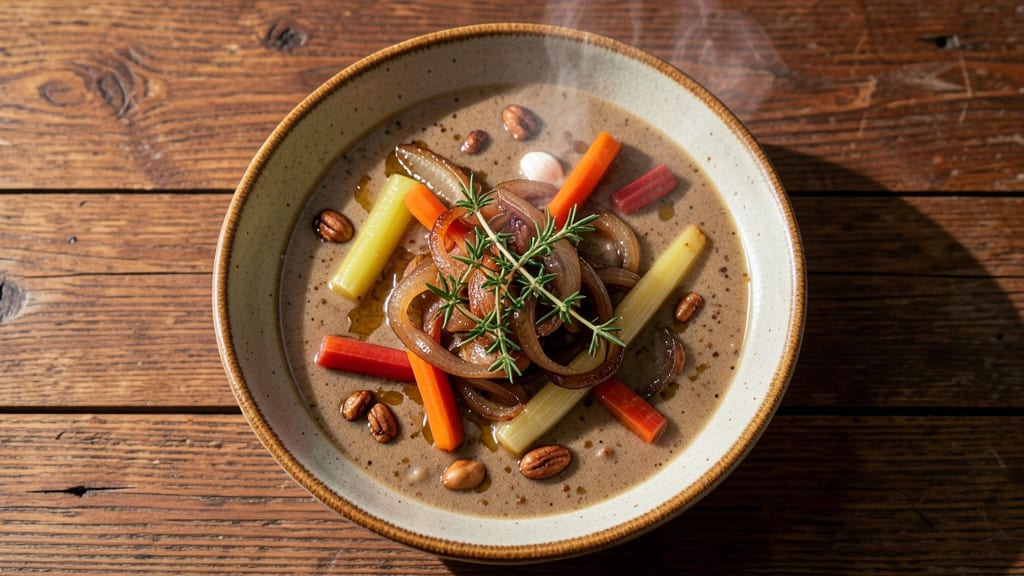
This acorn soup recipe brings the deep, toasty richness of autumn forests to your table, where earthy flavors meet comforting warmth in every spoonful. The process begins with carefully preparing acorns—leaching them to remove bitterness—before simmering them into a velvety broth infused with aromatic vegetables and herbs.
What makes this dish special is its ability to transform humble ingredients into something deeply satisfying, with a texture that’s both hearty and delicate.
The beauty of acorn soup lies in its versatility—traditionally a vegetarian staple, it can easily be adapted with smoked turkey, crispy bacon, or mushrooms for added depth.
My version balances sweetness and savory notes, using a touch of maple syrup to complement the natural nuttiness while keeping the focus on the acorns’ unique character. The result is a soup that’s rich enough to stand alone but light enough for a crisp fall day.
By the time you finish this recipe, you’ll have a bowl of soup that’s creamy from blended acorns, fragrant with thyme and sage, and finished with a swirl of olive oil for brightness.
It’s the kind of dish that pairs perfectly with crusty bread or a simple green salad, making it ideal for cozy gatherings or quiet weeknight dinners. The process may require patience, but the reward is a flavor profile that feels both nostalgic and entirely modern.
Whether you’re exploring traditional Native American cuisine or simply craving a taste of autumn, this recipe delivers. Store leftovers in the fridge for up to 5 days, or freeze for longer shelf life—though I doubt you’ll have any left. Let’s get cooking!
Ingredients for acorn soup
Toasted acorns and aromatic herbs create this soul-warming vegetarian soup with autumn's richest flavors.
| Ingredient | Amount | Notes |
|---|---|---|
| Acorns 🌰 | 1 ½ cups | Shells removed, leached overnight |
| Yellow Onion 🧅 | 1 whole | Diced, medium size |
| Carrots 🥕 | 2 medium | Peeled, chopped into chunks |
| Celery Stalks 🥬 | 3 whole | Chopped, including leaves |
| Garlic Cloves 🧄 | 4 cloves | Peeled, smashed |
| Fresh Thyme 🌿 | ¼ cup | Chopped, stems included |
| Fresh Sage 🌿 | ¼ cup | Chopped, leaves only |
| Vegetable Stock 💧 | 4 cups | Low-sodium preferred |
| Maple Syrup 🍯 | 2 tbsp | Pure, grade B preferred |
| Extra-Virgin Olive Oil 🫒 | ¼ cup | For finishing |
| Salt 🧂 | 1 ½ tsp | Kosher or sea salt |
| Black Pepper 🌶️ | ½ tsp | Freshly ground |
| Crusty Bread 🍞 | 1 loaf | For serving, optional |
Acorns are the star here, so source them fresh from a trusted supplier—avoid those pre-packaged in stores, which are often bitter. If you're gathering them yourself, test a few first to ensure they're edible. The key is to leach them overnight in cold water to remove tannins. I usually buy mine from local Native American markets or specialty food stores—they handle the prep work for you. For herbs, fresh is non-negotiable—dried just won't give you that same earthy depth. The vegetable stock should be homemade if possible, but a good-quality low-sodium store-bought works in a pinch.
No acorns? Toasted walnuts or pecans at double the amount get you close, though the texture won't be identical. Fresh herbs out of season? Dried thyme and sage at half the quantity will work, but the flavor won't be as vibrant. The maple syrup adds just enough sweetness to balance the earthiness—substitute agave or honey if needed. For a creamier texture without dairy, blend in 1/2 cup cooked white beans at the end. The olive oil should be fruity and peppery—skip the light, bland varieties. And if you're feeling fancy, toast the acorns in a dry pan for 5 minutes before blending for extra depth.
This soup tastes even better the next day as flavors meld. Store in airtight containers for up to 5 days in the fridge. For longer storage, freeze in portions for up to 3 months. I like to make a big batch—it reheats beautifully. The crusty bread is optional, but a good sourdough or baguette makes this feel like a proper autumn feast. If you're serving a crowd, double the recipe—it's that good.
Why You'll Love This Recipe
- No-Fuss Base Ingredients: I keep a bag of pre-leached acorns in the pantry—just toss them in with the onions, carrots, and celery. Honestly, the chopping is the only effort, and even that’s quick with a sharp knife.
- Earthy, Rich Depth: That nutty acorn flavor? It’s like a cross between chestnut and mushroom—deep but not overpowering. The garlic and caramelized onions take it from hearty to ridiculously good in one pot.
- Meal-Prep Goldmine: This soup tastes even better the next day—perfect for batch cooking. I make a double batch on Sundays, freeze half, and reheat it for lazy nights when I’d otherwise order takeout.
- Budget-Friendly Pantry Staple: Acorns are cheap if you forage or buy in bulk, and the veggies? Basic, affordable, and always on hand. Between us, this is my go-to when I’m broke but refuse to eat sad leftovers.
Step-by-step instructions for acorn soup
Here's how to transform humble acorns into a rich, earthy soup with layers of toasted nut flavor.
Toast the Acorns for Maximum Flavor
Preheat your oven to 350°F. Spread the 1.5 cups acorns (already shelled and leached) on a baking sheet in a single layer. Toast for 15-20 minutes, stirring every 5 minutes, until they develop a golden brown color and smell deeply nutty. This toasting step is crucial—it removes any lingering bitterness and intensifies the natural sweetness.
Watch them carefully after 15 minutes—they burn quickly. You want them golden, not blackened. Once toasted, let them cool completely before grinding. The acorns should be warm to the touch but not hot, or they'll release steam when ground, making a mess.
Build the Soup Base with Aromatics
Heat the 0.25 cup extra-virgin olive oil in a large pot over medium heat. Add the 1 whole yellow onion, 2 medium carrots, and 3 whole celery stalks (chopped with leaves). Cook for 8-10 minutes until the vegetables soften and the onion becomes translucent.
Add the 4 cloves garlic cloves (smashed) and cook for another 1 minute until fragrant. Here's where the magic happens—don't let the garlic burn. If it starts to darken too quickly, reduce the heat slightly. The goal is to infuse the soup with aromatic depth without bitterness.
Simmer the Soup Until Tender
Pour in the 4 cups vegetable stock and bring to a gentle boil. Stir in the toasted acorns and simmer for 30 minutes until the vegetables are fork-tender. The soup should reduce slightly, concentrating the flavors. Taste and adjust seasoning with the 1.5 tsp salt and 0.5 tsp black pepper—you might need more salt depending on your stock.
Here's the thing—acorns can be subtle, so don't be shy with the seasoning. The 0.25 cup fresh thyme and 0.25 cup fresh sage should be added now. Let the soup simmer uncovered for another 10 minutes to allow the herbs to release their aromatic oils. Skim off any foam that rises to the surface for a cleaner texture.
Blend and Finish with Maple Syrup
Use an immersion blender to purée the soup until smooth. If you prefer a rustic texture, leave it slightly chunky. Stir in the 2 tbsp maple syrup and simmer for 5 minutes to balance the earthy acorn flavor with natural sweetness. The syrup also helps round out the richness, especially if your acorns have a slightly bitter edge.
This is the moment that matters: taste and adjust. If the soup needs more depth, add a pinch of salt or a splash of stock. If it's too thick, thin with a little water. The final consistency should be creamy but still allow the acorn flavor to shine through. The soup should smell like a warm autumn forest—earthy, slightly sweet, and deeply comforting.
Serve with Crusty Bread
Ladle the soup into bowls and serve immediately with slices of the 1 loaf crusty bread. The bread's crust will soak up every last drop of that nutty, herby broth. I like to drizzle a little extra extra-virgin olive oil on top just before serving—it adds a silky finish that complements the soup's earthy notes.
Don't skip the bread. It's not just for soaking—it provides a satisfying contrast to the soup's velvety texture. The first bite should deliver warmth, depth, and a perfect balance of sweet and savory. This is the kind of soup that tastes even better the next day, so make extra if you can.
Pro Tips For Making Acorn Soup
- SOAK ACORNS TWICE: First soak them in cold water overnight to break down tannins, then boil them for 20 minutes to soften—skipping this step leaves a bitter, chalky texture that’ll make you regret using acorns at all.
- SWAP CELERY FOR LEAKS: If celery is bitter or tough, swap it for 1-2 leeks (white and light green parts only) sliced thin—they add sweetness and a milder crunch without overpowering the earthy acorn flavor.
- DON’T BOIL THE GARLIC: Sauté the garlic in olive oil until golden (about 30 seconds) before adding it to the soup—raw or overcooked garlic turns bitter and clings to the pot like glue, ruining the balance.
- PUREE HALF THE SOUP: Blend only half the finished soup for a rustic texture—thick swirls of acorn puree against chunks of onion and carrot make every spoonful more interesting than a smooth, one-note purée.
Storing and reheating your acorn soup
Refrigerator Storage
Transfer your acorn soup to airtight glass containers while still warm to preserve texture and prevent skin formation. Let it cool at room temperature for no more than 2 hours before refrigerating at 40°F or below. The flavors actually deepen overnight as the acorns and herbs meld together.
I store mine in Pyrex glass jars with snap-on lids—they’re sturdy and stack well. The soup keeps beautifully for 4-5 days in the fridge, though I rarely have leftovers! 🌰
Freezer Prep Tips
For longer storage, portion the soup into freezer-safe containers or quart-sized silicone bags, leaving ½-inch headspace for expansion. I like using mason jars because they’re easy to reheat directly. Label with the date—this soup freezes for up to 3 months without losing its velvety texture or nutty flavor.
The key is to cool it completely before freezing to avoid ice crystals.
Stovetop Reheating
My preferred method is stovetop reheating because it restores the soup’s creamy consistency perfectly. Pour the chilled soup into a pot over medium-low heat and add 2-3 tablespoons of water or vegetable stock to prevent sticking. Bring to a gentle simmer for 8-10 minutes, stirring occasionally.
The maple syrup and herbs will re-infuse the broth with warmth. Taste and adjust seasoning—acorn soup often needs a pinch of salt or a splash of lemon juice after reheating. 🔥
Microwave Revival
For quick meals, transfer a single serving to a microwave-safe bowl and cover loosely with a microwave-safe lid or damp paper towel. Heat on medium power (50%) for 2-3 minutes, stir, then continue in 30-second intervals until reaching 165°F.
Avoid overcooking—acorn soup can separate if heated too aggressively. A splash of olive oil after reheating helps restore its silky mouthfeel.
Reviving Texture
If your reheated soup seems too thick, stir in 1-2 tablespoons of warm water or stock and let it sit for 5 minutes before blending briefly with an immersion blender. For extra richness, top with a drizzle of olive oil or a sprinkle of toasted acorn pieces (reserved before blending).
The contrast of warm soup and crunchy acorns makes it feel fresh again. This trick works wonders for leftovers that’ve been in the fridge for 3-4 days.
Freezer-to-Pot Transition
When reheating from frozen, I recommend thawing overnight in the fridge first. If you’re short on time, place the frozen container in cold water for 1 hour before reheating on the stovetop. Never microwave from frozen—it creates uneven heating and can make the soup grainy.
Once thawed, follow the stovetop reheating method for best results. The soup’s earthy aroma alone will make your kitchen smell like autumn. ✨
Nutrition facts
Frequently asked questions
Why do I need to leach acorns before using them?
Leaching removes bitter tannins that make raw acorns inedible. Soak shelled acorns in cold water for 8-12 hours, changing water 3-4 times to eliminate bitterness completely. This step is non-negotiable—skipping it will leave your soup tasting harsh and unpleasant. Think of it as the acorn version of blanching vegetables!
Can I substitute acorns with other nuts?
Yes, but expect different flavors! For a similar texture, use toasted walnuts or pecans (double the amount). Hazelnuts work too but lack the same earthy depth. The key is toasting—always toast your nut substitute until golden brown to develop that nutty aroma. Just know the flavor won't be identical to true acorn soup.
How do I know when acorns are ready to harvest?
Look for acorns that have fallen naturally from the tree (not still attached). They should feel heavy for their size and have a papery cap that's easy to remove. The meat inside should be firm, not mushy. Harvest in fall after the first frost for the best flavor—this natural curing process enhances sweetness. Never use acorns from oaks producing bitter tannins.
What's the best way to serve this soup?
Pair it with crusty bread or cornbread for the perfect texture contrast. For a complete meal, add a side salad with arugula and pomegranate seeds to cut through the richness. The soup also makes an excellent appetizer when served in small bowls with a drizzle of olive oil. Pro tip: Garnish with fresh thyme leaves just before serving for that restaurant-quality touch!
My soup turned out too thin—how can I fix it?
Simmer uncovered for 10-15 extra minutes to reduce the liquid naturally. If that's not enough, blend ½ cup cooked white beans into the soup for creaminess without dairy. For immediate thickening, mix 1 tbsp cornstarch with 2 tbsp cold water, stir into the soup, and simmer for 2 minutes. Never use flour—it can make the soup cloudy.