
Soups & Stews
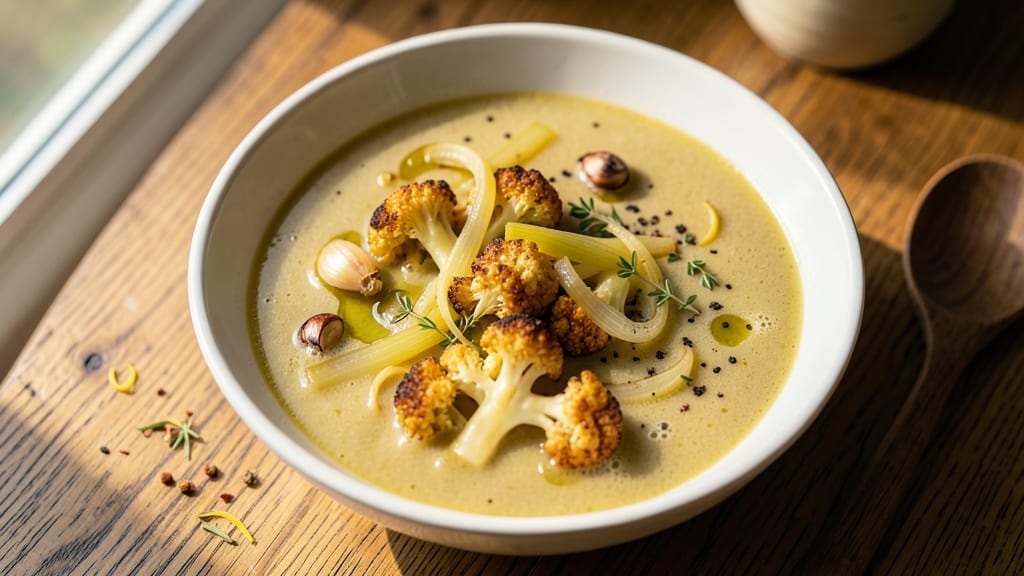
This America’s Test Kitchen cauliflower soup recipe delivers velvety perfection with a roasted base and crisp celery crowns that transform a simple vegetable into a restaurant-worthy dish. The secret lies in slow-roasting cauliflower until tender and caramelized, then blending it into a silky broth that’s rich without being heavy.
Every spoonful balances earthy cauliflower with bright, herby notes—no cream or heavy ingredients needed.
The recipe’s genius is in the technique: roasting the cauliflower until deeply flavorful before simmering, then finishing with a crisp celery crown that adds texture and freshness. Unlike many cauliflower soups, this version avoids watery results by controlling liquid ratios and cooking times precisely.
The result? A soup that’s creamy, aromatic, and packed with umami depth—ideal for chilly evenings or cozy gatherings.
What sets this apart is the attention to detail: sautéing aromatics until fragrant, simmering just long enough to meld flavors, and blending until smooth but not pasty. The crisp celery crowns—achieved through a quick fry—add a satisfying crunch that elevates every bite.
It’s the kind of soup that tastes like it took hours, even though it comes together in under an hour.
Serve with crusty bread to soak up the velvety broth or pair with a simple green salad for balance. The recipe scales effortlessly, making it perfect for meal prep or feeding a crowd. Ready to make the creamiest, most flavorful cauliflower soup you’ve ever tasted? Let’s get started.
Ingredients for america's test kitchen cauliflower soup
These carefully selected ingredients transform humble cauliflower into a restaurant-worthy velvety soup with crisp celery crowns.
| Ingredient | Amount | Notes |
|---|---|---|
| Fresh Cauliflower 🥬 | 2 lb | Cut into florets, stems removed |
| Yellow Onion 🧅 | 1 whole | Medium size, diced |
| Celery Stalks 🥬 | 4 whole | Thick, cut into 1-inch pieces |
| Garlic Cloves 🧄 | 4 cloves | Peeled, whole |
| Extra-Virgin Olive Oil 🫒 | ½ cup | High-quality, fruity |
| Vegetable Broth 💧 | 4 cups | Low-sodium preferred |
| Heavy Cream 🥛 | ½ cup | Optional for creaminess |
| Fresh Thyme Leaves 🌿 | ¼ cup | Or 1 tbsp dried thyme |
| Fresh Parsley Leaves 🌿 | ¼ cup | Chopped, for garnish |
| Salt 🧂 | 1 ½ tsp | Diamond Crystal kosher |
| Ground Black Pepper 🌶️ | ½ tsp | Freshly ground |
| All-Purpose Flour 🌾 | 2 tbsp | For crisp celery crowns |
| Panko Breadcrumbs 🍞 | ¼ cup | For crisp celery crowns |
| Fresh Lemon Juice 🍋 | 1 tbsp | Brightens the soup |
The cauliflower is the star—opt for organic when possible, as it tends to have denser florets that roast more evenly. Whole Foods or local farmers' markets often carry the best quality. Avoid pre-cut cauliflower, as it loses flavor and texture quickly. For celery, select thick stalks with vibrant green leaves—these indicate freshness and crispness. The thyme and parsley should be bright green and fragrant, not wilted or yellowing. Store fresh herbs wrapped in damp paper towels in a sealed container for up to 5 days in the fridge.
No fresh thyme? Dried thyme at one-third the amount works in a pinch, though fresh provides superior aroma. Substitute the heavy cream with full-fat coconut milk for a dairy-free option, though texture will differ slightly. For the celery crowns, if you can't find thick stalks, bundle thin stalks together before breading. The vegetable broth is critical—low-sodium ensures you control the final seasoning. If using a pre-made broth, low-sodium options like Pacific Foods or Imagine are ideal. For extra umami depth, add 1 tsp soy sauce to the broth during simmering.
Roasted cauliflower keeps 3 days in the fridge before blending, though fresh is ideal. The crisp celery crowns are best served immediately but can be re-fried for 1-2 minutes if reheating. Store the soup in airtight glass containers for up to 4 days—the flavors develop beautifully overnight. For meal prep, portion into individual containers and freeze for up to 3 months. When reheating, add a splash of vegetable broth to restore creaminess if needed.
Why You'll Love This Recipe
- No Fuss, Big Payoff: I swear by this soup because it’s the kind of recipe where you can chop while watching TV—no measuring cups, no stress. The ATK method lets you roast the cauliflower and veggies whole (yes, really), so you’re basically setting it and forgetting it for 20 minutes. Honestly, that crispy edge on the florets? Worth the effort.
- Garlic Kiss: That first spoonful of soup—where the roasted cauliflower meets the caramelized onion and garlic—is what makes this recipe legendary. The ATK team nails the balance: enough garlic to sing without overpowering, and a touch of cream (or coconut milk) that turns it from "veggie side" to "I’ll have seconds."
- Leftover Hero: This soup only gets better the next day. Between us, I’ve reheated mine three times with zero complaints—my partner even asks for it when I bring it to work. The flavors meld into this rich, comforting base that’s perfect for lunches or quick dinners when you’re too tired to cook.
- Pantry Staple Magic: You’re already using ingredients you own—onion, celery, garlic—so it’s basically free to make. Swap the chicken stock for veggie if you’re plant-based, or add a splash of white wine for depth. It’s the kind of recipe that works for date nights, sick days, or when your kid’s soccer team needs snacks. Solid every time.
Step-by-step instructions for america's Test Kitchen cauliflower soup
A velvety roasted cauliflower base meets crisp celery crowns in this refined soup.
Roast the Cauliflower for Deep Flavor
Preheat your oven to 425°F and line a large baking sheet with parchment paper. Toss the 2 lb fresh cauliflower florets with 2 tablespoons of the extra-virgin olive oil, 1 teaspoon of the salt, and ¼ teaspoon of the ground black pepper. Spread them in a single layer on the baking sheet, ensuring even exposure to heat.
Roast for 25-30 minutes until the edges are deeply golden brown and the florets become tender when pierced with a knife. The roasting caramelizes natural sugars, creating a rich, nutty foundation for the soup. Don't overcrowd the pan—this prevents even browning and proper crisping.
Sauté Aromatics and Build the Soup Base
While the cauliflower roasts, heat the remaining 3 tablespoons extra-virgin olive oil in a large Dutch oven over medium heat. Add the diced yellow onion and 1-inch celery pieces (reserve 3 celery stalks for later), cooking for 8-10 minutes until softened and golden. Add the 4 peeled garlic cloves and cook for 30 seconds until fragrant.
Stir in the 2 tablespoons all-purpose flour and cook for 1 minute to remove any raw taste. Slowly whisk in the 4 cups vegetable broth to prevent lumps, then add the roasted cauliflower. Bring to a gentle simmer and cook for 10 minutes to meld flavors.
Blend for Silky Texture and Finish the Soup
Use an immersion blender to purée the soup until completely smooth—no chunks should remain. For a traditional approach, carefully transfer the soup to a blender in batches, blending until silky. Return the puréed soup to the pot and stir in the 0.5 cup heavy cream, 0.25 cup fresh thyme leaves, and remaining ½ teaspoon salt and ¼ teaspoon black pepper.
Simmer gently for 5 minutes to integrate flavors. Finish with the 1 tablespoon fresh lemon juice—this brightens the richness of the cream. Taste and adjust seasoning if needed. The soup should be velvety with a balanced blend of roasted cauliflower sweetness and aromatic depth.
Prepare Crisp Celery Crowns
While the soup simmers, cut the reserved 3 celery stalks into 1-inch pieces. In a small bowl, combine the 0.25 cup panko breadcrumbs, remaining 1 tablespoon olive oil, and remaining ½ teaspoon salt. Toss the celery pieces in this mixture until evenly coated.
Heat 1 tablespoon olive oil in a skillet over medium-high heat until shimmering. Working in batches, add the coated celery and cook for 2-3 minutes per side until golden brown and crisp. Transfer to a paper towel-lined plate to drain excess oil. These crowns should be crunchy with a toasted flavor contrast to the smooth soup.
Assemble and Serve
Ladle the finished soup into bowls, dividing evenly among 6 servings. Top each portion with 2-3 crisp celery crowns and garnish with fresh parsley leaves. The texture contrast between the velvety soup and crisp celery creates an unforgettable mouthfeel. Serve immediately with crusty bread to soak up every last drop of this refined vegetable soup.
Pro Tips For Making America'S Test Kitchen Cauliflower Soup
- Cut Cauliflower Small: The recipe calls for florets, but I’ve found that chopping the cauliflower into ½-inch pieces—including the core—cooks faster and blends smoother. No need to peel the core, just slice it thinly like you’re making matchsticks.
- Sweat Onions Low: After mincing the onion, cook it in olive oil over medium-low heat for 8–10 minutes until it’s translucent but not browned. I used to rush this, and the soup always tasted raw—patience here makes a real difference.
- Blend in Batches: If your blender’s max capacity is 4 cups, split the soup into two rounds. Overfilling leads to splatter and under-blending. I learned this after cleaning soup off the ceiling—trust me, it’s easier to do it right the first time.
- Strain the Broth: After simmering the cauliflower and veggies, strain the broth through a fine-mesh sieve before blending. This removes fibrous bits that make the final soup grainy, even when pureed. It’s an extra 30 seconds that saves you from scraping the bottom of the pot later.
Regional styles of america's test kitchen cauliflower soup
Southern Comfort
In the American South, cauliflower soup often gets a smoky twist with the addition of 1 teaspoon smoked paprika and ½ teaspoon cayenne pepper to the roasted cauliflower.
I like to boost the depth by adding ½ cup cooked ham or smoked sausage to the simmering broth—just crumble it in during the final 10 minutes of cooking. Serve with cornbread instead of crusty bread for a true Southern experience. 🌶️
New England Crisp
Up north, the focus shifts to crispy textures and herbaceous brightness. Swap the celery crowns for crispy fried shallots—sauté ½ cup thinly sliced shallots in 2 tablespoons butter until golden.
Finish the soup with a splash of 1 teaspoon apple cider vinegar and garnish with chopped chives for a tangy, fresh contrast. Pair with buttery dinner rolls for dipping. ❄️
French-Inspired Creaminess
For a French bistro touch, replace the heavy cream with ½ cup crème fraîche and stir in 1 teaspoon Dijon mustard during the final simmer.
Top each bowl with crispy fried leeks (sauté ½ cup sliced leeks in 1 tablespoon olive oil until golden) and a sprinkle of fresh tarragon. The mustard adds a subtle tang that balances the richness beautifully. 🥖
Mediterranean Herb Garden
Bring a Greek island vibe to your soup by infusing the broth with 1 cinnamon stick and 2 bay leaves while simmering. Finish with 1 tablespoon lemon zest, ¼ cup chopped fresh dill, and a drizzle of extra-virgin olive oil.
Serve with warm pita bread for scooping up the herby, citrusy broth. The cinnamon adds warmth without overpowering the cauliflower’s natural sweetness. 🌿
Spicy Thai Fusion
For a bold, aromatic twist, stir in 1 tablespoon red curry paste with the broth and add 1 cup coconut milk instead of heavy cream. Finish with 1 teaspoon fish sauce (or soy sauce for vegetarian), 1 tablespoon lime juice, and 2 tablespoons chopped cilantro.
Garnish with crushed peanuts and sliced Thai basil for a fragrant, spicy-sweet contrast. Serve with steamed jasmine rice for a complete meal. 🌶️
Classic Italian Rustic
Channel Italian countryside flavors by adding ½ cup canned diced tomatoes to the sautéed aromatics and finishing with ¼ cup grated Parmesan cheese and 1 tablespoon fresh basil. The tomatoes deepen the umami, while the Parmesan adds a salty, nutty finish.
Serve with garlic bread and a side of roasted cherry tomatoes for a hearty, rustic spread. 🍅
Nutrition facts
Frequently asked questions
Why does this recipe roast the cauliflower instead of boiling or steaming it?
Roasting caramelizes the cauliflower's natural sugars, creating a deeper, nuttier flavor that transforms it from bland to rich and complex. This technique builds flavor intensity that boiling or steaming simply can't match—it's what gives this soup its restaurant-quality depth. The golden edges also add visual appeal and texture contrast.
Can I make this soup without an immersion blender?
Transfer the hot soup to a regular blender in batches, blending until completely smooth. Just be extra careful—soup can splatter when hot. For best results, let the soup cool slightly first (about 5 minutes), then blend. Never fill the blender past the maximum line, and always vent the lid to prevent pressure buildup.
What's the secret to getting crisp celery crowns?
The key is threefold: use thick celery stalks, coat them thoroughly in the panko mixture, and cook them in small batches at medium-high heat. The breadcrumbs need to get golden brown and crisp, not just lightly toasted. Work quickly to maintain heat in the pan—overcrowding lowers the temperature and makes them soggy. A paper towel-lined plate helps absorb excess oil for extra crunch.
How can I make this soup dairy-free?
Replace the heavy cream with full-fat coconut milk for a neutral flavor, or use cashew cream (blend soaked cashews with water) for a richer texture. For extra body, stir in 2 tablespoons nutritional yeast after blending. The lemon juice and thyme will still provide the bright, herby notes that balance the soup's richness—just taste as you go to adjust seasoning since dairy-free versions can taste slightly different.
Can I prep this soup ahead of time?
Yes! Roast the cauliflower and store it in the fridge for up to 3 days before blending. The soup itself keeps well in airtight containers for 4 days, though the celery crowns are best made fresh. For meal prep, assemble everything except the celery crowns, reheat gently, and crisp the celery just before serving. Add a splash of broth when reheating if the soup seems too thick—it will thin out as it warms.