
Soups & Stews
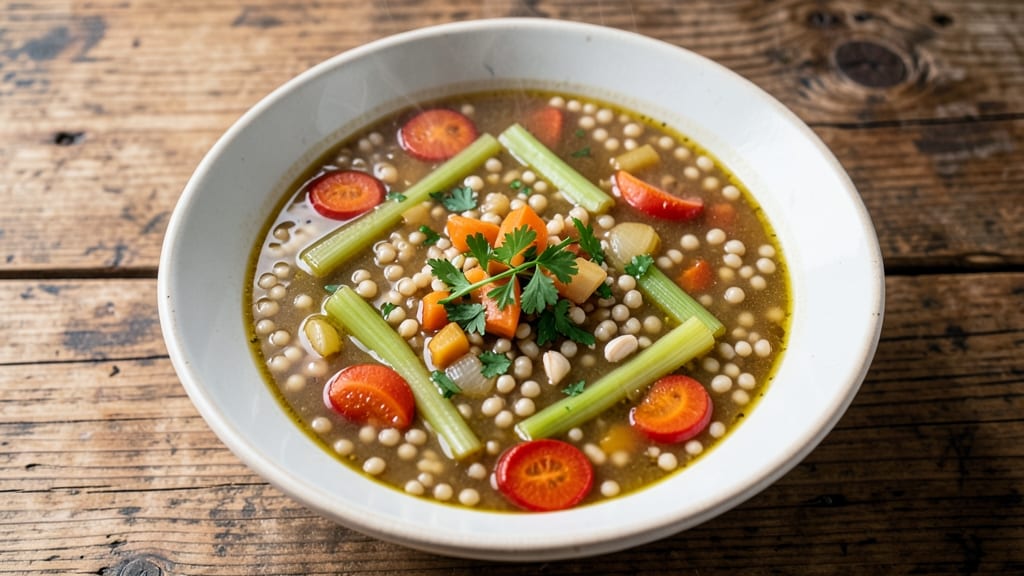
This Amy's vegetable barley soup recipe delivers the ultimate comfort in every steaming bowl—hearty, aromatic, and packed with wholesome ingredients that transform simple vegetables into a deeply satisfying meal. 💛 The secret lies in slow-simmered barley, which absorbs flavors beautifully while creating a naturally thick, velvety texture that makes this soup both nourishing and restaurant-worthy.
What sets this recipe apart is its one-pot simplicity—no fancy techniques required, just a few fresh vegetables, aromatic herbs, and quality broth that work together over 45 minutes to create a dish that feels like a warm hug.
The barley softens just enough to thicken the soup naturally, while carrots, celery, and onions develop deep, caramelized sweetness that balances the earthy notes of thyme and bay leaf.
By the time you're done, you'll have a vegetarian-friendly soup that's rich in flavor but light enough for any meal—perfect for chilly evenings or as a base for meal prep. The broth is so fragrant it'll have everyone asking for seconds, and the barley adds satisfying texture with every spoonful.
Serve with crusty bread or a sprinkle of fresh parsley for a touch of brightness.
This recipe also shines as a versatile foundation—swap in seasonal vegetables, add a splash of lemon juice for brightness, or stir in cooked lentils for extra protein.
The possibilities are endless, but the core technique remains the same: slow, gentle cooking that lets all the ingredients shine. Let's get started!
Ingredients for amy's vegetable barley soup
These wholesome ingredients create a deeply aromatic, restaurant-worthy vegetable barley soup with comforting depth.
| Ingredient | Amount | Notes |
|---|---|---|
| Vegetable Broth 💧 | 6 cups | Low-sodium preferred for balance |
| Pearl Barley 🌾 | 1 cup | Uncooked, rinsed thoroughly |
| Yellow Onion 🧅 | 1 whole | Medium size, diced uniformly |
| Carrots 🥕 | 4 medium | Peeled, cut into 1/2-inch pieces |
| Celery Stalks 🧄 | 3 whole | Trimmed, cut into 1/2-inch pieces |
| Garlic Cloves 🧄 | 4 cloves | Peeled, minced finely |
| Fresh Thyme 🌿 | 2 tbsp | Leaves only, chopped |
| Fresh Parsley 🌿 | ¼ cup | Chopped, for garnish |
| Bay Leaves 🍃 | 2 whole | Dried, removed before serving |
| Tomato Paste 🍅 | 2 tbsp | Smooth, not chunky |
| Extra-Virgin Olive Oil 🫒 | 2 tbsp | For sautéing vegetables |
| Salt 🧂 | 1 ½ tsp | Diamond Crystal kosher salt |
| Black Pepper 🌶️ | ½ tsp | Freshly ground preferred |
| Lemon Juice 🍋 | 1 tbsp | Freshly squeezed, optional |
The barley is the heart of this soup—opt for pearl barley (not quick-cooking) for that satisfying, creamy texture. Bob's Red Mill or Whole Foods bulk bins carry excellent quality. Rinse it thoroughly before cooking to remove any dust or debris. For the vegetables, organic carrots and celery (from Trader Joe's or your local farmers market) have the best flavor, but conventional works fine. The tomato paste adds richness without overpowering—Mutti or San Marzano are my go-tos, but any smooth paste will do. Fresh thyme and bay leaves elevate the broth's aroma, so don't skip them.
No fresh thyme? Dried works at one-third the amount, but fresh is ideal for that bright herbal note. Running low on vegetable broth? Water plus 1 tsp soy sauce and 1 tsp miso gets you close. Substituting potatoes for carrots? Use equal weight—they absorb liquid differently. The lemon juice is optional but adds a lovely brightness if you want to cut through the richness. For extra protein, stir in 1 cup cooked lentils or 1/2 cup crumbled feta (if not strictly vegetarian). The soup freezes beautifully—just skip adding fresh herbs until reheating.
This soup tastes even better the next day as flavors meld. Store in an airtight container for up to 5 days in the fridge or 3 months in the freezer. For freezing, cool completely first and portion into ziplock bags or containers. Reheat gently on the stove with a splash of broth or water to restore creaminess. Garnish with fresh parsley and a drizzle of extra-virgin olive oil right before serving—that final touch makes all the difference.
Why You'll Love This Recipe
- One-Pot Magic: I swear by this recipe because it’s literally dump-and-simmer. No fancy techniques—just chop the onion, celery, and carrots (or buy pre-diced if you’re feeling lazy), toss them in a pot with the barley, broth, and a pinch of salt, then let it bubble away. That’s it. The barley softens into perfect bite-sized pillows while the veggies melt into the broth, and honestly? It’s the kind of meal that makes you feel like you’ve earned a break.
- Savory Depth: Here’s what sold me—the way the barley and veggies marry with that rich vegetable broth. The onions caramelize just enough to add sweetness, while the celery brings a bright, herbal punch. I’ll be real: it’s not fancy, but it’s ridiculously satisfying, like a hug in a bowl. (Yes, even on a Tuesday night.)
- Meal Prep MVP: This soup tastes better the next day—seriously, the flavors deepen as it sits. I make a big batch on Sundays, portion it into containers, and have hearty lunches all week. It’s my go-to for busy mornings because reheating it just takes a minute, and the barley stays chewy, not mushy. Plus, it’s weirdly versatile: serve it with crusty bread for dinner or pack it cold for work.
- Budget-Friendly Powerhouse: Between us, this recipe is my secret weapon for stretching ingredients without sacrificing flavor. Pearl barley is cheap, veggies are affordable, and broth lasts forever. I’ve fed four people for under $10 with this, and they’ve always asked for seconds. It’s the kind of dish that proves you don’t need expensive ingredients to make something solid—just good technique and patience.
Step-by-step instructions for vegetable barley soup
This method delivers rich, aromatic soup with perfectly tender barley and caramelized vegetables.
🍳 Step 1: Sauté the Vegetable Base
Heat the 2 tablespoons extra-virgin olive oil in a large pot over medium heat until shimmering. Add the diced yellow onion and cook for 5 minutes until soft and translucent, stirring occasionally. The onions should release their natural sweetness without browning.
Add the peeled carrots and trimmed celery stalks, both cut into ½-inch pieces. Cook for another 6-8 minutes until the vegetables begin to soften and release their flavors. Here's where the magic happens—the vegetables develop depth as they caramelize slightly in their own juices.
🍳 Step 2: Incorporate Aromatics and Tomato Paste
Stir in the minced garlic cloves and cook for 30 seconds until fragrant—this prevents the garlic from burning. Add the 2 tablespoons tomato paste and mix well to coat the vegetables. The paste will deepen the soup's color and add a subtle umami richness.
Pour in the 6 cups vegetable broth and bring to a gentle boil. Add the 1 cup pearl barley (previously rinsed), 2 bay leaves, and 1.5 teaspoons salt. Reduce heat to medium-low and let it simmer uncovered for 20 minutes to allow the barley to begin absorbing the broth.
🍳 Step 3: Season and Simmer to Perfection
After 20 minutes, stir in the 2 tablespoons fresh thyme and ½ teaspoon black pepper. The thyme will infuse the soup with its earthy aroma, while the pepper adds a subtle warmth. Return to a gentle simmer and cook for an additional 30-35 minutes until the barley is tender but still holds its shape.
Here's the thing—pearl barley should be al dente, not mushy. Test by tasting a grain—it should be soft but still have a slight bite. If the soup reduces too much, add ¼ cup water to maintain the proper consistency. The soup should coat the back of a spoon but remain light enough to sip easily.
🥘 Step 4: Finish with Herbs and Brightness
Remove the 2 bay leaves and stir in the 1 tablespoon lemon juice. The acidity brightens the flavors and balances the richness of the soup. Taste and adjust seasoning if needed—this is where you fine-tune the balance of salt, acid, and herbs.
Ladle the soup into bowls and garnish with the ¼ cup chopped fresh parsley. The parsley adds a fresh, vibrant contrast to the hearty soup. Serve immediately while hot, with crusty bread on the side to soak up every last drop of that comforting broth.
Pro Tips For Making Amy'S Vegetable Barley Soup
- TOAST THE BARLEY FIRST: I learned this the hard way—skipping the quick toast in dry oil or butter makes the barley turn mushy instead of chewy. Just 2-3 minutes over medium heat until it smells nutty (yes, even if you're impatient like me), then add the broth. The flavor deepens and the texture holds up.
- CHOP VEGETABLES UNIFORM: My grandmother swore by this, and she was right: big chunks of carrot and celery take forever to soften, leaving you with a soup that’s unevenly textured. Aim for ¼-inch dice—small enough to cook through in the same time as the barley, but not so fine they disappear into mush.
- SALT THE BROTH EARLY: I used to add salt at the end, and the soup always tasted flat. Pearl barley soaks up liquid like a sponge, so toss in half the salt with the broth at the start. Let it flavor the water before the barley absorbs it—your taste buds (and future self) will thank you.
- STIR THE POT ONCE: Sounds weird, but it works: After the initial simmer, resist the urge to stir constantly. The barley and veggies will cook evenly without your help, and you’ll avoid breaking up the barley’s edges (which makes it gummy). Just give it a quick stir every 20 minutes—no need to babysit.
Storing and reheating your amy's vegetable barley soup
Refrigerator Storage
Let your soup cool to room temperature (about 30-45 minutes) before transferring to an airtight container—I use glass Pyrex with snap-on lids. Store in the fridge at 40°F or below for up to 5 days.
The flavors actually deepen overnight as the barley absorbs more of the aromatic broth. 💛
For best texture, stir in a splash of water or broth when reheating—this prevents the soup from becoming too thick. I like to portion it into individual containers so I can grab a bowl straight from the fridge for quick lunches. The barley holds up beautifully this way.
Freezer Prep Tips
Freezing this soup is a game-changer for busy weeks. Cool it completely first, then portion into ziplock freezer bags or airtight containers, leaving 1-inch headspace for expansion.
Label with the date—it keeps for up to 3 months without losing quality. I skip adding fresh herbs until reheating to preserve their freshness.
For thawing, transfer the frozen soup to the fridge overnight. If you're in a hurry, place the sealed container in a bowl of cool water for 2-3 hours. Never microwave it straight from frozen—this can make the barley mushy and unevenly heated.
Stovetop Reheating
My preferred method is stovetop reheating because it restores that restaurant-quality texture. Pour the soup into a pot and heat over medium-low heat for 10-15 minutes, stirring occasionally.
Add ¼ cup water or broth if it looks too thick. Taste and adjust seasoning—soup often needs a pinch of salt after reheating. 🔥
If you added fresh herbs during storage, stir them in during the last 2 minutes of reheating to keep their vibrant color and flavor. The gentle heat helps revive the soup's natural aromas, making it taste almost as good as fresh.
Microwave Shortcuts
For quick meals, microwave individual portions in a microwave-safe bowl covered with a damp paper towel. Heat on 70% power for 2-3 minutes, stir, then continue in 30-second intervals until reaching 165°F internal temperature. Add a splash of water if it separates.
I avoid full microwave reheating for this soup because it can create hot spots and uneven texture. If you must use the microwave, transfer the soup to a bowl with a wider surface area—this helps distribute heat more evenly. Stir vigorously before serving to restore creaminess.
Nutrition facts
Frequently asked questions
Can I substitute quick-cooking barley for pearl barley in this recipe?
Yes, but the texture will differ significantly. Quick-cooking barley softens in 15-20 minutes versus 45-50 minutes for pearl barley, so your soup will be thinner and less hearty. If substituting, use ½ cup quick-cooking barley and reduce simmering time to 25-30 minutes total. The flavor remains excellent, but the comforting, creamy texture is what makes pearl barley special in this dish.
How can I make this soup even more flavorful without adding meat?
Boost umami with 1 tbsp soy sauce or ½ tsp miso paste when adding the broth, or stir in 1 cup cooked lentils for protein. For depth, add 1 tsp smoked paprika with the tomato paste or a splash of red wine when sautéing the vegetables. Fresh herbs like rosemary or sage also elevate the aroma—just adjust the thyme to 1 tbsp if using both.
Why did my barley turn mushy instead of al dente?
Overcooking or insufficient liquid are the most common culprits. Pearl barley needs 45-50 minutes total simmering time—check it at 40 minutes to avoid mushiness. If your soup reduces too much, add ¼ cup water or broth and simmer 5 more minutes uncovered. For next time, use a larger pot to prevent evaporation. The barley should be tender but still hold its shape when bitten.
Can I make this soup in an Instant Pot or pressure cooker?
Sauté the vegetables as directed, then add all remaining ingredients except fresh herbs. Pressure cook on high for 10 minutes, then quick-release. Stir in herbs and lemon juice at the end. The barley will soften faster—check for doneness at 8-10 minutes. For extra flavor, add ½ cup water after cooking to restore creaminess.
What's the best way to serve this soup for a crowd?
Double the recipe and use a large stockpot or Dutch oven to maintain even heat. Keep the soup warm in a slow cooker on "keep warm" setting while serving. Offer toppings like crusty bread, grated Parmesan, or a dollop of Greek yogurt for customization. For a festive touch, garnish with edible flowers or microgreens. Prep ahead by making the soup 1 day in advance—flavors improve overnight!