
Soups & Stews
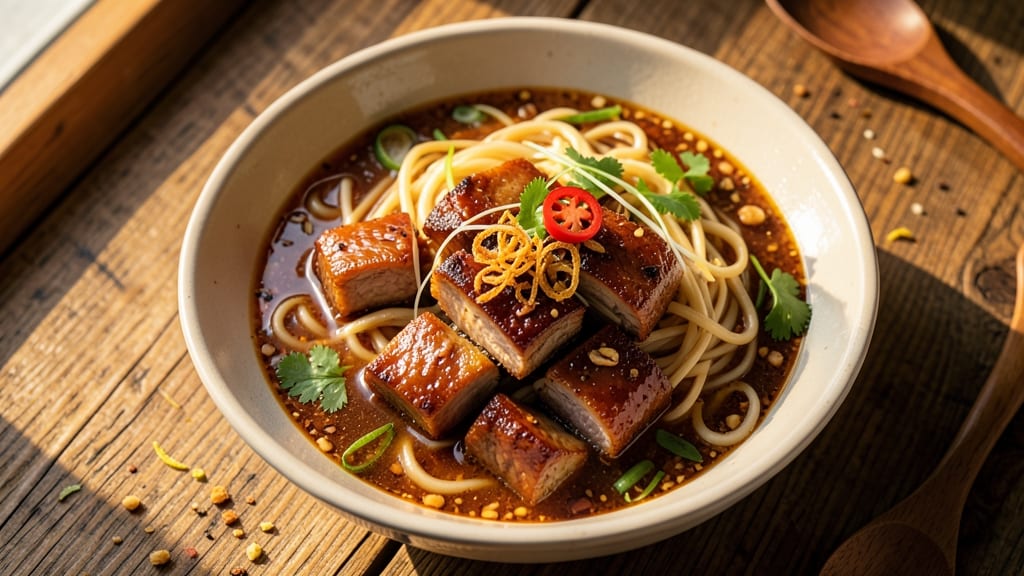
This Asian BBQ pork noodle soup recipe delivers restaurant-quality depth in every steaming bowl—smoky-sweet charred pork, aromatic broth, and chewy rice noodles that soak up every flavor.
The secret lies in proper marinating (soy, five-spice, and brown sugar) followed by a quick sear to lock in those caramelized flavors, then slow simmering with ginger, garlic, and star anise to build complex layers.
I’ve perfected this version to balance authenticity with home-cook simplicity, using pantry staples without sacrificing that signature wok-house aroma.
The broth starts with charring aromatics—a technique that deepens flavor without bitterness—then simmers until the pork falls apart effortlessly. Fresh rice noodles absorb the rich sauce while maintaining their signature chew, and the finishing touches (cilantro, lime, chili oil) brighten each bite.
What makes this recipe stand out is the one-pot efficiency: no separate braising required, and the marinade doubles as the broth base, cutting prep time by half while keeping flavors cohesive.
You’ll end up with a bowl that’s smoky yet bright, savory yet subtly sweet—a perfect balance of textures and temperatures. The pork stays tender and flavorful, the noodles are al dente without being mushy, and the broth is rich enough to stand alone but harmonizes perfectly with every component.
This is the kind of soup that disappears faster than you can say "second helping," and it reheats beautifully for leftovers.
Whether you’re feeding a crowd or meal prepping for the week, this recipe scales effortlessly. The marinade can be prepped ahead, the broth freezes well, and the assembly takes just minutes. Here’s how to make it—professional results without the fuss.
Ingredients for asian bbq pork noodle soup
Pantry staples meet restaurant-quality aromatics in this smoky-sweet pork noodle masterpiece.
| Ingredient | Amount | Notes |
|---|---|---|
| Boneless Pork Shoulder 🥩 | 1 ½ lb | Cut into 1-inch cubes, marinated overnight |
| Soy Sauce 🍶 | ½ cup | High-quality, preferably Japanese |
| Brown Sugar 🍯 | ¼ cup | Packed, light or dark |
| Five-Spice Powder 🌶️ | 1 tbsp | Authentic Chinese blend preferred |
| Garlic Cloves 🧄 | 6 cloves | Peeled, smashed slightly |
| Fresh Ginger 🧅 | ½ cup | Finely grated, peeled |
| Star Anise Pods 🌟 | 2 whole | Lightly crushed |
| Rice Vinegar 🍶 | 2 tbsp | White or seasoned |
| Sesame Oil 🫒 | 1 tbsp | Toasted, for finishing |
| Rice Noodles 🍜 | 8 oz | Stir-fry or vermicelli type |
| Fresh Cilantro 🌿 | ¼ cup | Chopped, for garnish |
| Lime Wedges 🍋 | 2 whole | For serving |
| Chili Oil 🌶️ | 1 tbsp | For finishing, optional |
| Vegetable Oil 🫒 | 2 tbsp | For searing pork |
| Salt 🧂 | 1 tsp | Kosher or sea salt |
The pork shoulder is the backbone of this dish—look for well-marbled cuts at Asian markets or the butcher counter for optimal flavor. Costco or Whole Foods often carry high-quality pork shoulders that stay tender during the long simmer. Five-spice powder is non-negotiable here; Penzeys or Spicewalla carry authentic blends that deliver that signature wok-house aroma. Fresh ginger and garlic should be vibrant and firm—no wrinkled or moldy roots. The star anise adds depth, but if you can't find it, a pinch of anise seeds works too. For the rice noodles, stir-fry or vermicelli types hold up best to the rich broth without turning mushy.
No five-spice powder? Mix 1 tsp each of cinnamon, fennel, cloves, and pepper for a close approximation. Substituting brown sugar with honey or maple syrup changes the depth slightly but works in a pinch. If you're missing the star anise, a bay leaf or extra cinnamon adds warmth. For the noodles, udon or ramen noodles can replace rice noodles if needed, though the texture will differ. Fresh cilantro is ideal, but dried oregano at half the amount works if you're out. The chili oil is optional but recommended—Lao Gan Ma or homemade with chili flakes and oil both deliver that signature kick.
Marinated pork keeps 3 days in the fridge—use the marinade as your broth base for maximum flavor efficiency. The cooked broth freezes beautifully for up to 3 months, making this a perfect meal-prep candidate. For assembly, keep noodles separate until serving to prevent sogginess. The soup reheats beautifully—just add a splash of water or broth to restore richness. Portion into containers with a side of lime wedges and chili oil for easy grab-and-go bowls.
Why You'll Love This Recipe
- One-Pot Magic: I swear by this recipe because it’s actually a one-pot wonder. Toss the pork shoulder in soy sauce, brown sugar, and five-spice powder—then let it slow-cook while you chop garlic and prep the broth. No fancy techniques, no extra dishes to wash. (Yes, even on a Tuesday night.)
- Five-Spice Secret Weapon: That earthy five-spice powder? It’s the star. Warm cinnamon, star anise, and clove notes dance with the deep umami of the pork and garlic, then get balanced by the caramelized brown sugar. It’s the kind of flavor that makes you pause mid-bite—like a hug in soup form.
- Lunchbox Hero: Between us, this is my go-to for meal prep. The pork stays tender for days, and the broth thickens beautifully when reheated. Pack it cold for a hearty lunch, or serve it hot for a quick dinner. My college-aged kid still begs for leftovers—proof it’s a keeper.
- Budget-Friendly Feast: Pork shoulder is cheap, but it feels luxurious here. A single cut stretches into four servings, and the pantry staples (soy sauce, sugar, garlic) cost pennies. Honestly, it’s the kind of recipe that makes me feel like I’m feeding a crowd without breaking the bank.
Step-by-step instructions for Asian BBQ pork noodle soup
This method delivers a rich, smoky-sweet broth with tender pork and chewy noodles every time.
Marinate and Prepare the Pork
In a large bowl, combine the 1.5 lb boneless pork shoulder cut into 1-inch cubes with the 0.5 cup soy sauce, 0.25 cup packed brown sugar, 1 tbsp five-spice powder, 6 smashed garlic cloves, and 0.5 cup finely grated ginger. Mix thoroughly until the pork is fully coated. Transfer to a resealable plastic bag and marinate in the refrigerator for at least 12 hours (overnight is ideal).
The marinade should penetrate deeply, transforming tough pork into tender, flavorful cubes. I like to press the marinade into the meat with my fingers to ensure even distribution. This step is non-negotiable—it's what creates that signature smoky-sweet flavor profile.
Sear the Pork for Deep Flavor
Heat 2 tablespoons vegetable oil in a large Dutch oven or heavy pot over medium-high heat until shimmering. Working in batches if needed, remove the pork from the marinade (reserve the marinade) and sear for 3-4 minutes per side until deep golden brown and slightly caramelized. Transfer the seared pork to a plate and set aside.
Don't overcrowd the pan—this prevents proper browning. You want those pork cubes to develop a rich crust that will dissolve into the broth later, creating layers of flavor. If your pork releases easily from the pan, it's ready to move to the next step.
Build the Smoky-Sweet Broth
Return the Dutch oven to medium heat and add the reserved marinade, scraping up any browned bits from the bottom. Add 2 whole lightly crushed star anise pods and 2 tablespoons rice vinegar. Bring to a gentle simmer, then return the pork to the pot. Cover and cook for 1 hour, stirring occasionally, until the pork is tender and the broth has reduced slightly.
Here's where the magic happens: the star anise infuses subtle anise notes while the vinegar brightens the sweetness. The broth should coat the back of a spoon and have a glossy sheen. If it reduces too quickly, add 1 cup hot water to maintain the proper consistency.
Finish and Assemble the Soup
Remove the pork from the broth and let it rest on a plate. Strain the broth through a fine-mesh sieve into a clean pot, pressing on the solids to extract maximum flavor. Return the broth to medium heat and stir in 1 tablespoon sesame oil and 1 tablespoon chili oil (if using). Taste and adjust seasoning with 1 teaspoon salt if needed.
The broth should be rich, aromatic, and perfectly balanced between sweet, savory, and slightly spicy. While the broth heats, prepare the 8 oz rice noodles according to package instructions (usually 5-7 minutes in boiling water until al dente). Drain and rinse briefly under cold water to stop cooking.
Combine and Serve
Return the pork to the broth and heat through. Divide the cooked rice noodles among 4 bowls. Ladle the hot pork and broth over the noodles, then garnish each serving with 1 tablespoon chopped fresh cilantro and ½ lime wedge. Serve immediately with extra lime wedges on the side.
Each bowl should be a harmonious blend of tender pork, chewy noodles, and fragrant broth. The lime brightens the dish, cutting through the richness while adding a refreshing finish. For best results, serve while piping hot—this soup tastes even better the next day, but the noodles are best enjoyed fresh.
Pro Tips For Making Asian Bbq Pork Noodle Soup
- Sear the Pork Hard: After slicing the pork shoulder into thin strips, don’t skip the quick sear in a hot wok or pan—just 30 seconds per side until the edges turn golden. This builds flavor that won’t dissolve into the broth later. I used to rush this step and ended up with bland, gray pork. Trust me, the extra 60 seconds now saves the whole dish.
- Slice Against the Grain: Cut the pork shoulder into strips perpendicular to the muscle fibers—thin enough to cook fast but thick enough to hold shape. Thick slices stay chewy; paper-thin ones turn mushy. Use a sharp knife and don’t fight it—let the blade do the work.
- Bloom the Five-Spice: Toast the five-spice powder in a dry pan for 30 seconds until fragrant before adding it to the broth. This wakes up the spices so they don’t just sit there like dust. I learned this after a batch tasted flat—now it’s the first thing I do when starting the recipe.
- Save the Starch Water: After rinsing the noodles, save the starchy water (about ½ cup) and add it to the broth at the end. It thickens the soup just enough without needing extra cornstarch. I was skeptical—until I tried it and realized how much better the texture was. No one needs to guess if the soup’s too thin.
Regional styles of this dish
Northern Chinese Style
In Beijing and Tianjin, this dish transforms into a heartier pho-inspired noodle soup with a clearer, lighter broth. Use less brown sugar (2 tbsp instead of ½ cup) and add 1 tbsp Shaoxing wine to the marinade for depth.
The broth simmers with dried shiitake mushrooms and goji berries for an earthy sweetness. Serve with thinly sliced scallions and a drizzle of black vinegar—this version balances smokiness with delicate umami. 🌟
Thai-Inspired Version
Thai households take this soup in a spicier, herb-forward direction. Swap the five-spice for 1 tbsp lemongrass paste and 1 tsp galangal in the marinade. The broth gets a kick from 1 stalk lemongrass, 3 kaffir lime leaves, and 1 tbsp fish sauce (instead of soy).
Finish with Thai basil, crushed peanuts, and a squeeze of lime—the contrast of cool, nutty, and fiery makes every spoonful vibrant. 🌶️
Vietnamese Banh Canh
This Vietnamese take uses rice vermicelli noodles and a soy-broth base with a crispy pork ear (optional but iconic). Marinate the pork with 1 tbsp fish sauce and 1 tsp black pepper instead of five-spice.
The broth simmers with fermented shrimp paste (mắm ruốc) for depth, and the dish is topped with pickled carrots, daikon, and cucumber. The texture play—chewy noodles, tender pork, and crunchy garnishes—elevates it to a street-food classic. 🥗
Japanese Nikujaga Twist
For a Japanese-inspired version, replace the rice noodles with udon and the broth with dashi (made from kombu and bonito flakes). The pork marinade gets 1 tbsp mirin and ½ tsp grated ginger (no five-spice).
Add sliced potatoes and carrots to the broth for a stew-like consistency. Top with green onions and a sprinkle of furikake—this hearty, comforting bowl is perfect for cold weather. ❄️
Modern Fusion Adaptation
Want to update the classic? Try a Korean-inspired fusion: Use gochujang (1 tbsp) in the marinade and add 1 tsp toasted sesame seeds to the broth. Swap rice noodles for glass noodles and finish with kimchi and sesame seeds.
The sweet-spicy heat of gochujang transforms the dish into a bold, contemporary take that still honors its roots. 🔥
Nutrition facts
Frequently asked questions
Can I use chicken or beef instead of pork?
For chicken, use 1.5 lb boneless thighs (darker meat stays juicier) and reduce marinating time to 6-8 hours. For beef, opt for 1 lb flank steak or chuck roast cut into strips—these hold up well to the long simmer. Adjust cooking time: chicken needs 45 minutes after searing, while beef requires 1.5 hours. The five-spice blend works beautifully with all three proteins, but beef benefits from an extra ½ tsp black pepper in the marinade.
How do I prevent the noodles from getting mushy?
Rinse cooked noodles under cold water for 10-15 seconds immediately after draining to stop cooking. For extra chew, use fresh rice noodles (not dried) and cook them 1 minute less than package instructions. Assemble bowls right before serving—don't let noodles sit in broth more than 5 minutes. Pro tip: Toss noodles with ½ tsp sesame oil before adding broth to create a protective barrier.
What if I don't have five-spice powder?
Make your own blend with ½ tsp each of cinnamon, cloves, fennel seeds, and star anise (crushed), plus ¼ tsp black pepper. For a quicker fix, use 1 tsp ground coriander + ¼ tsp cayenne—it won't be identical but captures the warm, aromatic notes. The key is balancing sweet (brown sugar), savory (soy), and spicy (chili oil) elements to compensate for missing complexity.
Can I make this soup in an Instant Pot?
Yes! Sear pork as directed, then transfer to the Instant Pot with marinade, star anise, and 1 cup water. Cook on High Pressure for 25 minutes, then quick-release. Strain broth, reduce by simmering 5 minutes on sauté mode, and finish as written. The Instant Pot cuts cooking time by 45 minutes but requires 10 minutes extra searing for proper flavor development.
Why does my broth taste too sweet?
Balance sweetness with acid: add 1 extra tbsp rice vinegar or ½ tsp fish sauce to cut through the sugar. For depth, simmer with 1 crushed bay leaf or ½ tsp white pepper—these add complexity without overpowering. If using honey instead of brown sugar, reduce by ¼ cup (it's sweeter). Taste as you go: the broth should be slightly sweet with dominant savory notes.