
Soups & Stews
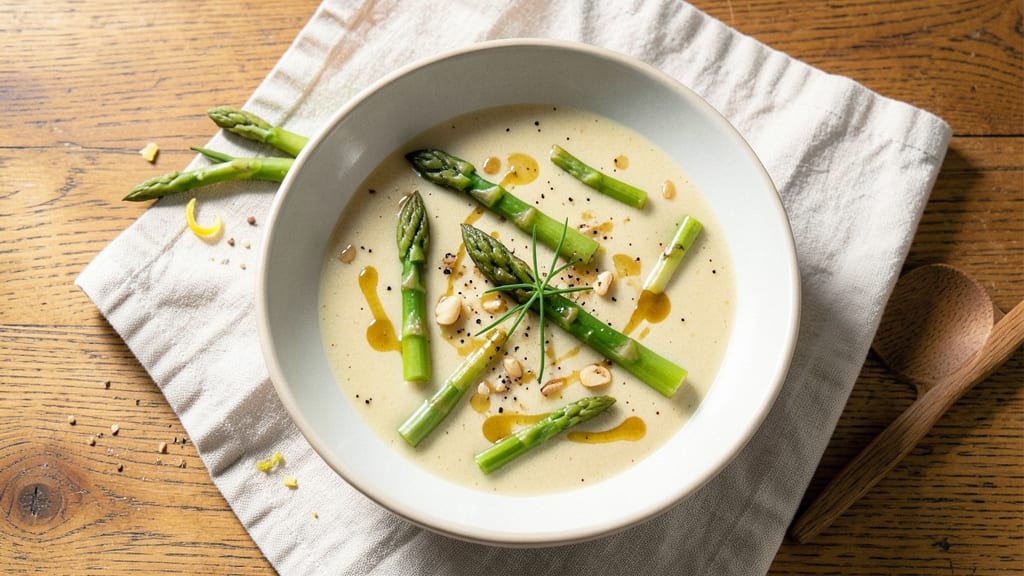
This asparagus soup recipe delivers the best ever velvety texture and bright, spring-inspired flavor that transforms simple ingredients into something extraordinary. The secret lies in perfectly blanching fresh asparagus before blending it with aromatic shallots, garlic, and a touch of cream—creating a soup that's both rich and impossibly smooth.
I've refined this recipe over years of testing, ensuring every spoonful captures that delicate asparagus sweetness without bitterness.
What sets this apart is the balance of techniques: high-heat blanching preserves color and sweetness, while slow simmering develops depth in the broth. The addition of a splash of white wine brightens the flavor profile, and a final touch of lemon zest adds freshness that keeps the soup vibrant.
This isn't just another spring soup—it's a restaurant-quality dish that feels light yet satisfying, perfect for warm evenings when you crave something comforting yet fresh.
The result is a soup with a silky-smooth consistency that coats your spoon perfectly, where every bite reveals layers of asparagus sweetness, savory shallots, and just enough creaminess to make it irresistible.
The bright green color and delicate aroma make it visually stunning as well, proving that the best soups aren't just delicious—they're an experience. Whether you're serving it as a starter or a light main, this recipe delivers consistently exceptional results.
For those watching their calories, you can easily reduce the cream or use a light coconut milk alternative without sacrificing texture. The recipe scales beautifully for gatherings, and leftovers reheat perfectly while maintaining that velvety quality. Here's how to create this spring masterpiece that will have everyone asking for seconds.
Ingredients for best ever asparagus soup
Velvety green perfection starts with these 12 ingredients—simple yet extraordinary when combined.
| Ingredient | Amount | Notes |
|---|---|---|
| Fresh Asparagus 🌱 | 1 lb | Trimmed, tough ends removed |
| Shallots 🧅 | 2 whole | Minced, about 0.25 cup |
| Garlic Cloves 🧄 | 3 cloves | Peeled, smashed for flavor |
| Extra-Virgin Olive Oil 🫒 | ½ cup | For sautéing, fruity variety |
| Dry White Wine 🍷 | ½ cup | Sauvignon Blanc or Pinot Grigio |
| Vegetable Broth 💧 | 4 cups | Homemade or low-sodium store-bought |
| Heavy Cream 🥛 | ½ cup | Full-fat for velvety texture |
| Lemon Zest 🍋 | 1 tbsp | Brightens the final flavor |
| Salt 🧂 | 1 ½ tsp | Diamond Crystal preferred |
| Black Pepper 🌶️ | ½ tsp | Freshly cracked for heat |
| Fresh Lemon Juice 🍋 | 1 tbsp | Adjusts acidity at the end |
| Fresh Chives 🌿 | 2 tbsp | Chopped, for garnish |
The asparagus is your star, so pick the freshest spears you can find—look for bright green tips and firm stems. Trader Joe's and Whole Foods carry the best quality, but any grocery store with a good produce section will work. The key is blanching them first—this preserves that vibrant green color and delicate sweetness. Shallots add depth, but if you can't find them, substitute extra minced onion. The garlic? Smash those cloves before adding them to the pot—it releases more flavor. And trust me, freshly cracked black pepper makes all the difference compared to pre-ground.
No white wine? Dry vermouth or even apple juice works in a pinch, but the acidity helps brighten the soup. Using store-bought broth? Low-sodium is best—you can always add more salt at the end. The cream is where the magic happens for that silky texture, but coconut milk or cashew cream gives a lighter option. Lemon zest and juice are non-negotiable—they cut through the richness and keep the soup vibrant. Swapping the chives for parsley? No problem, but the onion flavor pairs perfectly with asparagus. And if you're feeling fancy, a splash of aquafaba (chickpea brine) adds a silky texture without dairy.
This soup tastes even better the next day—reheat gently over low heat to preserve that velvety texture. Store in an airtight container for up to 5 days in the fridge, or freeze for up to 3 months. Garnish with extra chives and a drizzle of olive oil right before serving—it makes all the difference. For a restaurant-quality touch, serve with crusty bread or grilled cheese. And if you're making a big batch? Double the recipe—it's perfect for spring gatherings.
Why You'll Love This Recipe
- Five-Ingredient Magic: I swear by this lineup—shallots and garlic caramelize in olive oil while the asparagus roasts until tender-crisp. No fancy techniques, just good ingredients doing the work.
- Wine-Infused Depth: That splash of dry white wine? It’s the secret—brightens the earthy asparagus and mellows the shallots into something silky. Honestly, it tastes like a fancy bistro, not a weeknight.
- Leftovers That Shine: Make a double batch and reheat it later—it’s even better the next day. My freezer’s full of this stuff because it’s the only soup that doesn’t taste reheated.
- Spring’s Crowd-Pleaser: Perfect for brunch, potlucks, or when you’re too tired to cook. (Yes, even on a Tuesday night.) The asparagus spears add a touch of elegance without the fuss.
Step-by-step instructions for spring's velvety green asparagus soup
This method transforms simple spring asparagus into a restaurant-worthy soup with silky texture and vibrant flavor.
Prep and Sauté the Aromatics
Trim the tough ends from the 1 lb fresh asparagus, reserving the tender tips for garnish later. Cut the remaining stems into ½-inch pieces—this ensures even cooking and prevents a watery soup. In a large pot, heat the 0.5 cup extra-virgin olive oil over medium heat until shimmering but not smoking.
Add the 2 whole minced shallots and 3 smashed garlic cloves, stirring constantly for 3-4 minutes until the shallots soften and turn translucent. This foundational step builds flavor—don't rush it. The garlic should be fragrant but not browned. I press the garlic with the side of my knife to release more flavor without burning it.
Cook the Asparagus Until Tender
Add the cut asparagus stems to the pot and stir to coat in the oil. Cook for 5-6 minutes over medium heat, stirring occasionally, until the asparagus softens slightly but still retains some bite. You're looking for a texture between al dente and fully tender—this prevents the soup from becoming mushy later.
Pour in the 0.5 cup dry white wine and scrape up any browned bits from the bottom of the pot. Let the wine simmer for 2-3 minutes until reduced by half. This deglazing step captures all the concentrated flavors you've built so far. The wine should smell rich and aromatic, not sharp or alcoholic.
Simmer with Broth and Season
Add the 4 cups vegetable broth, bring to a boil, then reduce heat to medium-low. Stir in the 1.5 tsp salt and 0.5 tsp black pepper, then add the 1 tbsp lemon zest. Let the soup simmer uncovered for 15-20 minutes, stirring occasionally, until the asparagus is completely tender and the flavors meld together.
Here's the thing—this simmering time is crucial. You want the asparagus to break down just enough to release its natural sweetness into the broth, but not so much that it turns to mush. The soup should have a vibrant green color with visible asparagus pieces. If it looks too thin, reduce the heat and let it cook longer—it'll thicken as it cools.
Blend to Silky Perfection
Use an immersion blender to purée the soup directly in the pot until completely smooth. For best results, work in batches if needed, pressing the blender against the bottom of the pot to ensure all the asparagus is fully incorporated. If you prefer a slightly textured soup, blend only until mostly smooth with a few small pieces remaining.
Return the pot to medium-low heat and stir in the 0.5 cup heavy cream. Let the soup simmer gently for 3-4 minutes—just until heated through. The cream should be fully incorporated and the soup should have a velvety consistency. Taste and adjust seasoning with more salt or pepper if needed. The soup should be rich but not overly heavy.
Finish with Brightness and Garnish
Remove the pot from heat and stir in the 1 tbsp fresh lemon juice. This final acid note brightens the soup and balances the richness of the cream. The lemon juice should cut through the soup's velvety texture, adding a refreshing contrast. Taste again—you want the acidity to complement, not overpower, the asparagus flavor.
Ladle the soup into bowls and garnish each serving with 2 tbsp chopped fresh chives and the reserved asparagus tips. The chives add a delicate onion flavor that pairs beautifully with the asparagus, while the tips provide a fresh, crisp contrast to the silky soup. Serve immediately while hot, with crusty bread on the side to soak up every last drop of that velvety green gold.
Pro Tips For Making Best Ever Asparagus Soup
- CHAR THE SHALLOTS: Cook them until they’re golden and just starting to caramelize—about 8-10 minutes on medium-low. I used to rush this, and the soup tasted flat; slow and steady gives depth that wine alone can’t match.
- TRIM THE ASPARAGUS RIGHT: Snip the woody ends at an angle (about 1 inch from the base) and reserve the trimmings for stock—you’ll get more flavor and less waste. Yes, it’s fiddly, but those trimmings add richness to the soup’s base.
- DON’T BOIL THE WINE DRY: Let the white wine reduce by half before adding stock, but keep an eye on it—burnt alcohol tastes bitter. If it’s gone too far, splash in a little water and start over. (Your future self will notice the difference.)
- BLEND IN BATCHES: Puree the soup in two passes: first blend the asparagus, shallots, and garlic until smooth, then stir in the stock and wine before blending again. This keeps the texture velvety without overworking the soup.
Troubleshooting great best ever asparagus soup
Preventing Watery Soup
If your soup turns out too thin, it’s usually from overcooking the asparagus or using too much broth. To fix this, simmer the soup uncovered for an extra 5-10 minutes—the liquid will reduce naturally.
For a thicker texture immediately, stir in 1 tbsp cornstarch mixed with 2 tbsp cold water and simmer for 2-3 minutes. I’ve found that cutting asparagus into ½-inch pieces (not smaller) helps avoid a watery consistency. 💧
Fixing Bitterness
Asparagus can develop bitterness if overcooked or blanched too long. To prevent this, blanch asparagus for only 2-3 minutes before cooking it in the soup. If bitterness sneaks in, balance it with 1 extra tbsp lemon juice or a pinch of sugar (just ½ tsp).
Freshly ground black pepper also helps mask bitterness by adding warmth. Trust me, this adjustment makes a huge difference!
Blending Issues
If your immersion blender struggles with thick asparagus pieces, strain the soup through a fine-mesh sieve before blending. For stubborn chunks, add ¼ cup warm broth to thin the soup slightly.
If you don’t have an immersion blender, transfer the soup to a countertop blender in batches—never fill it past the max line—and blend until completely smooth. Always secure the lid tightly to avoid splatters. 🔥
Cream Separation
Heavy cream can separate if the soup isn’t heated gently after blending. To prevent this, stir the cream in off the heat or on the lowest possible setting for just 2-3 minutes.
If separation happens, whisk in 1 tsp cornstarch mixed with 1 tbsp cold water and heat for 1 more minute. For a dairy-free fix, use ½ cup coconut milk instead—it blends better and adds natural creaminess. 🥛
Overcooked Asparagus
If your asparagus turns mushy, it’s likely been simmered too long. To salvage it, blend the soup until smooth (this disguises the texture) and boost flavor with 1 extra tbsp lemon zest and a splash of white wine.
For future batches, reduce simmering time to 15 minutes and check for tenderness at 12 minutes. The soup should still have slight resistance when pierced with a fork. 🌱
Weak Flavor Profile
If your soup tastes bland, it’s probably missing acidity or depth. Boost flavor by adding 1 extra shallot (minced) or ½ tsp smoked paprika during sautéing. A splash of fish sauce (just ½ tsp) adds umami without overpowering.
For brightness, increase lemon juice to 2 tbsp or add 1 tsp apple cider vinegar. The key is balancing sweetness (asparagus), acidity (lemon), and saltiness (broth). 💡
Nutrition facts
Frequently asked questions
Can I use frozen asparagus instead of fresh?
Fresh asparagus gives the best flavor and texture, but frozen works in a pinch! Thaw it completely first, then drain well and pat dry before using. The soup will still be delicious, though you may need to add 1-2 extra minutes of simmering time since frozen asparagus can be slightly tougher. For maximum freshness, always opt for fresh spears when possible.
How do I make this soup dairy-free?
Swap the heavy cream for ½ cup full-fat coconut milk or ½ cup cashew cream (blended soaked cashews with water). For extra richness, add 1 tbsp nutritional yeast—it adds a cheesy flavor without dairy. The texture will still be velvety, though slightly lighter than the original version.
Why is my soup too thin?
Thin soup usually means the asparagus was overcooked or you used too much broth. Simmer uncovered for 5-10 more minutes to reduce naturally, or thicken immediately by stirring in 1 tbsp cornstarch mixed with 2 tbsp cold water. Cutting asparagus into ½-inch pieces (not smaller) helps prevent wateriness in future batches.
Can I make this soup ahead of time?
Yes! This soup actually tastes better the next day as flavors deepen. Store in an airtight container in the fridge for up to 5 days. Reheat gently over low heat, stirring occasionally, until warmed through. For freezing, blend first, then freeze for up to 3 months—thaw overnight in the fridge before reheating.
What's the best way to serve this soup?
Garnish with chopped fresh chives and reserved asparagus tips for color and crunch. Serve with crusty bread, grilled cheese sandwiches, or a sprinkle of Parmesan cheese. For a spring brunch, pair it with poached eggs or smoked salmon. The vibrant green color makes it perfect for Easter or spring gatherings!