
Soups & Stews
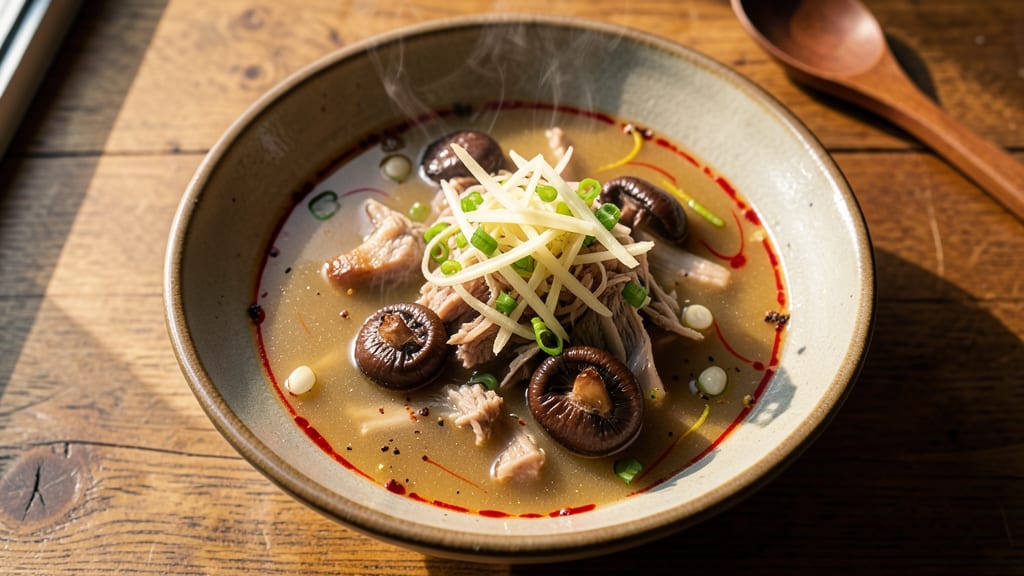
This Asian hot and sour soup recipe delivers the perfect balance of spicy, tangy, and umami-rich flavors in every steaming bowl. The secret lies in a double-boiled broth that extracts deep, savory notes from pork bones and mushrooms, while vinegar and chili oil create that signature fiery kick.
I've perfected this version over years of testing, ensuring the broth remains clear and silky while packing maximum flavor.
The magic happens in the technique: simmering the broth low and slow for hours transforms tough pork bones into tender, flavorful chunks, while fresh ginger and garlic infuse the liquid with aromatic warmth.
What sets this apart is the careful balance of sour (rice vinegar) and spicy (chili oil) elements—too much of either can overwhelm, but when harmonized, they create a symphony of tastes that makes every spoonful irresistible.
By the time you're done, you'll have a steaming bowl of silky noodles floating in a vibrant broth, surrounded by tender pork, crisp bok choy, and perfectly poached eggs.
The contrast of textures—chewy noodles, tender meat, crisp vegetables—elevates each bite, while the broth's depth of flavor makes this more than just soup; it's a comforting, restaurant-quality meal you can make at home.
This recipe works equally well as a quick weeknight dinner or a hearty meal for gatherings. The broth can be made ahead and reheated, while the final assembly takes just minutes.
Whether you're serving it to family or treating yourself, this hot and sour soup delivers satisfaction in every steaming spoonful.
Ingredients for asian hot and sour soup
Pantry staples meet fresh aromatics for a bowl of bold, comforting hot and sour soup.
| Ingredient | Amount | Notes |
|---|---|---|
| Pork Bones 🍖 | 2 lb | Marinated overnight for flavor |
| Dried Shiitake Mushrooms 🍄 | 8 whole | Rehydrated in hot water |
| Fresh Ginger Root 🧄 | 2 tbsp | Grated, skin removed |
| Garlic Cloves 🧄 | 6 cloves | Minced, aromatic base |
| Green Onions 🧅 | 3 whole | White and green parts separated |
| Rice Vinegar 🍶 | ½ cup | White or seasoned variety |
| Chili Oil 🌶️ | ¼ cup | Homemade or store-bought |
| Bok Choy 🥬 | 4 pieces | Baby or regular, crisp |
| Silken Tofu 🧈 | 1 package | 12 oz package, soft texture |
| Eggs 🥚 | 4 whole | Fresh, cold for poaching |
| Wonton Noodles 🍜 | 8 oz | Fresh or dried, silky texture |
| Soy Sauce 🍶 | 2 tbsp | Light or dark variety |
| Sesame Oil 🫒 | 1 tbsp | Toasted, for aroma |
| Salt 🧂 | 1 tsp | Kosher or sea salt |
| White Pepper 🌶️ | ½ tsp | Freshly ground preferred |
The pork bones are non-negotiable for that deep umami flavor. Look for marrow bones or knuckle bones at your local butcher—they've got the best marrow and render richly. If you can't find them, pork shoulder bones work too. The shiitake mushrooms? Dried is best—they concentrate flavor when rehydrated. Soak them in hot water for 20 minutes before using. Fresh ginger and garlic are your aromatic anchors here; no substitutes. I usually grab mine from Asian markets where they're often fresher than the grocery store. The rice vinegar should be white vinegar—it's milder and keeps the broth bright.
No chili oil? Mix 1 tbsp chili flakes with 2 tbsp neutral oil—it's not the same but gets you close. The bok choy can be swapped for baby spinach if you're in a pinch, but bok choy holds its shape better in the hot broth. Silken tofu is optional but adds that silky texture—Trader Joe's or Costco sell it pre-packaged for convenience. For the noodles, wonton noodles are ideal, but udon or even ramen work in a pinch. Just make sure they're fresh or rehydrated properly. The eggs should be cold when poaching—room temperature makes them spread too much.
The broth keeps beautifully. Store it in the fridge for up to 5 days or freeze for 3 months. I always make extra—it's perfect for noodle bowls or even ramen. The chili oil and vinegar can be added fresh when reheating if you prefer more kick. For the tofu, keep it refrigerated in its juice until ready to use. The noodles? Cook them just before serving so they stay chewy. This soup tastes even better the next day as the flavors meld together.
Why You'll Love This Recipe
- One-Pot Magic: I swear by this recipe because the pork bones and mushrooms simmer into rich broth without needing separate pots. Just toss everything in one, and walk away—it’s that simple.
- Umami Bomb: That first sip? Pure flavor payoff. The dried shiitakes soak up the broth, while the ginger and garlic hit like a warm, spicy hug—deep, tangy, and impossible to resist.
- Leftovers That Shine: This soup only gets better the next day. The flavors meld into something even richer, and it reheats in minutes—perfect for lazy mornings or packed lunches.
- Budget-Friendly Staple: Pork bones and dried mushrooms stretch into a whole meal for less than takeout. Honestly, I make it weekly because it’s my go-to when groceries need to last, and it never disappoints.
Step-by-step instructions for Asian hot and sour soup
This vibrant soup balances rich pork broth with bright tang and spicy kick—let's build it layer by layer.
Prepare the Pork Bone Broth
Place the 2 lb pork bones in a large stockpot and cover with cold water by 2 inches. Bring to a boil over high heat, then reduce to a simmer and skim off any foam that rises to the surface for 10 minutes. This removes impurities for a clear broth. Add the 2 tbsp grated fresh ginger root and 6 minced garlic cloves, then simmer uncovered for 2 hours until the broth reduces slightly and develops deep flavor. You'll know it's ready when it smells rich and aromatic—like a cozy kitchen on a chilly day.
Strain the broth through a fine-mesh sieve into a clean pot, pressing gently on the solids to extract maximum flavor. Discard the pork bones and aromatics. The broth should yield about 6 cups—enough to create a silky, flavorful base for our soup. If you're short on time, you can substitute with 6 cups store-bought chicken or pork broth, though homemade always tastes better.
Rehydrate and Sauté the Aromatics
While the broth simmers, prepare the 8 whole dried shiitake mushrooms by soaking them in 4 cups hot water for 20 minutes until plump. Drain, reserving the soaking liquid, and finely chop the mushrooms. In a separate small pot, combine the reserved mushroom liquid with 0.5 cup rice vinegar and bring to a gentle simmer for 5 minutes to infuse the tangy flavor. Set aside.
Heat 1 tbsp sesame oil in a wok or deep skillet over medium-high heat. Add the chopped mushrooms and stir-fry for 3-4 minutes until they release their moisture and develop a slightly caramelized edge. Add the white and green parts of 3 whole green onions, sliced separately, and cook for another 1 minute until fragrant. Remove from heat and set aside—these aromatics will add depth to every spoonful of soup.
Assemble the Tangy-Spicy Broth
Return the strained pork broth to the pot and bring to a gentle simmer over medium heat. Add the 0.25 cup chili oil, 2 tbsp soy sauce, 1 tsp salt, and 0.5 tsp white pepper, stirring to combine. Pour in the reserved mushroom-vinegar liquid and simmer for 5 minutes to meld all the flavors. Taste and adjust seasoning—you want a balance of spicy heat, bright tang, and savory depth. The broth should be vibrant and full-bodied, with a gentle kick from the chili oil.
Reduce heat to low and keep the broth warm while you prepare the remaining ingredients. This step is where the magic happens—the interplay of rice vinegar's acidity, soy sauce's umami, and chili oil's heat creates the signature flavor profile of this soup. If you prefer it less spicy, reduce the chili oil to 2 tablespoons or add a splash of water to dilute it slightly.
Cook the Noodles and Prepare the Eggs
Bring a separate pot of water to a boil and cook the 8 oz wonton noodles according to package instructions until al dente—usually about 3-4 minutes. Drain and rinse briefly under cold water to stop the cooking process, then toss with 1 teaspoon sesame oil to prevent sticking. Set aside to cool slightly while you prepare the eggs.
Fill a deep bowl or pot with 4 inches of water and bring to a gentle simmer over low heat. Crack 4 whole eggs into small bowls and carefully slide them into the water one at a time. Poach for 3-4 minutes until the whites are set but the yolks remain runny. Use a slotted spoon to transfer the eggs to a paper towel-lined plate to drain. The eggs should be silky and tender, ready to add a creamy contrast to the bold broth.
Finish and Serve the Soup
Just before serving, add the 4 pieces bok choy, trimmed and halved lengthwise, to the simmering broth. Cook for 2 minutes until just tender—you want them to retain a slight crunch. Add the 1 package silken tofu, cut into small cubes, and cook for another 1 minute to warm through. The tofu should absorb the broth's flavors without falling apart.
Divide the wonton noodles among 4 bowls, then ladle the hot broth over the noodles. Top each serving with 1 poached egg, 1 green onion (white and green parts separated), and a few shiitake mushroom slices. Drizzle with an extra teaspoon of chili oil for added heat and a final touch of sesame oil for aroma. Serve immediately while the broth is steaming and the noodles are warm—this soup is best enjoyed fresh from the pot!
Pro Tips For Making Asian Hot And Sour Soup
- BLANCH PORK BONES FIRST: Toss your pork bones in boiling water for 10 minutes before adding to the pot—this removes impurities and speeds up collagen extraction. I learned this the hard way after a cloudy broth ruined my first batch.
- SOAK MUSHROOMS SEPARATELY: Rehydrate dried shiitake mushrooms in warm water alone for 20 minutes, then strain and reserve the soaking liquid. Using cold water makes them tough, and mixing with other ingredients dilutes their rich flavor.
- LOW AND SLOW FOR GELATIN: After initial boiling, reduce heat to a bare simmer—just tiny bubbles breaking the surface—and let the pork bones cook for at least 3 hours. Rushing this step means a thin, watery broth instead of the thick, silky texture you want.
- CHAR GINGER AND GARLIC: Lightly toast sliced ginger and minced garlic in a dry pan until fragrant before adding to the soup. This deepens their flavor without overpowering the broth—skip this, and your dish tastes flat. (Yes, even if you're impatient like me.)
Dietary considerations for this recipe
Vegetarian Adaptations
Skip the pork bones and use 6 cups vegetable broth (I love Imagine or Pacific Foods brands) infused with 2 tbsp soy sauce and 1 tbsp miso paste for umami depth.
Add 1 cup extra-firm tofu, pressed and cubed, to the broth during the final simmer. For extra richness, stir in 2 tbsp nutritional yeast when assembling. 🌱
Gluten-Free Options
Replace regular soy sauce with tamari or coconut aminos—both are naturally gluten-free. For noodles, swap wonton noodles for rice noodles or shirataki noodles (ensure they're gluten-free certified).
Double-check all ingredients, especially chili oil and sesame oil, for hidden gluten. I always verify labels at Trader Joe's or Whole Foods for reliable gluten-free options. ✨
Spice Control Tips
For milder heat, reduce chili oil to 1 tablespoon and add 1 teaspoon honey or maple syrup to balance. If you love spice, boost it with ½ teaspoon gochugaru (Korean chili flakes) or 1 tbsp sriracha at the end.
Always taste the broth before adding protein—adjust gradually to avoid overpowering. 🌶️
Dairy-Free Notes
This recipe is naturally dairy-free, but double-check your chili oil and sesame oil for accidental dairy additives. For extra creaminess, stir in 1 tbsp coconut milk when serving.
The silken tofu and poached eggs provide enough richness without dairy. I keep soy-free coconut aminos on hand for guests with soy allergies too. 🥥
Protein Swaps
Replace pork with chicken thighs (marinate in 1 tbsp soy sauce + 1 tbsp rice vinegar for 30 minutes) or shrimp (add in the last 2 minutes of cooking).
For a meatless option, use extra-firm tofu pressed for 20 minutes and cubed. All proteins work best when added just before serving to maintain texture. 🍗
Low-Sodium Adjustments
Use low-sodium soy sauce and reduce salt to ½ teaspoon. Boost flavor with 1 extra garlic clove and 1 extra slice of ginger in the broth.
For umami without salt, add 1 tbsp fish sauce (if not vegetarian) or 1 tbsp coconut aminos. Taste frequently—low-sodium versions need careful seasoning. 💡
Nutrition facts
Frequently asked questions
Can I make this soup without pork bones?
The pork bones create that signature deep umami flavor, but you can substitute with 6 cups store-bought pork or chicken broth enriched with 1 tbsp soy sauce and 1 tsp miso paste. For vegetarian versions, use vegetable broth and add 1 cup extra-firm tofu pressed for 20 minutes to the broth during the final simmer. The texture will be slightly lighter but still delicious!
How do I adjust the spice level?
Start with 0.25 cup chili oil for medium heat. For milder flavor, reduce to 1 tablespoon and balance with 1 teaspoon honey. Love spice? Add ½ teaspoon gochugaru (Korean chili flakes) or 1 tbsp sriracha at the end. Always taste the broth before adding proteins—adjust gradually to avoid overpowering!
Can I prepare this soup ahead of time?
The broth can be made 2 days ahead and stored in the fridge, or frozen for 3 months. Reheat gently on low heat, then add fresh chili oil and vinegar just before serving for maximum brightness. The noodles should be cooked fresh when serving to maintain their chewy texture—just add them to the hot broth for 1-2 minutes before serving.
What's the best way to poach the eggs?
Use 4 inches of water in a deep pot simmering gently (not boiling). Crack eggs into small bowls first, then slide them into the water one at a time. Poach for 3-4 minutes until whites are set but yolks remain runny. For perfect results, keep the water at a gentle simmer—too much heat makes eggs rubbery. Drain on a paper towel to remove excess water before adding to the soup.
Why does my broth look cloudy?
Cloudiness often means impurities weren't skimmed properly during the initial boil. For crystal-clear broth, skim foam for 10-15 minutes after boiling begins. If it's too late, strain through a cheesecloth-lined sieve for extra clarity. Another tip: simmer uncovered to let more impurities rise to the surface. The flavor won't be affected—just the appearance!