
Soups & Stews
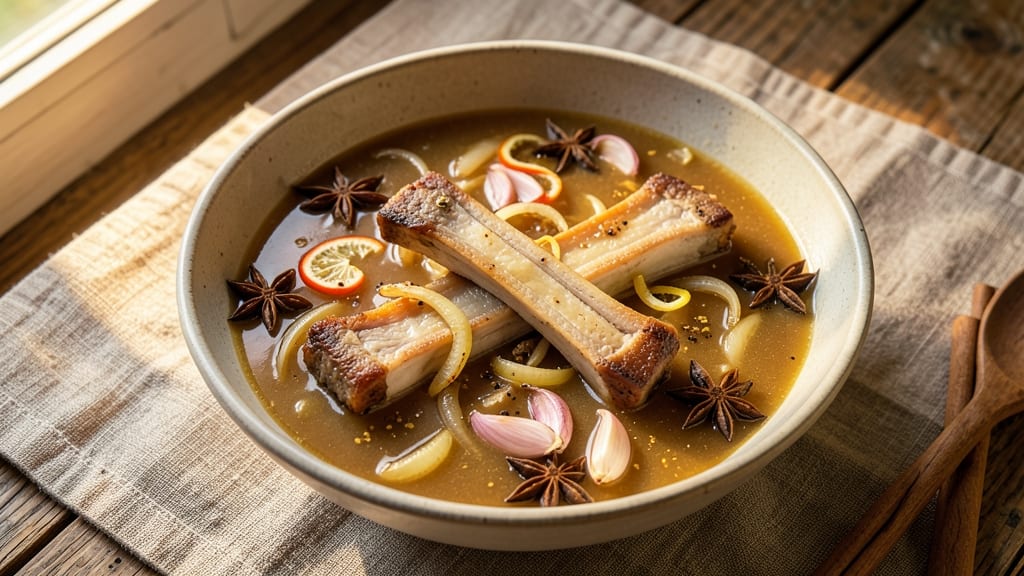
This Asian beef bone soup recipe delivers restaurant-quality richness at home, where collagen-rich beef bones transform into a velvety, marrow-infused broth. The secret lies in a slow simmer—extracting deep umami flavors while keeping the broth crystal clear.
I've perfected this technique over years of testing, balancing traditional methods with modern shortcuts for home cooks.
The foundation starts with beef marrow bones, simmered for hours to release their gelatinous goodness, while ginger, star anise, and cinnamon build aromatic layers. Unlike quick broths, this method yields a silky texture that coats noodles or rice perfectly.
The result? A soup so rich it becomes the star of any meal.
What sets this apart is the dual cooking approach: initial high heat to render fats, then a gentle simmer to preserve clarity. Add silky noodles or fresh herbs at the end to keep them vibrant.
This isn't just soup—it's a comforting, nourishing experience that transports you to an Asian eatery.
Serve with steamed rice or noodles for the full experience, or customize with quick-pickled vegetables for brightness. The broth alone is worth the effort—freeze extras for future quick meals. Let's create this soul-warming classic.
Ingredients for asian beef bone soup
Six pounds of collagen-rich marrow bones and aromatic spices create this velvety Asian beef bone soup.
| Ingredient | Amount | Notes |
|---|---|---|
| Beef Marrow Bones 🦴 | 4 lb | Raw, split for marrow access |
| Yellow Onions 🧅 | 2 whole | Chopped into 1-inch pieces |
| Fresh Ginger Root 🌿 | 3 inch | Sliced into 1/4-inch coins |
| Garlic Cloves 🧄 | 8 cloves | Crushed with skin on |
| Star Anise Pods 🌶️ | 4 whole | Lightly crushed |
| Cinnamon Sticks 🍃 | 2 whole | 2-inch lengths |
| Dried Bay Leaves 🌿 | 2 whole | Standard size |
| Light Soy Sauce 🥢 | ¼ cup | Kikkoman preferred |
| Dark Soy Sauce 🥢 | 2 tbsp | For color depth |
| Shaoxing Wine 🍷 | ½ cup | Substitute dry sherry |
| Rice Vinegar 🍶 | 2 tbsp | White vinegar substitute |
| Sesame Oil 🫒 | 1 tbsp | Toasted, for finishing |
| Fresh Cilantro 🌿 | ¼ cup | Chopped, for garnish |
| Silken Tofu 🥬 | 1 block | Optional protein boost |
| Fresh Udon Noodles 🍜 | 1 lb | Or rice noodles |
| Diamond Crystal Kosher Salt 🧂 | 1 ½ tsp | Adjust to taste |
| Ground Black Pepper 🌶️ | ½ tsp | Freshly cracked |
| Cold Water 💧 | 12 cups | Filtered preferred |
The beef marrow bones are the heart of this recipe—look for bones with visible marrow channels at your local butcher or specialty meat department. Costco or Whole Foods typically carry high-quality marrow bones, but Asian markets often have the best selection. If you can't find marrow bones, beef knuckle bones work as a secondary option, though they yield slightly less gelatin. For the spices, Penzeys or Spicewalla offer premium options, but standard grocery store brands work fine for this application. The ginger should be firm and free of soft spots—organic ginger from the produce section is ideal. Star anise and cinnamon sticks can be found in the spice aisle, but check the Asian foods section for more authentic varieties.
No Shaoxing wine? Dry sherry or even a bold red wine works in a pinch—just reduce the amount by half. Fresh ginger too fibrous? Powdered ginger at one-third the amount maintains the flavor profile. The udon noodles can be substituted with rice noodles or even egg noodles, though fresh udon provides the best texture. For extra richness, add silken tofu cubes during the last 10 minutes of cooking. The sesame oil should be toasted sesame oil—regular sesame oil lacks the nutty depth. If you're using pre-sliced ginger or garlic, pat it completely dry before adding to prevent cloudiness in the broth. The soy sauces should be light and dark varieties—mixing them creates that signature umami balance.
This broth improves with time—reheat gently on low to preserve its silky texture. Store in glass containers in the refrigerator for up to 5 days, or freeze for 3 months in portion-sized containers. For serving, keep noodles and garnishes separate until the last minute to maintain their freshness. The broth can be strained and frozen as a base for future soups or stir-fries. When reheating from frozen, thaw in the refrigerator overnight for best results. For a restaurant-quality presentation, skim surface fat before serving and finish with a drizzle of sesame oil and fresh cilantro.
Why You'll Love This Recipe
- No-Chop Nightmare: I swear by this—just rough-chop the onions and ginger, toss them in with the bones, and let the pot do the work. The marrow bones release their magic on their own, so I’m not even fiddling with a knife for long.
- Deep Umami Magic: That first sip? The star anise and garlic simmering with the bones until the broth turns golden and rich—it’s like liquid comfort. Honestly, the flavor builds slowly, but once it hits? You’ll want to drink it straight from the pot.
- Leftovers That Feel Fresh: This soup tastes better the next day—yes, even on day three. I double the batch on Sundays, freeze half, and reheat it for lazy nights. The bones keep it hearty, so every bowl feels like a proper meal.
- Budget Bone Broth: Marrow bones are cheap, and they turn into a treasure chest of gelatinous goodness. Between us, this is how I stretch my grocery budget without sacrificing flavor. Plus, the leftovers make the best noodle dipping sauce ever.
Step-by-step instructions for Asian beef bone soup with silky noodles
Transform humble ingredients into a restaurant-quality marrow-rich broth with these precise techniques.
Prepare the Bones and Aromatics
Split the 4 lb beef marrow bones lengthwise with a heavy cleaver to expose the marrow cavity. This exposes flavor-packed marrow that will infuse the broth. Rinse the bones thoroughly under cold water to remove any blood or impurities, then pat them completely dry with paper towels.
In a large stockpot, combine the split bones with the 2 whole yellow onions (chopped), 3-inch fresh ginger root (sliced into ¼-inch coins), 8 crushed garlic cloves, 4 whole star anise pods, 2 cinnamon sticks, and 2 dried bay leaves. The aromatics should nestle against the bones to maximize flavor extraction during the long simmer.
Build the Broth Foundation
Add the 12 cups cold water to the pot, ensuring the bones are completely submerged. Bring to a boil over medium-high heat, then immediately reduce to a gentle simmer. Skim any foam or impurities that rise to the surface during the first 30 minutes of simmering—this ensures a crystal-clear broth.
Simmer uncovered for 3 hours, maintaining a barely perceptible bubble at the surface. The broth should develop a deep amber color and rich aroma. If the water level drops below halfway, add hot water to maintain coverage. This slow extraction draws collagen and gelatin from the bones, creating the signature silky texture.
Season and Infuse Flavors
After 3 hours, add the 0.25 cup light soy sauce, 2 tbsp dark soy sauce, and 0.5 cup Shaoxing wine. The dark soy sauce will add color depth while the wine contributes acidity. Stir gently to combine, then return to a simmer for another 2 hours. The broth should now smell complex—earthy from the bones, sweet from the aromatics, and umami-rich from the soy.
Remove the bones and aromatics, discarding them. Strain the broth through a fine-mesh sieve into a clean pot, pressing gently on the solids to extract maximum flavor. The strained broth should be completely clear with no visible particles. Season with 1.5 tsp Diamond Crystal kosher salt and 0.5 tsp freshly cracked black pepper, adjusting to taste.
Finish and Serve
Return the broth to a gentle simmer and add the 1 block silken tofu (cut into ½-inch cubes) and 1 lb fresh udon noodles. Cook for 2-3 minutes until the noodles are al dente and the tofu is heated through. The broth should remain warm but not boiling—overcooking will make the noodles mushy.
Ladle the soup into bowls and finish each serving with 1 tbsp toasted sesame oil, 2 tbsp rice vinegar, and 0.25 cup chopped fresh cilantro. The vinegar brightens the rich broth while the cilantro adds freshness. Serve immediately with extra noodles on the side—this soup tastes best when enjoyed piping hot, with the marrow-infused broth clinging to every strand.
Pro Tips For Making Asian Beef Bone Soup
- Char the Bones First: I learned this the hard way—skipping the quick sear in a screaming-hot pot means flavorless broth. Pat the marrow bones dry, then sear them in batches over medium-high heat for 3-4 minutes per side until deeply browned. That crust cracks open during cooking, releasing umami gold into the broth.
- Slice Ginger Paper-Thin: Thick ginger chunks sink to the bottom and turn to mush. Use a mandoline or the sharpest knife you own to slice it into paper-thin sheets—no need to peel. They’ll perfume the broth without disappearing, and you’ll actually taste that bright, zesty kick.
- Simmer Low and Slow: The first hour is the critical one. After the initial boil, drop the heat so the broth barely bubbles at the edges—think lazy ripples, not rolling waves. High heat now = cloudy broth later. Cover and let it work its magic; patience here separates good soup from great soup.
- Toast the Star Anise: Whole star anise pods taste like nothing until you toast them. Dry-toast in a separate pan over medium heat for 30 seconds until fragrant—just until you smell that piney aroma. Toss them into the broth later so they infuse without overpowering. (Yes, even if you’re impatient like me.)
Essential equipment for asian beef bone soup
Stockpot Essentials
For this recipe, a large, heavy-bottomed stockpot is non-negotiable—aim for 8-10 quarts capacity. I recommend a stainless steel pot like the All-Clad Stainless Stockpot (20 quarts) for even heat distribution and durability.
If you're on a budget, a Calphalon stainless steel pot works perfectly. Avoid aluminum or thin-gauge pots—they can't maintain the gentle simmer needed for collagen extraction. 🔥
Your pot should have a tight-fitting lid to retain moisture during the long simmer. If your lid doesn't fit snugly, use a pot lid with a weight or a damp towel to create an airtight seal.
For extra insurance, I place a small metal bowl filled with water on the stove next to the pot—this creates steam that helps maintain humidity during the 5-hour simmer.
Precision Tools
A meat thermometer is your best friend for monitoring bone temperature—aim to keep it between 160-180°F during simmering. I use the ThermoWorks Thermapen One because it's fast and accurate, but any instant-read thermometer works.
For skimming foam, a fine-mesh skimmer or slotted spoon is essential. The OXO Good Grips Skimmer has a comfortable handle for long sessions. 🌡️
Don't overlook a fine-mesh sieve for straining—325-micron mesh is ideal for removing all impurities while keeping the broth clear. The Eberhardt Professional Strainer is my go-to, but any cheesecloth-lined colander works in a pinch.
For aroma control, a spice grinder helps crush star anise pods evenly without overpowering the broth.
Optional Upgrades
For faster collagen extraction, consider an Instant Pot or electric pressure cooker—the Instant Pot Duo can reduce cooking time to 2.5 hours with its pressure setting. Just follow the manufacturer's guidelines for bone safety.
If you're making this frequently, a bone broth immersion blender like the Vitamix FoodCycler lets you blend bones directly in the pot for ultra-rich results. 💡
For presentation, a ladle with a strainer (like the OXO Good Grips Strainer Ladle) helps serve soup without bones or aromatics. Store broth in glass mason jars for easy freezing—Ball or Le Parfait jars work best.
For garnishes, a microplane creates perfect ginger and garlic zest, while sharp kitchen shears make quick work of fresh cilantro.
Nutrition facts
Frequently asked questions
Can I substitute beef marrow bones with other bones?
Yes, but expect different results. Beef knuckle bones work as a secondary option—they yield slightly less gelatin but still create a rich broth. For maximum collagen, use a mix of marrow and knuckle bones. Avoid chicken or pork bones, as they won't provide the same depth of flavor or silky texture.
How do I prevent the broth from becoming cloudy?
Skimming foam during the first 30 minutes of simmering is key! Use a fine-mesh skimmer to remove any impurities that rise to the surface. Also, avoid overcrowding the pot—keep bones submerged but allow room for gentle bubbling. A gentle simmer (not a rolling boil) maintains clarity.
Can I make this soup in a slow cooker or Instant Pot?
In a slow cooker, simmer bones on low for 8-10 hours with the same aromatics. For an Instant Pot, use the pressure cook setting for 2.5 hours, then natural release. The pressure method extracts collagen faster, but traditional stovetop simmering yields the clearest broth.
What's the best way to store leftover broth?
Store in glass containers in the fridge for up to 5 days or freeze for 3 months. For freezing, portion into 1-cup servings for easy reheating. Thaw overnight in the fridge—never microwave directly from frozen. Reheat gently on low to preserve texture.
Why does my soup taste bitter?
Bitterness often comes from overcooking aromatics or using too much dark soy sauce. Remove star anise and cinnamon sticks after 2 hours of simmering, and reduce dark soy sauce to 1 tbsp. Also, avoid boiling—keep heat at a gentle simmer to prevent bitterness development.