
Soups & Stews
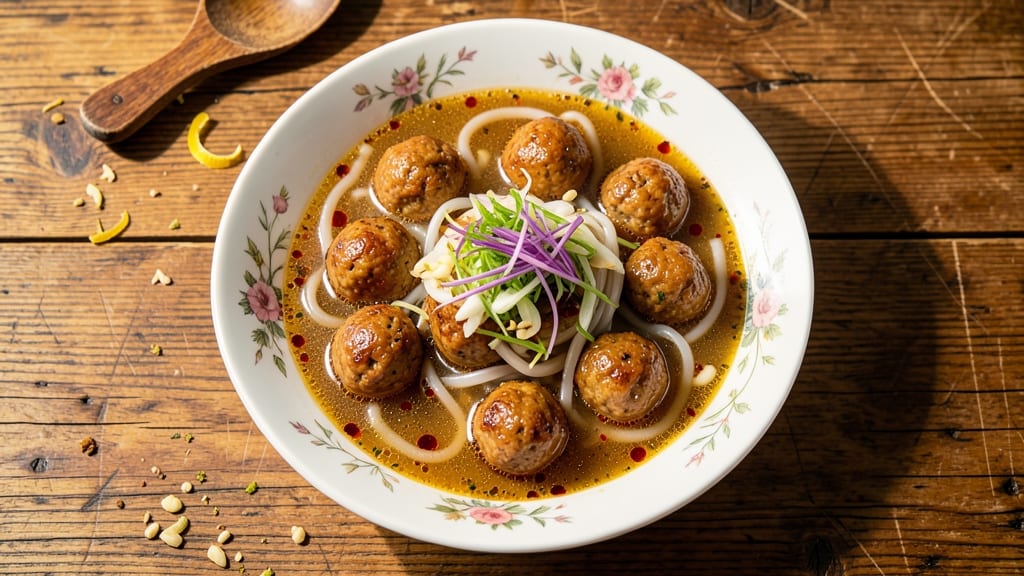
This Asian pork meatball soup recipe transforms simple ingredients into a fragrant, comforting bowl of silky rice noodles and tender meatballs bathed in a ginger-soy broth.
The secret lies in balancing sweet, salty, and umami flavors through slow simmering—creating a broth so rich it practically tastes like it simmered all day. I developed this version after years of testing different Asian-inspired meatball soups, and it finally delivers that perfect harmony of textures and tastes.
The magic begins with the meatballs—juicy pork combined with aromatic ginger, garlic, and a touch of fish sauce for depth. These aren’t your typical dense meatballs; they stay tender while developing a light crust from simmering in the fragrant broth.
The broth itself is where the real magic happens: a slow reduction of soy sauce, miso paste, and fresh ginger creates layers of complexity that make this soup unforgettable.
By the time you’re done, you’ll have a steaming bowl of silky rice noodles wrapped around perfectly seasoned pork meatballs, all floating in a golden broth that’s fragrant with ginger and umami-rich from the miso.
The contrast of tender meatballs, chewy noodles, and velvety broth makes every spoonful satisfying. This recipe is designed to be your new weeknight staple—elegant enough for guests but simple enough for a quick dinner.
Serve with a squeeze of lime, a sprinkle of fresh cilantro, and chili flakes for heat. For extra depth, pair it with quick-pickled vegetables or steamed bok choy. The broth freezes beautifully, so you can make a big batch and enjoy it all week. Let’s get cooking!
Ingredients for asian pork meatball soup
Simple ingredients that pack layers of flavor into every spoonful of this comforting soup.
| Ingredient | Amount | Notes |
|---|---|---|
| Ground Pork 🐷 | 1 ½ lb | Freshly ground for best texture |
| White Rice Noodles 🍜 | 8 oz | Silken or medium-width preferred |
| Fresh Ginger 🧄 | 3 tbsp | Finely grated, aromatic variety |
| Garlic Cloves 🧄 | 6 cloves | Minced for aromatic depth |
| Fish Sauce 🍶 | 1 tbsp | Red Boat preferred for quality |
| Soy Sauce 🥫 | ½ cup | Light or all-purpose variety |
| White Miso Paste 🍶 | 2 tbsp | For umami richness |
| Egg 🥚 | 1 whole | For meatball binding |
| Green Onions 🧅 | 3 whole | Thinly sliced, for garnish |
| Fresh Cilantro 🌿 | ¼ cup | Chopped, for freshness |
| Lime 🍋 | 1 whole | Juiced, for brightness |
| Vegetable Oil 🫒 | 1 tbsp | For cooking meatballs |
| Water 💧 | 4 cups | For broth base |
| Salt 🧂 | 1 tsp | Adjust to taste |
| Black Pepper 🌶️ | ½ tsp | Freshly ground |
The pork makes or breaks these meatballs—ground pork is non-negotiable here (ground beef works in a pinch, but texture suffers). Grab the freshest you can find at Whole Foods or your local butcher shop, where they often grind it right in front of you. The ginger and garlic? Fresh is key—dried just won’t cut it for that bright, aromatic punch. Fish sauce adds that signature umami depth, and Red Boat is my go-to brand (it’s worth the splurge for this dish). For the noodles, silken or medium-width rice noodles are perfect—they soften beautifully without turning mushy. If you can only find thick rice noodles, soak them 10 minutes longer to get the right texture.
No fish sauce? Soy sauce with a dash of Worcestershire works in a bind, though it won’t be quite the same. Fresh ginger too expensive? Dried ginger at half the amount gets you close, but toast it first to wake up the flavor. The miso paste is where the umami magic happens—white miso for a cleaner taste, red if you want more depth. Want to make this vegetarian? Swap the pork for ground mushrooms or tofu, but add an extra tablespoon of soy sauce to compensate. The lime juice is non-negotiable for brightness—Mexican limes if you can find them, or regular Key limes. And if you’re short on cilantro, fresh basil or Thai basil works beautifully too.
This soup tastes even better the next day—double the broth and freeze half for quick meals later. Store leftovers in the fridge for 4-5 days, or freeze the broth (without noodles) for up to 3 months. To reheat, warm gently on the stove with a splash of water—stirring constantly to prevent sticking. For extra richness, stir in a spoonful of coconut milk when reheating. The meatballs and noodles reheat beautifully too, but add a splash of water or broth to keep them moist. Garnish with fresh herbs and lime before serving—that final touch makes all the difference.
Why You'll Love This Recipe
- One-Pot Magic: I swear by this—just toss everything in one pot, and the pork meatballs release their juices while the noodles soak up that aromatic broth. No dirty dishes, no stress, and honestly? That’s my kind of cooking.
- Umami Bomb: Fish sauce and ginger team up for a flavor punch that’s ridiculously good. The meatballs stay tender with a subtle char, and that first spoonful of broth? It’s like a little burst of happiness in a bowl.
- Office Lunch Hero: Between us, this is my go-to for meal prep. The noodles hold up for days, and I can pack it cold or reheat it—either way, it’s a hit. My coworkers think I’m a genius when I bring it in on Fridays.
- Budget-Friendly Feast: Ground pork stretches far, rice noodles are cheap, and a little fish sauce goes a long way. I feed my whole family for under $10, and somehow, it always tastes like a fancy restaurant dish. (Yes, even on a Tuesday night.)
Step-by-step instructions for Asian pork meatball soup
This method delivers perfectly balanced flavors with tender meatballs and aromatic broth.
Prepare the Ginger-Garlic Paste and Meatball Mixture
In a small bowl, combine the 3 tablespoons finely grated fresh ginger and 6 minced garlic cloves. Let this sit for 5 minutes to release their aromatic oils. In a large mixing bowl, gently combine the 1.5 pounds ground pork, ginger-garlic paste, 1 tablespoon fish sauce, 0.5 cup soy sauce, 2 tablespoons white miso paste, 0.5 teaspoon black pepper, and 1 whole egg.
Using your hands, mix everything until just combined—don't overwork the pork or the meatballs will become tough. The mixture should hold together when pressed but still feel slightly loose. Here's the thing—I like to add a splash of ice water (about 1 tablespoon) if the mixture feels too dry, as this helps create lighter meatballs.
Form and Cook the Pork Meatballs
Using slightly wet hands (dip in water if needed), roll the pork mixture into 1-inch diameter meatballs. I aim for about 12-14 meatballs total for even cooking. Heat 1 tablespoon vegetable oil in a large pot over medium-high heat until shimmering.
Working in batches to avoid crowding, add the meatballs to the pot and cook for 3-4 minutes per side until they develop a golden-brown crust. They'll release easily when ready—don't press down with a spatula or they'll flatten. Transfer the cooked meatballs to a plate and set aside. The key here is getting that initial sear before adding liquid, which builds deep flavor.
Build the Fragrant Ginger-Soy Broth
In the same pot, reduce heat to medium and add 4 cups water. Bring to a gentle simmer, then add the cooked meatballs back to the pot. Stir in the 1 teaspoon salt and let everything simmer uncovered for 15 minutes to allow the flavors to meld. You'll notice the broth develop a beautiful golden hue and subtle aroma from the ginger and miso.
Here's where it gets good—after 10 minutes of simmering, give the broth a taste and adjust seasoning if needed. I usually add another ½ teaspoon fish sauce or ½ teaspoon soy sauce at this point, depending on how the flavors are developing. The broth should be savory but not overly salty, with a gentle umami depth from the miso.
Cook the Noodles and Assemble the Soup
While the broth simmers, prepare the 8 ounces white rice noodles according to package instructions (usually 5-7 minutes in boiling water). Drain immediately and rinse briefly under cold water to stop cooking. The noodles should be tender but still slightly firm—they'll finish cooking in the hot broth.
Just before serving, add the cooked noodles to the pot with the meatballs and broth. Gently stir everything together and simmer for an additional 2-3 minutes to heat through. The noodles should absorb just enough broth to become silky while maintaining their structure. Real talk: don't overcook the noodles here or they'll turn mushy and lose their texture.
Finish and Serve with Fresh Garnishes
Remove the soup from heat and let it sit for 2 minutes to allow the flavors to settle. Divide among bowls and top each serving with thinly sliced green onions and chopped fresh cilantro. Squeeze the juice of 1 whole lime over each bowl and give it a good stir—this brightens the flavors and cuts through the richness.
Serve immediately while the broth is hot and the noodles are still tender. Each spoonful should deliver a perfect balance of tender meatballs, aromatic broth, and fresh herbs. If you have leftovers, store them in the fridge for up to 3 days, but I promise you'll want to enjoy this fresh while the flavors are at their peak.
Pro Tips For Making Asian Pork Meatball Soup
- Brown the Pork First: Skip the raw meatballs—sear the ground pork in batches until it’s deeply golden, not just cooked. I learned this the hard way: undercooked meatballs turn mushy in broth, and overcrowding the pan steams them instead of browning. Use a nonstick skillet with 1 tablespoon of oil per batch, and don’t rush it—let it crisp for 3-4 minutes per side.
- Grate the Ginger Fine: No tiny shreds? Your soup will taste one-note. Use the smallest holes on a box grater or pulse in a food processor until it’s almost paste-like. Fresh ginger loses its punch when it sits in broth, so add it raw with the aromatics—no need to cook it first. (Yes, even if you’re impatient like me.)
- Simmer, Don’t Boil: A rolling boil turns noodles to mush and makes the broth cloudy. Keep the heat at a gentle simmer—tiny bubbles breaking the surface—once the meatballs are cooked. If your broth is too thin, reduce it uncovered first; adding noodles last keeps them from turning to glue.
- Toast the Garlic: Raw garlic cloves? Bitter, harsh, and wasted. Slice them thin and fry in the same oil you used for the pork until they’re golden and smell nutty—about 30 seconds. This step makes a real difference: the flavor mellows into something sweet and complex, not sharp. (Your future self will thank you.)
Creative variations of this dish
Japanese Okonomiyaki-Inspired
Transform this soup into a savory Japanese-inspired bowl by adding shredded cabbage (about 2 cups) directly to the broth during the final 5 minutes of simmering.
Stir in 1 tablespoon okonomiyaki sauce (find it in the Asian aisle) and top each bowl with thinly sliced leeks, bonito flakes, and a fried egg on top. The cabbage softens beautifully in the broth, creating a hearty texture that pairs perfectly with the meatballs. 🥬
Thai Tom Yum Fusion
For a spicy Thai twist, add 1 cup coconut milk to the broth after simmering for 10 minutes, along with 1 tablespoon fish sauce, 1 tablespoon lime juice, and 1 teaspoon red curry paste.
Toss in 1 cup sliced mushrooms and 1 stalk lemongrass (bruised) during the final 5 minutes of cooking. Finish with Thai basil leaves and a squeeze of extra lime. The coconut milk mellows the heat while adding creamy richness. 🌶️
Korean Sundubu-Jjigae Style
Give this soup a Korean-inspired makeover by using soft tofu cubes (about 1 cup) instead of meatballs or alongside them. Add 1 tablespoon gochujang (Korean chili paste) and 1 teaspoon sesame oil to the broth during the final 10 minutes of simmering.
Garnish with sesame seeds, green onions, and a drizzle of sesame oil before serving. The tofu soaks up all the spicy, savory flavors beautifully. 🌱
Spicy Szechuan Kick
For a fiery Szechuan-inspired version, stir in 1 tablespoon Szechuan peppercorns (toasted and crushed) and 1 teaspoon chili bean paste during the final 5 minutes of cooking. Add 1 tablespoon fermented black beans for extra umami depth.
Garnish with extra chili oil and scallions for a bold, numbing-spicy finish. The peppercorns add a unique tingling sensation that balances the heat. 🔥
Creamy Coconut-Lime
For a lighter, tropical variation, stir in ½ cup coconut milk and 1 tablespoon lime zest during the final 5 minutes of simmering. Add ½ cup shredded coconut (toasted) as a garnish.
The coconut milk adds a velvety texture while the lime zest brightens the flavors. Serve with extra lime wedges for squeezing. 🥥
Vegetarian Adaptation
Swap the pork for ground mushrooms or tofu (about 1.5 lbs) and add an extra 1 tablespoon soy sauce and 1 teaspoon mushroom powder to the meatball mixture. For extra depth, stir in 1 tablespoon miso paste and 1 teaspoon sesame oil during the final 10 minutes of cooking.
Garnish with extra green onions and toasted sesame seeds for a satisfying vegetarian version. 🌿
Nutrition facts
Frequently asked questions
Can I use ground beef instead of pork for this recipe?
The recipe is designed for pork because it creates the most tender, flavorful meatballs with the right fat content. Ground beef works in a pinch, but the texture will be denser and the flavor less delicate. If you must substitute, use 80/20 lean-to-fat ratio ground beef and add 1 extra tablespoon soy sauce to compensate for the leaner meat. For best results, stick with pork for that authentic Asian-inspired taste.
How do I prevent the meatballs from falling apart in the broth?
Overmixing the meatball mixture is the #1 cause of falling-apart meatballs. Mix just until combined, and avoid pressing too hard when forming them. The egg and miso paste act as natural binders, but the key is gentle handling. Also, sear the meatballs first before adding broth—this creates a protective crust that keeps them intact. If your mixture feels too dry, add 1 tablespoon ice water before forming.
Can I make this soup without miso paste?
If you can't find miso, replace it with 1 tablespoon soy sauce + ½ teaspoon sugar for similar umami depth. For extra richness, add 1 teaspoon Worcestershire sauce or ½ teaspoon fish sauce. The broth will still be flavorful, though the miso gives a unique fermented complexity that's hard to replicate. The ginger-soy base will still shine through beautifully.
What's the best way to reheat leftovers?
Reheat gently on the stove over low-medium heat with 2-3 tablespoons water or broth to prevent drying out. Stir constantly to keep the noodles from sticking. For extra richness, add a splash of coconut milk or soy sauce when reheating. Never microwave directly from the fridge—this makes the noodles rubbery. The broth reheats beautifully, but the meatballs are best enjoyed fresh or reheated quickly from room temperature.
How can I make this soup spicier?
Add ½ teaspoon chili flakes or 1 teaspoon gochujang (Korean chili paste) to the broth while simmering. For heat with depth, stir in 1 teaspoon sambal oelek during the final 5 minutes of cooking. Garnish with extra chili oil or Thai chili slices before serving. Start with small amounts—you can always add more, but you can't take it out!