
Soups & Stews
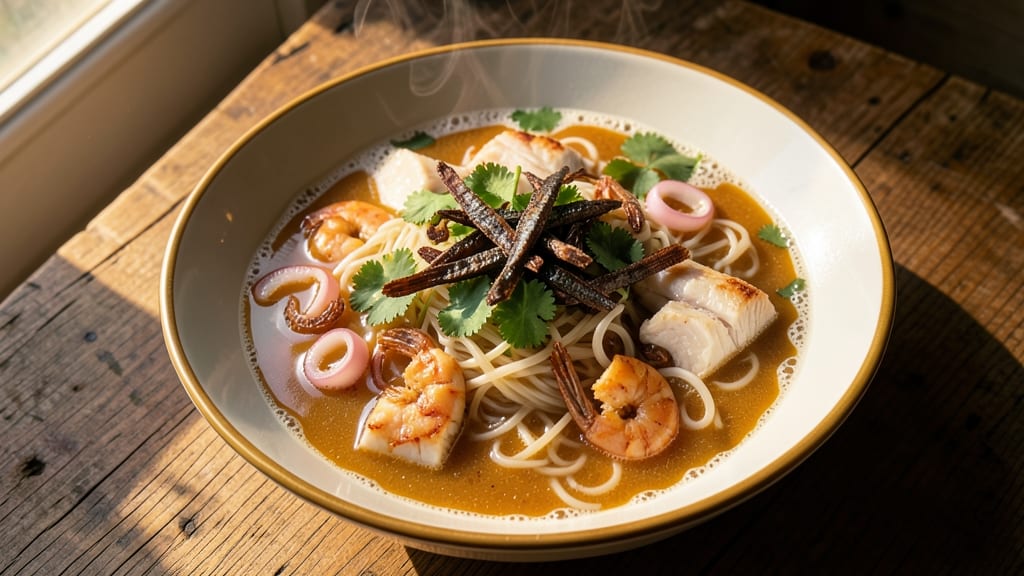
This Asian seafood noodle soup recipe delivers the perfect balance of silky broth, tender seafood, and aromatic flavors that transport you to a bustling street-side stall. The star anchovies and crispy shallots add depth and texture, while lemongrass and chili bring a bright, spicy kick that lingers on the palate.
I’ve refined this recipe over years of testing—each element works together to create a dish that’s both comforting and exciting.
The broth is the heart of this soup, built with a rich base of star anchovies, coconut milk, and aromatic vegetables like ginger and garlic. Meanwhile, the seafood—shrimp, squid, and fish—is seared just enough to lock in flavor before being poached in the broth.
The noodles, whether rice or egg, soak up the essence of the soup, becoming tender yet firm enough to hold their shape. Every bite is a harmony of textures: the crispy shallots, the silky noodles, and the delicate seafood.
What makes this recipe stand out is the attention to detail—from toasting the spices to crisping the shallots at the end. The result is a bowl of soup that’s restaurant-quality, with layers of flavor that keep you reaching for another spoonful.
Serve it with a side of pickled vegetables or fresh herbs to brighten the dish even more. This is the kind of meal that feels like a hug in a bowl.
The best part? It’s easier than it looks, with a method that’s foolproof yet flexible. Whether you’re cooking for a weeknight dinner or a special gathering, this soup delivers warmth, satisfaction, and a taste of Asia’s vibrant street food culture. Let’s get started—your taste buds will thank you.
Ingredients for asian seafood noodle soup
Star anchovies, crispy shallots, and tender seafood—just these ingredients transform a simple pot into restaurant-quality Asian noodle soup.
| Ingredient | Amount | Notes |
|---|---|---|
| Star Anchovies 🐟 | 2 tbsp | Packed in oil, crushed |
| Dried Shrimp 🦐 | ½ lb | Small size preferred |
| Squid Tubes 🐙 | ½ lb | Cleaned, sliced into rings |
| White Fish Fillets 🐟 | 1 lb | Cod or snapper preferred |
| Rice Noodles 🍜 | 8 oz | Medium thickness, uncooked |
| Coconut Milk 🥥 | 1 can | 13.5 oz can, full-fat |
| Yellow Onion 🧅 | 1 whole | Chopped, medium size |
| Garlic Cloves 🧄 | 6 cloves | Minced, fresh preferred |
| Fresh Ginger 🌿 | 2 tbsp | Grated, peeled |
| Lemongrass 🌿 | 1 stalk | Bruised, cut into 2-inch pieces |
| Red Chili Peppers 🌶️ | 2 whole | Bird's eye or Thai, sliced |
| Shallots 🧅 | 4 whole | Thinly sliced, for crisping |
| Fish Sauce 🥫 | 2 tbsp | Red Boat preferred |
| Soy Sauce 🥫 | 1 tbsp | Light or dark |
| Lime Juice 🍋 | 2 tbsp | Freshly squeezed |
| Vegetable Oil 🫒 | 2 tbsp | For searing seafood |
| Salt 🧂 | 1 ½ tsp | Kosher or sea salt |
| Black Pepper 🌶️ | ½ tsp | Freshly ground |
The star anchovies are non-negotiable—they build that umami backbone. Red Boat brand is my go-to, but any quality brand works. Look for them packed in oil, not water. The dried shrimp and squid? Asian markets usually have the best selection, but the freezer section at Trader Joe's has decent options too. For the fish, cod or snapper stay firm when cooked—avoid flaky types like tilapia. The rice noodles? Mama Luang brand is my favorite, but any medium-thickness works. Soak them in warm water while you prep the broth.
No star anchovies? Fish sauce at double the amount gets you close, but you’ll miss that toasty depth. Short on shrimp? Scallops or extra fish work too. The lemongrass is key—if you can’t find fresh, paste works in a pinch (use half the amount). For the chili, Thai bird's eye peppers pack the most heat, but any small red chili works. The shallots? Slice them paper-thin for perfect crispiness—don’t skip this step. And if you’re worried about the coconut milk separating, just give it a quick shake before using.
This soup tastes even better the next day—honestly, the flavors meld into something magical. Store leftovers in the fridge for 3-4 days, or freeze portions for up to 3 months. I always make extra because it disappears fast. For reheating, add a splash of water or broth to keep it silky. And pro tip: Save the crispy shallots from the bottom of the pot—they’re the best part!
Why You'll Love This Recipe
- No Chopping Nightmare: I swear by this recipe because the dried shrimp and squid tubes just plop into the pot—no fiddling with bones or slicing. Even on nights when I’ve got a glass of wine in one hand and a toddler in the other, this soup comes together faster than takeout.
- Umami Bomb: That first spoonful? Chef’s kiss. The star anchovies and dried shrimp pack a punch—salty, funky, and deeply savory—while the fish fillets stay tender. It’s the kind of flavor that makes you forget you’re eating something “simple.”
- Lunchbox Magic: Between us, this soup is my secret weapon for meal prep. Cook a big batch, and you’ve got leftovers that taste just as good cold the next day—perfect for packed lunches or a quick reheat. (Pro tip: The rice noodles hold up way better than you’d think.)
- Budget-Friendly Luxury: Honestly, this recipe feels fancy without breaking the bank. Squid tubes and dried shrimp stretch the broth, and white fish fillets are cheaper than steak but just as satisfying. It’s the kind of meal that makes you feel like you’re treating yourself—without the guilt.
Step-by-step instructions for silky Asian seafood noodle soup
Here's how to build a rich, aromatic broth that balances sweetness and umami.
Prepare the Seafood and Aromatics
Start by rehydrating the dried shrimp in warm water for 5 minutes—they should plump up noticeably. While they soak, prep the squid tubes by slicing them into ½-inch rings and patting them dry with paper towels. Cut the white fish fillets into 1-inch cubes and set aside.
Finely chop the yellow onion and slice the shallots as thinly as possible—this ensures they crisp beautifully later. Mince the garlic cloves and grate the fresh ginger, then bruise the lemongrass by pounding it gently with the flat side of a knife. Slice the red chili peppers into thin rings, removing seeds if you prefer less heat.
Build the Umami-Packed Broth
Heat the 2 tablespoons vegetable oil in a large pot over medium-high heat. Add the crushed star anchovies and toast for 30 seconds until fragrant—this releases their deep, savory essence. Immediately add the chopped onion, garlic, ginger, lemongrass, and chili peppers. Cook for 3-4 minutes until the onion softens and the mixture smells intensely aromatic.
Pour in the 1 can coconut milk and stir well. Add the 2 tablespoons fish sauce, 1 tablespoon soy sauce, and 1.5 teaspoons salt. Bring the mixture to a gentle simmer, then reduce heat to low and let it cook uncovered for 10 minutes, allowing the flavors to meld. This is where the magic happens—the broth develops its signature silky texture and complex taste.
Cook the Seafood and Noodles
Add the drained dried shrimp, squid rings, and fish cubes to the simmering broth. Cook for 4-5 minutes until the shrimp turn pink and the squid becomes opaque. The fish should just begin to flake—it will finish cooking in the hot broth. Remove the pot from heat and stir in the 2 tablespoons lime juice and ½ teaspoon black pepper. Let it sit for 2 minutes to infuse.
In a separate bowl, soak the 8 ounces rice noodles in hot water for 8-10 minutes until pliable but still slightly firm. Drain well and set aside.
Finish with Crispy Shallots and Fresh Herbs
Heat a dry skillet over medium heat and add the sliced shallots. Cook without stirring for 4-5 minutes until they turn deep golden brown and crisp. This is the moment that matters—don't walk away! Transfer them to a paper towel-lined plate to drain excess oil.
To assemble, divide the cooked noodles among bowls. Ladle the hot seafood broth over the noodles, then top with the crispy shallots. Garnish with fresh cilantro or Thai basil if available, and serve immediately with extra lime wedges on the side. The contrast of silky broth, tender seafood, and crispy shallots makes every bite unforgettable.
Pro Tips For Making Asian Seafood Noodle Soup
- Bloom the Anchovies First: Toss those star anchovies into 2 cups of hot water for 10 minutes before adding to the broth—this extracts their umami punch without making the soup taste like fish paste. I learned this the hard way after a batch ended up tasting like a saltwater aquarium.
- Parboil Squid Tubes: Give those squid tubes a quick 30-second blanch in boiling water before stir-frying—it tightens the texture so they don’t turn to mush when you toss them in later. Sounds weird, but it works: your noodle soup will have chewy, springy squid instead of sad, limp rings.
- Salt the Fish Fillets: Pat the white fish dry, season with a pinch of salt, and let them sit for 5 minutes before cooking—this keeps them from curling up like disappointed sea creatures. My grandmother swore by this, and she was right: the texture stays firm, and the flavor stays where it belongs.
- Soak Noodles in Cold Water: Drain the rice noodles when they’re just tender, then rinse them in cold water for 30 seconds—this stops them from turning to glue when they hit the hot broth. I skip this when I’m lazy, but the dish is noticeably better when I don’t. (Your future self will thank you.)
Flavor customization for this asian seafood noodle soup
Spicy Heat Boost
For a fiery kick, add 1-2 extra slices of Thai bird's eye chili to the broth while simmering. If you love heat, stir in ½ teaspoon of chili crisp (like Lao Gan Ma) when serving.
For a smoky twist, toast ½ teaspoon of ground coriander in the oil with the star anchovies—it adds depth without overpowering. 🌶️
Citrus Brightness
Swap lime juice for 1 tablespoon of yuzu juice (if available) for a subtly floral tang. Or try 1 tablespoon of tamarind paste dissolved in warm water for a sour-sweet balance. I’ve found that adding 1 teaspoon of grated lime zest to the broth while simmering brightens the entire dish.
Finish with a squeeze of fresh lime at the table for extra zing.
Creamy Depth
For a richer texture, stir in ¼ cup of coconut cream (the thick part from the can) at the end. Or blend ½ cup of cashews with the broth for a velvety consistency.
If you prefer dairy, a splash of heavy cream (about 2 tablespoons) adds a luxurious touch—just don’t overdo it, or the broth will lose its silky clarity.
Herbaceous Freshness
Garnish with Thai basil or mint leaves for an aromatic finish. I like to tear handfuls of fresh cilantro and scatter them over the top just before serving.
For a more complex flavor, add 1 tablespoon of finely chopped galangal (a ginger relative) to the broth while simmering—it’s a Southeast Asian staple that adds a piney, citrusy note.
Umami Enhancers
Boost the savory profile with 1 teaspoon of oyster sauce or ½ teaspoon of mushroom powder stirred into the broth. For a deeper flavor, add 1 tablespoon of miso paste (white or red) when simmering—it dissolves beautifully and adds a fermented richness.
I’ve also found that a pinch of white pepper (instead of black) adds warmth without overpowering the seafood.
Texture Contrasts
Add crispy fried shallots (store-bought or homemade) for extra crunch. For a chewy element, toss in ½ cup of bean threads (dried or fresh) while the broth simmers.
If you love texture, top each bowl with toasted sesame seeds or crushed peanuts—they add a nutty crunch that balances the silky broth. ✨
Nutrition facts
Frequently asked questions
Can I use fresh shrimp instead of dried shrimp in this recipe?
Use ½ lb fresh shrimp instead of dried, but peel and devein them first. Poach them in the broth for just 1-2 minutes until pink—they cook quickly and should finish in the hot liquid. Fresh shrimp adds a lighter texture compared to the chewy dried variety.
How do I adjust the spice level for kids or sensitive palates?
Remove the seeds from chili peppers before slicing, and reduce the number of slices from 2 to 1. For extra mildness, omit the chili entirely and add ½ teaspoon of sugar to balance the broth's savory notes. Always taste the broth before serving!
What's the best way to store leftovers?
Store in an airtight container with the broth and seafood separated from the noodles. Refrigerate for up to 3 days or freeze for 3 months. When reheating, add 2 tablespoons of water per bowl to maintain the silky texture.
Can I make this soup vegetarian?
Yes! Replace seafood with extra mushrooms (shiitake or oyster) and tofu cubes seared in oil. Use ½ cup vegetable broth instead of fish sauce, and add 1 teaspoon of miso paste for umami depth. The crispy shallots and herbs will still shine!
Why did my broth turn oily or separate?
This happens when coconut milk isn't heated gently or if the pot isn't uncovered while simmering. For next time, simmer uncovered on low heat and stir occasionally. If it separates, whisk in 1 tablespoon of cold water to re-emulsify before serving.