
Soups & Stews
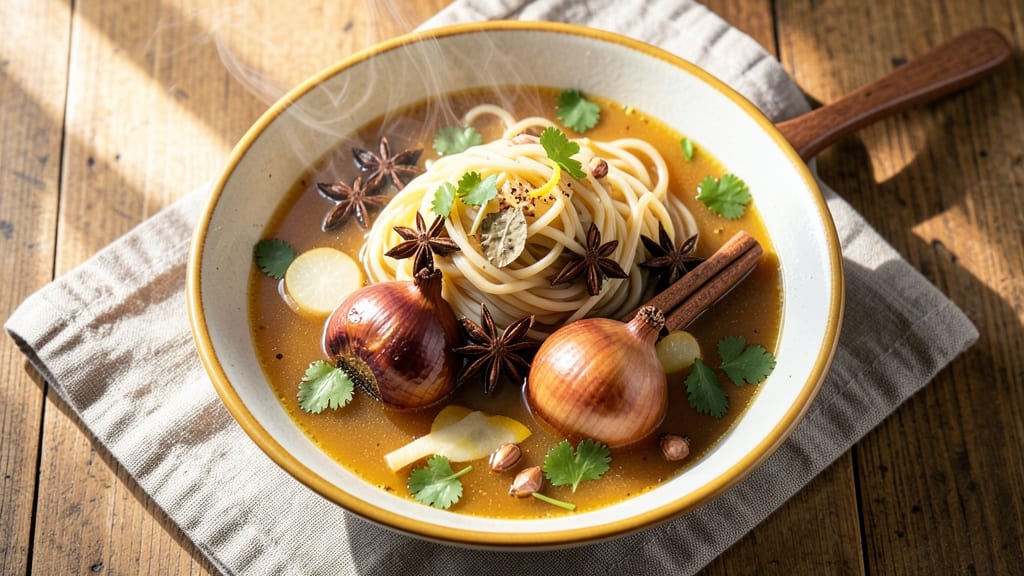
This Asian noodle soup broth recipe transforms simple ingredients into a fragrant, umami-rich foundation that elevates any bowl of ramen or pho. The secret lies in slow-simmered aromatics—ginger, garlic, and star anise—that infuse the broth with layers of warmth and complexity.
I’ve refined this method over years of testing, ensuring every sip delivers restaurant-quality depth without shortcuts.
What sets this broth apart is the balance of sweet, salty, and savory flavors, achieved through a combination of soy sauce, fish sauce, and a touch of brown sugar. The broth develops its rich character over 90 minutes of simmering, allowing the vegetables to break down into a velvety consistency.
Whether you’re making a quick weeknight meal or prepping for a family gathering, this broth serves as the heart of any Asian-inspired dish.
By the end, you’ll have a deeply aromatic, golden-hued broth that clings to noodles and enhances every ingredient it touches. The technique is straightforward but yields professional results—no fancy equipment required, just patience and attention to detail.
Perfect for pairing with fresh rice noodles, soft-boiled eggs, or your choice of protein, this broth turns a simple bowl into a memorable meal.
The best part? This recipe scales effortlessly, so you can make a small batch for two or a large pot for a crowd. Store leftovers in the fridge for up to 5 days or freeze for longer storage, ensuring you always have a flavorful base ready for quick soups.
Let’s get started on creating broth that tastes like home.
Ingredients for asian noodle soup broth
Simple pantry staples and aromatic spices create this restaurant-quality Asian noodle soup broth.
| Ingredient | Amount | Notes |
|---|---|---|
| Yellow Onions 🧅 | 2 whole | Chopped into 1-inch pieces |
| Garlic Cloves 🧄 | 8 cloves | Smashed with side of knife |
| Fresh Ginger 🌿 | 3 oz | Unpeeled, sliced into 1-inch pieces |
| Star Anise Pods 🌟 | 2 whole | Lightly crushed with mortar |
| Cinnamon Sticks 🌿 | 2 whole | 2-inch pieces for easy removal |
| Dried Bay Leaves 🍃 | 2 whole | Standard size, not crumbled |
| Carrots 🥕 | 4 whole | Cut into 2-inch chunks, peeled |
| Celery Stalks 🌿 | 4 whole | Cut into 2-inch pieces, leaves reserved |
| Light Soy Sauce 🥢 | ½ cup | Kikkoman preferred for balance |
| Fish Sauce 🍶 | 2 tbsp | Red Boat brand recommended |
| Brown Sugar 🍯 | 2 tbsp | Packed lightly, not granulated |
| Chicken Stock 🍲 | 8 cups | Homemade preferred, low-sodium |
| Water 💧 | 4 cups | Filtered preferred for clarity |
| Sesame Oil 🫒 | 1 tbsp | Toasted, for finishing only |
| Salt 🧂 | 1 ½ tsp | Diamond Crystal kosher salt |
The star anise and cinnamon sticks are non-negotiable—they bring that signature depth you find in high-end ramen shops. Whole Foods or Asian markets carry the best quality, but don't stress if you can only find them online. Look for pods that are plump and intact, not shriveled. The ginger should be firm and aromatic when peeled—no wrinkly or moldy spots. For the celery, save those leafy tops for garnish later; they're packed with flavor. The carrots can be any color, but orange ones add natural sweetness that complements the broth beautifully.
No fish sauce? Worcestershire sauce at half the amount works in a pinch, though it won't have that authentic umami punch. Swap brown sugar for honey or maple syrup if you prefer, but the caramelization from brown sugar is key for that rich color. Short on chicken stock? Vegetable stock plus 1 tbsp soy sauce gets you close. The soy sauce matters here—Kikkoman or Pearl River Bridge are my go-tos, but any light soy will do. For extra richness, add 1 tbsp of miso paste at the end of cooking, but don't skip the salt adjustment afterward.
This broth tastes even better the next day as flavors meld. Store in airtight containers for up to 5 days in the fridge, or freeze for 3 months—just thaw overnight in the fridge. I always make a double batch and freeze half; nothing beats having a flavorful base ready for quick weeknight meals. For freezing, use glass jars with at least 1-inch headspace to prevent cracking. When reheating, warm gently on the stove—microwaving can make it cloudy.
Why You'll Love This Recipe
- Minimal Chopping Required: I swear by this—just dice one onion, mince a few garlic cloves, and grate some ginger. No fancy techniques, no stress. The star anise and cinnamon sticks? Toss them in whole. That’s it.
- Deep, Warm Comfort: Between us, there’s nothing like that first sip of broth simmered with star anise and cinnamon—earthy, slightly sweet, with a slow-building warmth. It’s the kind of flavor that sticks with you, even after the last spoonful.
- Freezer-Friendly Magic: Make a double batch and freeze it in jars. When you’re exhausted or craving something hearty, just thaw and add noodles. Honestly, it’s my secret weapon for lazy Sundays or post-work exhaustion.
- Budget Stretch: Onions, garlic, ginger—those are cheap staples that pack a punch. Star anise and cinnamon add depth without breaking the bank. This broth turns $5 worth of ingredients into a meal that feels like a restaurant dish.
Step-by-step instructions for crafting umami-packed Asian noodle soup broth
This aromatic broth builds layer by layer—start with the aromatic base and finish with the perfect balance of savory and sweet.
Build the Aromatic Base
Heat a large stockpot over medium heat and add the 1 tablespoon sesame oil. Once shimmering, add the 2 whole yellow onions (chopped into 1-inch pieces), 8 cloves garlic cloves (smashed), and 3 oz fresh ginger (sliced). Cook for 5-7 minutes until the onions soften and the garlic turns golden—this develops their natural sweetness and deepens the flavor foundation.
Here's the thing—don't rush this step. The onions should caramelize slightly at the edges, creating a rich, nutty depth that carries through the entire broth. If they brown too quickly, reduce the heat slightly and let them cook gently. This is where the magic happens.
Add the Spice and Herb Bundle
Toss in the 2 whole star anise pods (lightly crushed), 2 whole cinnamon sticks (cut into 2-inch pieces), and 2 whole dried bay leaves. Stir for 1 minute to distribute the spices evenly. The star anise will release its licorice-like aroma, while the cinnamon adds warmth—both essential for authentic Asian depth.
Add the 4 whole carrots (cut into 2-inch chunks) and 4 whole celery stalks (cut into 2-inch pieces). Pour in the 8 cups chicken stock and 4 cups water, then bring to a gentle boil. Once boiling, reduce heat to medium-low and let it simmer uncovered for 20 minutes—this allows the spices to steep and infuse the broth without overpowering it.
Balance the Broth with Savory and Sweet
After 20 minutes, remove the cinnamon sticks and bay leaves with tongs (you can leave the star anise in for now—it's easier to remove later). Stir in the 0.5 cup light soy sauce, 2 tablespoons fish sauce, and 2 tablespoons brown sugar. Let the broth simmer for another 10 minutes to meld all the flavors.
The soy sauce adds umami and saltiness, while the fish sauce deepens the savory notes. The brown sugar isn't just for sweetness—it also helps caramelize the vegetables further, creating a richer, more complex broth. Taste as you go; you can adjust the balance here if needed.
Finish and Strain for Clarity
Strain the broth through a fine-mesh sieve into a clean pot, pressing gently on the vegetables to extract all the flavor. Discard the solids. Return the broth to the stove and add the 1.5 teaspoons salt. Simmer for 5 more minutes to ensure everything is well incorporated.
Here's where it gets good—taste and adjust the seasoning. You want a broth that's deeply flavorful but not overpowering. The salt should enhance the umami, not dominate it. If it needs more brightness, add a splash of rice vinegar or a pinch more fish sauce. For extra richness, you can whisk in 1 tablespoon toasted sesame oil at the end.
Use Immediately or Store Properly
For immediate use, keep the broth at a gentle simmer until ready to serve. If storing, let it cool to room temperature, then refrigerate for up to 5 days or freeze for up to 3 months. When reheating, do so gently over low heat to preserve the delicate flavors.
This broth is the heart of any Asian noodle soup—packed with umami, aromatic spices, and a perfect balance of sweet and savory. Use it as the base for pho, ramen, or any noodle dish you love. The key is patience; let the flavors develop slowly, and you'll end up with a broth that's far more complex than anything you can buy.
Pro Tips For Making Asian Noodle Soup Broth
- CHAR THE ONIONS FIRST: I learned this the hard way—if you toss in whole onions, you’ll end up with a broth that’s more oniony than aromatic. Instead, cut them into 1-inch chunks and cook them in a dry pot for 5 minutes on medium-high until they start to caramelize slightly. That deepens the flavor way more than just throwing them in raw.
- GINGER: GRATE, DON’T SLICE: Thin slices of ginger just float and turn to mush. Use a microplane or the largest holes of a box grater to get fine, even shreds—this releases the oils and infuses the broth properly. (Yes, even if you’re impatient like me, don’t skip this.)
- SIMMER, DON’T BOIL: The moment your broth starts rolling hard, turn the heat down. A gentle simmer (tiny bubbles, occasional swirls) extracts flavor without burning the spices or making the broth bitter. I used to ignore this, and my star anise and cinnamon would taste like they’d been microwaved.
- DOUBLE-BAG THE SPICES: Star anise and cinnamon sticks are non-negotiable for depth, but they’re easy to lose in the broth. Toss them in a small cheesecloth pouch or a clean kitchen towel before dropping it into the pot—no more fishing for spices later. (Your future self will thank you.)
Creative variations of these flavors
Spicy Thai Tom Yum Twist
Transform your broth into a Thai-inspired tom yum by adding 1 tbsp lemongrass paste (or 2 stalks fresh lemongrass, bruised) and 1 tbsp galangal or ginger during the aromatic base step.
After simmering the vegetables, stir in 2 tbsp fish sauce, 1 tbsp lime juice, and 1-2 tsp chili paste (like Maesri Sriracha). Finish with ½ cup sliced mushrooms and ¼ cup Thai basil leaves just before serving.
The broth will have a bright, tangy kick that pairs perfectly with rice noodles. 🌶️
Japanese Miso Ramen Upgrade
For a Japanese ramen-style broth, reduce the soy sauce to ¼ cup and add 2 tbsp white miso paste at the end of cooking. Stir in 1 tbsp toasted sesame oil and 1 tsp grated daikon radish for depth.
Serve with soft-boiled eggs, sliced green onions, and a drizzle of chili oil. The miso adds a fermented richness that complements the umami perfectly. 🍜
Vietnamese Pho-Inspired Broth
Create an authentic pho broth by using beef stock instead of chicken stock and adding 1 cinnamon stick, 3 star anise pods, and 1 tsp coriander seeds to the aromatic base. After simmering, stir in 1 tbsp fish sauce and 1 tsp rock sugar (or brown sugar).
Strain and finish with ½ cup bean sprouts and ¼ cup Thai basil. The result is a fragrant, slightly sweet broth that’s perfect for pho noodles. 🌿
Korean Kimchi Broth Fusion
Give your broth a Korean kimchi twist by adding ½ cup kimchi juice (strained) and 1 tbsp gochujang (Korean chili paste) at the end of cooking. Stir in 1 tsp sesame seeds and 1 tsp toasted garlic for extra depth.
Serve with rice noodles, sliced cucumbers, and a fried egg. The kimchi adds a tangy, spicy complexity that’s irresistible. 🥬
Vegetarian Mushroom Broth
For a vegetarian version, swap the chicken stock for 8 cups vegetable stock and add 1 cup sliced shiitake mushrooms and 1 cup baby bok choy during the simmer. Boost umami with 1 tbsp soy sauce and 1 tsp mushroom powder.
Finish with 1 tsp rice vinegar and fresh cilantro. This version is just as rich and flavorful, perfect for veggie lovers. 🍄
Nutrition facts
Frequently asked questions about Asian noodle soup broth
Can I make this broth without fish sauce?
Yes! For a vegetarian version, replace the 2 tablespoons fish sauce with 1 tablespoon soy sauce plus 1 teaspoon mushroom powder or ½ teaspoon dried shiitake powder. The umami will be slightly different but still delicious. For a non-vegetarian alternative, use 2 tablespoons Worcestershire sauce instead—it won’t be identical, but it adds depth.
How do I adjust the spice level in this broth?
This recipe is mild by design, but you can easily customize it. For a spicier broth, add ½ teaspoon red pepper flakes or 1 tablespoon chili paste (like gochujang) during the final 10 minutes of simmering. For a hotter kick, stir in 1 teaspoon sriracha or ½ teaspoon cayenne at the end. Taste first—you can always add more, but you can’t remove it!
Can I use beef stock instead of chicken stock?
Beef stock works wonderfully, especially if you’re making a pho-inspired broth. Use the same quantity (8 cups) and add an extra 1 cinnamon stick and 1 star anise pod for deeper richness. The beef stock will give your broth a meatier, heartier flavor that pairs perfectly with beef slices or brisket. For a lighter touch, reduce the soy sauce to ¼ cup and add 1 tablespoon oyster sauce instead.
Why does my broth look cloudy after simmering?
Cloudiness usually means the broth needs more time to clarify. Simmer uncovered for an extra 15-20 minutes to allow impurities to rise and evaporate. If it’s still cloudy, strain it through a cheesecloth-lined sieve for a clearer result. Avoid boiling vigorously—this can cause the broth to break down and become murky. For extra clarity, skim off any foam that forms during simmering.
Can I make this broth in an Instant Pot or pressure cooker?
Yes, but with adjustments! Sauté the aromatics (onions, garlic, ginger) for 3 minutes on "Sauté" mode, then add the spices and vegetables. Pour in the stock and water, seal the lid, and cook on High Pressure for 20 minutes. Quick-release the pressure, then strain and finish with the soy sauce, fish sauce, and brown sugar. Simmer on the stove for 5 minutes to meld flavors. The pressure cooker speeds up the process but may slightly dilute the depth of flavor compared to stovetop simmering.