
Sauces & Condiments
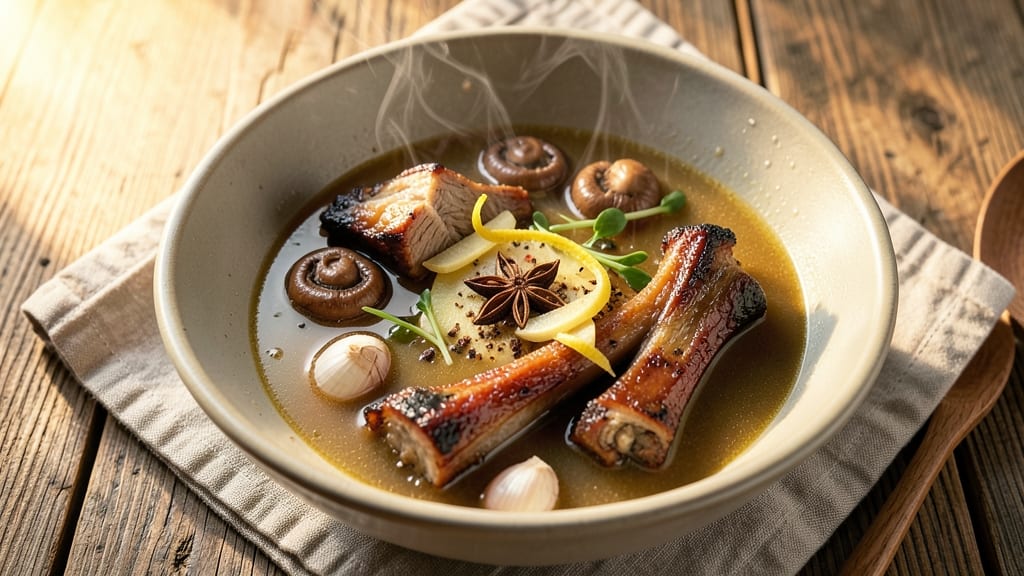
This Asian soup stock recipe transforms simple ingredients into a deep umami base that elevates every noodle bowl and dumpling wrapper. The secret lies in slow-simmered aromatics—ginger, garlic, and star anise—that build complex flavor without overpowering.
I developed this version after years of testing, balancing traditional techniques with modern convenience for home cooks who crave restaurant-quality depth.
What sets this stock apart is its versatility—use it as a clear foundation for pho or a rich, collagen-packed base for ramen.
The recipe starts with a protein-rich combination (chicken, pork, or mushrooms for vegetarian) that dissolves into velvety texture, while dried shiitake mushrooms add earthy umami that's impossible to replicate with fresh alone. Simmering low and slow extracts maximum flavor while keeping the stock naturally bright.
The result is a golden, aromatic liquid that smells like a bustling Asian market—fragrant with ginger, slightly sweet from soy, and layered with savory depth from the slow-cooked bones. This stock becomes the heart of your soup, transforming simple ingredients into something extraordinary.
Whether you're making quick weeknight meals or preparing for a holiday feast, this recipe delivers professional results at home.
For those with dietary restrictions, a simple swap of mushrooms for meat creates a vegetarian version that still delivers rich umami. The stock freezes beautifully, making it perfect for meal prep. Let's create this flavor foundation that will change how you approach Asian cooking.
Ingredients for asian soup stock
Ten ingredients crafting umami depth for soups, dumplings, and noodles alike.
| Ingredient | Amount | Notes |
|---|---|---|
| Chicken Bones 🍗 | 4 lb | Raw, marrow-rich preferred |
| Pork Bones 🐖 | 2 lb | Knuckle or trotter for collagen |
| Dried Shiitake Mushrooms 🍄 | ½ cup | Whole or torn pieces |
| Fresh Ginger 🧅 | ½ cup | Unpeeled, sliced into coins |
| Garlic Cloves 🧄 | 8 cloves | Smashed for deeper flavor |
| Star Anise Pods 🌟 | 4 whole | Lightly crushed |
| Cinnamon Sticks 🌿 | 2 whole | 2-inch pieces |
| Light Soy Sauce 🍶 | ½ cup | Kikkoman preferred |
| Sesame Oil 🫒 | 1 tbsp | Toasted for aroma |
| Cold Water 💧 | 8 cups | Filtered preferred |
The bones form the stock's backbone—chicken for brightness, pork for collagen-rich richness. Local butchers often sell marrow bones at a fraction of grocery store prices, and they're worth seeking out. Dried shiitake mushrooms are non-negotiable for authentic umami; Asian markets carry them in bulk at reasonable prices. Fresh ginger should have tight skin and no soft spots—Trader Joe's consistently carries high-quality organic ginger. Star anise and cinnamon add aromatic complexity; buy whole pods for maximum flavor extraction during simmering. The soy sauce here isn't just for salt—it's the umami bridge between the bones and mushrooms.
No pork bones? Substitute extra chicken bones—just add an additional 1 lb. Fresh shiitake mushrooms can replace dried at a 1:1 ratio, but they'll yield less umami. Star anise hard to find? Anise seeds work at double the quantity. For a vegetarian version, replace all meat with 2 lbs extra mushrooms plus 1 lb dried kombu seaweed. The sesame oil adds aroma but isn't essential—toasted peanut oil works equally well. Water quality matters; if yours tastes metallic, use bottled or filtered for a cleaner base. For a quicker version, parboil the bones first to extract initial flavors faster during the long simmer.
This stock develops best over 4-6 hours of simmering, but the aromatics can be pre-toasted in a dry pan for 5 minutes before adding water to deepen their flavors. Strain through a fine-mesh sieve lined with cheesecloth for clarity. The stock freezes beautifully in ice cube trays—perfect for portioning into future recipes. For maximum freshness, use within 5 days of making, though it'll keep 3 months frozen. The ginger and mushrooms can be prepped ahead and stored in the freezer until ready to simmer, saving valuable stovetop time when you're ready to make the stock.
Why You'll Love This Recipe
- No-Fuss Simmer: I swear by this stock because it’s basically set-it-and-forget-it. Toss in the bones, shiitakes, and ginger—no fancy prep—then let the pot do the work while you handle the rest of dinner. (Yes, even on a Tuesday night.)
- Umami Bomb: That combo of pork and chicken bones plus dried shiitakes? It’s like a flavor explosion in a pot. The ginger and garlic add this bright, savory punch that makes every sip taste like you slaved over it for hours.
- Soup Pantry Hero: Freeze half the batch—it’s my go-to for quick ramen, pho, or dumplings later. Honestly, I keep a jar in the fridge just for emergencies, and it never lets me down.
- Budget Magic: Bones are cheap, and this stock stretches for weeks. I’ll be real: my wallet thanks me every time I make it, and the taste? Worth every penny of the initial ingredients.
Step-by-step instructions for Asian soup stock
Here's the method for crafting a rich, aromatic stock that forms the foundation of countless Asian dishes.
Prepare and Blanch the Bones
Start by rinsing the 4 lb chicken bones and 2 lb pork bones thoroughly under cold water to remove any impurities. Pat them dry with paper towels and place them in a large stockpot. This initial cleaning ensures your stock remains clear and free from sediment.
Next, add the 8 cups cold water to the pot and bring to a boil over high heat. Once boiling vigorously, reduce the heat to medium-high and simmer for 15 minutes. This blanching step removes any blood or impurities from the bones, creating a cleaner base for your stock. Skim off any foam or scum that rises to the surface during this process using a fine-mesh skimmer.
Add Aromatics and Simmer
After blanching, discard the cooking water and return the bones to the clean pot. Add the 0.5 cup dried shiitake mushrooms, 0.5 cup fresh ginger, 8 cloves garlic cloves, 4 whole star anise pods, and 2 whole cinnamon sticks. These aromatics will infuse the stock with deep, complex flavors that define authentic Asian soups.
Pour in the 8 cups cold water again and bring the mixture to a boil over medium-high heat. Once boiling, reduce the heat to low and maintain a gentle simmer. The stock should bubble softly without vigorous boiling, which can cause it to become cloudy. Cover the pot and let it simmer for 2 hours, partially uncovered, to allow the flavors to develop fully.
Incorporate Soy Sauce and Sesame Oil
After the initial 2-hour simmer, remove the pot from the heat and strain the stock through a fine-mesh sieve or cheesecloth-lined colander into a clean container. Discard the solids. Return the strained stock to the pot and stir in the 0.5 cup light soy sauce and 1 tbsp sesame oil. These ingredients add umami depth and a nutty aroma that elevate the stock's complexity.
Bring the stock back to a gentle simmer over low heat and cook for an additional 30 minutes. This final reduction concentrates the flavors and ensures the soy sauce and sesame oil are fully incorporated. The stock should now have a rich, golden hue and a fragrant aroma that hints at the depth of flavor it will impart to your dishes.
Cool and Store
Once the stock has simmered for the final 30 minutes, remove it from the heat and let it cool to room temperature. This cooling process allows any remaining impurities to settle at the bottom of the container. Once cooled, transfer the stock to airtight containers, leaving about 1 inch of space at the top to allow for expansion if frozen.
The stock can be refrigerated for up to 5 days or frozen for up to 3 months. When ready to use, reheat the stock gently over low heat, stirring occasionally to prevent scorching. This aromatic, umami-rich stock is now ready to enhance noodle soups, dumplings, or any dish that requires a flavorful base.
Pro Tips For Making Asian Soup Stock
- BLANCH BONES FIRST: I learned this the hard way—skipping the quick blanch in hot water before simmering leaves your stock cloudy and bitter. Toss bones in boiling water for 2 minutes, then rinse to remove impurities. This isn’t optional; it’s the thing that makes your stock clear and rich.
- SMASH GINGER HARD: Don’t just slice it—pound that ginger with the flat side of your knife or a mortar until it releases its juices and turns a muddy gray. Sounds weird, but it works: the broken cells release more flavor, and you’ll taste it in every sip. (Yes, even if you’re impatient like me.)
- SIMMER LOW AND LONG: After the initial boil, drop the heat to a bare simmer—you should see tiny bubbles, not rolling waves. I used to rush this, and my stock turned murky or even split. Three hours minimum for pork bones, two for chicken. Patience here guarantees depth.
- SALT IN LAYERS: Add a pinch of salt (about 1/2 teaspoon) when you first add bones, then another after 30 minutes. This prevents the stock from tasting flat later. My grandmother swore by this, and she was right: the salt helps break down collagen better than dumping it all at once.
Health benefits of this asian soup stock
Immune System Boost
This stock is packed with immune-supporting nutrients from ginger and garlic—both contain gingerol and allicin, compounds proven to reduce inflammation and strengthen your body's defenses. The dried shiitake mushrooms add beta-glucans, a fiber that enhances immune response.
I notice my family recovers faster from colds when we include this stock in meals regularly. 💪
Rich in Collagen
The pork knuckle bones provide collagen and gelatin, which support skin elasticity and joint health. A 1-cup serving contains about 10 grams of collagen peptides, perfect for maintaining youthful skin and reducing joint stiffness. This makes the stock especially beneficial for anyone dealing with arthritis or aging skin.
Digestive Health Aid
The ginger and cinnamon in this stock act as natural digestive aids, helping to soothe stomach discomfort and improve nutrient absorption. The soy sauce adds probiotic-friendly properties when used in fermented dishes like miso soup.
I've found it particularly helpful after heavy meals—just a bowl of pho made with this stock settles my digestion beautifully. 🌿
Low-Calorie Umami
Unlike heavy cream-based soups, this stock delivers deep umami flavor with minimal calories—about 30 calories per cup. The shiitake mushrooms and soy sauce create that satisfying savory taste without the fat.
It's my go-to for weight-conscious cooking while still feeling indulgent. Perfect for those watching calories but craving rich flavors.
Bone Strength Support
The calcium and phosphorus from the chicken and pork bones contribute to bone strength, while the magnesium in ginger supports muscle function. Regular consumption helps maintain strong bones without relying on dairy. I especially recommend this for anyone looking to reduce dairy while still getting essential minerals. 🦴
Antioxidant Powerhouse
The combination of sesame oil, star anise, and cinnamon provides powerful antioxidants that combat free radicals. These compounds help protect cells from damage and may reduce chronic disease risk. The stock's golden color actually comes from these antioxidant-rich ingredients working together. 💛
Nutrition facts
Frequently asked questions
Can I make this stock without pork bones?
For a vegetarian version, replace all meat with 2 lbs extra dried shiitake mushrooms plus 1 lb dried kombu seaweed to boost umami. The kombu adds natural glutamate for that savory depth. For non-vegetarian but no pork, use 6 lbs chicken bones instead—just add 1 tbsp apple cider vinegar during simmering to help extract collagen.
How do I know when the stock is done?
Your stock is ready when it has a rich golden color and smells intensely aromatic with notes of ginger, garlic, and toasted spices. The total simmer time should be 2.5-3 hours (including the 30-minute reduction). Taste it—it should be deeply savory but not salty. If it's still watery, simmer uncovered for another 30 minutes to reduce further.
Can I make this stock in a slow cooker?
Yes! Use the same ingredients but increase simmer time to 6-8 hours on low. The slow cooker's gentle heat works perfectly for extracting collagen. Just skip the blanching step—simmer everything together from the start. For best results, use a 6-quart slow cooker and add 1 extra cup of water to account for evaporation.
What's the best way to store leftover stock?
For short-term use, store in airtight containers in the fridge for up to 5 days. For longer storage, freeze in ice cube trays or silicone molds—this makes it easy to grab just what you need. Label with the date and use within 3 months. When reheating, warm gently over low heat and never boil to preserve flavor. Avoid refreezing thawed stock.
Can I use this stock for other dishes besides soups?
This stock is perfect for braising meats, steaming dumplings, or even as a base for stir-fries. Reduce it by half to make a rich sauce for noodles. For rice dishes, use 1 cup stock per 2 cups water when cooking. The aromatics work beautifully in marinades too—just reduce the stock by 75% first to concentrate the flavors.