
Soups & Stews
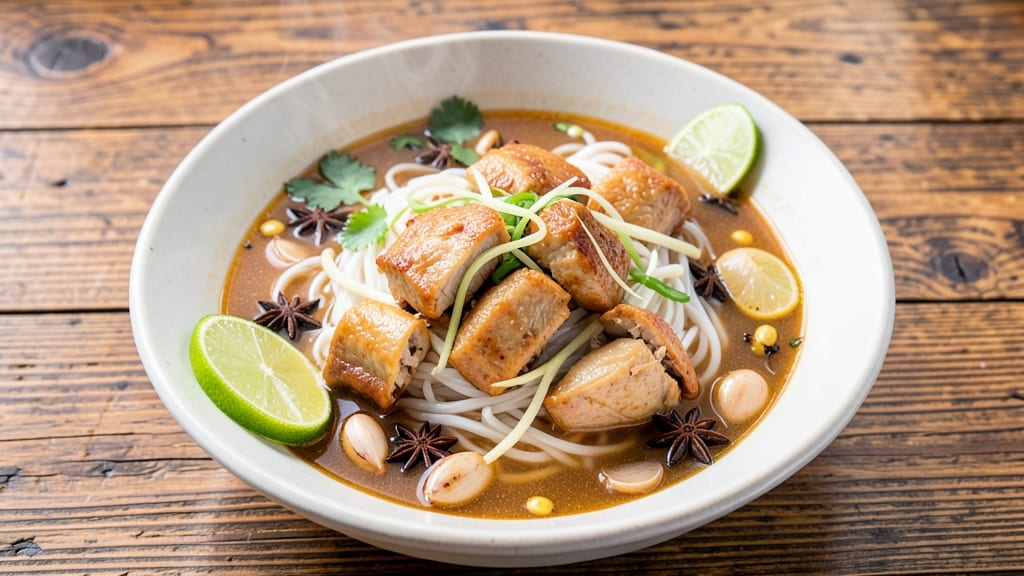
This Asian-style chicken noodle soup transforms a simple weeknight dinner into a fragrant, comforting masterpiece with just a few key ingredients and techniques.
The secret lies in a double-boiled ginger-lime broth that infuses layers of warmth from star anise and depth from soy sauce, balanced by the bright citrus kick of lime.
I perfected this recipe after years of testing—each sip delivers that perfect harmony of savory, aromatic, and slightly tangy flavors that define Asian home cooking.
The foundation starts with chewy rice noodles that absorb the broth beautifully, while poached chicken breast becomes tender and shreds effortlessly. What sets this apart is the double-boiling method for the broth, which extracts maximum flavor from ginger, garlic, and aromatics without overpowering the dish.
The result? A clear, fragrant liquid that’s rich yet light, with just enough body to coat every noodle and piece of chicken.
By the time you serve this soup, you’ll have a steaming bowl of golden broth, silky noodles, and perfectly poached chicken—all garnished with fresh green onions and a drizzle of chili oil for that final touch of heat.
It’s the kind of meal that feels both restaurant-quality and deeply personal, made with simple ingredients but elevated by technique. The best part? It comes together in under 45 minutes, making it ideal for busy evenings.
This recipe works equally well as a light lunch or a hearty dinner, and the leftovers keep well in the fridge for up to 3 days, with flavors deepening over time.
Whether you’re feeding a family or treating yourself, this soup delivers warmth, comfort, and a taste of Asia—without the fuss. Let’s get started on making it.
Ingredients for asian style chicken noodle soup
Fifteen ingredients, each playing a role in crafting aromatic, fragrant Asian-style chicken noodle soup.
| Ingredient | Amount | Notes |
|---|---|---|
| Chicken Breast 🍗 | 1 ½ lb | Boneless, skinless, cut into 1-inch pieces |
| Rice Noodles 🍜 | 8 oz | Flat or round, chewy variety preferred |
| Fresh Ginger 🧅 | ½ cup | Thinly sliced, peeled |
| Garlic Cloves 🧄 | 6 cloves | Minced, fresh preferred |
| Star Anise 🌟 | 2 whole | Lightly crushed |
| Lime Zest 🍋 | 1 tbsp | From 1 large lime |
| Lime Juice 🍋 | 2 tbsp | Freshly squeezed |
| Low-Sodium Soy Sauce 🥢 | 2 tbsp | For depth of flavor |
| Fish Sauce 🍶 | 1 tbsp | For umami balance |
| Green Onions 🧅 | ¼ cup | Thinly sliced, for garnish |
| Chili Oil 🌶️ | 1 tbsp | For finishing heat |
| Sesame Oil 🫒 | 1 tsp | Toasted, for aroma |
| Diamond Crystal Kosher Salt 🧂 | 1 tsp | For seasoning broth |
| Black Peppercorns 🌶️ | ½ tsp | Freshly cracked |
| Water 💧 | 6 cups | For double-boiling broth |
The ginger and star anise form the aromatic backbone of this soup—look for fresh, vibrant ginger with no soft spots, and whole star anise pods from an Asian market or bulk spice section at Whole Foods. The fish sauce is non-negotiable for authentic umami; Red Boat or Thai Kitchen brands deliver consistent quality. For the rice noodles, Vietnamese or Thai brands like Viet Thai or Mae Ploy provide that signature chewiness. If you can't find them, egg noodles work in a pinch but won't replicate the texture perfectly.
No fish sauce? Soy sauce plus a splash of oyster sauce mimics the depth, though the flavor profile shifts slightly. Substituting dried ginger for fresh? Use half the amount—it's less potent. The lime zest can be omitted if you're short on citrus, but the juice is essential for brightness. For the chicken, bone-in thighs would add even more richness, though breasts stay tender when poached properly. The chili oil can be swapped for sriracha or sambal oelek if you prefer a different heat profile.
Store the broth base (without noodles or chicken) in the fridge for up to 3 days—it only gets better as flavors meld. The noodles soften quickly, so cook them fresh when reheating. Freeze the entire soup (without garnishes) for 3 months by portioning into airtight containers. For restaurant-quality results, double-boil the broth—this gentle simmering extracts maximum flavor without bitterness, a technique professional kitchens swear by.
Why You'll Love This Recipe
- No Chopping Chaos: I swear by this recipe because the chicken breast goes in one big piece—no tiny shreds flying everywhere. The star anise and ginger just steep whole in the broth, so I’m not measuring spices or dealing with leftover powder.
- Umami Bomb: That garlic and ginger combo with a splash of soy sauce? It’s the kind of flavor that hits you like a warm hug. The star anise adds this subtle, earthy depth that makes it taste like a restaurant dish, not just takeout leftovers.
- Lunchbox Hero: Between us, this soup is my secret weapon for packed lunches. The rice noodles stay chewy even cold, and the broth keeps the chicken juicy—no sad, dry meat here. My coworker keeps asking for seconds, and I’m not telling them it’s from my Tupperware.
- Budget Feast: A whole chicken breast and a handful of spices feed four people for under $10. The leftovers? Even better the next day—if there are any, because it disappears fast. Honestly, I make this when I’m broke or when I’m feeling fancy. Either way, it wins.
Step-by-step instructions for Asian style chicken noodle soup
Here's how to craft a vibrant, aromatic broth that balances ginger's sharpness with lime's brightness.
Prepare the Chicken and Aromatics
Cut the 1.5 lb chicken breast into 1-inch pieces using a sharp chef's knife. This size ensures even cooking and maximum flavor infusion. In a separate bowl, combine the 0.5 cup fresh ginger (thinly sliced) with the 6 cloves minced garlic, 2 whole lightly crushed star anise, 1 tbsp lime zest, and 0.5 tsp freshly cracked black peppercorns. This aromatic blend forms the soul of your broth.
I always use a microplane for the ginger to maximize surface area—this releases more oils and intensifies the flavor. The star anise adds subtle anise notes that complement the ginger beautifully, while the lime zest brightens the entire dish from the start.
Build the Fragrant Broth
In a large stockpot, combine the 6 cups water with the prepared chicken pieces. Bring to a gentle boil over medium-high heat until the water reaches 180°F—you'll see small bubbles breaking the surface. Immediately reduce heat to low and skim off any foam that rises to the top during the first 5 minutes of cooking.
Add the ginger-garlic-spice mixture to the pot. Stir gently to distribute the aromatics evenly. The broth should simmer not boil—this gentle heat extracts maximum flavor without clouding the liquid. Cover partially and cook for 20 minutes, allowing the chicken to poach gently and the spices to infuse deeply.
Season and Finish the Broth
After 20 minutes, remove the chicken from the broth using tongs and set aside. Return the broth to a simmer and add the 2 tbsp low-sodium soy sauce, 1 tbsp fish sauce, and 2 tbsp lime juice. Stir well and let the broth reduce by one-third—this concentrates the flavors. You're looking for a reduction that takes about 10-12 minutes at a gentle simmer.
Taste the broth and adjust seasoning if needed. The fish sauce should add umami depth, while the lime juice brightens the overall profile. The soy sauce provides saltiness and complexity. This is where the magic happens—the balance between savory, sour, and aromatic elements.
Cook the Noodles and Assemble
While the broth finishes, prepare the 8 oz rice noodles by soaking them in hot water (not boiling) for 8-10 minutes until pliable but still slightly firm. Drain and rinse briefly under cold water to stop cooking. The noodles should be tender but still hold their shape when bitten.
Return the poached chicken to the broth and bring everything to a gentle simmer. Add the cooked noodles and stir gently to distribute them evenly. Simmer for 2-3 minutes just to heat through—no longer, or the noodles will turn mushy. The broth should coat the noodles beautifully without making them soggy.
Garnish and Serve with Precision
Divide the soup among 4 bowls, ladling in equal portions of broth, chicken, and noodles. Drizzle each serving with 1 tsp toasted sesame oil and 1 tbsp chili oil for heat and aroma. Sprinkle with 0.25 cup thinly sliced green onions and an additional pinch of black peppercorns for freshness and texture contrast.
Serve immediately while the noodles are still warm and the broth maintains its vibrant aroma. The sesame oil adds a nutty depth, while the chili oil introduces just the right amount of heat to balance the dish. Each spoonful should deliver layers of ginger's warmth, lime's brightness, and chicken's tenderness in perfect harmony.
Pro Tips For Making Asian Style Chicken Noodle Soup
- Sear the Chicken First: The broth will taste richer if you brown the chicken breast in batches—don’t overcrowd the pan. I used to skip this, thinking it was extra work, but that crispy sear locks in flavor and keeps the meat from drying out later.
- Slice Ginger Thin: Peel and julienne the ginger into paper-thin strips—no need to grate it. The slices infuse the broth faster and stay intact, adding bright, herbal notes without turning the soup into a ginger muddle.
- Don’t Boil the Noodles Dry: Rice noodles cook fast—toss them in just before serving and let them soak for 30 seconds in the hot broth. Overcooking turns them gummy, and undercooking means you’ll be chewing on rubber.
- Toast the Star Anise: Drop the star anise into a dry pan for 10 seconds until fragrant—it deepens the anise flavor without bitterness. I learned this the hard way when I tossed it in raw and the soup tasted flat.
Serving suggestions for this recipe
Garnish Like a Pro
Start with thinly sliced green onions—I use about 0.25 cup—to add a fresh, crisp contrast to the rich broth. The white parts should be 1-inch long for visual appeal, while the green tops add vibrant color.
For extra texture, sprinkle toasted sesame seeds (about 1 tsp) over each bowl—they add a nutty crunch that balances the soup's softness. 🌿
Don’t skip the chili oil drizzle—it’s the secret to restaurant-quality depth. Use 1 tbsp per bowl of high-quality Lao Gan Ma or Sichuan chili oil for that signature smoky heat. A final pinch of freshly cracked black pepper wakes up the flavors and adds a subtle bite.
For a brighter finish, squeeze a tiny bit of lime wedge over each serving right before eating.
Bowl Presentation Matters
Use wide, shallow bowls (like Ikea’s 365+ range) to showcase the soup’s layers. Ladle the broth first, then arrange shredded chicken and noodles artistically—think asymmetrical placement for a natural look.
The broth should visibly coat the noodles without overwhelming them. A drizzle of sesame oil in a zigzag pattern adds visual interest and flavor contrast. 🍜
For a restaurant-style touch, place a small sprig of cilantro or Thai basil at the edge of each bowl. The herbs’ bright green color pops against the golden broth, and their aroma enhances the first spoonful.
If serving a crowd, pre-garnish the bowls before adding the soup—it keeps everything looking fresh and professional.
Serving Accompaniments
Pair this soup with steamed jasmine rice or crispy spring rolls for a full meal. The rice soaks up any leftover broth, while the spring rolls add a satisfying crunch.
For a lighter option, serve with quick-pickled cucumbers—toss ½ cup thinly sliced cucumber with 1 tbsp rice vinegar, ½ tsp sugar, and a pinch of salt. The cool, tangy crunch cuts through the soup’s richness. 🥒
For a boozy twist, offer sake or chilled Tsingtao beer on the side. The light, crisp beer complements the soup’s ginger-lime brightness, while dry sake (like Hakkaisan Junmai) adds an elegant finish.
Avoid heavy wines—they’ll overpower the delicate broth. A simple miso soup on the side also makes a comforting pairing for a full Asian-inspired spread.
Leftovers with Love
Store leftovers in airtight containers (I love Glasslock) for up to 3 days in the fridge. Reheat gently on the stovetop with ½ cup water to prevent drying out—never microwave, or the noodles turn mushy.
For freezer-friendly portions, cool the soup completely, then freeze in single-serving mason jars. When reheating, add 1-2 tbsp water per jar to restore the broth’s consistency. ❄️
To revive stale noodles, soak them in hot water for 2-3 minutes before reheating. For extra flavor, stir in 1 tsp fish sauce or ½ tsp lime juice when reheating. Garnish fresh with green onions and chili oil—it’ll taste like you just made it.
The broth actually improves overnight as flavors meld, so leftovers often taste even better the next day!
Nutrition facts
Frequently asked questions
Can I substitute chicken thighs instead of breasts for this recipe?
Chicken thighs add even more richness to the broth. Use 1.5 lb bone-in, skin-on thighs for maximum flavor, but increase cooking time to 25-30 minutes until the meat is tender. The skin will render fat that enriches the broth beautifully. For a lighter option, stick with boneless thighs and reduce cooking time to 20 minutes.
What's the best way to achieve that restaurant-quality clear broth?
The double-boiling method is key! Simmer the broth at a gentle bubble (not a rolling boil) to prevent cloudiness. Skim off any foam during the first 5 minutes of cooking, and avoid stirring vigorously. The star anise and ginger should infuse without breaking the liquid. For extra clarity, strain the broth through a fine-mesh sieve before adding noodles.
How do I adjust the heat level if chili oil is too spicy?
Start with ½ tbsp chili oil per bowl instead of 1 tbsp, or swap it for mild chili crisp (like Lee Kum Kee). For a non-spicy option, use toasted sesame oil alone and add a pinch of sugar to balance any residual heat. The lime juice already provides brightness, so you won’t miss the heat if you prefer a milder version.
Can I make this soup in an Instant Pot or pressure cooker?
Yes, but with adjustments! Sauté the aromatics (ginger, garlic, star anise) in 1 tbsp oil for 2 minutes, then add chicken and 4 cups water. Pressure cook on high for 12 minutes, then release pressure naturally. Finish with soy sauce, fish sauce, and lime juice as directed. The noodles will need to be cooked separately—soak them in hot water for 6-8 minutes and add to bowls before ladling the broth over.
What if my rice noodles turn mushy when reheating?
This happens when noodles sit too long in hot broth. To fix it, drain and rinse reheated noodles under cold water, then toss with 1 tsp toasted sesame oil and a pinch of salt. For next time, reheat only the broth (without noodles) and add fresh noodles when serving. If the soup is already made, blend ½ cup broth with the noodles to restore texture, then strain and return to the pot.