
Soups & Stews
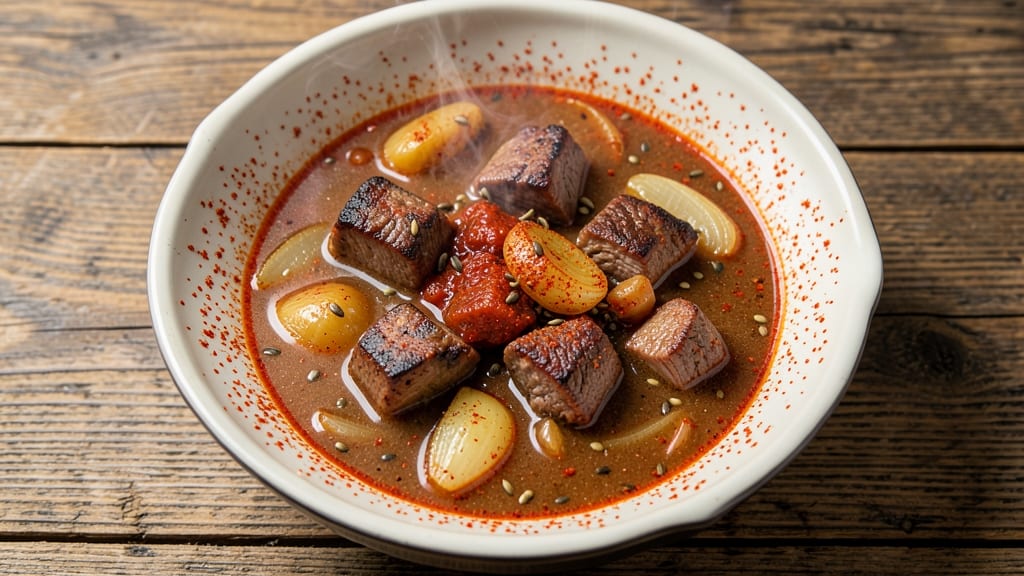
This authentic German goulash soup delivers hearty, paprika-spiced comfort in every bowl—just like your Oma used to make. The secret lies in slow-browning beef with onions and paprika until deep, caramelized flavors develop, then simmering until the meat falls apart in rich, velvety broth.
This isn’t your grandmother’s watery stew; it’s a deeply satisfying dish with layers of smoky, slightly sweet paprika and caraway notes that define true German soul food.
The magic begins with proper browning—never rushing this step—and building flavor through slow simmering. Traditional German goulash relies on a balance of sweet and hot paprika, plus a touch of tomato paste for depth, creating a sauce that coats every bite.
Unlike Hungarian goulash, this version stays true to German roots with simpler spices and a focus on tender beef and vegetables. The result? A soup so rich and comforting, it feels like a warm hug on a chilly day.
What sets this recipe apart is the authentic thickening—using a roux made from butter and flour to create a velvety consistency without losing the meat’s natural juices. Serve it with crusty bread or fluffy bread dumplings to soak up every last drop of that paprika-infused broth.
The aroma alone will have your kitchen smelling like a German countryside tavern, and the first spoonful will confirm why this dish has been a staple for generations.
Perfect for family dinners, potlucks, or cozy weeknight meals, this goulash is both foolproof and deeply satisfying. The instructions walk you through every step—from searing the meat to balancing the spices—so you’ll achieve that restaurant-quality depth at home. Let’s get cooking!
Ingredients for authentic german goulash soup
Six hearty ingredients transform into a bowl of German comfort—rich, smoky, and deeply satisfying.
| Ingredient | Amount | Notes |
|---|---|---|
| Beef Chuck Roast 🥩 | 2 ½ lb | Cut into 1-inch cubes |
| Yellow Onions 🧅 | 3 whole | Sliced into half-moons |
| Sweet Paprika 🌶️ | 2 tbsp | Hungarian preferred |
| Hot Paprika 🌶️ | 1 tbsp | For smoky depth |
| Tomato Paste 🍅 | 2 tbsp | Squeeze tube preferred |
| Caraway Seeds 🌿 | 1 tsp | Lightly toasted |
| Bay Leaves 🍃 | 2 whole | Fresh preferred |
| Garlic Cloves 🧄 | 4 cloves | Minced finely |
| Unsalted Butter 🧈 | 4 tbsp | For roux |
| All-Purpose Flour 🌾 | 4 tbsp | For roux |
| Beef Broth 💧 | 6 cups | Homemade or quality store-bought |
| Potatoes 🥔 | 2 lb | Yukon gold, cubed |
| Carrots 🥕 | 4 whole | Peeled, sliced |
| Salt 🧂 | 1 ½ tsp | Kosher or sea salt |
| Black Pepper 🌶️ | ½ tsp | Freshly ground |
The beef is non-negotiable here. Chuck roast delivers that melt-in-your-mouth tenderness—sirloin or round roast won’t cut it. Grab a 2.5 lb piece from the butcher counter or pre-cubed section at Kroger or Whole Foods. Look for good marbling; that’s where the flavor hides. If you’re feeling adventurous, ask for it cut into 1-inch cubes—saves you prep time. The onions? Yellow onions add sweetness that balances the paprika’s heat, but red onions work too if you want color. Just slice them evenly so they cook at the same rate.
No sweet paprika? Smoked paprika at half the amount gives you smokiness, but you’ll lose that signature sweetness. Hot paprika can be swapped for cayenne at one-quarter the amount—but trust me, the blend is key. Tomato paste? Squeeze tubes from Trader Joe’s are perfect—they’re concentrated, so you don’t need much. Caraway seeds are the secret weapon; if you’ve never used them, toast them in a dry pan for 30 seconds first—Walmart or Penzeys sell them in tiny bottles, but they last forever. Fresh bay leaves? Dried works in a pinch, but fresh adds a brighter note. The roux is where the magic happens—unsalted butter (none of that salted nonsense) and all-purpose flour create that velvety texture without overpowering the broth.
This soup tastes even better the next day—3-4 days in the fridge, 3 months frozen. I always make a double batch because it disappears fast. For freezing, portion it into quart-sized containers—just thaw overnight in the fridge. The potatoes and carrots can be prepped ahead too; store them in water in the fridge for up to 2 days. Leftovers reheat beautifully—just add a splash of broth if it’s too thick. Serve it with crusty bread or German bread dumplings if you’re feeling fancy. The aroma alone will have your whole house smelling like a German tavern.
Why You'll Love This Recipe
- One-Pot Magic: The beef chuck roast practically melts into tender perfection while you stir—no fancy searing or braising required. Honestly, I just dump everything in, let it simmer, and walk away. That sweet and hot paprika blend does the heavy lifting for you.
- Deep, Smoky Hug: Between the caramelized onions and that smoldering mix of sweet and hot paprika, this soup tastes like a warm embrace from a German grandmother. The tomato paste ties it all together with a richness that lingers—dangerously satisfying.
- Weeknight Workhorse: I make this when I’m feeding a crowd or just myself—I scale it effortlessly. Double the batch for leftovers that reheat like a dream, or serve it over crusty bread for a hearty lunch. It’s my go-to for lazy Sundays or unexpected company.
- Budget Beef Boost: A cheap cut of beef transforms into something luxurious with just paprika and patience. Between us, this recipe stretches my grocery budget without sacrificing flavor. The leftovers? Even better the next day—proof that good food doesn’t need to break the bank.
Step-by-step instructions for authentic German goulash
Here's how to make this hearty, paprika-spiced classic—rich, tender, and bursting with authentic German flavor.
Brown the Beef Chuck Roast in Batches
Heat a large Dutch oven over medium-high heat and add 2 tablespoons unsalted butter. Working in batches to avoid crowding, add the 2.5 lb beef chuck roast cut into 1-inch cubes and sear until deeply browned on all sides—about 3-4 minutes per batch. This step develops deep, meaty flavor that forms the base of your goulash.
Once browned, remove the beef from the pot and set aside. You'll notice the butter will foam and then subside—this is normal. Don't rush this step; properly browned meat equals rich, complex flavor in your finished soup. If the butter starts smoking, reduce the heat slightly to maintain control.
Build the Paprika-Spiced Base
In the same Dutch oven, add another 2 tablespoons unsalted butter over medium heat. Add the 3 whole yellow onions sliced into half-moons and cook for 8-10 minutes until softened and slightly caramelized. You'll know they're ready when they're translucent with just a hint of golden color around the edges.
Stir in the 2 tablespoons sweet paprika and 1 tablespoon hot paprika, stirring constantly for 1 minute until fragrant. Add the 2 tablespoons tomato paste and cook for another 2 minutes to deepen the color. This aromatic base is the soul of your goulash—where all the flavors begin to meld together.
Create the Roux and Add Vegetables
Sprinkle the 4 tablespoons all-purpose flour over the onion-paprika mixture and stir vigorously for 1-2 minutes to cook out the raw flour taste. Gradually whisk in the 6 cups beef broth until smooth. Add the 2 whole bay leaves and 1 teaspoon toasted caraway seeds—these will infuse subtle, earthy notes throughout the soup.
Return the browned beef to the pot along with the 2 lb potatoes cubed and 4 whole carrots peeled and sliced. Bring the mixture to a gentle boil, then reduce heat to low-medium and let it simmer uncovered for 45 minutes. This slow cooking allows all the flavors to develop and the meat to become fork-tender.
Finish with Aromatics and Seasoning
After 45 minutes of simmering, stir in the 4 cloves minced garlic and cook for another 5 minutes until fragrant. Taste the soup and adjust seasoning with the 1.5 teaspoons salt and 0.5 teaspoon black pepper as needed. The potatoes should be tender and the carrots easily pierced with a fork—this ensures everything is perfectly cooked.
Remove the 2 whole bay leaves before serving. Ladle the goulash into bowls and enjoy immediately while steaming hot. The aroma alone will make your kitchen smell like a German countryside tavern. This rich, paprika-spiced masterpiece is perfect for chilly days or family gatherings.
Pro Tips For Making Authentic German Goulash Soup
- BROWN THE BEEF FIRST: I learned this the hard way—skipping the deep sear means your goulash will taste more like stewed beef than rich, caramelized flavor. Cut the chuck roast into 1.5-inch chunks, pat dry, and cook in batches over medium-high heat with 1 tablespoon of oil until deep brown on all sides. That crust locks in moisture and builds the base for the paprika’s smoky depth.
- SWEEP THE POT AFTER TOASTING PAPRIKA: Sounds weird, but it works: After adding the sweet and hot paprika to the onions, let it cook for 2 minutes until fragrant, then immediately scrape up every last bit of browned bits from the bottom with a wooden spoon. Those bits are pure flavor—don’t let them go to waste in your next pot of soup.
- DILUTE THE TOMATO PASTE: My grandmother swore by this, and she was right: Mix the tomato paste with a splash of cold water or broth before adding it to the pot. Stirring dry paste directly into hot oil makes it clump like glue—diluting it first ensures a smooth, even coat that blends into the soup without graininess.
- SIMMER LOW AND LONG: Start with a rolling boil to kill bacteria, then drop the heat to a gentle simmer—you’re aiming for tiny bubbles, not a frenzy. German goulash needs 2.5 to 3 hours to tenderize the chuck properly; rushing it leaves the meat tough. Cover the pot and let it do its thing—your future self will thank you.
Pro cooking tips for this recipe
Perfect Browning Technique
Never skip browning the beef—this is where the deep, meaty flavor develops. Use a large Dutch oven on medium-high heat and work in batches to avoid steaming. I like to add 2 tablespoons unsalted butter first to help create a rich fond at the bottom.
Let each piece sear for 3-4 minutes until deeply browned on all sides. This step takes patience, but it’s worth it—rushing leads to pale, bland meat. 🔥
Paprika Blend Balance
The secret to authentic German goulash lies in balancing 2 tablespoons sweet paprika with 1 tablespoon hot paprika. The sweet variety adds warmth, while the hot brings smoky depth. Stir them into the onions for 1 minute until fragrant—this releases their aromatic oils.
I recommend Hungarian paprika for that signature flavor, but don’t substitute with smoked paprika alone. Toast the caraway seeds lightly in a dry pan first to enhance their earthy notes.
Roux Mastery
A proper roux is non-negotiable for that velvety texture. Melt 4 tablespoons unsalted butter over medium heat, then whisk in 4 tablespoons all-purpose flour until smooth. Cook for 1-2 minutes until it turns a golden color—this removes the raw flour taste.
Gradually whisk in 6 cups beef broth to create a silky base. If you rush this step, the flour will taste chalky and ruin the soup’s richness.
Simmering for Tenderness
Simmer the goulash uncovered on low-medium heat for 45 minutes—this allows the meat to become fork-tender while keeping the broth flavorful. Stir occasionally to prevent sticking, especially if the potatoes start to brown too quickly.
The key is patience; the longer it simmers, the deeper the flavors meld. I add 4 cloves minced garlic in the last 5 minutes to brighten the dish without overpowering it.
Adjusting Seasoning
Taste the soup before serving and adjust seasoning carefully. German goulash should be rich but not overly salty. I typically add 1.5 teaspoons kosher salt and 0.5 teaspoon black pepper at the end, but taste first—store-bought broth can vary in saltiness.
Remove the 2 bay leaves before serving, as they can make the soup bitter if left in too long. The final touch? A dollop of sour cream or fresh parsley for freshness. ✨
Nutrition facts
Frequently asked questions
Can I substitute beef with another protein for this German goulash?
While beef chuck roast is traditional, you can use pork shoulder or venison for a gamey twist. Avoid lean cuts like chicken or turkey—they won't develop the same rich, tender texture. For vegetarian options, swap the meat for mushrooms or lentils, but increase the paprika to 3 tablespoons total to compensate for the missing meaty depth.
How do I make this goulash less thick?
If your soup is too thick, stir in ½ to 1 cup hot beef broth at a time until you reach your desired consistency. For a smoother texture, blend half the soup with an immersion blender before mixing it back in. Avoid adding cold liquid—it can cause the soup to separate. The roux naturally thickens the goulash, so reducing the flour to 3 tablespoons next time will help too.
What's the best way to reheat leftover goulash?
Reheat goulash gently on the stove over low-medium heat for 10-15 minutes, stirring occasionally and adding 2-3 tablespoons broth if it thickens too much. Microwaving works too—heat for 2-3 minutes at 50% power, stirring halfway. For extra richness, add a pat of butter or a splash of sour cream at the end. Never reheat to a boil, as this can make the meat tough.
Can I make this goulash in a slow cooker?
Yes! Brown the beef first in a skillet, then transfer everything to your slow cooker. Cook on low for 6-7 hours or high for 3-4 hours, adding broth if needed. The slow cooker method yields even more tender meat, but you may need to thicken the soup afterward with a cornstarch slurry (1 tbsp cornstarch + 1 tbsp water) since slow cookers can thin out broths.
What sides pair best with German goulash?
Traditional pairings include crusty rye bread or German bread dumplings (like Semmelknödel) to soak up the rich broth. For a heartier meal, serve with buttered egg noodles or roasted sauerkraut. A simple green salad with a tangy vinaigrette cuts through the richness beautifully. Don't forget a cold German beer—its crispness balances the paprika's warmth perfectly.