
Soups & Stews
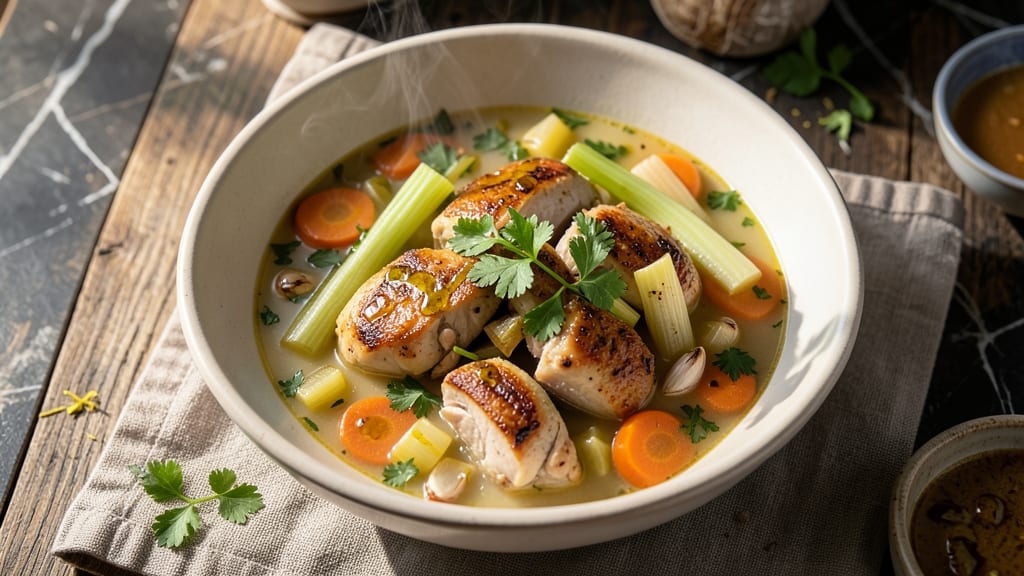
This authentic Italian chicken soup brings the heart of Nonna's kitchen to your pot, where tender chicken, hand-torn pappardelle, and aromatic vegetables simmer in a rich, slow-cooked broth.
The secret lies in the layers of flavor—caramelized onions, celery, and carrots form the base, while fresh herbs like parsley and basil finish the dish with bright, vibrant notes. Unlike heavy cream-based versions, this recipe stays true to traditional Italian techniques, delivering comfort in every spoonful.
The magic happens in the broth, which develops deep, savory richness from simmering chicken bones and vegetables for hours. I use a combination of chicken thighs and breasts for juicy meat that practically melts in your mouth, while the vegetables add natural sweetness and texture.
The pappardelle—broad, ribbon-like pasta—absorbs the broth beautifully, creating a satisfying, hearty bite that's perfect for chilly days.
What makes this soup truly special is its balance of simplicity and depth. The slow simmer allows flavors to meld naturally, while the final touch of fresh herbs brightens each bowl.
Whether you're serving it to a family gathering or simply craving a taste of Italy, this recipe delivers restaurant-quality results that taste like home. The aroma alone will have everyone asking for seconds.
This version stays true to Italian tradition by avoiding heavy cream, instead relying on the natural richness of the broth and vegetables. The result is a lighter, more authentic dish that still feels deeply comforting.
Perfect for weeknight dinners or cozy gatherings, this soup is the ultimate expression of Italian home cooking.
Ingredients for authentic italian chicken soup
Sixteen ingredients, all pantry staples or easy finds at the market, transform into Nonna's soul-soothing chicken soup.
| Ingredient | Amount | Notes |
|---|---|---|
| Chicken Thighs 🍗 | 1 ½ lb | Bone-in, skin-on preferred |
| Chicken Breasts 🍗 | 1 ½ lb | Boneless, skinless, cut into pieces |
| Yellow Onions 🧅 | 2 whole | Peeled, halved lengthwise |
| Celery Stalks 🧅 | 4 whole | Trimmed, cut into 1-inch pieces |
| Carrots 🥕 | 4 whole | Peeled, cut into 1-inch chunks |
| Garlic Cloves 🧄 | 6 cloves | Peeled, roughly chopped |
| Pappardelle Pasta 🍝 | 12 oz | Fresh or dried, torn by hand |
| Fresh Parsley 🌿 | ¼ cup | Leaves only, chopped fine |
| Fresh Basil 🌿 | ⅛ cup | Leaves only, torn |
| Extra-Virgin Olive Oil 🫒 | ¼ cup | For sautéing vegetables |
| Dry White Wine 🍷 | 1 cup | Pinot Grigio or Vermentino |
| Chicken Broth 💧 | 6 cups | Homemade or high-quality store-bought |
| Tomato Paste 🍅 | 2 tbsp | Smooth, not chunky |
| Salt 🧂 | 1 ½ tsp | Diamond Crystal kosher salt |
| Black Pepper 🌶️ | ½ tsp | Freshly ground preferred |
The chicken is the heart of this soup—bone-in thighs add richness to the broth, while breasts stay tender. Look for free-range or organic at Whole Foods or your local butcher if you can swing it, but regular grocery store chicken works perfectly fine. For the vegetables, freshness matters most—bright, firm carrots and celery with no wilting. I always grab a bunch of parsley and basil at Trader Joe's because they keep well and add that bright Italian finish. The pappardelle? If you can't find fresh, dried works—just tear it by hand for that rustic touch.
No white wine? Extra chicken broth with a splash of lemon juice mimics the acidity beautifully. Fresh herbs wilt fast, so dried oregano at half the amount works in a pinch—just remember it won't have the same vibrant punch. The tomato paste is non-negotiable for depth, but if you're avoiding it, a handful of sun-dried tomatoes (oil-packed) can stand in. For the broth, homemade is ideal, but Pacific Foods or Imagine brands are solid store-bought options. And if you're making this ahead? The flavors only get better overnight—trust me on that.
This soup keeps for 4-5 days in the fridge, with the broth tasting even more concentrated the next day. For longer storage, freeze portions for up to 3 months. I always make a double batch—one for dinner, one for lunches. The pasta? Cook it fresh when serving, but you can prep the broth and vegetables ahead of time. Just reheat gently on the stove, add the pasta, and finish with fresh herbs. That aroma alone will have everyone rushing to the table.
Why You'll Love This Recipe
- No-Fuss Sauté: The onions, celery, and carrots—what Italians call soffritto—get softened in olive oil while you chop the chicken. No fancy techniques, just a pot, a knife, and 15 minutes of hands-off simmering. Honestly, I’ve made this with half the ingredients and it still worked.
- Rich, Layered Depth: That crispy thigh skin melting into the broth? Pure satisfaction. The chicken breasts stay tender, but the thighs add a savory backbone, while the soffritto base builds flavor like a slow dance. Between us, it’s the kind of soup where you forget it’s “just” chicken and veggies.
- Leftovers That Shine: Make a double batch—it’s way better the next day. The broth deepens, the chicken gets even more fall-off-the-bone, and you’ve got a freezer-friendly meal for when you’re too tired to cook. My college-aged son actually texts me when it’s in the fridge.
- Budget That Works: Chicken thighs stretch farther than breasts, and carrots/celery/onions are cheap staples. I’ve fed six people for under $12 with this—no shortcuts, just smart shopping. Plus, the leftovers mean no last-minute takeout runs. (Yes, even on a Tuesday night.)
Step-by-step instructions for authentic Italian chicken soup
Here's the method that delivers restaurant-quality Italian chicken soup with that perfect balance of rich flavors and comforting textures.
Sear the Chicken for Maximum Flavor
Pat the 1.5 lb chicken thighs and 1.5 lb chicken breasts completely dry with paper towels. Heat 2 tablespoons of the extra-virgin olive oil in a large Dutch oven over medium-high heat. Working in batches, add the chicken pieces and sear for 4-5 minutes per side until golden brown and crispy. You'll see the skin develop a beautiful mahogany color and the meat release easily from the pan.
Remove the chicken from the pot and set aside. Don't clean the pot yet—those browned bits are pure flavor. Here's the thing about searing: it creates a flavor foundation called the "fond" that we'll deglaze later. If your chicken releases too easily before reaching golden brown, reduce the heat slightly and give it another minute.
Build the Soup Base with Aromatics
In the same Dutch oven, add another 2 tablespoons of extra-virgin olive oil and increase heat to medium. Add the halved yellow onions, celery stalks, and carrots and cook for 8-10 minutes until softened and lightly browned. You want them to caramelize just slightly—that deepens the flavor profile dramatically.
Add the 6 cloves garlic cloves and the 2 tbsp tomato paste, stirring for 1 minute until fragrant. Pour in the 1 cup dry white wine and scrape up all those browned bits from the bottom of the pot. This deglazing step captures all the flavor you worked so hard to build. Let the wine simmer for 3-4 minutes until reduced by half.
Simmer the Chicken and Vegetables
Return the seared chicken to the pot. Add 6 cups chicken broth, bring to a boil, then reduce heat to low. Partially cover and simmer for 30-35 minutes until the chicken is fork-tender and the vegetables are completely tender. You'll know it's ready when the chicken meat pulls apart easily and the broth has reduced slightly to coat the back of a spoon.
Here's where authenticity matters: resist the urge to add salt yet. The chicken and broth already contain enough natural saltiness that you'll want to taste before adding the 1.5 tsp salt and 0.5 tsp black pepper. Italian soups rely on quality ingredients and proper technique rather than excessive seasoning.
Finish with Fresh Herbs and Pasta
Remove the chicken from the broth and set it aside to cool slightly. Using tongs, transfer the vegetables to a cutting board and roughly chop them. Return the chopped vegetables to the broth. Stir in the 0.25 cup fresh parsley and 0.125 cup fresh basil—adding them at the end preserves their bright, fresh flavors.
Tear the 12 oz pappardelle pasta by hand into 3-inch pieces (this creates that rustic, handmade look). Add the pasta to the soup and cook for 8-10 minutes until al dente. The pasta should absorb the broth but still have a slight bite. Taste and adjust seasoning if needed—this is where you can add salt if the soup needs it.
Serve with Crispy Chicken and Fresh Garnishes
Using tongs, transfer the chicken to a cutting board and shred it with two forks, discarding any bones or cartilage. Return the shredded chicken to the soup and heat through for 2-3 minutes. Ladle the soup into warmed bowls, making sure each serving gets plenty of pasta, vegetables, and chicken.
Garnish each bowl with additional fresh parsley and fresh basil torn by hand. The contrast between the rich, savory broth and the bright herbs is what makes this soup authentically Italian. Serve immediately with crusty bread to soak up every last drop of that flavorful broth.
Pro Tips For Making Authentic Italian Chicken Soup
- Brown the Chicken First: The richest Italian soups start with deeply browned meat—don’t skip this. Sear the chicken thighs and breasts in batches over medium-high heat until they release crispy, golden bits (about 5-6 minutes per side). These bits dissolve into the broth later, adding depth that raw chicken can’t match.
- Cut Vegetables Small: Italian soups rely on a fine, even texture—no big chunks. Dice the onions into ¼-inch pieces, and slice the celery and carrots into thin half-moons (about ⅛-inch thick). This ensures everything softens at the same time without turning mushy.
- Remove Chicken Early: Pull the chicken out of the broth when it’s just barely cooked through (around 165°F for breasts, 175°F for thighs). Let it rest on a plate while the soup finishes simmering—this keeps the meat tender and juicy, not dry. Shred it right before serving.
- Use Chicken Stock, Not Water: Store-bought broth is fine, but for authenticity, use a mix of homemade chicken stock (at least half) and water. The stock’s savory base is non-negotiable—skip it, and your soup will taste flat. If short on time, simmer the chicken bones with a bay leaf and a pinch of salt for 20 minutes.
Troubleshooting this recipe
Broth Too Weak?
If your soup tastes bland, it's likely because the broth didn't develop enough flavor. The secret is longer simmering time—aim for at least 2 hours for the broth to concentrate. I've found that using chicken bones (even just a few) in addition to meat adds incredible depth.
If you're short on time, add 1 tsp fish sauce or ½ tsp soy sauce to the broth for umami richness. 💫
Chicken Too Tough?
Overcooking chicken is the #1 reason it turns out dry and chewy. Remove chicken when it reaches 165°F internal temperature—don't wait for it to get stringy. For extra tenderness, poach the chicken separately in broth for 12-15 minutes before adding it to the soup.
I also recommend using bone-in thighs—they stay juicier than breasts during long simmering.
Vegetables Mushy?
Vegetables lose their texture when overcooked. Add carrots and celery in the last 15 minutes of simmering, and onions should go in earlier (they take longer to soften).
For extra texture, try roasting the vegetables at 400°F for 20 minutes before adding them to the soup. This caramelizes them slightly while keeping them firm. 🥕
Pasta Too Soft?
Pasta absorbs broth quickly, especially when cooked in liquid. To maintain al dente texture, cook the pasta separately in salted water for 1 minute less than package instructions, then add it to the soup just before serving.
For a rustic touch, tear dried pasta by hand instead of cutting it—this prevents it from becoming mushy. I always reserve ½ cup pasta water to add if the soup gets too thick.
Herbs Lose Flavor?
Fresh herbs wilt quickly in hot broth. Add them only in the last 5 minutes of cooking, or better yet, toss them in after serving. For extra brightness, use a mix of parsley and basil—parsley adds freshness while basil contributes sweetness.
If you're using dried herbs, reduce the amount to ¼ tsp and add them during the simmering phase. 🌿
Soup Too Thick?
If your soup is too thick, it's likely because the pasta absorbed too much broth. Thin it out by adding ½ cup warm broth at a time until you reach the desired consistency. For a creamier texture (though not traditional), stir in 2 tbsp heavy cream at the end.
If you prefer a lighter soup, reduce the pasta quantity by 2 oz next time. Always taste as you go—Italian soups should coat the back of a spoon but remain light enough to sip.
Nutrition facts
Frequently asked questions
Why does this recipe use pappardelle instead of traditional pasta?
Pappardelle is the traditional pasta for many Italian chicken soups, especially in central Italy. Its wide, ribbon-like shape holds up beautifully to the rich broth and adds a satisfying texture. For an even more authentic touch, use fresh pappardelle—it cooks faster and absorbs flavors better than dried. If you can't find it, fettuccine or tagliatelle work well as substitutes.
Can I make this soup without wine?
Replace the white wine with an equal amount of extra chicken broth plus 1 teaspoon lemon juice to maintain acidity. The wine adds depth, but this substitution works perfectly for a non-alcoholic version. For extra umami, add ½ teaspoon soy sauce or 1 teaspoon fish sauce to the broth during simmering.
How do I make this soup extra flavorful?
For deeper flavor, add 2-3 chicken bones (legs or wings) along with the meat—they release collagen that thickens the broth naturally. Also try adding ½ cup crushed tomatoes with the tomato paste, or a bay leaf during simmering. For a smoky touch, add ½ teaspoon smoked paprika with the vegetables.
Can I prepare this soup ahead of time?
This soup tastes even better the next day! Make the broth and chicken mixture up to 2 days ahead, then refrigerate. When ready to serve, reheat gently, add fresh herbs, and cook the pasta separately before combining. For freezing, portion the soup (without pasta) and freeze for up to 3 months. Thaw overnight in the fridge before reheating.
What's the secret to keeping the chicken tender?
Never overcook the chicken—remove it when it reaches 165°F internal temperature. For extra tenderness, poach the chicken separately in broth for 12-15 minutes before adding to the soup. Bone-in thighs stay juicier than breasts during long simmering. Also, avoid lifting the lid while cooking to maintain steady heat.