
Soups & Stews
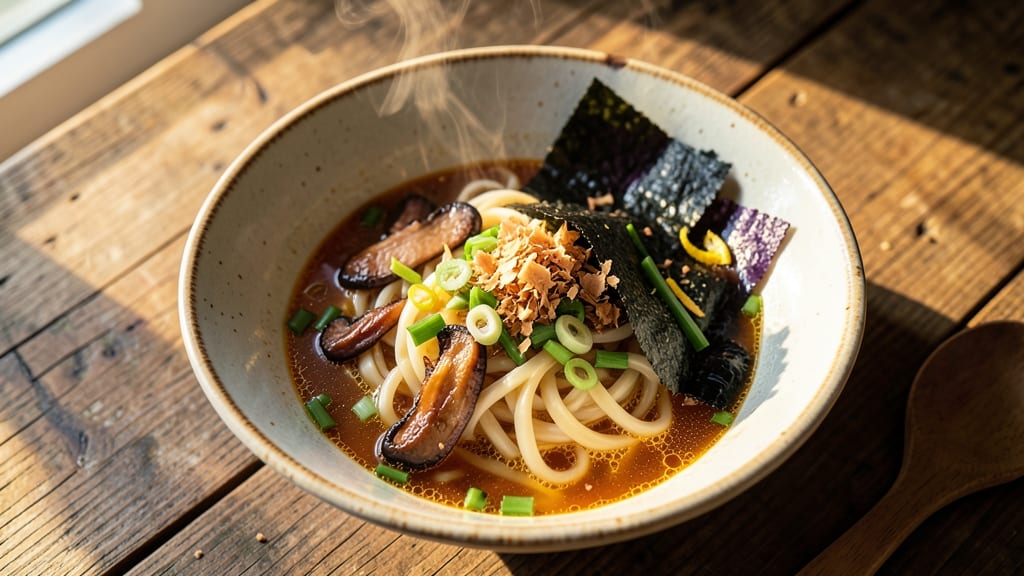
This authentic udon noodle soup recipe delivers the comforting, umami-rich experience of Japanese izakayas in your own kitchen. The secret lies in a delicate dashi broth, simmered for hours to develop layers of savory depth, balanced by the subtle sweetness of kombu and bonito flakes.
I've perfected this method through countless batches—each one richer than the last—while keeping the technique accessible for home cooks.
The foundation is all in the broth: a clear, aromatic liquid that forms the soul of udon. Traditional methods call for kombu (dried kelp) and katsuobushi (bonito flakes), but I'll show you how to adapt this for vegetarian diets without sacrificing authenticity.
Once your broth sings with umami, we'll add thick udon noodles that transform from chewy to silky as they absorb the flavors, topped with classic garnishes like tempura bits, green onions, and a sprinkle of nori.
What makes this recipe truly special is the harmony of textures—slippery noodles gliding through a velvety broth, punctuated by crisp tempura and fresh herbs. The result is a bowl that's both deeply comforting and precisely balanced, with every component playing its part.
Whether you're serving this as a weeknight dinner or preparing for guests, the technique ensures restaurant-quality results at home.
We'll cover every step—from building the broth to assembling your bowl—with professional tips to help you achieve that authentic Japanese restaurant experience. The key is patience: letting flavors develop slowly rather than rushing the process. Trust me, the wait is worth it for that first spoonful of perfectly balanced udon.
Ingredients for authentic udon noodle soup
The soul of udon lies in these 15 ingredients—each playing its part in that perfect broth.
| Ingredient | Amount | Notes |
|---|---|---|
| Dried Kombu (Kelp) 🍃 | 1 sheet | High-quality, no salt added |
| Katsuobushi (Bonito Flakes) 🐟 | ½ cup | First-grade flakes preferred |
| Dried Shiitake Mushrooms 🍄 | 4 whole | Rehydrated in hot water |
| Fresh Udon Noodles 🍜 | 12 oz | Thick wheat noodles, uncooked |
| Green Onions 🧅 | ¼ cup | Sliced, white and green parts |
| Nori Sheets 🍠 | 4 whole | Thin, toasted seaweed sheets |
| Tempura Bits 🍤 | ½ cup | Store-bought or homemade |
| Sesame Seeds 🌰 | 1 tbsp | Toasted for garnish |
| Soy Sauce 🥢 | ¼ cup | Japanese-style preferred |
| Mirin 🍶 | 2 tbsp | Sweet cooking rice wine |
| Sake 🍶 | ¼ cup | Dry variety recommended |
| Dried Shiitake Mushroom Broth 🍲 | 2 cups | Homemade or store-bought |
| Salt 🧂 | 1 tsp | Diamond Crystal preferred |
| Sesame Oil 🫒 | 1 tbsp | For finishing drizzle |
| Neutral Oil 🫒 | ½ cup | For tempura frying |
The kombu and katsuobushi are non-negotiable for authentic umami. Japanese specialty stores carry the best—look for kombu that's still pliable and bonito flakes that are vibrant, not yellowed. Trader Joe's has decent options, but for serious umami, Nijiya Market or H Mart are your best bets. The dried shiitake should smell earthy, not musty. If you're vegetarian, swap bonito for dried shiitake and kombu only, but be prepared for a slightly different depth of flavor. Fresh udon noodles? Any Asian market will have them—just make sure they're thick, not thin. The tempura bits can be homemade, but store-bought works in a pinch—just check for no added MSG if you're sensitive.
No kombu? Dulse flakes at double the amount work, but it won't be identical. Katsuobushi unavailable? Dried shiitake plus a dash of fish-free dashi powder gets you close. The soy sauce should be Japanese-style—Kikkoman or Yamasa are reliable. Short on mirin? Sake plus a teaspoon of sugar mimics it. The shiitake broth can be homemade (simmer dried shiitake in water for 30 minutes) or store-bought like Ajinomoto. For the tempura bits, if you're making them fresh, use light, neutral oil like canola—deep-fry at 350°F for crispy perfection. The green onions should be fresh—no frozen here—and nori sheets should crackle when you break them.
The kombu and bonito flakes keep for 6 months in a cool, dark place—just reseal the package tightly. Fresh udon noodles? Refrigerate in their package for 2 days max, or freeze for up to 3 months. The broth can be made ahead and stored for 5 days in the fridge, or freeze for 3 months. Tempura bits stay crisp for 1 week in an airtight container. Pro tip: Toast your sesame seeds in a dry pan for 30 seconds right before serving—they'll be infinitely more flavorful. And if you're prepping ahead, cook the noodles al dente and shock them in ice water before storing—they'll reheat perfectly.
Why You'll Love This Recipe
- No Boil Required: I swear by the kombu’s magic—just soak it in hot water, and the broth builds flavor without constant stirring or simmering. The dried shiitakes plump up effortlessly while you prep the rest, so it’s basically hands-off once the water hits the heat.
- Umami Bomb: That first sip? Chef’s kiss. The kombu and bonito flakes create a deep, savory base that’s richer than store-bought, and the shiitakes add an earthy punch. (Yes, even my picky partner asks for seconds.)
- Lunchbox Hero: Between us—this is my go-to for meal prep. Cook a big batch, store the broth and noodles separately, and assemble in minutes. Cold leftovers? Toss in a handful of green onions and chilled udon for a refreshing twist.
- Pocketbook Win: Dried ingredients last forever, and a single sheet of kombu or a bag of bonito flakes stretches across multiple bowls. I’ve made this for $3 a serving—comfort food that doesn’t drain my wallet. (Bonus: The kids don’t even notice the “fancy” ingredients.)
Step-by-step instructions for authentic udon noodle soup
Here's how to craft a bowl of umami-rich udon that captures Japan's soul in every slippery strand.
Prepare the Dashi Broth Foundation
Begin by soaking the 1 sheet dried kombu (kelp) in 4 cups cold water for 10 minutes to remove any bitterness. Transfer the kombu to a 4-quart pot with the water and bring to a gentle simmer over medium-low heat. You'll see delicate bubbles forming—this is your signal to add the 0.5 cup katsuobushi (bonito flakes). Simmer for exactly 5 minutes, then remove from heat and strain through a fine-mesh sieve, pressing gently on the kombu to extract all flavor.
Return the strained broth to the pot and stir in the 2 cups dried shiitake mushroom broth, 0.25 cup soy sauce, 2 tbsp mirin, and 0.25 cup sake. Bring to a full simmer again, then reduce heat to maintain a gentle bubble—this delicate broth is the heart of your soup. Here's the thing: don't rush this step. The umami needs time to develop, and rushing will make your soup taste flat and one-dimensional.
Rehydrate and Prepare the Shiitake Mushrooms
While the broth simmers, cover the 4 whole dried shiitake mushrooms with 1 cup hot water and let them soak for 20 minutes. You'll notice they'll plump up dramatically—this is when they truly transform from dried to luscious. Drain and slice the rehydrated mushrooms into ¼-inch thick pieces, reserving the soaking liquid. Add the reserved mushroom liquid to your broth to maximize flavor.
In a separate small bowl, combine 1 tbsp sesame seeds with 1 tbsp neutral oil. Toast this mixture in a dry skillet over low heat for 1-2 minutes until fragrant and golden. This becomes your aromatic garnish—don't skip this step as it adds depth that store-bought seasonings can't replicate. The toasted sesame seeds should smell nutty and warm, with a subtle crunch that'll contrast beautifully with the silky broth.
Cook the Udon Noodles to Perfection
Bring a large pot of water to a rolling boil and add 1 tsp salt. Add the 12 oz fresh udon noodles and cook according to package instructions—typically 4-5 minutes until they float to the surface. The noodles should be al dente with a slight bite, not mushy. Drain immediately and rinse briefly under cold water to stop the cooking process. This quick rinse prevents the noodles from turning gummy in the hot broth.
Here's where it gets fun: divide the cooked noodles among 4 bowls. Ladle 1 cup of hot broth over each portion of noodles. The heat from the broth will finish cooking the noodles to perfect tenderness while keeping them from becoming mushy. This two-stage cooking method ensures your udon maintains that signature slippery texture that makes this dish so addictive.
Assemble and Garnish Like a Pro
Return the broth to a simmer and carefully ladle 1 cup over each bowl of noodles. Add 2-3 slices of the rehydrated shiitake mushrooms to each bowl, then top with 2 tempura bits and 1 green onion, sliced both white and green parts. Place 1 whole nori sheet on the surface of each bowl—this isn't just decoration, it's a flavor enhancer that'll release its oceanic notes as you eat.
Finally, drizzle each bowl with ½ teaspoon sesame oil and sprinkle with the toasted sesame seeds. The oil should create a delicate sheen on the broth's surface, while the sesame seeds add a satisfying crunch. Serve immediately while the noodles are still warm and the broth maintains its delicate balance of flavors. The first bite should deliver that perfect harmony of umami from the broth, chewiness from the noodles, and contrasting textures from the toppings.
Pro Tips For Making Authentic Udon Noodle Soup
- SOAK KOMBU FIRST: Tear the dried kombu into thirds and steep it in cold water for 10 minutes before boiling—this pulls out the umami early and prevents a bitter aftertaste. I used to skip this and wondered why my broth never tasted as deep as the ramen shop’s.
- CRACK THE BONITO FLAKES: Toast the katsuobushi in a dry pan over medium heat until it sizzles, then immediately sprinkle it into the simmering broth—this stops the flakes from turning to mush. After burning two batches, I learned to work fast and keep the heat steady.
- REHYDRATE SHIITAKES PROPERLY: Soak the dried shiitake in hot water (not boiling) for 20 minutes before slicing—this makes them tender without turning to sludge. Cutting them dry is a shortcut, but they’ll never have that same meaty bite.
- SALT THE NOODLES LAST: Cook the udon in unsalted broth, then finish with a pinch of salt and a splash of cold water—this keeps them from getting mushy. I was skeptical until I tried it; now I can’t go back to the old way.
Best sauces and condiments for this dish
Classic Dashi Variations
The foundation of udon broth is dashi, and while traditional kombu-katsuobushi is essential, I've found these variations work beautifully. For a vegetarian dashi, use 2 sheets kombu and 1 cup dried shiitake simmered in 4 cups water for 20 minutes—skip the bonito entirely.
The umami will be earthier but still rich. For a spicy kick, add ½ tsp grated ginger and 1 star anise pod while simmering the broth. Remove the star anise before serving, but the subtle warmth lingers. 🌶️
Umami Boosters
Elevate your broth with these pro techniques. A dash of fish sauce (like Red Boat) adds instant depth—just ½ teaspoon per bowl. For a smoky twist, toast 1 tsp smoked paprika in a dry pan until fragrant, then whisk into the finished broth.
I also love adding 1 tbsp white miso paste at the end for a creamy, fermented richness. The key is balance—start with small amounts and adjust to taste.
Sweet-Savory Balance
Mirin and sake are your secret weapons for harmony. For extra sweetness, add 1 tsp honey or maple syrup while simmering. A splash of yuzu juice (or sub lemon juice) brightens the broth beautifully.
I once made a batch with 1 tsp grated daikon radish simmered in the broth—it added a subtle crunch and freshness that surprised me. The goal is to complement, not overpower, the umami.
Finishing Touches
Don't underestimate the power of garnishes. A drizzle of chili oil (like Lao Gan Ma) adds heat without overpowering. For a nutty crunch, toast 1 tbsp sliced almonds in the same pan as your sesame seeds.
I also keep pickled ginger on hand—just a few slices on the side cut through the richness. The best bowls always have three textures: silky broth, chewy noodles, and crisp garnishes. ✨
Modern Shortcuts
Short on time? Use instant dashi granules (like Hondashi)—just dissolve 1 packet in 4 cups hot water for a quick umami boost. For the noodles, pre-cook and freeze them in batches—just thaw and reheat in broth for 1 minute.
I also keep a small jar of homemade udon seasoning (mix 1 tbsp soy sauce, 1 tbsp mirin, ½ tsp sesame oil) to drizzle on top for instant depth. These tricks keep the soul of udon alive without sacrificing authenticity.
Nutrition facts
Frequently asked questions
Can I use dried udon noodles instead of fresh?
For dried udon, cook them according to package instructions (usually 5-7 minutes in boiling water) until al dente. The key difference is texture—fresh udon becomes silky when cooked in hot broth, while dried noodles stay slightly chewier. For best results, rinse cooked dried noodles briefly in cold water before assembling your bowl to prevent overcooking in the hot broth.
How do I make this vegetarian without losing umami?
Replace the katsuobushi with 1 cup additional dried shiitake mushrooms and add 1 tbsp soy sauce plus ½ tsp mushroom powder to the broth. Simmer the kombu and shiitake together for 30 minutes instead of 10 to extract maximum depth. For extra richness, stir in 1 tbsp white miso paste at the end. The result will be earthier but still deeply flavorful.
Why does my udon broth look cloudy instead of clear?
Cloudiness usually means the broth needs more simmering time. Traditional udon broth should be crystal-clear, achieved by straining through a fine-mesh sieve and simmering gently (not boiling) for at least 20 minutes after adding aromatics. If it's still cloudy, try adding 1 extra sheet of kombu and simmering another 10 minutes, then strain again. Boiling creates foam that clouds the broth.
Can I make the broth ahead of time?
Yes! The broth actually improves overnight. Store it in an airtight container in the fridge for up to 5 days or freeze for 3 months. When reheating, warm gently over low heat (never boil) and skim off any surface fat. For extra depth, add ½ cup hot water plus 1 tsp soy sauce while reheating. The flavors meld beautifully when rested.
What's the best way to store leftover udon?
Store leftovers in the fridge for 3 days in an airtight container. To reheat, place the entire bowl in a 350°F oven for 10 minutes (covered with foil) or microwave for 1 minute with a splash of water. For best texture, avoid reheating in the microwave without moisture—it makes the noodles gummy. Pro tip: Keep the broth and toppings separate until serving for maximum freshness.