
Soups & Stews
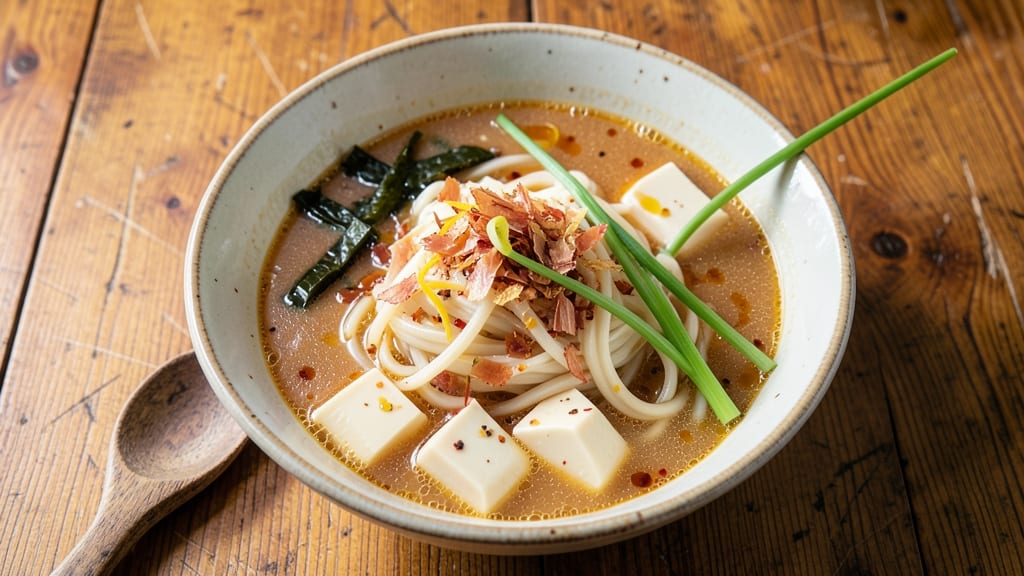
This Asian udon noodle soup recipe delivers the perfect balance of slippery noodles and rich, savory miso-ginger broth that warms you from the inside out.
The secret lies in building layers of umami through a traditional dashi base and fermented miso, creating a broth so flavorful it transforms simple ingredients into something extraordinary. I've perfected this recipe over years of testing, ensuring every spoonful delivers that signature harmony of salty, sweet, and aromatic notes.
What sets this udon soup apart is the technique: simmering kombu (dried kelp) and bonito flakes for a clean, oceanic depth, then balancing it with miso paste and fresh ginger.
The udon noodles cook in just 3 minutes—keeping them perfectly chewy and slippery—while toppings like silken tofu, shiitake mushrooms, and green onions add texture and freshness. The broth's complexity comes from patience: letting flavors meld while keeping the soup light enough to enjoy with chopsticks.
By the time you assemble your bowl, you'll have a steaming plate of restaurant-quality udon with tender noodles floating in a glossy, aromatic broth. The miso-ginger foundation ensures depth without heaviness, while the toppings let you customize—add shrimp for protein, chili oil for heat, or extra mushrooms for earthiness.
This is comfort food at its finest: simple to prepare but impossible to resist.
Perfect for chilly evenings or as a light yet satisfying lunch, this udon soup scales effortlessly for one or many. The broth freezes beautifully, so you can prep ahead for busy days. Let's make it—your taste buds will thank you.
Ingredients for asian udon noodle soup
These 14 ingredients create restaurant-quality udon with rich miso-ginger broth and slippery noodles.
| Ingredient | Amount | Notes |
|---|---|---|
| Dried Udon Noodles 🍜 | 8 oz | Fresh or dried, 3mm width preferred |
| Dried Kombu 🍃 | 1 sheet | High-quality, no salt crystals |
| Bonito Flakes 🐟 | ½ cup | Premium grade for clean flavor |
| White Miso Paste 🧈 | 2 tbsp | Fermented, smooth texture |
| Fresh Ginger 🧄 | 2 tbsp | Finely grated, aromatic |
| Silken Tofu 🧈 | 8 oz | Soft, unpressed blocks |
| Dried Shiitake Mushrooms 🍄 | 4 whole | Rehydrated for umami depth |
| Green Onions 🧅 | 4 whole | Thinly sliced, white and green |
| Sesame Oil 🫒 | 1 tsp | Toasted, for aroma |
| Low-Sodium Soy Sauce 🥄 | 1 tbsp | For balanced saltiness |
| Water 💧 | 8 cups | Filtered for best flavor |
| Salt 🧂 | ½ tsp | Kosher, to taste |
| Optional Shrimp 🦐 | ½ lb | Peeled, for protein boost |
| Chili Oil 🌶️ | 1 tbsp | For heat lovers |
The kombu and bonito flakes are non-negotiable for that signature umami kick—look for premium dried kombu sheets at Asian markets or well-stocked grocery stores like Whole Foods. Fresh ginger should smell vibrant, not dull, and the miso paste? White miso is milder than red, perfect for this delicate broth. I always grab extra bonito flakes—they dissolve fast, so having a backup ensures no gaps in flavor. For udon noodles, fresh is ideal but dried works too, just soak them properly. The shiitake mushrooms? Dried shiitake from a jar saves time and adds incredible depth—no need to hunt for fresh.
No kombu? Dulse flakes at half the amount work in a pinch, though the flavor won't be identical. Short on bonito? Dried shiitake tea (steeped and strained) mimics some of that oceanic depth. The silken tofu can be swapped for extra mushrooms if you're vegetarian, but trust me—it adds that silky texture that makes udon special. For the ginger, if you've got it, use fresh. Dried? One-third the amount, but it won't have the same zing. The optional shrimp? Peel and devein them right before adding to the broth—no need to cook them separately. And chili oil? Skip it if you're not into heat, but it's amazing for those who love a little kick.
This broth freezes like a dream—portion it into containers with room to expand and it'll keep for 3 months. Reheat gently on the stove, adding a splash of water if it's too thick. The udon noodles? Cook them fresh when serving—just 3 minutes in boiling water—and they'll be perfectly chewy. Store dried ingredients like kombu and bonito flakes in airtight containers; fresh ginger lasts 2 weeks in the fridge wrapped in a damp towel. Make a double batch of broth—it's worth the effort, and you'll have soup ready in minutes for busy days.
Why You'll Love This Recipe
- No-Fuss Pantry Magic: I swear by this recipe when my fridge is bare—just dried udon, kombu, and miso. The kombu alone infuses that deep, oceanic richness without a single chop.
- Umami Bomb Combo: That first crackle of bonito flakes? Instant flavor explosion. The ginger and miso paste team up for a broth so balanced—salty, sweet, and just a little funky.
- Lunchbox Hero: Between us, this soup reheats like a dream. Pack it cold for work or warm it up in 2 minutes—still tastes fresh, even after 3 days in the fridge.
- Budget Comfort Food: Honestly, I make this when I’m broke or lazy—both work. Udon’s cheap, kombu lasts forever, and a pinch of miso stretches into multiple bowls. My wallet and taste buds thank me.
Step-by-step instructions for Asian udon noodle soup
Here's how to create a restaurant-quality udon broth that's rich, aromatic, and perfectly balanced.
Prepare the Kombu and Bonito Broth Base
Start by placing the 1 sheet Dried Kombu in a large pot and cover it with the 8 cups Water. Bring to a gentle simmer over medium heat and let it steep for 10 minutes. You'll notice the kombu releases a deep, oceanic aroma—this is where the umami magic begins.
While the kombu steeps, toast the 0.5 cup Bonito Flakes in a dry skillet over low heat for 2-3 minutes until they turn a rich golden brown and smell intensely fishy. Immediately sprinkle the toasted flakes into the simmering kombu water. Let the broth simmer uncovered for 5 minutes to infuse all those smoky, savory notes. The broth should smell like a perfect storm of sea and smoke—this is your flavor foundation.
Build the Miso-Ginger Sauce
In a small bowl, whisk together the 2 tbsp White Miso Paste with the 2 tbsp Fresh Ginger (finely grated) and 1 tbsp Low-Sodium Soy Sauce until smooth. This paste is the heart of your soup's flavor profile—it should be thick but easily stirrable. I like to use a fork to break up any lumps completely before adding it to the broth.
Remove the kombu sheet from the broth (you can save it for another use or compost it) and stir in the miso-ginger mixture. Let the broth simmer gently for 5 minutes to meld these flavors. You'll see the broth develop a beautiful golden hue and a rich, complex aroma. Taste the broth now—it should be deeply savory with a bright ginger kick. If it needs more salt, add the 0.5 tsp Salt now.
Cook the Udon Noodles and Add Vegetables
While the broth simmers, prepare the 8 oz Dried Udon Noodles by soaking them in hot water for 8-10 minutes until pliable but still slightly firm. Drain and rinse briefly under cold water to stop the cooking process—this prevents them from becoming mushy in the hot broth. The noodles should be tender but still have a slight bite.
Add the soaked udon noodles to the broth along with the 4 whole Dried Shiitake Mushrooms (rehydrated in hot water for 20 minutes) and 8 oz Silken Tofu (cut into small cubes). Simmer everything together for 3-4 minutes until the mushrooms are tender and the tofu is heated through. The broth should now be fragrant with all the ingredients working together in harmony.
Finish with Aromatics and Optional Protein
Just before serving, stir in the 1 tsp Sesame Oil and 1 tbsp Chili Oil for that final aromatic punch. The sesame oil will add a nutty depth while the chili oil brings just the right amount of heat. If using the 0.5 lb Optional Shrimp, add them now and cook for 1-2 minutes until just opaque—overcooking will make them rubbery.
Divide the soup among bowls and garnish with thinly sliced 4 whole Green Onions (white and green parts separated). The white parts add subtle sweetness while the greens bring freshness. Serve immediately while the broth is steaming hot, with the noodles perfectly slippery and the broth rich enough to sip.
Pro Tips For Making Asian Udon Noodle Soup
- Bloom the Kombu First: Toss that dried kombu into simmering water before adding anything else—just let it steep for 10 minutes while you prep the rest. I learned this the hard way: skipping this step means your broth will taste flat, like someone forgot to season it. The kombu’s umami needs time to wake up.
- Toast Bonito Flakes Fast: Keep a lid nearby and toss those flakes into the hottest part of the broth just before serving—no simmering, just a quick sprinkle. After burning three batches trying to "cook" them in, I realized they’re meant to sizzle and dissolve instantly. If you’re impatient like me, do this last.
- Miso Paste Needs Warmth: Whisk your white miso into warm broth (just below boiling), not cold water—this prevents clumping and lets the flavor integrate smoothly. I used to dump it in raw and end up with a gritty, uneven soup. A splash of broth first, then stir like you’re angry at it.
- Cook Udon Noodles Separately: Boil the udon in a separate pot for 2–3 minutes less than the package says, then shock them in ice water. Adding them straight to the broth makes the soup gluey and watered down. Trust me, this keeps them chewy and separate—no sad, mushy noodles here.
Flavor customization for this dish
Spicy Kick Options
Add a 1 tbsp chili oil or ½ tsp gochujang paste to your broth for instant heat. For a smoky twist, stir in ½ tsp Korean red pepper flakes with the sesame oil.
I love using Sichuan chili bean paste (½ tsp) for a funky, spicy depth that pairs perfectly with the umami broth. 🌶️
Citrus Brightness
Finish your bowl with 1 tsp freshly grated yuzu zest or ½ tsp lemon juice to cut through the richness. The acidity makes each spoonful feel fresh and vibrant. I also like adding thinly sliced daikon radish for a crisp, citrusy crunch that balances the silky noodles.
Herbaceous Twist
Swap green onions for fresh cilantro or Thai basil for a brighter, more aromatic finish. The basil adds a subtle anise note that complements the ginger beautifully. For a more traditional approach, try shiso leaves—their minty flavor pairs wonderfully with the miso broth.
Creamy Upgrade
Blend ½ cup silken tofu with 1 tsp sesame oil and a pinch of salt, then drizzle over your soup for a velvety finish. Alternatively, stir in 1 tbsp coconut milk just before serving to add a gentle creaminess without overpowering the broth's delicate flavors.
Smoky Depth
Toast 1 tsp smoked paprika in the dry skillet with the bonito flakes for an extra layer of smokiness. Or, add ½ tsp liquid smoke directly to the broth (start with less—it's potent!). This works especially well if you're serving the soup with grilled proteins like shrimp or chicken.
Sweet Contrast
Balance the savory broth with a touch of sweetness using ½ tsp mirin or 1 tsp honey. Stir it in during the final 2 minutes of simmering.
For a more dramatic effect, add thinly sliced apple or pear to your bowl—they soften slightly in the hot broth and add a lovely crunch.
Nutrition facts
Frequently asked questions
Can I use fresh udon noodles instead of dried?
Fresh udon noodles cook in just 2 minutes—no soaking required. They're naturally chewier and hold their shape better in broth. For this recipe, use 12 oz fresh udon instead of dried, and reduce the cooking time in the broth to 2-3 minutes to maintain that perfect slippery texture.
What if I don't have kombu or bonito flakes?
For kombu, dulse flakes (½ sheet) work in a pinch, though the flavor will be subtly different. Skip bonito flakes? Use 1 tbsp dried shiitake tea (steeped and strained) or ½ tsp fish sauce for umami depth. The broth will still be delicious but less oceanic. For a vegetarian version, combine 1 tbsp soy sauce + 1 tsp mushroom powder to mimic the savory notes.
How do I make this soup vegetarian?
Omit shrimp and use extra mushrooms (8 oz) or 1 block extra-firm tofu instead. Boost umami with 1 tbsp vegetarian dashi powder or ½ cup miso paste. For protein, try tempeh or seitan—sear them first for depth. The broth remains rich and satisfying without meat or seafood.
Can I make the broth ahead and reheat it?
Yes! The broth freezes beautifully—portion it into containers with 1 inch headspace to prevent expansion cracks. Thaw overnight in the fridge, then reheat gently on the stove (don't boil) with a splash of water if it's too thick. For best texture, cook fresh udon noodles when serving—just 3 minutes in boiling water.
Why did my udon noodles turn mushy?
Overcooking is the usual culprit! Udon noodles should cook for only 3 minutes in the broth after being pre-soaked. If using dried noodles, soak them for 8-10 minutes in hot water first, then rinse with cold water to stop cooking. For fresh noodles, reduce broth cooking time to 2 minutes. Always taste-test a small piece first.