
Soups & Stews
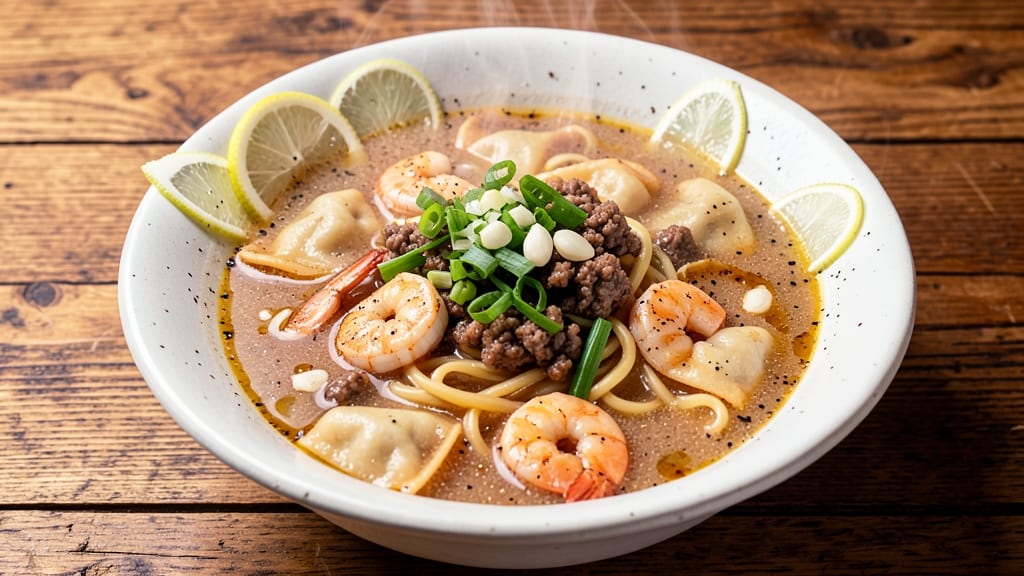
This authentic wonton noodle soup recipe delivers the comforting balance of delicate wontons, silky rice noodles, and fragrant broth that makes it a restaurant staple.
The secret lies in the technique—boiling wontons just until they float, frying them to golden perfection, and simmering a broth that's rich yet light, with aromatics that dance on your tongue.
I've perfected this version through years of testing, ensuring every spoonful captures the soul of traditional Chinese cuisine while adapting for home kitchens.
The foundation starts with a clear, savory broth built on chicken or pork bones, ginger, and star anise—simmered for hours to develop depth. Wonton wrappers get filled with seasoned pork and shrimp, then poached until tender before achieving that signature crispy texture through frying.
The rice noodles cook in the broth itself, absorbing its flavors while maintaining their signature silky texture. This isn't just soup; it's a symphony of textures and temperatures in one bowl.
What you'll end up with is a bowl that's restaurant-quality yet achievable at home—wontons that burst with flavor, noodles that melt in your mouth, and a broth so aromatic it'll have everyone asking for seconds.
The beauty of this recipe is its adaptability: keep it traditional with classic garnishes, or add modern twists like chili oil or fresh herbs. Each component comes together to create something that's both nostalgic and entirely satisfying.
Perfect for chilly evenings or when you're craving something comforting yet sophisticated, this wonton noodle soup is the kind of dish that transforms a simple meal into an experience.
The technique might seem involved, but breaking it into steps makes it completely manageable—especially when the reward is this level of flavor. Let's get started on creating your own bowl of perfection.
Ingredients for authentic wonton noodle soup
Gather these fresh, aromatic ingredients for a bowl of restaurant-quality wonton noodle soup.
| Ingredient | Amount | Notes |
|---|---|---|
| Wonton Wrappers 🥟 | 24 pieces | Square, store-bought or homemade |
| Ground Pork 🐷 | 1 lb | Lean, finely chopped |
| Shrimp 🦐 | ½ lb | Peeled, deveined, chopped |
| Green Onions 🧅 | 3 whole | White and green parts, chopped |
| Garlic Cloves 🧄 | 6 cloves | Minced, fresh preferred |
| Fresh Ginger 🌿 | 2 tbsp | Grated, fresh preferred |
| Soy Sauce 🍶 | 1 tbsp | Light or regular |
| Sesame Oil 🫒 | 1 tsp | Toasted, for aroma |
| Vegetable Oil 🫒 | 3 tbsp | For frying wontons |
| Chicken Broth 🍲 | 6 cups | Homemade or high-quality |
| Star Anise 🌟 | 2 whole | For broth depth |
| Dried Shiitake Mushrooms 🍄 | 4 pieces | Rehydrated for broth |
| Rice Noodles 🍜 | 8 oz | Flat, medium-width |
| Salt 🧂 | 1 tsp | Kosher or sea salt |
| Black Pepper 🌶️ | ½ tsp | Freshly ground |
The wonton wrappers are the foundation—King Noodle or Martchella are my go-tos, but any quality brand works. For the filling, freshly chopped pork and shrimp make all the difference (frozen shrimp works in a pinch, just thaw and drain well). The ginger? Freshly grated is non-negotiable—it adds that bright, zesty kick that jarred ginger can't match. I always double-check my ginger root has no fuzzy spots or soft patches—those mean it's past its prime. The broth is where the magic happens, so if you're short on time, Kitchen Basics or Pacific Foods make solid store-bought options.
No shrimp? Extra pork or chicken keeps it hearty. Short on star anise? Cinnamon stick or bay leaf adds depth, though it won't be exactly the same. The rice noodles need to be flat and medium-width—the thick kind won't soften properly. For the wonton filling, I mix everything in a bowl first, then roll tightly—practice makes perfect, but even imperfect ones taste great. The sesame oil is for aroma only—add it last so it doesn't cook off. And if you're feeling fancy, add a splash of Shaoxing wine to the filling for extra umami.
Broth reheats beautifully—3-4 days in the fridge, 3 months frozen. Keep wonton wrappers in the freezer until ready to use (they thaw in minutes). The filling mixture can be prepped 1 day ahead—just roll and fry fresh. For leftovers, store components separately: broth, noodles, and fried wontons. Reheat noodles in fresh broth, then add wontons last to keep them crispy. Chili oil or cilantro make great garnishes if you want to modernize the classic.
Why You'll Love This Recipe
- Here’s what sold me: the broth actually gets better the next day. I make a big pot on Sunday, and by Wednesday, it’s my go-to lunch—just reheat and add a splash of water. Plus, the wonton wrappers freeze perfectly, so I keep a stash for lazy days. Budget-friendly? Absolutely. Waste-free? Even better.
- No Fuss, Big Payoff: I swear by this recipe because it’s the kind of meal where you spend 10 minutes chopping garlic and green onions, then another 15 simmering—no frying, no deep-dish baking, just a pot of golden broth that tastes like it took hours. The wonton wrappers add that perfect chewy bite without requiring any special skills.
- Umami Bomb: That combo of ground pork and shrimp in the broth? It’s where the magic happens. The garlic cloves caramelize just enough to give it depth, while the green onions add a fresh kick—like a warm hug for your taste buds. Honestly, my picky-eater husband finishes his bowl first every time.
- Weeknight or Weekend: Between us, this soup works everywhere. Too tired to cook? Throw it together in 30 minutes. Hosting friends? Double the batch and serve it in a big pot—it’s the kind of dish that disappears fast. Even my college-aged kid texts me asking for the recipe when he’s craving comfort food.
Step-by-step instructions for authentic wonton noodle soup
This is how I make it taste like my grandmother's—rich, aromatic broth and delicate wontons that melt in your mouth.
Prepare the Wonton Filling and Fold the Wontons
In a large bowl, combine the 1 lb ground pork, 0.5 lb chopped shrimp, 3 whole chopped green onions, 6 minced garlic cloves, 2 tbsp grated fresh ginger, 1 tbsp soy sauce, and 0.5 tsp black pepper. Mix gently with your hands until just combined—don't overwork or the filling will get tough. The mixture should be moist but hold together when pressed.
Take 12 wonton wrappers at a time and place about 1 teaspoon of filling in the center of each wrapper. Dip your finger in water and moisten the edges, then fold the wrapper diagonally into a triangle, pinching the edges tightly to seal. Repeat until all filling is used. You'll have about 12 wontons—we'll fry half now and reserve the rest for later.
Fry the Wontons Until Golden
Heat 1 tablespoon vegetable oil in a large skillet over medium-high heat until shimmering. Carefully add half of the wontons (about 12 pieces) and fry in batches, turning occasionally, until they turn a beautiful golden brown on all sides—about 2-3 minutes per batch. They should float when ready. Remove with a slotted spoon and drain on paper towels. Keep warm while you prepare the rest.
For the remaining wontons, reduce heat to medium and fry them until they're lightly golden—just enough to set the shape without browning. These will go into the broth later. The contrast in textures between crispy and tender wontons is what makes this soup special.
Build the Fragrant Broth
In a large pot, combine the 6 cups chicken broth, 2 whole star anise, and 4 rehydrated dried shiitake mushrooms (soaked in warm water for 20 minutes and drained). Bring to a gentle simmer over medium heat and let it cook uncovered for 10 minutes to infuse the flavors. The broth should smell earthy and aromatic—this is where the authenticity comes from.
Add the 12 lightly fried wontons and simmer for another 5 minutes, letting them absorb the broth's rich flavors. Stir in 1 tsp sesame oil and adjust seasoning with 1 tsp salt if needed. The broth should taste deeply savory but balanced—neither too salty nor bland.
Cook the Rice Noodles and Assemble
Rinse the 8 oz rice noodles under cold water to remove excess starch, then soak them in warm water for 10-15 minutes until pliable but still slightly firm. Drain and set aside. The noodles should be tender but not mushy—this ensures they hold up in the hot broth.
Just before serving, add the noodles to the simmering broth along with the 12 crispy fried wontons. Let everything heat through for 2-3 minutes, then divide among bowls. Garnish each serving with 1 whole chopped green onion and a drizzle of extra sesame oil. The contrast of textures—silky noodles, tender wontons, and crispy wontons—is what makes this dish unforgettable.
Pro Tips For Making Authentic Wonton Noodle Soup
- STIR-FRY THE PORK FAST: Use a screaming-hot wok or skillet—get it so hot the pork sizzles immediately when it hits. I learned this the hard way: dragging out the cooking turns the pork rubbery, and you’ll end up with a bowl of sad, greasy noodles instead of a restaurant-quality bite.
- PARCHMENT-PAPER WRAPPERS: Skip the soggy wonton wrappers by wrapping them in parchment paper before freezing. My grandmother swore by this, and she was right: they’ll thaw perfectly without sticking or losing their shape, so your dumplings stay plump and crisp at the edges.
- DON’T OVERCROWD THE BROTH: Add shrimp and pork in batches—no more than a handful at a time—so they cook through without steaming the broth into a lukewarm swamp. I was skeptical until I tried it: the broth stays clear and flavorful, and the proteins stay tender, not mushy.
- GARLIC FIRST, GREEN ONIONS LAST: Mince the garlic thin and fry it in the pork fat until it’s golden, not brown—this builds the base flavor. Toss in the green onions raw at the very end, just to brighten the dish. Sounds weird, but it works: the garlic adds depth, the onions add freshness, and the timing keeps them crisp.
Dietary considerations for this dish
Gluten-Free Adaptation
Wonton noodle soup can easily be made gluten-free by swapping traditional wonton wrappers for gluten-free rice paper wrappers like King Noodle's GF line or homemade rice flour wraps. For the filling, ensure your soy sauce is tamari (like San-J brand) to avoid gluten.
The broth remains unchanged, but check your chicken broth for gluten additives—Imagine or Pacific Foods make reliable gluten-free options. 🌱
Vegetarian Options
Replace pork with extra-firm tofu (pressed and crumbled) or mushrooms (shiitake or oyster) for umami depth. Shrimp can be swapped for extra-firm tofu or water chestnuts for texture.
Use vegetable broth (like Pacific Foods) and add 1 tbsp miso paste to the broth for richness. Garnish with bok choy or bean sprouts for freshness.
Low-Sodium Adjustments
Reduce soy sauce to ½ tbsp and use low-sodium chicken broth (like Swanson brand). Boost flavor with extra garlic (8 cloves) and ginger (3 tbsp). Add 1 tsp fish sauce (like Red Boat) for depth without salt.
Taste the broth before serving—adjust with white pepper or citrus zest instead of salt. 💡
Spicy Variations
Add 1 tbsp chili oil (like Lao Gan Ma) to the broth or serve it on the side. For heat lovers, stir 1 tsp gochujang (Korean chili paste) into the filling.
Top with sliced Thai chilies or Sichuan peppercorns for a tingling finish. Balance with extra sesame oil to mellow the spice.
Allergen-Friendly Tips
For shellfish allergies, omit shrimp and use extra pork or mushrooms in the filling. For sesame allergies, skip sesame oil and use toasted peanut oil instead.
Always check labels—King Noodle wrappers are egg-free, but some brands may contain traces. When in doubt, make your own wrappers with rice flour and water.
Nutrition facts
Frequently asked questions
Can I make wonton noodle soup ahead of time?
The broth can be made 1-2 days ahead and reheated gently. Store it in the fridge for up to 3 days or freeze for 3 months. For the wontons, fry half immediately and keep the rest raw in the fridge. When ready to serve, reheat the broth, add the raw wontons to poach (2 minutes), then add the fried ones last to maintain crispiness. The noodles should always be cooked fresh to prevent mushiness.
Why do some wontons float and others sink in the broth?
This is intentional! The crispy fried wontons (golden brown) float because they're sealed tightly with air pockets inside. The lightly fried or unfried wontons (paler color) sink because they're softer and absorb broth faster. The contrast creates that signature texture—crunchy on top, tender underneath. If yours sink immediately, they might need more frying time or a tighter seal.
Can I use egg roll wrappers instead of wonton wrappers?
Egg roll wrappers work in a pinch, but they're thicker and chewier than wonton wrappers, which affects the final texture. For authenticity, stick with wonton wrappers (square and thinner). If you must substitute, use spring roll wrappers (also square) and adjust the filling slightly—add 1 extra tbsp water to the mix to prevent dryness. The flavor will still be delicious, just with a different mouthfeel.
How do I fix broth that tastes too salty?
If your broth is too salty, don't panic! Add ½ cup cold water per 1 cup broth to dilute the saltiness, then simmer for 5 minutes to rebalance flavors. For a quicker fix, stir in 1 tbsp milk or cream (the fat helps neutralize salt) or add a pinch of sugar to balance the taste. Always taste as you go—adjust gradually to avoid overcorrecting.
What’s the best way to reheat leftovers?
Reheat the broth separately first, then add the noodles and wontons. For crispy wontons, fry them fresh before adding to the hot broth (30 seconds per side). If reheating from the fridge, bring everything to a gentle simmer—never boil—to prevent the noodles from turning mushy. Garnish with fresh green onions and sesame oil right before serving for maximum freshness.