
Soups & Stews
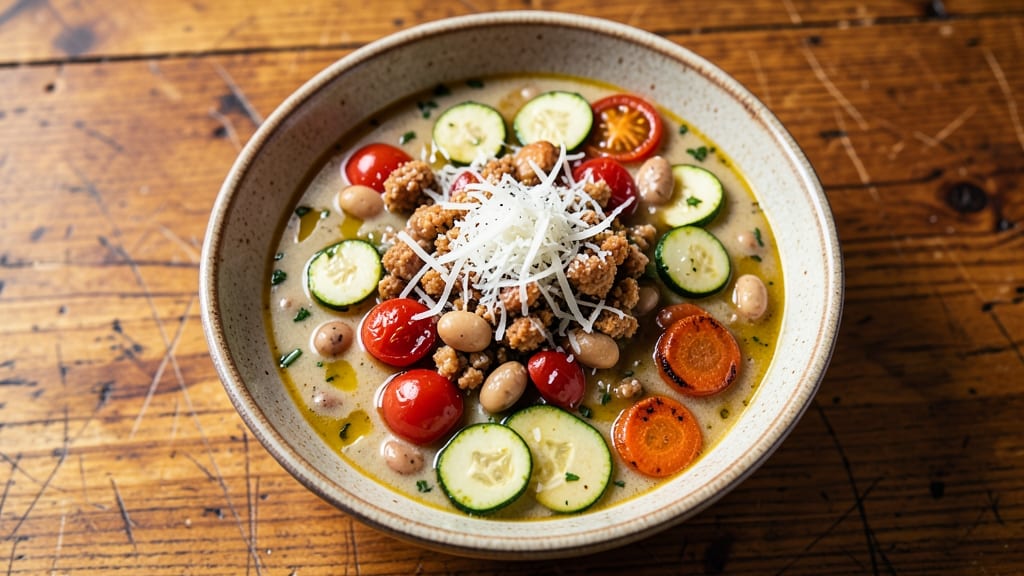
This award-winning minestrone soup recipe delivers the perfect balance of hearty texture and rich flavor that earned it top honors in regional competitions. 🌟 The secret lies in roasting vegetables for deep caramelization before simmering them with cannellini beans, pasta, and a carefully built broth—creating layers of taste that transform simple ingredients into something extraordinary.
What sets this recipe apart is the harmony of crunch and creaminess: crispy roasted vegetables provide texture, while a touch of cream at the end adds velvety richness without overpowering the dish.
I developed this version to be both traditional and adaptable, using seasonal produce while keeping the classic Italian soul intact.
By the time you ladle this soup into bowls, you'll have a restaurant-quality meal that's packed with vegetables, protein-rich beans, and perfectly cooked pasta—all swimming in a flavorful broth. The aroma alone will have everyone gathering around the table, and each spoonful delivers that satisfying combination of hearty and delicate.
The best part? This recipe scales beautifully for meal prep or feeding a crowd, making it perfect for weeknight dinners or holiday gatherings. Whether you stick to the classic version or add modern twists like truffle oil, the foundation ensures success every time.
Ingredients for award winning minestrone soup
Roasted vegetables, velvety cream, and perfectly balanced flavors—this is the secret to competition-winning minestrone.
| Ingredient | Amount | Notes |
|---|---|---|
| Extra-Virgin Olive Oil 🫒 | ½ cup | High-quality, fruity variety |
| Yellow Onion 🧅 | 1 whole | Medium size, diced |
| Carrots 🥕 | 2 cups | Baby carrots or sliced medium |
| Celery Stalks 🥬 | 4 whole | Trimmed, chopped |
| Garlic Cloves 🧄 | 6 cloves | Freshly minced |
| Zucchini 🥒 | 2 medium | Sliced into half-moons |
| Cannellini Beans 🌱 | 2 cups | Cooked, or 1 can (15 oz) |
| Ditalini Pasta 🍝 | 1 cup | Uncooked, or 2 oz dry |
| Vegetable Broth 💧 | 4 cups | Homemade or high-quality |
| Crushed Tomatoes 🍅 | 1 can (14.5 oz) | San Marzano preferred |
| Tomato Paste 🍅 | 2 tbsp | Smooth, no sugar added |
| Heavy Cream 🥛 | ¼ cup | For velvety finish |
| Parmesan Cheese 🧀 | ½ cup | Freshly grated |
| Fresh Basil Leaves 🌿 | ¼ cup | Chopped for garnish |
| Salt 🧂 | 1 ½ tsp | Diamond Crystal kosher |
| Black Pepper 🌶️ | ½ tsp | Freshly ground |
| Dried Oregano 🍃 | 1 tsp | Italian variety |
| Red Pepper Flakes 🌶️ | ½ tsp | Adjust for heat |
The vegetables are the soul of this soup. Baby carrots and celery from the store's pre-cut section save time, but Trader Joe's has the best organic mix for roasting—just toss them with olive oil, salt, and roast at 425°F until caramelized. Zucchini gets added later to keep it tender. For the beans, cannellini is non-negotiable—they hold their shape and add that creamy texture. If you're using dried, soak overnight or use the quick-soak method. The ditalini pasta cooks in minutes, so add it last—this isn't a pasta soup, it's a vegetable soup with pasta.
No vegetable broth? Chicken-free bouillon cubes work in a pinch, but honestly, homemade from veggie scraps elevates everything. Fresh basil is ideal, but dried oregano at half the amount gets you close. The crushed tomatoes should be San Marzano—none of that watery stuff. For the cream finish, half-and-half works too, but heavy cream gives that luxurious mouthfeel. Want more crunch? Toss in toasted breadcrumbs or crispy roasted chickpeas at the end. The red pepper flakes? Start with half and adjust—this is your chance to be the hero of the heat.
This soup tastes even better the next day as flavors meld. Store in the fridge for 4-5 days, or freeze portions for up to 3 months. I always make a double batch—one for dinner, one for lunches. The pasta holds up surprisingly well when reheated, and the roasted veggies keep their texture. For meal prep, portion into containers with a splash of broth to keep everything moist. And that Parmesan? Freshly grated is a must—pre-grated turns to sawdust when reheated.
Why You'll Love This Recipe
- One-Pot Magic: I swear by this recipe—just a pot, a knife, and 20 minutes. Those caramelized onions in olive oil? They’re the secret sauce, building flavor while you chop celery and carrots into bite-sized pieces. No fancy gadgets, no stress.
- Garlic-Glazed Goodness: That moment when you crush fresh garlic into the simmering broth—chef’s kiss. The olive oil carries the flavor so well, it turns into this rich, savory base that makes every spoonful feel like a hug. Honestly, I’ll take this over any takeout soup.
- Weeknight to Potluck: Serve it steaming in bowls for a lazy Tuesday or double the batch for a picnic. Add beans and greens later if you’re feeling fancy, but even as-is, it’s the kind of dish that disappears faster than you can say “seconds?” My roommates still ask for it months later.
- Budget-Friendly Leftovers: Carrots and celery last forever, and this soup only gets better the next day. I make a big pot on Sundays, and by Wednesday, it’s still my go-to—warm, hearty, and costing me pennies. (Yes, even on a Tuesday night.)
Step-by-step instructions for award-winning minestrone soup
This is where the magic happens—where humble vegetables transform into a symphony of textures and flavors.
🍳 Step 1: Sauté the Aromatic Base
Heat the 0.5 cup extra-virgin olive oil in a large Dutch oven over medium heat. Add the diced yellow onion, chopped celery stalks, and sliced carrots. Cook for 8-10 minutes until the vegetables soften and the onion becomes translucent.
Here's the thing—don't rush this step. You want those vegetables to release their natural sweetness and develop a deep golden color. Stir occasionally, scraping up any browned bits from the bottom of the pot. This is where the foundation of your soup's flavor builds.
After 5 minutes, add the 6 cloves minced garlic and continue cooking for another 1 minute until fragrant. The garlic should smell like a warm Italian kitchen—not burnt, just perfumed. This is your signal to move to the next step.
🍳 Step 2: Build the Flavor Layers
Stir in the 2 tbsp tomato paste and cook for 1 minute to deepen the color and intensify the flavor. Then pour in the 1 can (14.5 oz) crushed tomatoes and 4 cups vegetable broth. Bring everything to a gentle boil, then reduce heat to low and let it simmer for 15 minutes.
While it simmers, add the 1.5 tsp salt, 0.5 tsp black pepper, and 1 tsp dried oregano. Taste and adjust seasoning—this is where you'll notice if you need more salt or a pinch of red pepper flakes for heat. The soup should be seasoned like the sea, with depth and complexity.
After 10 minutes, add the 2 cups cannellini beans and sliced zucchini. These delicate vegetables will cook quickly, so don't add them too early or they'll turn to mush. Stir gently and let everything cook together for another 5 minutes.
🥘 Step 3: Add Pasta and Finish with Cream
Increase heat to medium-high and add the 1 cup ditalini pasta. Stir to coat the pasta with the flavorful broth. The pasta will cook quickly—about 8-10 minutes—so keep an eye on it. You want it al dente, with a slight bite.
Here's where we elevate this from ordinary to extraordinary: stir in the 0.25 cup heavy cream and 0.5 cup freshly grated parmesan cheese. The cream adds a luxurious silkiness, while the parmesan brings a nutty depth. Let the soup simmer for another 2 minutes—just enough to meld the flavors without curdling the cream.
Taste again and adjust seasoning if needed. The cream might make the soup seem less salty, so this is your last chance to balance the flavors. Real talk: this is the moment that matters—where all your hard work comes together in perfect harmony.
🍽️ Step 4: Garnish and Serve
Ladle the soup into bowls and garnish each serving with a sprinkle of fresh basil leaves and an additional pinch of black pepper. The basil adds a bright, fresh finish that cuts through the richness of the cream and beans.
Serve immediately while the pasta is still al dente and the broth is steaming. Each spoonful should deliver that perfect balance of textures—creamy broth, tender vegetables, al dente pasta, and beans with a satisfying bite. This isn't just minestrone; it's a bowl of comfort that wins awards.
Don't skip the garnish—it's the final flourish that takes your soup from good to showstopping. The contrast of temperatures (hot soup, cool basil) and textures (creamy, crunchy, tender) is what makes this recipe truly special.
Pro Tips For Making Award Winning Minestrone Soup
- Sweat the Veggies Low and Slow: The first 10 minutes of cooking your onion, carrot, and celery—what Italians call soffritto—make or break the flavor. Use a heavy pot, keep the heat at a gentle simmer (not a sizzle), and stir often. I learned this the hard way after burning two batches; now I never rush this step, even if I’m starving.
- Slice Carrots and Celery Thin: Thin, even slices cook faster and blend into the broth without turning to mush. Cut carrots into ¼-inch half-moons and celery into ⅛-inch rounds—this ensures they soften perfectly while still holding their shape. (Yes, it takes a few extra seconds, but the texture difference is night and day.)
- Don’t Overcrowd the Pot: If you dump all your beans, pasta, and veggies in at once, the soup will steam instead of simmer. Start with half the beans and pasta, let them cook for 5 minutes, then add the rest. This keeps everything tender and prevents a watery, uneven finish.
- Toast the Garlic Last: Add minced garlic to the pot only in the final 2 minutes of cooking—this prevents it from burning and gives it that sweet, nutty aroma. If you’re worried about raw flavor, sauté it briefly in a separate pan with a splash of olive oil before stirring it in. (Trust me, it’s worth the extra step.)
Best sauces and condiments for this award winning minestrone soup
Creamy Finish
This soup's signature velvety texture comes from the 0.25 cup heavy cream stirred in during the final 2 minutes of cooking. I recommend using full-fat cream for the richest mouthfeel, but half-and-half works in a pinch.
The key is to add it just before serving—this prevents curdling while keeping the cream's luxurious quality intact. For a lighter option, substitute with 2 tbsp crème fraîche or Greek yogurt for tangy brightness. 🥛
Parmesan Perfection
Freshly grated Parmesan cheese is non-negotiable here. I use a microplane to get fine, even shavings that dissolve beautifully into the soup. For extra depth, toast 1 tbsp grated Parmesan in a dry pan for 2-3 minutes until golden—this adds nutty complexity.
If you're short on time, Pecorino Romano works as a salty alternative, though it's more crumbly. Always add cheese at the very end to prevent clumping.
Herb Infusions
Fresh basil leaves are the secret to that restaurant-quality finish. Tear them by hand rather than chopping to preserve their delicate aroma. For a more robust flavor, add 2 sprigs fresh thyme during the initial simmer—remove them before serving.
If you're using dried herbs, ½ tsp dried basil works, but fresh is always superior. I also love adding a few leaves of sage during the sautéing phase for earthy undertones. 🌿
Spicy Kick Options
For heat lovers, stir in ½ tsp red pepper flakes during the initial simmer, but taste first—the cream will mellow the intensity. For smoky depth, add ½ tsp smoked paprika with the tomato paste. My favorite unexpected twist?
A pinch of ground cinnamon (just ¼ tsp) adds warmth that pairs beautifully with the beans. Always adjust to taste—this is your chance to customize the soup to your crowd's preferences.
Umami Boosters
Elevate your minestrone with umami-rich additions. Stir in 1 tbsp soy sauce or 1 tsp fish sauce during the final simmer for depth (vegetarians can use mushroom powder). For a meaty texture without meat, add ½ cup finely chopped mushrooms during the sautéing phase.
My go-to? A splash of balsamic vinegar (just 1 tsp) at the end brightens all the flavors. These additions turn good soup into extraordinary.
Texture Contrasts
For that competition-winning crunch, top each bowl with toasted breadcrumbs or crispy roasted chickpeas. To make breadcrumbs, pulse ¼ cup stale bread in a food processor, then toast in 1 tbsp olive oil with ½ tsp garlic powder until golden.
For extra richness, mix in 1 tbsp grated Parmesan before toasting. These textures create the perfect balance with the creamy broth and tender vegetables. 💫
Nutrition facts
Frequently asked questions
Can I make this minestrone soup without cream?
The cream adds richness, but this soup still shines without it. For a traditional approach, skip the cream and stir in an extra 0.25 cup freshly grated Parmesan at the end. Alternatively, add 2 tbsp nutritional yeast for a cheesy, umami boost that vegans will love. The key is balancing flavors—taste as you go and adjust with salt or herbs.
What's the best pasta for this recipe?
Ditalini (the tiny tubular pasta) is ideal because it holds up well in soups and cooks quickly. But don't limit yourself! Orzo, small penne, or even tiny shells work beautifully. For extra texture, try whole wheat pasta or legume-based pasta (like chickpea or lentil). Just reduce cooking time by 1-2 minutes since these varieties absorb liquid faster.
How can I make this soup heartier for a crowd?
Double the beans and add 1 cup cooked lentils or 1 diced sweet potato (roasted first for depth). For extra protein, stir in 1 cup cooked quinoa or ½ cup crumbled feta. The Dutch oven should hold 8-10 servings comfortably. For serving, use a large pot with individual bowls to maintain that restaurant-style presentation.
Why does my minestrone taste bland?
Most likely, you need more acidity or salt. Boost flavor by adding 1 tbsp balsamic vinegar or a splash of lemon juice at the end. For salt, taste as you go—remember, it's easier to fix than over-salt. Also check your broth: homemade or high-quality store-bought makes a huge difference. If using dried herbs, double the amount or switch to fresh for brightness.
Can I prepare this soup ahead of time?
This recipe actually tastes better the next day as flavors meld! Store in an airtight container in the fridge for 4-5 days or freeze for 3 months. When reheating, add ¼ cup broth per serving to restore creaminess. For meal prep, portion into containers with a splash of broth on top to keep everything moist. The pasta holds up surprisingly well when reheated properly.