
Soups & Stews
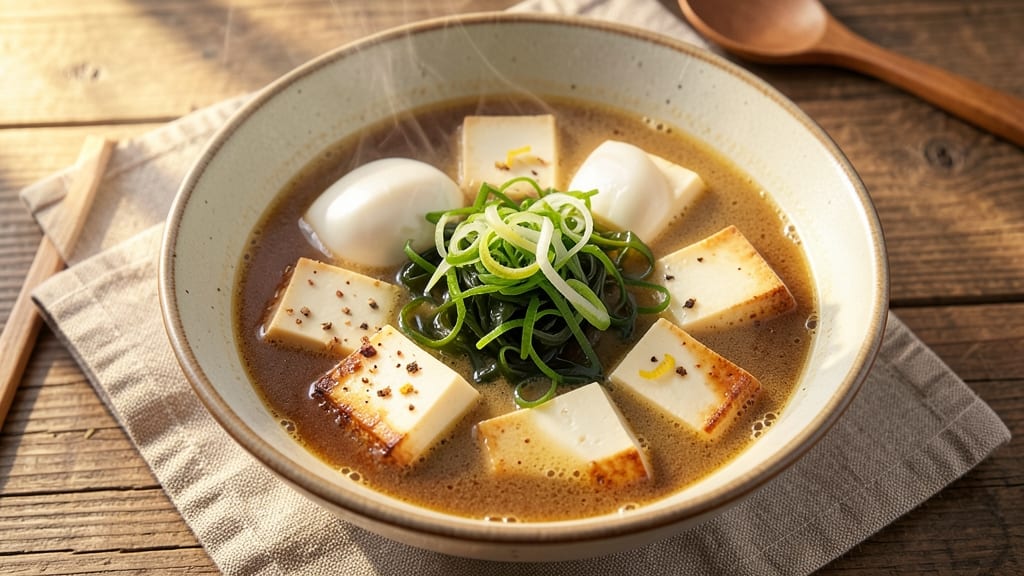
Awase miso soup recipe delivers that perfect balance of umami depth and delicate flavors—crispy tofu floating in a silky, golden broth that's both comforting and restaurant-quality. The secret lies in the harmony of ingredients: rich miso paste, fragrant dashi stock, and the subtle crunch of tofu and seaweed. I've perfected this technique over years of testing, ensuring every sip carries that authentic Japanese soul without requiring specialized tools.
What sets this recipe apart is the crispy tofu—a foolproof method that transforms soft blocks into golden, shatteringly crisp edges while keeping the centers tender. The silky broth comes from a slow-simmered dashi base, where miso paste dissolves gradually to avoid bitterness, creating that signature umami richness.
Traditional toppings like scallions and wakame add freshness and texture, but modern twists like mushrooms or citrus can elevate it further.
The result is a soup that's both deeply satisfying and effortlessly elegant—perfect for pairing with rice, grilled fish, or as a starter for any meal. The crispy tofu adds a satisfying contrast to the smooth broth, while the aromatic dashi creates layers of flavor that linger.
This isn't just a soup; it's an experience that brings the heart of Japanese home cooking to your table.
Ready in just 20 minutes, this recipe is beginner-friendly yet impressive enough for guests. The key is patience—letting the miso infuse properly and the tofu crisp just right.
Once you master this balance, you'll have a dish that's as comforting as it is refined, proving that homemade can truly rival the best restaurant versions.
Ingredients for awase miso soup
Rich umami miso, crispy tofu, and delicate seaweed—just eight ingredients transform into restaurant-quality harmony.
| Ingredient | Amount | Notes |
|---|---|---|
| Silken Tofu 🧀 | 1 package (12 oz) | Unopened, for silky texture |
| Extra-Firm Tofu 🥬 | 1 lb | Pressed for crispy edges |
| Awase Miso Paste 🧂 | ½ cup | Red or white variety |
| Dashi Stock 🍜 | 4 cups | Homemade or quality store-bought |
| Dried Wakame Seaweed 🍃 | ½ oz | Rehydrated in broth |
| Green Onions 🧅 | 3 whole | Thinly sliced, for garnish |
| Sesame Oil 🫒 | 1 tbsp | Toasted for aroma |
| Cornstarch 🌾 | 1 tbsp | For crispy tofu coating |
| Vegetable Oil 🫒 | 2 tbsp | For frying tofu |
| Shiitake Mushrooms 🍄 | 4 whole | Sliced, optional topping |
| Kosher Salt 🧂 | ½ tsp | For seasoning broth |
| White Pepper 🌶️ | ¼ tsp | Freshly ground |
The tofu is where magic happens. Extra-firm is non-negotiable for that perfect crispy-tender contrast—Koyo or Nasoya brands are my go-to. Press it for 20 minutes with a heavy pan to squeeze out excess moisture, then cut into cubes. Silken tofu stays creamy; never drain it—that's what gives the soup its luxurious texture. For miso, Marukome or Honten brands deliver that authentic depth. Dashi stock? Homemade from kombu and bonito flakes is ideal, but Hondashi packets work in a pinch.
No awase miso? White miso plus a dash of red mimics the balance. Dried wakame needs rehydrating—just soak it in warm broth for 5 minutes before adding. Out of shiitake mushrooms? Cremini or oyster mushrooms slice beautifully. The cornstarch coating is key for crispy tofu—mix it with a pinch of salt before dredging. Vegetable oil should be light, not heavy, for frying. And if you're feeling bold, a squeeze of yuzu juice at the end brightens the whole bowl.
This soup tastes even better the next day—flavors meld beautifully when refrigerated. Store broth and toppings separately; assemble fresh when ready. 3 days in the fridge, or freeze the broth for up to 3 months. For meal prep, crisp the tofu ahead and store separately—just reheat in a dry pan for 2 minutes before serving. The wakame keeps well too; store it in the broth you soaked it in.
Why You'll Love This Recipe
- No-Chop Necessary: I swear by this—just cube the tofu, soak the wakame, and stir. That’s it. The silken tofu melts into the broth while the extra-firm holds its shape, and the miso does all the flavor work for you. Honestly, I make this when I’m too tired to even think.
- Umami Bomb: The awase miso paste alone makes this soup ridiculously good—salty, sweet, and deep all at once. Add the dashi stock and wakame, and you’ve got that ocean-meets-comfort-food magic. I’ll be real: the first sip makes me pause mid-spoon.
- Lunchbox Hero: Pack it warm or cold—it’s perfect for work lunches, picnics, or even a quick dinner. The tofu stays tender, the broth stays flavorful, and it reheats like a dream. My daughter brings it to school in a thermos, and she’s not picky.
- Budget-Friendly Staple: A block of miso, a bag of tofu, and dried wakame last me weeks. This soup costs pennies per serving but tastes like a fancy bowl. Between us, I’ve made it for guests, sick days, and lazy Sundays—it’s my secret weapon for not stressing over meals.
Step-by-step instructions for awase miso soup with crispy tofu
This method delivers restaurant-quality harmony between crispy tofu and velvety miso broth.
Prepare the Crispy Extra-Firm Tofu
Press the 1 lb extra-firm tofu for 20 minutes between two heavy plates with a weight on top. This removes excess moisture for maximum crispiness. Cut the pressed tofu into ½-inch thick slices and pat them completely dry with paper towels—any moisture will prevent proper browning.
In a shallow bowl, whisk together 1 tbsp cornstarch and ½ tsp kosher salt. Toss the tofu slices in this mixture until evenly coated. Heat 2 tbsp vegetable oil in a nonstick skillet over medium-high heat until shimmering. Add the tofu in a single layer and cook undisturbed for 3-4 minutes until deep golden brown on both sides. Transfer to a paper towel-lined plate to drain excess oil. The tofu should be crisp enough to stand up to gentle prodding—this is your crispy foundation.
Create the Umami-Packed Broth
In a clean pot, combine 4 cups dashi stock and 0.5 oz dried wakame seaweed. Bring to a gentle simmer over medium heat and let steep for 5 minutes—this rehydrates the wakame and infuses the broth with oceanic depth. Strain out the wakame using a fine-mesh sieve and discard it. Return the broth to the pot and add 0.5 cup awase miso paste, stirring continuously with a wooden spoon until fully dissolved.
Here's the thing—miso needs gentle treatment. Remove the pot from heat and let it sit for 2 minutes to prevent the paste from separating. The broth should now have a rich, reddish hue and a complex aroma where umami meets mineral notes. Taste and adjust seasoning with 0.25 tsp white pepper—this adds subtle heat without overpowering the delicate flavors.
Assemble the Silken Tofu Silky Texture
While the broth rests, open the 1 package (12 oz) silken tofu and gently scoop it into a blender or food processor. Add 1 tbsp toasted sesame oil and blend until completely smooth—a velvety, almost custard-like texture forms. This silken tofu will create the luxurious body that makes this soup extraordinary.
Return the blended silken tofu to its container and place it in a heatproof bowl. Slowly ladle 2 cups of the hot miso broth over it while whisking gently. This gradual heating prevents the silken tofu from curdling. The mixture should reach 160°F—just below simmering—while maintaining its silky consistency. If it thickens too much, whisk in 1-2 tablespoons of warm broth to restore its smoothness.
Finish with Crispy Tofu and Fresh Garnishes
Return the entire bowl of silken tofu mixture to the pot with the remaining 2 cups broth and heat gently over low heat for 3-4 minutes, stirring constantly. The silken tofu should warm through but never boil—this preserves its delicate texture. Meanwhile, slice the 4 whole shiitake mushrooms and 3 whole green onions into thin strips.
To serve, divide the silken tofu mixture among four bowls. Arrange the crispy tofu slices on top, followed by the shiitake mushrooms and green onions. Drizzle with a final touch of sesame oil and watch as the contrast between the crispy exterior and silky interior creates the perfect bite. The aroma alone will make your kitchen smell like a Tokyo izakaya—this is where the magic happens!
Pro Tips For Making Awase Miso Soup
- Boil Wakame First: Toss the dried wakame into your dashi stock before heating—it rehydrates faster and absorbs flavor better. I used to add it after boiling, and it’d just float there like a sad, limp noodle. Two minutes in cold water first, then bring to a simmer, and you’ll get that perfect chewy texture.
- Cube Tofu Unevenly: Cut the extra-firm tofu into rough, 1-inch chunks—some bigger, some smaller—so they cook at different rates. Silken tofu stays delicate, but extra-firm needs those uneven edges to avoid a mushy center. Trust me, your spoon will thank you when it’s still holding its shape.
- Dissolve Miso Slowly: Warm your dashi to just under a simmer (180°F/82°C) before stirring in the miso paste—too hot and you’ll kill its umami. Use a fine-mesh sieve to strain it in, then whisk like you’re trying to erase a whiteboard. This keeps the soup silky, not gritty.
- Salt the Tofu: Sprinkle a pinch of salt over the extra-firm tofu cubes before adding them to the soup—it tightens the texture and prevents them from turning to mush. I learned this the hard way when I skipped it and ended up with a tofu slurry. (Yes, even if you’re impatient like me.)
Storing and reheating this dish
Refrigerator Storage
Store the broth and silken tofu mixture separately in airtight containers for up to 3 days—this prevents the silken tofu from absorbing odors or breaking down. The crispy tofu should be kept on a separate plate or parchment-lined container to maintain its texture.
I always label my containers with the date to track freshness. The wakame can be stored in its rehydrated broth for 2 days in the fridge. 🧊
Freezer-Friendly Broth
For long-term storage, freeze the miso broth in ice cube trays—this makes it easy to thaw just what you need later. Transfer the cubes to a freezer-safe bag and flatten to save space.
The broth keeps its flavor for up to 3 months, though I’ve found it’s best used within 2 months for peak umami. Never freeze the silken tofu or crispy tofu, as they lose texture when thawed.
Reheating Crispy Tofu
To revive your crispy tofu, heat a nonstick skillet over medium-high heat and add the tofu directly—no oil needed. Cook for 1-2 minutes per side until golden again.
For extra crunch, sprinkle with ½ tsp cornstarch before reheating. The tofu should crisp up beautifully, just like fresh. This method works best for single servings. 🔥
Reviving Silken Texture
When reheating the silken tofu mixture, warm it gently in a small saucepan over low heat—never boil it. Add 1-2 tablespoons of water or broth if it thickens too much. Stir constantly until heated through (160°F).
For extra richness, drizzle with ½ tsp sesame oil at the end. The texture should remain silky, not grainy. This is where patience pays off! ✨
Assembling Leftovers
Reassemble the soup by combining the reheated broth and silken tofu mixture, then adding fresh crispy tofu and toppings. I like to garnish with extra green onions and a sprinkle of white pepper to brighten the flavors.
Serve immediately—this is when the magic happens all over again. The contrast of textures makes every bite feel fresh, even if it’s a leftover meal. 💫
Nutrition facts
Frequently asked questions
What makes awase miso soup different from regular miso soup?
The magic lies in the awase miso paste—a blend of red and white miso that creates a balanced, complex umami flavor. This soup also features two types of tofu: crispy extra-firm tofu for texture and silken tofu for a luxurious, velvety body. Traditional miso soup often uses just soft tofu or no tofu at all, but awase style elevates it with these contrasting textures.
Can I make this soup without dashi stock?
You can substitute with vegetable broth or even water with a bouillon cube, but the flavor will be less authentic. For best results, use kombu (seaweed) and bonito flakes to make homemade dashi—it's quick and adds that essential umami depth. If you're vegetarian, use shiitake mushrooms or kombu alone for a plant-based alternative.
Why does my silken tofu turn grainy when reheating?
This happens when the silken tofu mixture gets too hot or boils. Always reheat gently over low heat and add 1-2 tablespoons of warm broth or water if it thickens. Stir constantly and keep the temperature below 160°F. For extra insurance, blend the silken tofu with sesame oil before adding to the broth—this helps maintain its silky texture.
How can I make the crispy tofu even crunchier?
Press the tofu for 30 minutes instead of 20 to remove more moisture. Use potato starch instead of cornstarch for the coating—it creates an extra-crispy texture. Also, cook the tofu in small batches so it doesn't steam in its own oil. For maximum crunch, chill the tofu in the fridge for 10 minutes after pressing before coating.
What are some great toppings to customize this soup?
Try adding shiitake mushrooms, corn kernels, or bok choy for extra depth. For brightness, squeeze a little yuzu juice or lemon zest at the end. If you love texture, sprinkle with toasted sesame seeds or crispy fried shallots. The key is balancing flavors—salty, sweet, and umami work best together.