
Soups & Stews
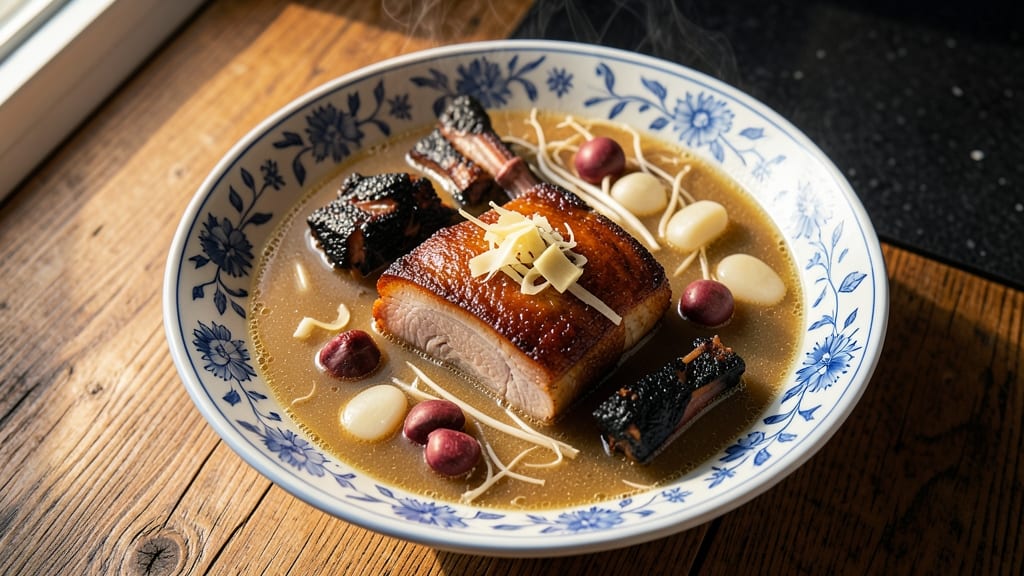
Ba Zhen Soup is a revered Chinese medicinal elixir that harmonizes pork, ginseng, and celestial herbs into a nourishing velouté. This traditional recipe balances earthy flavors with restorative properties, offering both comfort and wellness in every steaming bowl. The key lies in slow-simmered pork broth infused with ginseng and eight precious herbs—each playing a role in tonifying vitality.
The preparation begins with tender pork bones and meat, simmered for hours to extract deep umami richness. Ginseng, often called the "king of herbs," is soaked to preserve its potency, while the eight herbs (like astragalus and codonopsis) meld into the broth for their adaptogenic benefits.
Slippery rice noodles, added at the end, absorb the fragrant broth, creating a silky texture that soothes both body and soul.
What emerges is a golden, aromatic soup that's more than just a meal—it's a tonic for immunity and digestion. The pork remains tender, the broth deeply flavorful, and the noodles perfectly al dente, all while retaining the herbs' medicinal essence.
This dish embodies the Chinese principle of "food as medicine," where every ingredient serves a purpose beyond taste.
Serve this nourishing soup during convalescence or as a weekly tonic to support overall well-being. The process demands patience, but the results—both in flavor and health benefits—are unparalleled. Let's create this time-honored remedy in your own kitchen.
Ingredients for ba zhen soup
Pork bones, eight medicinal herbs, and slippery rice noodles create this revered Chinese elixir.
| Ingredient | Amount | Notes |
|---|---|---|
| Pork Bones 🍖 | 2 lb | Marrow-rich for depth of flavor |
| Pork Shoulder 🥩 | 1 ½ lb | Cut into 2-inch chunks |
| Fresh Ginseng Root 🌿 | 1 oz | Sliced, organic preferred |
| Astragalus Root 🌱 | 1 oz | Dried slices, high quality |
| Codonopsis Root 🌱 | 1 oz | Dried, earthy flavor |
| Rehmannia Root 🌱 | ½ oz | Dried, medicinal properties |
| Schisandra Berries 🍇 | 1 tbsp | Dried, tart-sweet |
| Liquorice Root 🌱 | ½ oz | Dried, sweet undertones |
| Fresh Ginger Root 🧄 | 2 tbsp | Grated, aromatic |
| Slippery Rice Noodles 🍜 | 8 oz | Dried, wide variety |
| Shaoxing Wine 🍷 | ½ cup | Dry, aromatic |
| Rock Sugar 🍬 | 2 tbsp | For subtle sweetness |
| Sea Salt 🧂 | 1 tsp | Fine grain, mineral-rich |
| Green Onions 🧅 | 4 whole | Sliced for garnish |
The foundation begins with pork bones and shoulder—marrow-rich bones are essential for deep umami, while the shoulder adds tenderness. For the herbs, prioritize organic or high-quality dried varieties from Asian specialty markets like H Mart or 99 Ranch Market. Look for vibrant colors: ginseng should be plump and moist, astragalus and codonopsis should be light brown without dark spots. Fresh ginger is non-negotiable here—organic ginger with tight skin and no soft spots works best. Shaoxing wine adds complexity; Ming Court or Yanghe brands provide authentic flavor. Store dried herbs in airtight containers away from light to preserve their potency for up to 12 months.
No fresh ginseng? High-quality dried ginseng works—simply soak it longer. Substitute astragalus with dang gui root if unavailable, though the flavor profile will shift slightly. For the noodles, slippery rice noodles are ideal, but vermicelli can be used in a pinch (though texture will differ). Rock sugar can be replaced with palm sugar for a more authentic taste. The Shaoxing wine can be omitted entirely if unavailable, though it contributes significantly to the soup's depth. For a vegetarian adaptation, mushroom broth replaces pork, and shiitake mushrooms add umami richness.
This soup demands patience—4-6 hours of simmering is ideal for extracting maximum flavor. Store the finished broth in glass containers in the refrigerator for up to 5 days or freeze for 3 months. Reheat gently on low heat, adding a splash of water if needed. The noodles are best added fresh when serving, but you can parboil them ahead and store separately for convenience. For optimal freshness, prepare the herbs and ginger just before simmering to preserve their aromatic qualities. The soup's restorative properties are best enjoyed fresh, though leftovers retain their medicinal benefits when stored properly.
Why You'll Love This Recipe
- One-Pot Magic: I swear by this recipe because it’s all in one pot—no chopping boards, no mess, just toss in the pork bones, shoulder, and herbs, then let time do the work. The bones render down while the roots simmer, and honestly? That’s my kind of cooking.
- Rich Without Effort: Between us, the pork shoulder turns fall-apart tender, and those roots—ginseng, astragalus, codonopsis—infuse the broth with this deep, earthy sweetness that just hits different. No fancy techniques, just patience and flavor.
- Weeknight to Weekend: Make a big batch on Sunday, and you’ve got lunch or dinner covered for days. My freezer’s always stocked with portions—perfect for when I’m too tired to cook or when unexpected guests show up. (Yes, even on a Tuesday night.)
- Budget-Boosting Powerhouse: Pork bones and shoulder stretch into gallons of soup, and those roots? They’re cheaper than you’d think if you buy in bulk. I’ve turned a $15 haul into enough meals for a week—no waste, just pure value.
Step-by-step instructions for ba zhen soup
Master this traditional Chinese herbal broth technique for a velvety, nutrient-rich foundation.
Prepare the Meat and Herbs for Cooking
Begin by rinsing the 2 lb pork bones and 1.5 lb pork shoulder under cold water, then pat them completely dry with paper towels. This step is crucial—any moisture will prevent proper browning and flavor extraction. Cut the pork shoulder into 2-inch chunks using a sharp cleaver, ensuring even-sized pieces for consistent cooking.
Next, prepare the medicinal herbs: slice the 1 oz fresh ginseng root into thin pieces, while the dried roots (1 oz astragalus, 1 oz codonopsis, 0.5 oz rehmannia, and 0.5 oz liquorice) should be lightly crushed between your palms to release their aromatic oils. Rinse the 1 tbsp schisandra berries briefly to remove any dust, then drain well. Grate the 2 tbsp fresh ginger root using a fine grater or microplane—its bright aroma will permeate the broth.
Char the Meat and Herbs for Depth of Flavor
Heat a large pot over medium-high heat and add the pork bones and shoulder chunks. Let them sear undisturbed for 8-10 minutes, turning occasionally, until they develop a deep golden-brown crust. This caramelization creates the rich umami foundation of the soup. Remove the meat and set aside temporarily.
In the same pot, add the prepared herbs and ginger, stirring constantly for 2-3 minutes until they begin to release their fragrance. The dried roots will darken slightly—this indicates they're releasing their medicinal properties. Immediately add the 0.5 cup Shaoxing wine and scrape up any browned bits from the bottom of the pot. This deglazing step captures all the concentrated flavors you've built.
Simmer the Broth for Maximum Extraction
Return the meat to the pot and add 8 cups of cold water (enough to cover the ingredients by about 2 inches). Bring to a rolling boil, then reduce heat to maintain a gentle simmer. Skim off any foam that rises to the surface during the first 15 minutes of cooking—this ensures a clear, clean broth.
Cover the pot and simmer for 2 hours, stirring occasionally to prevent the meat from sticking. The broth should reduce slightly and develop a deep amber color. After 2 hours, add the 2 tbsp rock sugar and 1 tsp sea salt, stirring until fully dissolved. The sugar will balance the earthy herbal notes while the salt enhances the meat's natural flavor. Continue simmering uncovered for another 30 minutes to allow the flavors to meld completely.
Prepare and Cook the Noodles
While the broth simmers, prepare the 8 oz slippery rice noodles according to package instructions—typically soaking in hot water for 5-8 minutes until pliable but still slightly firm. Drain and rinse briefly with cold water to stop the cooking process. The noodles should be tender but not mushy when bitten.
Slice the 4 whole green onions into 1-inch pieces, separating the white and green portions. Reserve the white portions for serving, and set the green portions aside for garnish. Just before serving, add the prepared noodles to the broth and cook for 2-3 minutes, allowing them to absorb the rich herbal flavors without becoming overcooked.
Serve with Traditional Garnishes
Ladle the hot broth and noodles into deep bowls, dividing the white portions of the green onions evenly among servings. The soup should have a velvety texture with visible strands of noodles and a delicate balance of sweet, salty, and herbal notes. Each spoonful should deliver both nourishment and complex flavor—this is the hallmark of a well-prepared Ba Zhen Soup.
For an authentic presentation, serve immediately with the green onion tops sprinkled on top. The contrast between the vibrant garnish and the deep amber broth creates a visually striking dish that's as beautiful as it is nourishing. The soup's medicinal properties make it particularly beneficial during convalescence or as a restorative tonic.
Pro Tips For Making Ba Zhen Soup
- Blister Bones First: I used to skip this step, thinking it was just for show—but those blackened patches on your pork bones? That’s where the collagen really breaks down. Sear them over high heat until they darken in spots, then rinse off the char before simmering. The soup will be richer, and you’ll taste the difference in the first sip.
- Slice Ginseng Thin: Thick chunks of fresh ginseng? No thanks. You want every bite to carry that earthy warmth, so slice it paper-thin—like you’re shaving it with a knife. Thicker pieces turn to mush and hide in the broth instead of infusing it evenly. (Yes, it takes patience, but it’s worth it.)
- Don’t Crowd the Pot: I learned this the hard way—packing pork shoulder and bones too tightly means the meat steams instead of rendering fat. Leave space between ingredients, and if your pot is small, work in batches. The broth needs room to breathe, or you’ll end up with a greasy, murky liquid instead of a clear, golden elixir.
- Simmer Low and Long: Ba zhen soup isn’t a quick fix. After the initial boil, drop the heat to the lowest setting where it’s still bubbling—just a whisper of movement. Three hours minimum, four if you can swing it. Rushing this step means the herbs won’t release their goodness, and the pork won’t melt into the broth like it’s supposed to. (Your future self will notice the difference.)
Dietary considerations for these flavors
Vegetarian Adaptation
For a vegetarian version, replace the pork with shiitake mushrooms and dried king oyster mushrooms—about 1 lb total—to replicate the umami depth. Soak the mushrooms in hot water for 20 minutes to rehydrate, then use the soaking liquid as part of your 8 cups broth.
Add 1 tbsp soy sauce and 1 tsp sesame oil to enhance savory notes. The herbs will still infuse beautifully, though the broth will be lighter in color. Garnish with extra green onions and a drizzle of chili oil for warmth. 🌱
Gluten-Free Considerations
This recipe is naturally gluten-free, but always verify that your dried herbs and Shaoxing wine (or substitute) contain no wheat additives. Use a dedicated pot if you're sensitive to cross-contamination. For extra safety, choose a gluten-free soy sauce if adding to the vegetarian version.
The slippery rice noodles are typically gluten-free, but check the package—brands like Thai Kitchen offer certified gluten-free options. 🍜
Allergen Awareness
Watch for potential allergens: the pork contains sulfites if not organic, and some dried herbs may carry traces of mold spores. If sensitive, source herbs from reputable suppliers like Mountain Rose Herbs, which test for purity.
For nut allergies, ensure no cross-contamination during herb preparation. The recipe itself is free from common allergens like dairy, eggs, and shellfish, making it widely accessible. Always store herbs in airtight containers to prevent mold growth. ⚠️
Low-Sodium Options
Reduce the 1 tsp sea salt to ½ tsp and omit the soy sauce in vegetarian versions to control sodium. Boost flavor with extra rock sugar (up to 3 tbsp) or a splash of coconut aminos instead.
The herbs naturally provide depth, so the broth will still taste rich and satisfying. For added umami, include 1 tbsp dried shiitake mushrooms in the herb blend. 💡
Keto-Friendly Adjustments
Replace the slippery rice noodles with zucchini noodles (about 4 medium zucchinis, spiralized) for a low-carb option. Simmer the zucchini noodles in the broth for just 1-2 minutes to prevent mushiness. The pork provides ample protein, while the herbs deliver fiber and nutrients without carbs.
Skip the rock sugar and use erythritol instead if needed. This version keeps the soup's nourishing properties while fitting keto diets. 🥦
Nutrition facts
Frequently asked questions
What makes Ba Zhen Soup different from other Chinese medicinal soups?
Ba Zhen Soup stands out because of its unique combination of eight precious herbs (including ginseng, astragalus, and codonopsis) and pork, creating a balanced flavor profile that's both savory and subtly sweet. Unlike simpler herbal soups, this recipe emphasizes a 4-6 hour simmer to extract maximum medicinal properties while maintaining rich umami from the pork. The addition of slippery rice noodles at the end makes it more substantial than broth-only soups.
Can I substitute any of the eight herbs if I can't find them all?
Yes, but with care! The core herbs (ginseng, astragalus, codonopsis) are essential for the soup's medicinal benefits. For the remaining herbs, you can substitute similar properties: dang gui for rehmannia, goji berries for schisandra, or extra licorice root for depth. Always maintain a 1:1 ratio by weight when substituting. If missing multiple herbs, focus on keeping the earthy-sweet balance intact with what you have available.
How long can I store the finished broth, and how should I reheat it?
The finished broth keeps well in glass containers in the refrigerator for up to 5 days or frozen for 3 months. To reheat, place the sealed container in a pot of simmering water (bain-marie) for 15-20 minutes—this preserves the delicate herbal flavors. Never microwave, as it can break down the beneficial compounds. Add a splash of water if the broth thickens too much during reheating.
Is Ba Zhen Soup safe to eat daily?
While this soup offers excellent health benefits, it's best enjoyed 2-3 times per week rather than daily. The combination of ginseng and other adaptogens provides potent effects on energy and immunity, but overconsumption may cause digestive sensitivity or insomnia in some individuals. Pregnant women and those with high blood pressure should consult a healthcare provider before regular consumption. The pork content also makes it a richer meal than vegetable-based soups.
Why does my Ba Zhen Soup taste bitter?
Bitterness typically comes from over-simmering the herbs or using low-quality dried roots. To fix this: reduce simmering time to 3-4 hours maximum, and ensure your herbs are fresh (no dark spots or musty smells). Add 1 extra tbsp rock sugar or a pinch of palm sugar to balance flavors. For future batches, soak the dried herbs in warm water for 10 minutes before adding to the broth to mellow their intensity.