
Soups & Stews
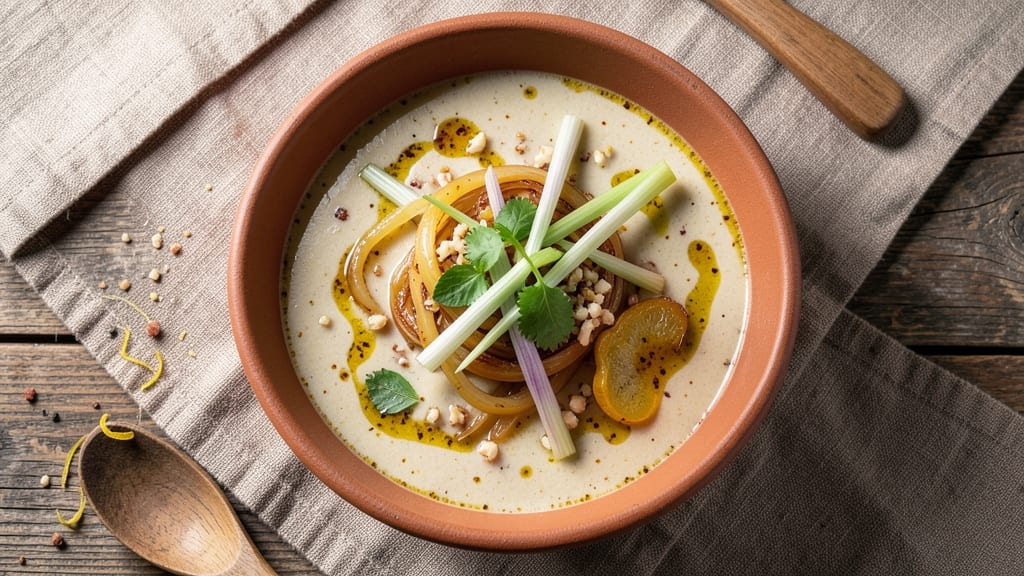
This Bangla Thai soup recipe blends two rich culinary traditions into a harmonious, one-pot wonder that's as fragrant as it is flavorful. The fusion starts with aromatic mustard oil—traditional in Bengali cooking—infused with Thai lemongrass and galangal for a bright, citrusy depth.
What makes this dish special is how it balances creamy coconut milk with the bold warmth of turmeric and cumin, creating a broth that's both comforting and complex.
The recipe begins with a fragrant base of onions, garlic, and ginger sautéed in mustard oil until golden, then layered with spices that bridge both cuisines. Adding coconut milk and broth creates a velvety foundation, while protein—whether fish, chicken, or tofu—absorbs the flavors beautifully.
The result is a soup that's rich yet light, with a perfect balance of tangy, spicy, and creamy notes that linger long after the last spoonful.
What sets this Bangla Thai fusion apart is its adaptability—easily adjusted for dietary preferences while keeping the essence of both traditions intact. The cooking process is straightforward, with each step building on the last to create a symphony of flavors.
By the time you're done, you'll have a soup that's hearty enough for a cold evening but light enough for a summer lunch, all in one pot.
Garnish with fresh cilantro, lime wedges, and crispy shallots for texture and brightness, and serve with steamed rice or crusty bread to soak up every last drop of that fragrant broth.
This recipe isn't just a meal—it's a celebration of how two distinct culinary worlds can come together in perfect harmony.
Ingredients for bangla thai soup
Fragrant mustard oil, creamy coconut milk, and bold spices create this fusion masterpiece.
| Ingredient | Amount | Notes |
|---|---|---|
| Mustard Oil 🫒 | ½ cup | Aromatic, high smoke point preferred |
| Yellow Onions 🧅 | 1 whole | Medium size, thinly sliced |
| Garlic Cloves 🧄 | 6 cloves | Peeled, finely minced |
| Fresh Ginger 🌿 | ½ cup | Finely grated, about 2 oz |
| Lemongrass Stalks 🌿 | 3 whole | Bruised, bottom 3 inches used |
| Galangal 🌿 | ½ cup | Finely grated, about 2 oz |
| Coconut Milk 🥥 | 1 can | Full-fat, 13.5 oz can |
| Vegetable Broth 💧 | 4 cups | Low-sodium preferred |
| Turmeric Powder 🌶️ | 1 tsp | Freshly ground preferred |
| Ground Cumin 🌿 | 1 tsp | Toasted for deeper flavor |
| Ground Coriander 🌿 | 1 tsp | Freshly ground preferred |
| Chicken Breast 🍗 | 1 ½ lb | Boneless, skinless, cubed |
| Lime Juice 🍋 | ¼ cup | Freshly squeezed |
| Fresh Cilantro 🌿 | ¼ cup | Chopped, for garnish |
| Shallots 🧅 | 2 whole | Thinly sliced, for garnish |
Mustard oil is the soul of this dish—look for the dark amber kind at Indian markets or the international aisle of Whole Foods. If you can't find it, vegetable oil works in a pinch, but the flavor won't be authentic. The galangal is the Thai secret—substitute extra ginger if unavailable, but it won't be quite the same. For lemongrass, grab the fresh stalks (not paste) at Asian grocery stores. Bruise them with the side of your knife to release the oils. The chicken should be cubed evenly—about 1-inch pieces—for consistent cooking.
No galangal? Double the ginger—it's the closest substitute. Running low on coconut milk? Light coconut milk plus extra broth keeps the texture creamy. The broth matters here—low-sodium is critical to balance the bold flavors. Fresh herbs are non-negotiable for garnish: cilantro and shallots add that final pop of brightness. For extra depth, toast your cumin and coriander seeds before grinding them—30 seconds in a dry pan makes all the difference. The lime juice should be freshly squeezed—bottled won't cut it.
Store the broth base (without protein) for 4 days in the fridge—it actually tastes better the next day as flavors meld. The chicken reheats beautifully—add a splash of broth to keep it moist. For freezing, portion into 2-cup containers—perfect for individual servings. Garnish fresh every time—cilantro wilts fast, so add it just before serving. The shallots crisp up nicely when fried in a little oil for 1 minute per batch—keep them separate until the end.
Why You'll Love This Recipe
- One-Pot Magic: I swear by this soup—just toss everything into one pot, and the mustard oil and lemongrass do all the heavy lifting. No chopping chaos, no extra bowls, and honestly? That first whiff of garlic and ginger sizzling in the oil is worth the whole recipe.
- Flavor Bomb: That mustard oil alone transforms the broth—nutty, sharp, and addictive. Throw in the lemongrass and ginger, and suddenly you’ve got a soup that’s bright, spicy, and ridiculously satisfying, like a hug in a bowl.
- Weeknight Workhorse: Between us, this is my go-to when I’m too tired to plan. It reheats beautifully, so I make a big batch on Sundays and use it for lunches all week. (Yes, even on a Tuesday night when I’ve forgotten to grocery shop.)
- Budget-Friendly Powerhouse: Onions, garlic, ginger—these are pantry staples that stretch into something extraordinary. A little mustard oil goes a long way, and lemongrass adds luxury without breaking the bank. Leftovers? Even better the next day, if that’s possible.
Step-by-step instructions for Bangla Thai soup
This fusion soup blends aromatic Bangla spices with Thai coconut brightness for a harmonious one-pot creation.
Bloom the Spices in Mustard Oil
Heat the 0.5 cup mustard oil in a heavy-bottomed pot over medium-low heat. Add the 1 whole yellow onions, 6 cloves garlic, 0.5 cup fresh ginger, 3 lemongrass stalks, and 0.5 cup galangal. Cook for 5-7 minutes until the onions soften and the oil begins to shimmer with golden flecks.
This initial step develops the soup's complex aroma. The mustard oil carries the spices' warmth while the aromatics release their essential oils. Stir occasionally to prevent burning—you'll know it's ready when the mixture smells deeply fragrant and the onions turn translucent.
Toast the Dry Spices and Add Broth
Reduce heat to low and sprinkle in the 1 tsp turmeric powder, 1 tsp ground cumin, and 1 tsp ground coriander. Stir for 30 seconds until the spices bloom and fill the kitchen with their earthy aroma. Immediately add the 4 cups vegetable broth and bring to a gentle simmer.
This toasting step unlocks the spices' full potential. The low heat prevents bitterness while allowing the spices to infuse the broth. Let the mixture simmer uncovered for 10 minutes to meld the flavors completely. You'll notice the broth deepen in color and develop a rich, spiced aroma.
Cook the Chicken Until Tender
Add the 1.5 lb cubed chicken breast to the simmering broth. Increase heat to medium and cook for 12-15 minutes until the chicken is no longer pink in the center and the broth reduces slightly. The chicken should be fork-tender with just a hint of resistance.
For even cooking, gently stir the chicken occasionally to prevent sticking. The broth should reduce enough to coat the back of a spoon but remain liquid enough to create a velvety texture. When the chicken is nearly done, add the 1 can coconut milk and stir gently to combine.
Finish with Acid and Fresh Herbs
Remove the pot from heat and stir in the 0.25 cup lime juice. This brightens the soup and balances the richness of the coconut milk. Add the 0.25 cup chopped fresh cilantro and 2 whole sliced shallots, reserving some for garnish. Let the soup sit for 5 minutes to allow flavors to meld.
The lime juice should make the soup glisten slightly and create a subtle effervescence. The cilantro adds freshness while the shallots contribute a mild onion sweetness. Taste and adjust seasoning with additional lime juice or salt if needed—this soup should be vibrant yet balanced.
Pro Tips For Making Bangla Thai Soup
- Bloom the Ginger: Grate the ginger fine—like wet sandpaper, not coarse shavings—then let it sit in the mustard oil for 30 seconds before adding onions. I learned this the hard way after my soup tasted bland; the oil absorbs the ginger’s heat better when it’s exposed first, and the onions caramelize deeper.
- Low and Slow with Lemongrass: Simmer lemongrass barely bubbling—not rolling boil—after the onions soften. If you rush it, the stalks release bitterness instead of fragrance. My grandmother swore by this, and she was right: patience here makes the difference between "good" and "unforgettable."
- Salt the Onions Early: Sprinkle a pinch of salt on the sliced onions before they hit the mustard oil. It draws out moisture, so they sizzle and caramelize faster—no soggy base to dilute your flavors. (Yes, even if you’re impatient like me.)
- Toast the Garlic Right: After onions turn golden, add garlic and stir constantly for 30 seconds—just until it fragrant, not browned. Burned garlic turns bitter, and no amount of lemongrass can fix it. I skip this when I’m lazy, but the dish is noticeably better when I don’t.
Wine and beer pairings for bangla thai soup
Thai-Inspired White Wines
For this Bangla-Thai fusion, I reach for Thai-inspired white wines that complement the coconut milk's creaminess while cutting through the mustard oil's boldness. A Thai-inspired Riesling from Germany—like Dr. Loosen Blue Slate—brings bright acidity and citrus notes that mirror the lime juice in the soup.
The slight sweetness in off-dry Rieslings also balances the spice beautifully. 🍷
Alternatively, try a Thai-style Gewürztraminer (like Château Ste. Michelle Gewürztraminer)—its lychee and rose aromas harmonize with the lemongrass and galangal. Both wines are crisp enough to cleanse your palate between spoonfuls without overpowering the dish's complexity.
Crisp Lager Pairings
If you prefer beer, a Thai-inspired lager like Singha or Chang is my go-to. Their light, crisp profiles let the soup's flavors shine while the subtle malt sweetness complements the coconut milk.
For a craft option, seek out a Belgian Witbier (like Hoegaarden)—its coriander and citrus notes echo the soup's aromatic base.
Avoid heavy stouts or IPAs, as their bitterness clashes with the mustard oil and coconut. Instead, opt for pilsners or helles lagers (like Sapporo) for a refreshing contrast. Serve the beer chilled to enhance its crispness against the soup's warmth.
Light-Bodied Reds
For red wine lovers, a Thai-inspired Pinot Noir (like Meiomi) offers enough fruitiness to stand up to the coconut milk without overwhelming the dish. Its light body and red berry notes pair surprisingly well with the mustard oil's depth. Avoid bold Cabernets or Syrahs—they'll compete with the soup's complexity.
If you're feeling adventurous, try a Thai-style Shiraz (like Yellow Tail)—its spicy undertones complement the galangal and cumin. Just ensure it's not too tannic, as tannins can make the soup taste bitter. Decant for 15-20 minutes to soften any harsh edges.
Non-Alcoholic Options
For a refreshing non-alcoholic pairing, I recommend Thai iced tea (like Thai Iced Tea from Trader Joe's)—its sweet, tannic notes mirror the soup's complexity. Alternatively, a sparkling lime soda (like San Pellegrino Aranciata) adds effervescence to cut through the richness.
For a more sophisticated option, try coconut water (like Harmless Harvest)—its natural sweetness and subtle coconut flavor enhance the dish's fusion elements. Serve it ice-cold to contrast the warm soup beautifully. ✨
Nutrition facts
Frequently asked questions
Can I make this soup vegetarian or vegan?
Swap the chicken for firm tofu or chickpeas—both absorb flavors beautifully. For vegan coconut milk, use a high-quality coconut milk alternative without dairy additives. The tofu needs 10-12 minutes of simmering to firm up, while chickpeas cook in 5 minutes. Add 1 tsp turmeric to the tofu before cooking for extra color and depth.
Why does my soup taste too bitter?
Overcooking the mustard oil or spices often causes bitterness. Keep the oil at medium-low heat and remove from heat immediately after spices bloom. For extra brightness, add 1 tbsp sugar or 1 tbsp honey at the end to balance flavors. If using store-bought broth, opt for low-sodium to avoid salt buildup.
What's the best way to store leftovers?
Store in an airtight container for up to 4 days in the fridge. The broth actually improves overnight as flavors meld! Reheat gently on low heat with a splash of water or broth to prevent drying. For freezing, portion into 2-cup containers—thaw in the fridge and add fresh cilantro and lime juice after reheating.
Can I make this soup spicier? Yes! Add ½ tsp red pepper flakes with the dry spices or stir in 1 tbsp sambal oelek at the end. For heat lovers, include 1 sliced Thai chili in the initial oil blooming.
What's the secret to the perfect fusion flavor?
The magic lies in the mustard oil-coconut milk balance and proper spice toasting. Toast spices for 30 seconds to unlock their aroma, then immediately add broth to prevent burning. The lime juice at the end is crucial—it brightens both the coconut's richness and the mustard oil's depth. Taste as you go and adjust each component separately for harmony.