
Soups & Stews
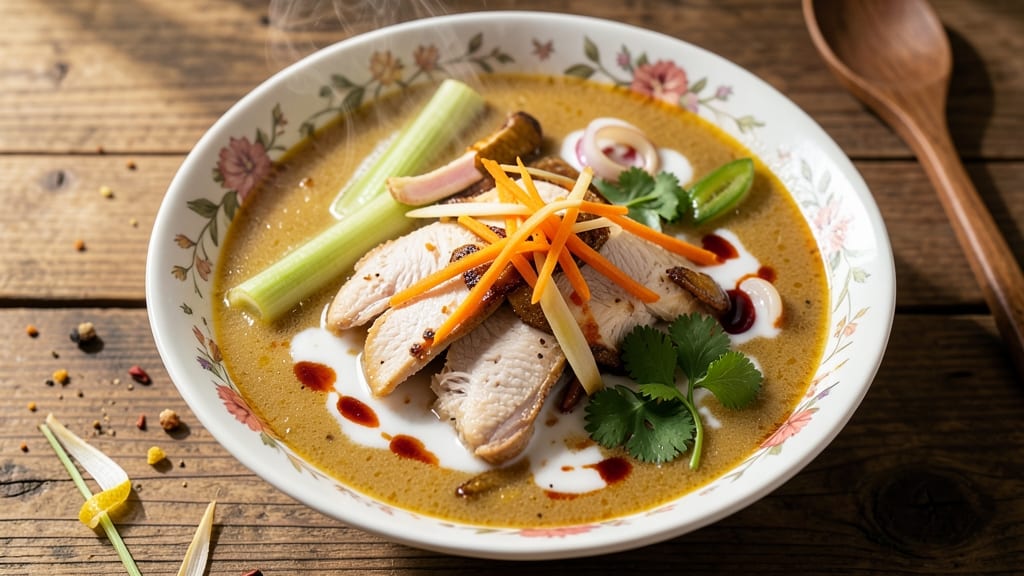
This Bangladeshi-style Thai soup recipe blends two vibrant culinary traditions into a fragrant, comforting bowl that dances with lemongrass, coconut milk, and turmeric. 🌿 The secret lies in slow simmering—where aromatic spices meld into a golden broth that feels like a warm embrace, perfect for chilly evenings or when you crave something both familiar and exciting. Unlike traditional versions, this fusion balances sweet, sour, and spicy notes with a touch of Bangladeshi warmth, creating a dish that’s impossible to resist.
The foundation starts with a rich broth infused with lemongrass, galangal, and ginger—classic Thai flavors given a Bangladeshi twist with turmeric and cumin. Protein like fish or chicken (or tofu for vegetarians) cooks tender in this fragrant base, while coconut milk adds a velvety richness that ties everything together.
The result? A soup that’s deeply satisfying yet light enough to enjoy any time of day.
What makes this recipe special is the harmony of techniques: the slow simmering from Bangladeshi cooking methods meets the bright, herbal notes of Thai cuisine. Each spoonful delivers layers of flavor—herbaceous, creamy, and just a hint of heat—with garnishes like fresh cilantro and a squeeze of lime adding brightness.
It’s the kind of dish that feels like a hug in a bowl, yet still manages to feel fresh and unexpected.
Whether you’re serving it as a main course or a light lunch, this soup is designed to impress without fuss. The ingredients are accessible, and the process is straightforward, but the result is anything but ordinary.
Ready to bring a taste of two cultures together in one pot? Let’s get started.
Ingredients for bangladeshi style thai soup
These aromatic ingredients blend Thai brightness with Bangladeshi warmth for a fragrant, comforting soup.
| Ingredient | Amount | Notes |
|---|---|---|
| Lemongrass Stalks 🌿 | 4 whole | Bruised and cut into 2-inch pieces |
| Galangal Slices 🧅 | 3 oz | Fresh, peeled and sliced thin |
| Fresh Turmeric 🌶️ | 1 tbsp | Grated, vibrant orange color |
| Fresh Ginger 🧄 | 1 tbsp | Grated, peeled |
| Coconut Milk 🥥 | 1 can | Full-fat, 13.5 oz can |
| Chicken Breast 🍗 | 1 ½ lb | Boneless, skinless, cut into chunks |
| Fish Fillets 🐟 | 1 lb | White fish like cod or snapper |
| Tofu 🥬 | 14 oz | Firm, pressed and cubed |
| Cumin Seeds 🌿 | 1 tsp | Toasted lightly for aroma |
| Fresh Cilantro 🌿 | ½ cup | Chopped, for garnish |
| Lime Juice 🍋 | 2 tbsp | Freshly squeezed |
| Fish Sauce 🍶 | 1 tbsp | High-quality, for umami |
| Palm Sugar 🍬 | 2 tbsp | Or substitute brown sugar |
| Kaffir Lime Leaves 🍋 | 2 whole | Torn into strips |
| Sea Salt 🧂 | 1 ½ tsp | Adjust to taste |
| Black Peppercorns 🌶️ | ½ tsp | Crushed, freshly ground |
The galangal and lemongrass are the soul of this soup—look for fresh, vibrant galangal at Asian markets or the international aisle. Thai Kitchen or Mae Ploy brands often carry it, but if you can't find it, ginger is a decent (though less aromatic) substitute. Fresh turmeric is a must—ground turmeric lacks the same depth. For the coconut milk, full-fat is essential—light versions won't give that creamy richness. I usually grab Thai Kitchen coconut milk because it's consistently flavorful, but any full-fat brand works. The fish sauce? Red Boat is the gold standard, but even budget brands add depth.
No galangal? Double the ginger and add a pinch of cardamom for complexity. Using tofu instead of fish or chicken? Press it well and marinate in lime juice before adding to prevent sogginess. The kaffir lime leaves can be tricky to find—substitute lime zest plus a few drops of lime oil if needed. Palm sugar is ideal, but brown sugar works in a pinch. For the fish sauce, vegetarians can use soy sauce plus a dash of miso for umami. The broth should simmer slowly—at least 30 minutes—to let the spices meld properly.
This soup tastes even better the next day as flavors deepen. Store in an airtight container for 3-4 days in the fridge or freeze for up to 3 months. I like to portion it into individual containers so I can grab a bowl for lunch—just reheat gently with a splash of water. The garnishes (cilantro, lime) should be added fresh right before serving. If you make a big batch, freeze half immediately—it reheats beautifully and tastes like it was just made.
Why You'll Love This Recipe
- No Chopping Chaos: I swear by this—just pound the lemongrass and galangal lightly with a mortar or the flat side of a knife. No dicing, no mincing, no mess. That’s it. The ginger and turmeric? Same story. You’ll have your broth base ready in under five minutes.
- Creamy Without Guilt: The coconut milk makes this soup dangerously comforting, but here’s the secret: the galangal and fresh turmeric cut through the richness like a cool breeze. It’s velvety, sure, but with a bright, herbal kick that keeps it light. My husband finishes his bowl first every time.
- Leftovers That Beg: This soup tastes just as good the next day—better, even. The flavors meld overnight, deepening that earthy galangal warmth. I double the batch on Sundays because it’s my go-to lunch for the week, and honestly? No one complains when I serve it cold with a squeeze of lime.
- Pantry Stretch: Between us, I keep galangal and turmeric on hand year-round because they’re my flavor multipliers. A few stalks of lemongrass and a can of coconut milk make this budget-friendly, but it still feels like a restaurant-worthy meal. My college budget would’ve wept happy tears.
Step-by-step instructions for Bangladeshi-style Thai soup
Build this aromatic fusion soup layer by layer—each ingredient unlocks deeper flavor.
🔥 Step 1: Toast Aromatics for Maximum Depth
Heat a heavy pot over medium heat and dry-toast the 1 tsp cumin seeds for 30 seconds until fragrant. Immediately add the 4 whole lemongrass stalks (cut into 2-inch pieces), 3 oz galangal slices, 1 tbsp fresh turmeric, and 1 tbsp fresh ginger—all should sizzle gently without browning.
This step develops the foundation of your soup's complex aroma. The cumin seeds release their earthy notes first, then the lemongrass and galangal infuse their citrusy, peppery punch into the oil. Stir constantly for 2 minutes until the galangal softens slightly—you'll smell that signature Thai-Bangladeshi herbal brightness.
🍳 Step 2: Build the Coconut-Turmeric Base
Pour in the 1 can coconut milk and bring to a gentle simmer over medium-low heat. Add the 2 whole kaffir lime leaves (torn into strips) and 1.5 tsp sea salt, then stir in the 2 tbsp palm sugar until dissolved. The mixture should smell richly floral with coconut's creamy sweetness.
Simmer uncovered for 5 minutes until the coconut milk separates slightly at the edges—that's when you know the base is ready. Here's where the magic happens: the turmeric's golden hue will deepen, and the coconut will develop a nutty aroma. Taste and adjust seasoning—this is your flavor benchmark before adding proteins.
👨🍳 Step 3: Cook Proteins in Stages
Add the 1.5 lb chicken breast chunks first and poach for 8 minutes until just cooked through (internal temp 165°F). Remove with a slotted spoon and set aside. In the same pot, add the 1 lb fish fillets and cook for 4-5 minutes until opaque and flaky.
Finally, add the 14 oz tofu cubes and simmer for 2 minutes—just enough to warm through. The key here is timing: chicken needs the longest cook, fish comes next, and tofu gets the briefest treatment to maintain its texture. Keep the heat gentle to prevent curdling the coconut milk.
🥘 Step 4: Finish with Bright Acidic Balance
Return all proteins to the pot and stir in the 1 tbsp fish sauce and 2 tbsp lime juice. Add the 0.5 tsp crushed black peppercorns and simmer for 3 minutes to meld flavors. The soup should smell vibrant—citrusy, umami-rich, with herbal undertones.
Taste and adjust seasoning: the fish sauce should add depth, lime should brighten, and pepper should add subtle heat. If the coconut milk has separated too much, whisk vigorously to re-emulsify. The final soup should be creamy yet balanced, with each ingredient contributing its distinct character.
🍽️ Step 5: Serve with Fresh Garnish
Ladle the soup into bowls and garnish immediately with 0.5 cup chopped fresh cilantro. The herb's freshness cuts through the richness of the coconut and adds a final layer of complexity. Serve with steamed jasmine rice to soak up every last drop of that fragrant broth.
This fusion soup delivers the best of both worlds: Thai's aromatic herbs meet Bangladeshi comfort food traditions. The lemongrass and galangal provide the signature Thai brightness, while the coconut milk and fish sauce offer that familiar Bangladeshi heartiness. Each spoonful should be a perfect harmony of textures and flavors.
Pro Tips For Making Bangladeshi Style Thai Soup
- Bruise, Don’t Chop: DESCRIPTION: Slap that lemongrass and galangal with the flat side of your knife—hard enough to break fibers but not turn it into mush. I learned this the hard way when my soup tasted like a bland smoothie instead of aromatic magic. (Yes, even if you’re impatient like me.)
- Toast the Spices: DESCRIPTION: Dry-toast your turmeric and ginger slices in the pot for 30 seconds before adding broth—just until you smell that earthy, toasty kick. Skipping this means your soup will taste like a missed opportunity.
- Strain the Coconut Milk: DESCRIPTION: Unless you’re going for a thick, chunky texture, strain the coconut milk through a fine-mesh sieve or cheesecloth. The last thing you want is grittiness ruining the creamy finish—trust me, I’ve served it both ways.
- Simmer, Don’t Boil: DESCRIPTION: Keep the heat low enough that the broth barely bubbles—gentle simmering lets the galangal and lemongrass infuse without turning bitter. I used to rush it, and the soup always ended up sharp and unpleasant. Patience here makes all the difference.
Storing and reheating your leftovers
Refrigerator Storage
Let your soup cool completely before transferring to airtight containers—I use glass Pyrex with snap-on lids for best results. Store in the fridge at 40°F or below for up to 4 days.
The flavors actually deepen overnight as the spices meld, making it taste even better the next day. 💛
For individual servings, portion into single-serving containers (like Glasslock or Rubbermaid brands) to grab and reheat quickly. The coconut milk may separate slightly—just stir vigorously before reheating to restore creaminess.
Freezer Storage
This soup freezes beautifully for up to 3 months without losing its vibrant flavors. Use quart-sized freezer bags (like Ziploc or Stasher) or glass containers with 1-inch headspace to prevent expansion cracks. Label with the date—trust me, you’ll want to save some for later! ❄️
For best texture, freeze the soup without the garnishes (cilantro and lime) and add them fresh when reheating. The proteins will stay tender, and the broth remains rich and aromatic.
Reheating Methods
Stovetop is my preferred method—gently heat over low-medium heat for 8-10 minutes, stirring occasionally. Add 2-3 tablespoons of water if the soup looks too thick, as coconut milk can separate when reheated. 🔥
For microwave reheating, transfer to a microwave-safe bowl and heat on 50% power in 2-minute intervals, stirring between each interval. Avoid full power to prevent curdling the coconut milk or overcooking the proteins.
Reviving Texture
If your reheated soup seems too thick, thin it with warm water or broth (about ¼ cup per bowl). For extra richness, stir in 1 tablespoon of coconut milk or a splash of fish sauce to restore balance.
The key is patience—let it heat through gradually for the best results.
Pro tip: If the cilantro looks wilted after reheating, sprinkle fresh on top right before serving. The bright, herby notes will wake up your taste buds and make the soup feel fresh again. ✨
Nutrition facts
Frequently asked questions
Can I make this soup without fish or chicken?
This recipe works beautifully with tofu as the sole protein. For extra flavor, marinate the tofu in 1 tbsp lime juice and ½ tsp turmeric for 15 minutes before cooking. You can also use shrimp or mushrooms for another delicious twist. The key is ensuring your protein has good texture contrast to balance the creamy coconut broth.
How can I adjust the spice level?
The recipe has a mild heat profile, but you can easily adjust it. For more spice, add ½ tsp chili flakes or 1 sliced Thai chili when toasting the aromatics. For heat lovers, stir in 1 tsp sambal oelek at the end. If you prefer less spice, simply omit the black peppercorns or reduce them to ¼ tsp. The coconut milk helps balance any heat beautifully.
What's the best way to substitute galangal?
If you can't find galangal, use double the amount of ginger plus ½ tsp cardamom powder for complexity. For an even closer substitute, mix 1 tbsp ginger with ½ tsp ground coriander. The galangal's citrusy, peppery notes are key to authentic Thai flavor, so these substitutes won't be identical but will still work well. Look for fresh galangal in Asian markets or the international aisle.
Can I make this soup in a slow cooker?
Yes! Combine all ingredients except garnishes in your slow cooker and cook on LOW for 4-5 hours or HIGH for 2-3 hours. The slow cooking enhances the flavors beautifully. Just be careful not to overcook the proteins—chicken should reach 165°F and fish should be just opaque. The coconut milk may separate slightly, so stir vigorously before serving. Add fresh cilantro and lime right before eating.
Why did my coconut milk separate?
This is completely normal when coconut milk sits or reheats. The separation happens because the fat and water separate naturally. To fix it, whisk vigorously or gently heat the soup while stirring constantly. For prevention, use full-fat coconut milk and avoid high heat. The separated soup is still delicious—just stir before serving to restore creaminess.