
Soups & Stews
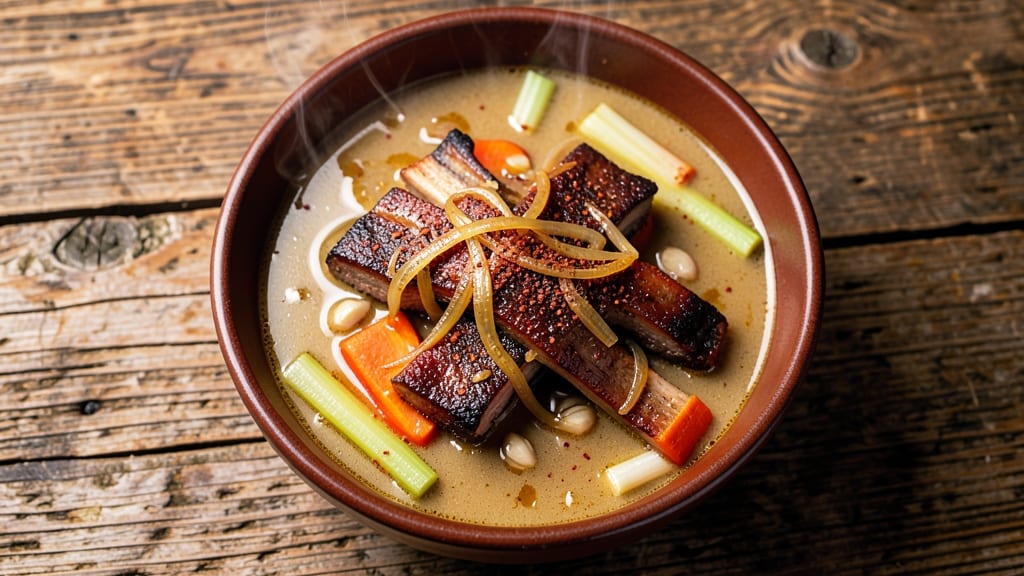
This beef back ribs soup recipe transforms tough cuts into melt-in-your-mouth tenderness through slow, smoky cooking—where every spoonful delivers rich tomato broth infused with deep, savory rib flavors.
The secret lies in a perfect balance of slow braising and aromatic spices that penetrate the meat, creating a dish that's both hearty and deeply satisfying.
What starts as a simple pot of ingredients evolves into a restaurant-quality bowl where the ribs practically fall apart at the touch of a spoon.
Professional chefs know the magic happens in the slow cook—whether your stovetop or slow cooker—where collagen breaks down over hours, transforming into a velvety broth that clings to each rib.
The recipe builds layers of flavor through caramelized onions, garlic, and smoked paprika, then lets the ribs simmer until they're so tender they separate at the bone. This isn't just soup; it's a complete meal where every component works together in perfect harmony.
The result is a bowl of soup where the ribs are fork-tender yet retain their natural meaty texture, swimming in a deep red broth that's rich with tomato, herbs, and just enough acidity to balance the smokiness.
The aroma alone will have everyone gathering around your table, and the first bite delivers that perfect marriage of smoky, savory, and slightly sweet flavors. This is comfort food at its finest—warm, inviting, and impossible to resist.
Perfect for chilly evenings or when you want to impress guests with minimal effort, this recipe scales beautifully for crowds while maintaining its depth of flavor. The leftovers reheat just as well, making it ideal for meal prep.
Here's how to create this showstopping dish that turns simple ingredients into an unforgettable experience.
Ingredients for beef back ribs soup
These 15 ingredients transform tough ribs into melt-in-your-mouth perfection with smoky, savory depth.
| Ingredient | Amount | Notes |
|---|---|---|
| Beef Back Ribs 🥩 | 4 lb | Bone-in, meaty cuts preferred |
| Yellow Onions 🧅 | 2 whole | Yellow or red, peeled |
| Garlic Cloves 🧄 | 8 cloves | Fresh, peeled and smashed |
| Carrots 🥕 | 3 whole | Medium-sized, peeled and chopped |
| Celery Stalks 🌿 | 4 whole | Fresh, trimmed and chopped |
| Smoked Paprika 🌶️ | 2 tbsp | High-quality for smoky flavor |
| Ground Black Pepper 🌶️ | 1 ½ tsp | Freshly cracked for intensity |
| Salt 🧂 | 2 tsp | Kosher or sea salt preferred |
| Tomato Paste 🍅 | ½ cup | High-quality, no sugar added |
| Beef Broth 💧 | 8 cups | Low-sodium preferred |
| Red Wine 🍷 | 1 cup | Bold dry red, like Cabernet |
| Fresh Thyme 🌿 | ¼ cup | Leaves only, finely chopped |
| Fresh Bay Leaves 🍃 | 2 whole | For aromatic depth |
| Olive Oil 🫒 | ¼ cup | Extra-virgin for richness |
| Balsamic Vinegar 🍶 | 1 tbsp | For subtle acidity balance |
The ribs are the star—look for meaty cuts with good marbling at your local butcher or Costco for the best value. Whole ribs work, but pre-cut sections save time. If you're buying whole, trim excess fat but leave some for flavor. The onions, carrots, and celery form your flavor base—fresh is best, but frozen veggies in a pinch work too. For the tomato paste, Trader Joe's or Muir Glen are my go-tos—they're rich and consistent. The smoked paprika? Penzeys has the best selection if you want to splurge, but any high-quality brand works.
No red wine? Beef broth with a splash of balsamic gets you close. The thyme can be dried at one-third the amount, but fresh is ideal. Running short on carrots? Substitute with sweet potatoes—they add natural sweetness. The balsamic vinegar might seem small, but it brightens the whole dish—don't skip it. For the broth, low-sodium is key unless you're adding extra salt. The bay leaves add depth, but if you're in a hurry, dried thyme will work too. The olive oil matters here—use something fruity and high-quality for the best flavor.
This soup tastes even better the next day as flavors meld. Keeps 4-5 days in the fridge or 3 months frozen. Portion into containers for easy lunches—just reheat with a splash of broth. The ribs will be fork-tender, but if you're short on time, braise them for 2 hours instead of 3. The broth reduces beautifully, so if you want it thicker, simmer uncovered for the last 10 minutes. Leftovers reheat perfectly—just add a little water if it's too thick.
Why You'll Love This Recipe
- Minimal Chopping Required: I swear by this trick—just dice the onions and celery roughly, then toss them straight into the pot with the ribs. No fancy julienne here; the carrots can even stay in big chunks if you’re in a rush. That garlic? Smash it with the side of your knife for maximum flavor with zero effort.
- Rich, Deep Umami Bomb: The ribs alone bring the savory punch, but the onions and celery caramelize into something magical as they simmer. Honestly, the longer you let it cook, the better it gets—think tender, fall-apart meat with a broth so flavorful you’ll want to sip it straight from the spoon.
- Leftovers That Don’t Suck: Between us, most soups turn into sad, watery meals by day three. Not this one. The ribs stay juicy, and the broth actually improves overnight—perfect for quick lunches or reheating when you’re too tired to cook. Freeze half for when you’re lazy or hosting unexpected guests.
- Budget-Friendly Protein Powerhouse: You’re getting a whole pound of beef for a fraction of the cost of steak or even brisket. The ribs break down into bite-sized pieces, so you’re not just feeding one person—this soup stretches to feed four (or more if you’re feeding hungry teens). Plus, the veggies add bulk without breaking the bank.
Step-by-step instructions for beef back ribs soup
Here's how to transform tough ribs into melt-in-your-mouth goodness in a rich, smoky broth.
Sear the Ribs for Deep Flavor
Heat the 0.25 cup olive oil in a large Dutch oven over medium-high heat until shimmering. Pat the 4 lb beef back ribs completely dry with paper towels—this ensures maximum browning. Working in batches if needed, sear the ribs on all sides for 3-4 minutes per side until deeply golden brown with crispy edges.
Here's the thing—don't crowd the pan. You want those ribs to develop that beautiful crust that'll melt into the broth later. Once all pieces are browned, transfer them to a plate and set aside. You'll notice the aroma filling your kitchen—that's flavor building right now.
Build the Aromatic Base
In the same Dutch oven, reduce heat to medium and add the 2 whole yellow onions, 8 cloves garlic cloves, 3 whole carrots, and 4 whole celery stalks. Cook for 8-10 minutes, stirring occasionally, until the vegetables soften and the onions turn translucent. This is where all that sweetness and depth start developing.
Sprinkle in the 2 tbsp smoked paprika, 1.5 tsp ground black pepper, and 2 tsp salt, stirring to coat the vegetables evenly. Let it cook for another 1 minute until fragrant. This step is crucial—it's where the smoky, peppery notes start infusing into the base of your soup.
Develop the Rich Tomato-Broth Foundation
Stir in the 0.5 cup tomato paste and cook for 2 minutes, stirring constantly, until it darkens slightly and becomes glossy. This creates a beautiful, deep color and rich flavor that'll carry through your entire soup. Pour in the 1 cup red wine and scrape up any browned bits from the bottom of the pot—this is called deglazing, and it captures all that concentrated flavor.
Add the 8 cups beef broth, 0.25 cup fresh thyme, and 2 whole fresh bay leaves. Bring everything to a gentle boil, then reduce heat to low and let it simmer uncovered for 30 minutes. This slow simmer allows all the flavors to meld together beautifully. You'll notice the broth developing a rich, reddish hue and an incredible aroma.
Cook the Ribs Until Fork-Tender
Return the seared ribs to the Dutch oven. Add the 1 tbsp balsamic vinegar and stir gently to combine. Bring everything back to a simmer, then reduce heat to low and cover partially. Let it cook for 2-2.5 hours, turning the ribs occasionally, until they're fork-tender and easily pull away from the bone.
Here's where patience pays off. The ribs should be so tender that when you lift them with a fork, they practically fall apart. The broth will have reduced slightly and become even more concentrated with flavor. If it looks like it's reducing too quickly, you can add a little water to maintain the right consistency.
Finish and Serve with Perfect Texture
Once the ribs are tender, remove them from the broth and let them cool slightly. Using tongs, carefully pick through the meat, discarding any large bones and fat. Return the meat back to the broth and stir gently to combine. Taste and adjust seasoning if needed—you might want to add a pinch more salt or pepper to balance the flavors.
Ladle the soup into bowls, making sure each serving gets a generous portion of those fall-off-the-bone ribs. The broth should be rich and flavorful, with visible pieces of meat throughout. Serve immediately while hot, and don't forget to offer some crusty bread on the side—it's perfect for soaking up all that delicious broth.
Pro Tips For Making Beef Back Ribs Soup
- Brown the Ribs First: Don’t skip the sear—pat those ribs dry, then hit them with oil and high heat until they’re deep golden. I used to rush this, and the soup never tasted as rich. Five minutes per side with a heavy pan makes all the difference.
- Chop Onions Like a Pro: Dice those yellow onions into even ¼-inch pieces—no big chunks, no slivers. I learned this the hard way: uneven cooking means some parts stay tough while others turn to mush. A sharp knife and steady hand save time and frustration.
- Don’t Overcrowd the Pot: Start with half the ribs in the pot, then add the rest once they’ve seared. I once crammed everything in at once, and the soup turned out watery. Give the meat space to release flavor without drowning in its own juices.
- Simmer Low and Slow: After the initial boil, drop the heat to a bare simmer—just enough to keep tiny bubbles breaking the surface. I used to let it rage, and the carrots and celery turned to mush. Patience here means tender meat and intact veggies.
Creative variations of this recipe
Smoky Chipotle Twist
For a smoky kick, add 1-2 chipotle peppers in adobo sauce when building the aromatic base. Blend them into the tomato paste before adding it to the pot.
This adds deep, smoky heat that pairs perfectly with the ribs. I like to add ½ tsp ground cumin too—it complements the chipotle beautifully. 🌶️
Asian-Inspired Ginger Version
Transform this into a fusion dish by adding 3 tbsp fresh ginger (minced) and 1 tbsp grated galangal when searing the ribs. Swap the red wine for 1 cup coconut milk> and add 1 tbsp fish sauce> for umami depth.
Finish with fresh cilantro and lime wedges for a bright contrast.
White Wine & Mushroom Upgrade
Swap the red wine for 1 cup dry white wine> and add 8 oz sliced cremini mushrooms> with the onions. The mushrooms add earthy depth, while the white wine keeps the broth bright.
I also add ½ tsp nutmeg> when simmering the broth for a subtle warmth that pairs wonderfully with the ribs.
Spicy Cajun Style
For a Cajun-inspired version, add 1 tbsp Cajun seasoning> (like Tony Chachere's) when searing the ribs. Include ½ tsp cayenne pepper> and 1 tsp smoked salt> to the spice blend.
Serve with hot sauce on the side and garnish with chopped green onions for freshness. This version has serious heat but incredible depth.
Hearty Vegetable Loaded
Make this a vegetable-packed meal by adding 1 diced sweet potato>, 1 cup chopped kale>, and 1 cup diced butternut squash> with the carrots and celery. The sweet potatoes add natural sweetness while the kale brings a fresh, slightly bitter contrast.
Simmer the kale for just 5 minutes> at the end to maintain its texture.
Slow Cooker Adaptation
For a hands-off version, brown the ribs in a skillet first, then transfer everything to a 6-quart slow cooker>. Cook on low for 8 hours> or high for 5 hours>, adding ½ cup water> if the broth reduces too much.
The slow cooker method is perfect for busy days—just dump everything in and let it work its magic. 💫
Nutrition facts
Frequently asked questions
How do I know when beef back ribs are fully cooked in soup?
The ribs are done when they're fork-tender and easily pull away from the bone. Test by lifting a piece with tongs—it should separate cleanly with minimal resistance after 2-2.5 hours of simmering. The broth will also have reduced slightly and developed a rich, concentrated flavor. If they're still tough, cook another 30 minutes covered.
Can I use frozen beef back ribs instead of fresh?
Fresh ribs work best for this recipe, but if you must use frozen, thaw them completely in the refrigerator first. Never thaw at room temperature, as this promotes bacterial growth. For frozen ribs, add 30-45 extra minutes to the cooking time to ensure full tenderness. The texture may be slightly less crispy, but the flavor will still be rich.
What's the best way to store leftovers?
Store in an airtight container in the fridge for up to 4-5 days or freeze for 3 months. For reheating, warm gently on the stove with a splash of broth or water to restore moisture. The ribs will be even more tender after resting overnight, making them perfect for quick lunches. Portion into individual containers for easy grab-and-go meals.
Why does my broth look too thin or watery?
This usually happens if you didn't reduce the broth enough during cooking. To fix it, simmer uncovered for 10-15 minutes to evaporate excess liquid. For prevention, use less broth initially (start with 6 cups instead of 8) or add 1 tbsp cornstarch mixed with water as a slurry and stir until thickened. The ribs should still be tender, not dry.
Can I make this in an Instant Pot?
Yes! Sear the ribs first, then add all ingredients and cook on high pressure for 60 minutes. Release pressure naturally, then shred the ribs and return to the pot. The broth will be thinner but still flavorful—reduce it on the stovetop afterward if needed. The Instant Pot cuts cooking time significantly while keeping the ribs tender.