
Soups & Stews
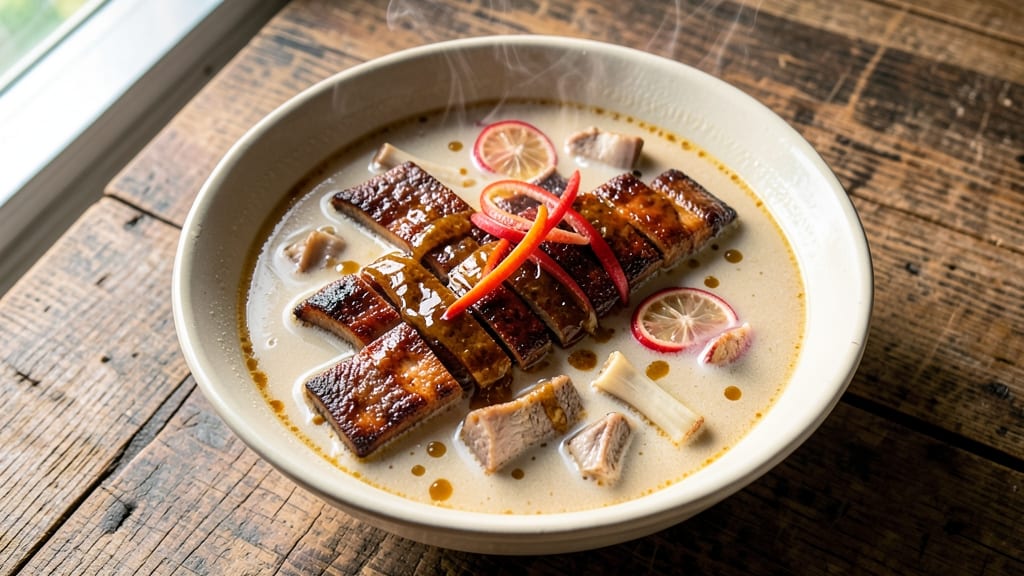
This Filipino-style beef ribs soup delivers the rich, smoky depth of coconut milk and tamarind that defines comfort food in the Philippines. The ribs become fork-tender through slow simmering, while aromatics like bay leaves and ginger create layers of warmth that linger long after the first spoonful.
What makes this recipe special is the balance between sweet, sour, and savory—achieved through a blend of traditional ingredients that transform simple beef ribs into a hearty, flavor-packed meal.
The process begins with a deep, aromatic broth built from beef bones and ribs, simmered for hours to extract maximum flavor. Coconut milk adds creamy richness, while tamarind paste introduces that signature tangy-sweet contrast Filipinos crave.
Patis (fish sauce) and calamansi (Filipino lime) elevate the broth to restaurant-quality depth, ensuring every spoonful is packed with umami and brightness.
By the time you serve this soup, you’ll have tender ribs that practically melt in your mouth, surrounded by a velvety broth infused with ginger, garlic, and a touch of chili for heat.
The aroma alone will fill your kitchen with warmth, while the first bite delivers the perfect harmony of textures and flavors. This is the kind of soup that feels like a hug in a bowl—ideal for family gatherings or chilly evenings when you crave something hearty and full of soul.
Pair it with steamed rice to soak up every last drop of that flavorful broth. The recipe scales beautifully, making it perfect for feeding a crowd or prepping ahead for meal prep. Let’s get cooking—the best part is yet to come.
Ingredients for beef ribs soup recipe filipino style
Six pounds of ribs and bones create the soul of this Filipino comfort soup—creamy, tangy, and packed with umami.
| Ingredient | Amount | Notes |
|---|---|---|
| Beef Ribs 🍖 | 3 lb | Bone-in, meaty cuts preferred |
| Beef Bones 🦴 | 2 lb | For rich broth, marrow bones ideal |
| Coconut Milk 🥥 | 1 can | Full-fat, 13.5 oz can (not carton) |
| Tamarind Paste 🍈 | ¼ cup | Or 2 tbsp tamarind concentrate |
| Patis (Fish Sauce) 🐟 | 2 tbsp | Filipino brand preferred (e.g., Red Boat) |
| Calamansi Juice 🍋 | ¼ cup | Or lime juice in pinch (less authentic) |
| Ginger 🧄 | ½ cup | Fresh, grated (about 3 oz whole) |
| Garlic Cloves 🧄 | 6 cloves | Minced, about 2 tbsp |
| Onion 🧅 | 1 whole | Yellow, chopped (about 1.5 cups) |
| Bay Leaves 🌿 | 4 whole | Dried, standard size |
| Chili Peppers 🌶️ | 2 whole | Bird's eye or Thai chili, sliced |
| Salt 🧂 | 1 ½ tsp | Adjust to taste (start with half) |
| Black Peppercorns 🌶️ | ½ tsp | Crushed, not ground |
| Water 💧 | 8 cups | Or enough to cover ingredients |
| Steamed White Rice 🍚 | 3 cups | For serving (cooked yield) |
The beef ribs and bones are non-negotiable for that deep, meaty flavor. Look for meaty cuts with good marbling—ask your butcher for 'beef short ribs' if they don't carry traditional Filipino-style ribs. Filipino markets or Asian grocery stores often have pre-cut beef ribs with more connective tissue, which melts beautifully. If you can't find calamansi, lime juice works but lacks that signature Filipino brightness. For tamarind, block form is best—it's easier to control the amount and texture. The coconut milk should be full-fat (not light) for that rich, velvety mouthfeel.
No patis? Soy sauce plus a dash of anchovy paste gets you close, but you'll lose that distinct umami punch. Running out of bay leaves? Dried thyme at half the amount works in a pinch. The chili peppers are optional but add that signature heat—skip them if you prefer mild. For ginger and garlic, fresh is non-negotiable—powders just don't cut it here. If you're prepping ahead, blanch the ribs for 5 minutes first to remove impurities before the long simmer. The rice should be steamed separately—just serve it alongside to soak up every last drop of that flavorful broth.
This soup tastes even better the next day as flavors meld. Store in the fridge for up to 5 days, or freeze portions for 3 months. The broth thickens as it cools, so add a splash of water when reheating. For meal prep, portion into individual bowls—just reheat with a splash of water or coconut milk. The ribs stay tender even after freezing, making this perfect for batch cooking. Leftovers reheat beautifully—just bring to a gentle simmer and let the flavors wake up again.
Why You'll Love This Recipe
- One-Pot Magic: I swear by this—just toss ribs, bones, and water in a pot, simmer until the bones turn golden, and boom, rich broth with zero fuss. The tamarind and patis do all the heavy lifting while you sip coffee.
- Umami Bomb: That combo of beef bones, patis, and coconut milk? It’s a flavor explosion—deep, tangy, slightly sweet, with a savory punch that sticks with you. Honestly, the first time I tasted it, I nearly spilled my drink.
- Leftovers That Shine: This soup begs for seconds, and the best part? It tastes even better the next day. I make a big batch on Sundays—some for dinner, some for lunches, and the rest freezes perfectly for lazy nights.
- Budget Feast: Beef ribs and bones are cheaper than you’d think, and a single pot stretches to feed four (or five if someone’s extra hungry). Between us, this is how I feed my whole family without breaking the bank.
Step-by-step instructions for Filipino-style beef ribs soup
Create a rich, aromatic broth that marries smoky ribs with coconut's creamy embrace.
🔥 Step 1: Sear the Beef Ribs and Bones for Deep Flavor
Heat a large Dutch oven over medium-high heat until hot. Add the 3 lb beef ribs and 2 lb beef bones in a single layer, searing them for 8-10 minutes until they develop a deep golden-brown crust. This step is crucial—it creates the Maillard reaction that forms the soup's foundational flavor.
Work in batches if needed to avoid crowding the pan. Once browned, transfer the ribs and bones to a plate. You'll notice the bones have rendered some fat—this is good, as it adds richness to your broth. Reserve this fat in the pot for now; we'll use it later to build layers of flavor.
🍳 Step 2: Build the Aromatic Base with Ginger, Garlic, and Onion
In the same Dutch oven, reduce heat to medium and add 0.5 cup grated ginger, 6 cloves minced garlic, and 1 whole chopped onion. Sauté for 5-6 minutes until the onion softens and becomes translucent, and the ginger releases its fragrant oils. You'll smell that unmistakable aromatic punch—this is where the soul of your soup begins to take shape.
Stir occasionally to prevent burning. The ginger should be soft but not mushy—you want it to break down just enough to release its essence into the broth. If the mixture starts to stick, add 2 tablespoons water to deglaze, scraping up any browned bits from the bottom of the pot.
🥘 Step 3: Simmer the Broth with Tamarind and Chili
Return the seared ribs and bones to the pot. Add 8 cups water, 0.25 cup tamarind paste, 2 whole sliced chili peppers, 4 whole bay leaves, 1.5 tsp salt, and 0.5 tsp crushed black peppercorns. Bring to a rolling boil, then reduce heat to low and let it simmer uncovered for 2 hours.
The tamarind paste will dissolve into the broth, creating a subtle tangy depth that balances the richness of the coconut milk we'll add later. Skim off any foam or impurities that rise to the surface during the first 30 minutes of simmering. This ensures a clear, clean broth. The ribs should become fork-tender by the end of this time.
🥘 Step 4: Finish with Coconut Milk and Patis for Authentic Flavor
After 2 hours, remove the ribs from the broth and set them aside. Strain the broth through a fine-mesh sieve into a clean pot, pressing gently on the solids to extract maximum flavor. Return the strained broth to the heat and stir in the 1 can coconut milk and 2 tbsp patis (fish sauce). Simmer gently for 10 minutes to blend the flavors.
The coconut milk will create a luxurious creaminess while the patis adds that signature umami depth Filipinos love. Taste and adjust seasoning—you might need a touch more salt or a splash of 0.25 cup calamansi juice to brighten the flavors. The soup should be rich but balanced, with layers of smoky, tangy, and creamy notes.
🍽️ Step 5: Serve with Steamed Rice and Fresh Garnishes
Return the ribs to the pot and let them warm through in the broth for 5 minutes. Ladle the soup over 3 cups steamed white rice and garnish with additional sliced chili peppers and fresh cilantro if available. The contrast of the warm, creamy soup against the cool rice is pure comfort.
Each bowl should be packed with tender, fall-off-the-bone ribs swimming in a velvety broth that carries all those complex flavors we built together. Serve immediately while the ribs are still steaming and the broth is at its peak richness. This soup tastes even better the next day, so consider making extra for leftovers!
Pro Tips For Making Beef Ribs Soup Recipe Filipino Style
- BLANCH BONES FIRST: Skip the direct simmer—give those beef bones a quick 5-minute boil in hot water first. This pulls out the bitterness and preps them for deeper flavor extraction later, so your broth won’t taste like a butcher shop’s backroom.
- USE THICK COCONUT MILK: Thin coconut milk water down the soup. Grab the canned version labeled "thick" or "cream" (not "light")—it’s richer and won’t turn your soup into a watery dessert. Stir in just enough to coat the ribs, not drown them.
- CONTROL THE TAMARIND: Tamarind paste is sneaky—start with half the recipe’s amount, taste, then adjust. Too much? Your soup’s sour edge will overpower the beef. Too little? You’ll wish you’d used more. Balance it with a splash of patis afterward.
- SAUTE THE RIB MEAT: Before adding liquid, sear the beef ribs in a dry pot for 3-4 minutes per side until they brown. That crust locks in flavor and prevents the meat from turning mushy when it hits the broth—trust me, it’s worth the extra 10 minutes.
Creative variations of this recipe
Spicy Tamarind Twist
For those who love a little kick, boost the heat by adding ½ cup diced siling labuyo (Filipino bird’s eye chili) when searing the ribs. The chili’s fiery notes will mingle beautifully with the tamarind’s tang, creating a bold, balanced heat that’s signature in Visayas-style soups.
If you can’t find siling labuyo, Thai bird’s eye chilies work perfectly—just double the quantity for extra punch. 🌶️
Creamy Coconut Variations
Swap the canned coconut milk for homemade coconut cream by blending 1 cup fresh coconut meat with 1 cup water for a lighter texture. For extra richness, add 2 tbsp toasted coconut cream (from the top of a can of coconut milk) at the end.
This variation keeps the dish creamy while adding a nutty depth that’s especially popular in Bicolano regions.
Vegetable-Packed Versions
Turn this into a vegetable-loaded Filipino-style rib soup by adding 1 cup chopped eggplant, 1 cup string beans, and 1 cup potatoes during the final 30 minutes of simmering. The vegetables absorb the broth’s flavors beautifully, adding texture and nutrition without overpowering the ribs.
For a spicy kick, toss in 1 cup chopped kangkong (water spinach) in the last 10 minutes—it’s a staple in Filipino soups.
Slow Cooker Adaptation
Make this a hands-off masterpiece by using a 6-quart slow cooker. Sear the ribs and bones as directed, then transfer everything (including the reserved fat) to the slow cooker.
Add all ingredients except the coconut milk and patis, then cook on LOW for 8 hours or HIGH for 5 hours. Stir in the coconut milk and patis in the last 30 minutes to blend flavors. This method ensures tender ribs with minimal effort, perfect for busy weeknights.
Protein Swaps
Craving variety? Swap the beef ribs for pork ribs (use 3 lb pork spare ribs) for a sweeter, slightly fattier profile that’s still rich and tender. For a seafood twist, add 1 lb shrimp in the last 10 minutes of cooking—they’ll absorb the broth’s flavors while staying juicy.
If you prefer chicken, use 3 lb bone-in chicken thighs and reduce the simmering time to 1.5 hours to avoid drying them out.
Garnish Ideas
Elevate your bowl with authentic Filipino garnishes. Top with crispy garlic (fry 4 cloves minced garlic in 2 tbsp oil until golden), sliced green onions, or toasted sesame seeds for crunch.
A drizzle of chili oil (mix 2 tbsp neutral oil with 1 tbsp chopped chili) adds smoky heat, while fresh cilantro brings a bright, herbaceous note. For a tangy finish, squeeze fresh calamansi over each serving before eating.
Nutrition facts
Frequently asked questions
Can I use regular beef bones instead of marrow bones for the broth?
Yes, you can! While marrow bones add extra richness, any beef bones will work—just simmer them longer (3-4 hours) to extract maximum flavor. The key is using bone-in beef ribs alongside the bones for that perfect meat-to-bone ratio. For best results, choose bones with some meat still attached.
What if I can't find tamarind paste or calamansi?
No problem! For tamarind, use 2 tbsp lemon juice + 1 tsp sugar to mimic the tangy-sweet balance. For calamansi, lime juice works in a pinch, though it lacks the signature Filipino brightness. If you're feeling adventurous, try 1 tbsp vinegar + 1 tsp sugar as a substitute—it adds complexity without overpowering.
How do I make the ribs extra tender?
Start by blanching the ribs for 5 minutes before searing to remove impurities. After the initial 2-hour simmer, transfer the ribs to a baking dish, add ½ cup coconut milk + 1 tbsp soy sauce, cover with foil, and bake at 300°F for 1 hour. This slow-braised step ensures melt-in-your-mouth texture while keeping the broth flavorful.
Can I make this soup in an Instant Pot?
Sear the ribs and bones as directed, then add all ingredients except coconut milk and patis. Cook on high pressure for 60 minutes, then quick-release. Strain the broth, return to the pot, and stir in the coconut milk and patis. Cook on sauté mode for 5 minutes to blend flavors. The ribs will be tender and the broth rich—just like the stovetop version!
Why does my soup taste too salty?
Patis (fish sauce) is salty, so use it sparingly at first (1 tbsp) and adjust to taste. If your broth is too salty, balance it with ½ cup coconut milk + 1 tbsp sugar to dilute and add sweetness. For extra depth, add 1 cup water and simmer for 10 minutes to mellow the saltiness while keeping the ribs tender.