
Soups & Stews
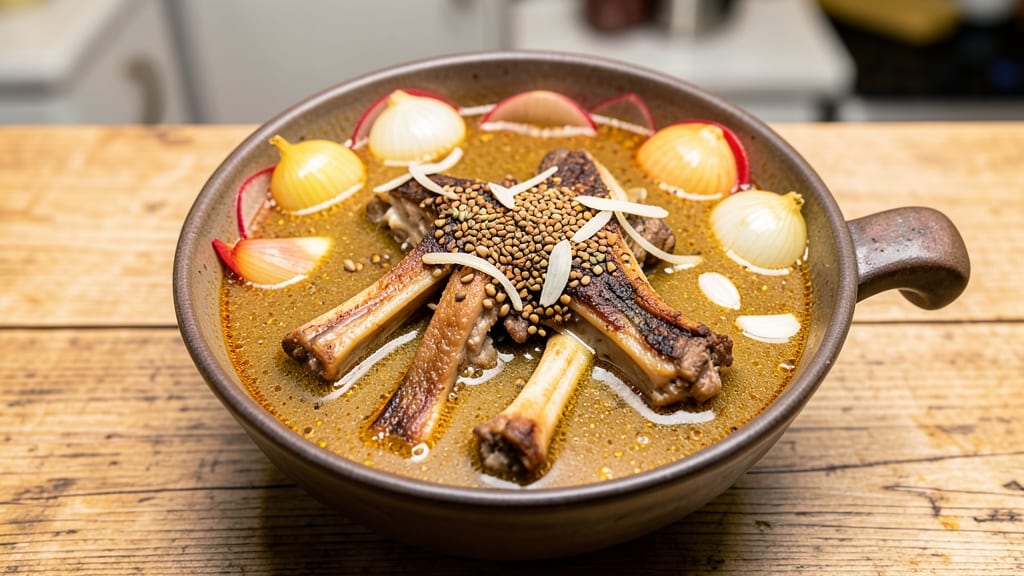
This Indian beef bone soup recipe delivers the deep, aromatic richness of traditional Ghantooh—a collagen-packed broth simmered with whole spices until the bones yield their marrow.
The secret lies in slow cooking, where turmeric, cumin, and garam masala infuse the broth with earthy warmth while extracting every ounce of gelatinous goodness from the bones. Unlike quick soups, this one rewards patience with a velvety texture and a flavor profile that balances spice and umami.
The foundation starts with beef bones—preferably marrow-rich—roasted to deepen their natural flavors before simmering for hours. Whole spices like cardamom and cloves add complexity, while ginger and garlic root out any bitterness.
The result is a broth so rich it coats the tongue like silk, perfect for sipping or ladling over steamed rice or crusty roti. This isn’t just soup; it’s a restorative elixir, steeped in Ayurvedic tradition for its collagen and mineral benefits.
What sets this apart is the marriage of technique and tradition: bones are simmered low and slow to dissolve their marrow, while spices are toasted to unlock their aromatic oils. The broth reduces to a concentrated depth, where every spoonful carries layers of savory, spiced warmth.
Serve it as a standalone meal or pair it with tangy pickles and warm bread for a complete, comforting experience.
For those new to Indian bone broths, don’t rush the simmering—this is where the magic happens. The longer it cooks, the more collagen-rich and flavorful it becomes. Store leftovers in the fridge for up to 5 days, or freeze for future use.
This recipe isn’t just about nourishment; it’s about honoring a culinary tradition that turns simple ingredients into something deeply satisfying.
Ingredients for beef bone soup recipe indian
Six pounds of marrow-rich bones and twelve aromatic spices create this deeply nourishing Indian bone broth.
| Ingredient | Amount | Notes |
|---|---|---|
| Beef Bones (Marrow-Rich) 🦴 | 4 lb | Knuckle or marrow bones preferred |
| Yellow Onions 🧅 | 2 whole | Chopped into even pieces |
| Fresh Ginger | 3 inches | Peeled, cut into thick slices |
| Garlic Cloves 🧄 | 8 cloves | Crushed with side of knife |
| Whole Cumin Seeds 🌿 | 1 ½ tbsp | Toasted until fragrant |
| Whole Coriander Seeds 🌿 | 1 tbsp | Toasted with cumin |
| Ground Turmeric 🧂 | 1 tsp | Freshly ground preferred |
| Ground Black Pepper 🌶️ | 1 tsp | Freshly cracked preferred |
| Green Cardamom Pods 🌿 | 6 whole | Lightly crushed |
| Black Cardamom Pods 🌿 | 4 whole | Lightly crushed |
| Cloves 🌿 | 4 whole | Lightly crushed |
| Cinnamon Sticks 🌿 | 2 whole | 2-inch pieces |
| Garam Masala Powder 🌶️ | 1 tbsp | Store-bought or homemade |
| Water 💧 | 16 cups | Filtered preferred |
| Fresh Lemon Juice 🍋 | 2 tbsp | Added at the end |
| Salt 🧂 | 2 tsp | Kosher or sea salt |
The bones are the heart of this soup—marrow-rich knuckle bones yield the most collagen and gelatin. Local butcher shops often carry these, or look for 'beef soup bones' at Costco or Whole Foods. Avoid bones with meat still attached, as they can make the broth cloudy. Fresh ginger and garlic should be vibrant—no shriveled roots or bruised cloves. Toasting the whole spices (cumin, coriander) in a dry pan for 30 seconds unlocks their aromatic oils, which is non-negotiable for that authentic depth. Penzeys Spices carries excellent whole spices if your grocery store's selection is lacking.
No fresh ginger? Powdered works at half the amount, though it lacks the same depth. Substitute black cardamom with equal parts cinnamon and cloves if unavailable. The garam masala can be homemade (blend cumin, coriander, cinnamon, cardamom, cloves) or store-bought—MDH or Everest brands are widely available. For a quicker version, use 2 tbsp of pre-made garam masala plus an extra cinnamon stick. The lemon juice at the end brightens the broth—freshly squeezed is best, but bottled works in a pinch. If you're short on time, pressure cook the bones for 2 hours instead of simmering, though the flavor won't be as concentrated.
This broth rewards patience—simmering for 12-16 hours extracts maximum collagen and flavor. Store in glass jars in the fridge for up to 5 days or freeze for 3 months. The longer it cooks, the richer it becomes—double the batch if you can. Freeze in ice cube trays for easy portioning later. Skim any foam that rises to the surface during the first few hours of cooking for the clearest broth. The aroma alone will make your kitchen smell like an Indian spice market—worth every minute.
Why You'll Love This Recipe
- Minimal Chopping Required: I swear by this—just dice onions, mince ginger, crush garlic, and toss in whole cumin seeds. No fancy knife skills, no small cuts to burn your fingers. The bones? Just rinse and roast—no pre-cooking stress.
- Ridiculously Rich Flavor: That marrow from the beef bones melts into the broth like liquid gold, while the cumin seeds toast up into warm, earthy notes. The ginger and garlic? Oh, they sing together—sharp, spicy, and deeply satisfying in every spoonful.
- Weeknight to Weekend: Make a big batch on Sunday, and you’ve got lunch covered all week. Freeze portions if you’re not using it fast enough—perfect for lazy days or unexpected guests. Honestly, I’ve served this to skeptical friends, and they’ve come back for seconds.
- Budget-Friendly Bone Magic: Beef bones stretch this soup into a whole meal for next to nothing. The onions and spices cost pennies, and the marrow turns scraps into something luxurious. Between us, this is how I feed my family well without breaking the bank.
Step-by-step instructions for spiced beef bone broth
Transform simple ingredients into a deeply aromatic, collagen-rich broth that forms the foundation of Indian cuisine.
Prepare and Toast the Whole Spices
In a dry skillet over medium heat, toast the 1.5 tablespoons whole cumin seeds and 1 tablespoon whole coriander seeds for 2-3 minutes until fragrant and lightly golden. You'll smell their warm, earthy aroma filling your kitchen—that's your signal they're ready. Immediately transfer to a bowl to cool.
In the same skillet, lightly toast the 6 whole green cardamom pods, 4 whole black cardamom pods, 4 whole cloves, and 2 whole cinnamon sticks for 30 seconds until just warm to the touch. This gentle toasting enhances their natural oils without burning them. Remove and add to the cooled cumin and coriander seeds.
Sear the Beef Bones for Maximum Flavor
Pat the 4 pounds marrow-rich beef bones completely dry with paper towels—this is crucial for developing a rich, caramelized crust. In a large Dutch oven over medium-high heat, sear the bones in batches for 3-4 minutes per side until they develop a deep golden-brown color. The bones should sizzle vigorously when they hit the pan.
As each batch sears, transfer the bones to a plate. This prevents overcrowding in the pot, which can lead to steaming instead of browning. The caramelized crust on the bones will dissolve into the broth, creating layers of complex flavor.
Build the Spiced Base
Add the seared bones back to the Dutch oven. Include the toasted whole spices, 2 whole chopped yellow onions, 3 inches peeled and sliced fresh ginger, and 8 crushed garlic cloves. Stir gently to combine, ensuring the spices coat the bones evenly. The aromatics will soften as they cook, releasing their flavors into the broth.
Pour in the 16 cups water and add the 2 teaspoons salt. Bring to a boil over high heat, then immediately reduce to a gentle simmer. The broth should bubble softly—if it boils too vigorously, it will prevent proper extraction of collagen from the bones.
Simmer for Maximum Collagen Extraction
Cover the Dutch oven and maintain a gentle simmer for 6-8 hours—this is where the magic happens. The long cooking time breaks down connective tissue into gelatin, creating that signature silky texture. I recommend starting this on a weekend so you can leave it unattended.
Every 2 hours, skim off any foam or impurities that rise to the surface with a ladle. This ensures a clear, clean broth. The bones should become tender enough to pierce with a fork, and the broth will gradually darken to a rich amber color as it develops depth of flavor.
Finish and Strain for Clarity
Once the broth has simmered for the full time, remove the bones and aromatics. Strain the broth through a fine-mesh sieve into a large bowl, pressing gently on the solids to extract every last drop of flavor. Discard the used bones and aromatics.
Return the strained broth to the pot and stir in the 1 tablespoon garam masala powder and 2 tablespoons fresh lemon juice. Simmer gently for 5 minutes to blend the flavors. The lemon juice brightens the broth, cutting through the richness while adding a refreshing finish. Taste and adjust seasoning with additional salt if needed.
Pro Tips For Making Beef Bone Soup Recipe Indian
- Char the Onions Properly: Don’t just sauté those yellow onions—get them deep golden brown, almost caramelized, before adding anything else. I used to rush this step, and the soup always tasted flat. Five minutes on medium-high heat with a splash of water if they stick, and you’ll build flavor that lasts.
- Blanch the Bones First: Toss your marrow-rich beef bones in boiling water for 2-3 minutes before simmering. This loosens impurities and speeds up the collagen release, giving you a clearer broth faster. Skip this, and you’ll be skimming scum for hours.
- Toast Cumin Until It Pops: Whole cumin seeds need to sizzle and crackle for 30 seconds in hot oil before adding onions. That’s when their aroma hits the spot. I was skeptical until I tried it—now it’s non-negotiable for depth in the soup.
- Simmer Low and Slow: Once the bones are covered, keep the heat at a bare simmer—no rolling boil, no rushing. Four to six hours is ideal; the longer, the richer. I learned this the hard way after a frantic 2-hour attempt that tasted underwhelming. Patience wins.
Make-ahead tips for beef bone soup recipe indian
Batch Prep Strategy
Double the recipe and freeze half for future use—I make 8 quarts at a time. Use quart-sized glass jars with tight-sealing lids, leaving 1-inch headspace for expansion. Label jars with the date and store them flat in the freezer for up to 3 months.
Thaw overnight in the fridge for the best texture. 🧊
Slow Cooker Adaptation
For hands-off prep, use a 6-quart slow cooker on low for 12 hours. Follow the same searing and spice toasting steps, then transfer everything to the slow cooker.
The broth will be slightly less concentrated but still deeply flavorful. I add 2 extra cups of water to account for evaporation during the long cook.
Spice Prep Shortcut
Save time by pre-toasting and storing whole spices in airtight containers for up to 6 months. I keep a jar of toasted cumin, coriander, and cardamom pods ready in my pantry.
For the garam masala, blend 2 tbsp cumin, 1 tbsp coriander, 1 tsp cinnamon, 4 cardamom pods, and 2 cloves into a fine powder. This shortcut maintains flavor while cutting prep time by 15 minutes. ✨
Reheating for Best Texture
Always reheat broth gently to preserve its silky consistency. Pour into a pot and warm over low heat for 10-15 minutes, stirring occasionally. Avoid microwaving—it creates a skin and weakens the collagen structure.
For frozen broth, transfer to the fridge to thaw overnight before reheating. The result is a smooth, velvety texture every time.
Storage Containers
Glass is non-negotiable for storage—plastic absorbs odors and can leach chemicals over time. I use Le Parfait glass containers with wide mouths for easy straining. For freezer storage, opt for mason jars with metal lids—they handle temperature changes better than plastic.
Always cool broth completely before refrigerating to prevent bacterial growth.
Flavor Boost Add-Ins
Enhance your soup with optional ingredients like 1 tbsp grated fresh turmeric or 2 bay leaves during simmering. For a smoky depth, add 1 tsp smoked paprika at the end.
I also like adding ½ cup chopped cilantro just before serving for freshness. These additions elevate the broth without altering its core flavor profile. 🌿
Nutrition facts
Frequently asked questions
Why do Indian beef bone soups require such long simmering times?
The extended simmering—6-12 hours—is essential for extracting collagen from the bones, which transforms into gelatin, creating that signature velvety texture. This slow process also deepens the flavor as spices and aromatics meld together. Traditional Indian cooking methods prioritize this patience for maximum nourishment and depth.
Can I use leftover roasted bones instead of raw bones?
Roasted bones add even more depth of flavor since they've already developed caramelized crusts. Just ensure they're thoroughly cleaned and patted dry before adding to the pot. This shortcut works especially well if you're using bones from a previous meal.
What's the difference between this and regular bone broth?
This Indian version incorporates whole spices like cardamom and cloves that are toasted to unlock their aromatic oils, plus fresh ginger and garlic for brightness. The slow simmer and spice blend create a more complex, aromatic profile compared to basic bone broth. It's essentially a spiced elixir rather than just a nutritional base.
How do I know when the broth is ready?
The broth is ready when the bones are fork-tender and the liquid has reduced to a rich amber color with a gelatinous consistency when chilled. You'll also notice the aroma becomes deeply aromatic with layers of spice. Typically, this takes 8-12 hours of gentle simmering, depending on your stove's heat.
Can vegetarians make a similar broth?
While this recipe uses beef bones, you can create a similar flavor profile using mushroom stems, kombu seaweed, or lentils as a base. For the spiced depth, use the same whole spices and aromatics. However, the collagen-rich benefits will differ since plant-based ingredients don't contain connective tissue.