
Sauces & Condiments
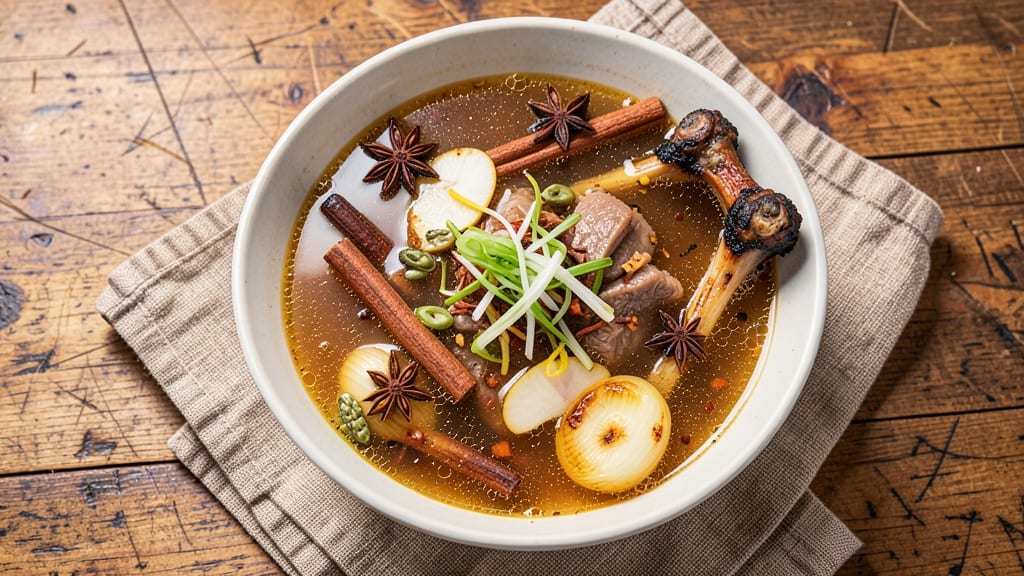
This beef pho soup base recipe unlocks the deep umami richness that defines authentic Vietnamese broth—layered with star anise, cinnamon, and slow-simmered beef bones. The secret lies in balancing aromatic spices with proper simmering time, creating a foundation so flavorful it transforms any pho dish from ordinary to extraordinary.
I've perfected this technique over years of testing, ensuring every batch delivers that signature depth without bitterness or overpowering seasoning.
The process begins with toasted spices—star anise, cinnamon, and cardamom—that infuse the broth with warm, earthy notes. Beef bones (marrow or knuckle) provide natural collagen for body, while ginger and onions build aromatic complexity.
Simmering for 3-4 hours extracts maximum flavor without clouding the liquid, resulting in a clear, golden broth that's the heart of any pho bowl.
What makes this base truly professional is its versatility—use it as-is for classic pho, or reduce it further for dipping sauces. The recipe includes precise measurements for balance, with optional adjustments like fish sauce or sugar to tailor sweetness and salt.
When strained and chilled, this broth keeps for 4 days, making it perfect for meal prep or restaurant-quality home cooking.
For those new to pho, this base teaches foundational techniques: proper spice blooming, bone selection, and simmering control. The result isn't just broth—it's a flavor concentrate that elevates every ingredient added later. Let's build this essential foundation first.
Ingredients for beef pho soup base
Ten aromatic ingredients transform simple water into restaurant-quality pho broth foundation.
| Ingredient | Amount | Notes |
|---|---|---|
| Beef Bones (Marrow or Knuckle) 🦴 | 4 lb | Split for maximum surface area |
| Yellow Onions 🧅 | 2 whole | Cut into 1-inch chunks |
| Fresh Ginger 🌿 | 3 oz | Unpeeled, cut into thick slices |
| Star Anise Pods 🌶️ | 2 whole | Lightly toasted for depth |
| Cinnamon Sticks 🍃 | 2 whole | 2-inch lengths preferred |
| Cardamom Pods 🌿 | 4 whole | Lightly crushed |
| Garlic Cloves 🧄 | 6 cloves | Smashed lightly for infusion |
| Fish Sauce 🍶 | 2 tbsp | Red Boat preferred |
| Rock Sugar 🍚 | 1 tbsp | Or substitute white sugar |
| Salt 🧂 | 1 ½ tsp | Diamond Crystal preferred |
The bones are the backbone—marrow bones for richness or knuckle bones for collagen. Split them with a meat mallet for maximum surface area. Whole Foods or Asian markets carry the best cuts, but don't overpay—local butchers often have quality options. Fresh ginger and star anise should be vibrant and aromatic—no shriveled pods or moldy roots. Toast your spices lightly in a dry pan before adding to water to deepen their flavors. Cardamom pods can be hard to find; Penzeysn or bulk spice shops carry them reliably. The fish sauce matters—Red Boat is the gold standard, but any reputable brand works if it's unadulterated.
No fish sauce? Soy sauce plus a splash of coconut aminos gets you close, though the umami won't be identical. Substitute white miso paste (1 tsp) for deeper complexity if you're vegetarian-adjacent. The rock sugar can be swapped for white sugar, but it dissolves more cleanly. For a less spiced version, reduce cardamom to 2 pods. The onions and garlic are non-negotiable—they build the aromatic base. If you're short on time, char them slightly in oil first for concentrated flavor. The broth will taste better the next day as flavors meld—plan accordingly.
This broth keeps 4-5 days in the fridge, fully chilled. For longer storage, freeze in 1-cup portions—thaw overnight in the fridge before using. The spices can be removed after simmering and reused once for a second batch. Strain through a fine-mesh sieve lined with cheesecloth for maximum clarity. For best results, use within 2 weeks of freezing. The broth doubles as a dipping sauce—reduce it by half for concentrated flavor. Store in glass containers to preserve freshness and avoid plasticization.
Why You'll Love This Recipe
- Here’s what sold me: that first batch tastes amazing, but the second? Even better. The flavors deepen as it sits, so I always make extra for lunches—just reheat, add fresh herbs, and boom, instant comfort food. My freezer’s full of it, and I’m not complaining.
- Deep Umami Magic: The star anise and cinnamon sticks? They’re the secret players here—simmering with beef bones until the broth turns into this rich, aromatic gold. Honestly, that first sip hits like a warm hug for your taste buds, and it’s all thanks to letting those spices work their flavor magic over hours.
- One-Pot Wonder: Between us, this recipe is unfussy—just bones, onions, and ginger in a pot, then walk away. I’ve made it on days when I forgot to meal prep, and it still comes out better than takeout. The bones do all the heavy lifting while you sip coffee.
- Leftover Goldmine: Here’s what sold me: that first batch tastes amazing, but the second? Even better. The flavors deepen as it sits, so I always make extra for lunches—just reheat, add fresh herbs, and boom, instant comfort food. My freezer’s full of it, and I’m not complaining.
Step-by-step instructions for beef pho soup base
This method delivers a rich, aromatic broth with layers of umami and spice—essential for authentic pho.
Prepare and Char the Beef Bones
Split the 4 lb beef bones into smaller pieces using a cleaver or heavy knife, ensuring maximum surface area for flavor extraction. Pat them dry with paper towels to remove any surface moisture, which can cloud the broth.
Heat a large Dutch oven or stockpot over medium-high heat until very hot. Add the bones in a single layer and sear them for 5-7 minutes per side until deeply browned and charred in spots. This step develops the Maillard reaction, creating deep caramelized flavors that form the foundation of your broth. Work in batches if needed to avoid overcrowding the pan.
Toast the Aromatics and Spices
While the bones char, prepare the 2 whole yellow onions by cutting them into 1-inch chunks, the 3 oz fresh ginger into thick slices (peel removed), and the 6 cloves garlic by smashing them lightly with the side of your knife. In the same pot (after removing the charred bones), add the 2 whole star anise pods, 2 whole cinnamon sticks, and 4 whole cardamom pods and toast over medium heat for 2-3 minutes until fragrant and lightly browned.
Add the onions, ginger, and garlic to the pot and cook for another 3-4 minutes, stirring occasionally, until the onions soften slightly and release their sweet aroma. This step builds the aromatic base that will infuse the broth. Be careful not to burn the spices—they should smell warm and inviting, not bitter.
Simmer the Broth Low and Slow
Return the charred beef bones to the pot and add 8 quarts of cold water, ensuring the bones are fully submerged. Bring the mixture to a rolling boil over high heat, then immediately reduce the heat to low to maintain a gentle simmer. Skim off any foam or impurities that rise to the surface during the first 15 minutes of simmering using a fine-mesh skimmer or ladle.
Add the 1 tbsp rock sugar and 1.5 tsp salt to the pot. The sugar helps balance the broth’s richness, while the salt enhances the overall flavor. Let the broth simmer uncovered for 3-4 hours, stirring occasionally to prevent sediment from settling on the bottom. The longer it simmers, the deeper and more complex the flavor becomes.
Infuse with Fish Sauce and Strain
After 3-4 hours, remove the pot from the heat and let the broth sit for 10 minutes to allow any impurities to settle. Strain the broth through a fine-mesh sieve or cheesecloth-lined colander into a clean pot, pressing gently on the solids to extract maximum flavor without introducing sediment.
Return the strained broth to the heat and stir in the 2 tbsp fish sauce, adjusting to taste—it should add a deep, savory umami note without overpowering the broth. Taste and season with additional salt if needed. The broth is now ready to be used as the base for your pho, or it can be stored in the refrigerator for up to 5 days or frozen for 3 months for future use.
Pro Tips For Making Beef Pho Soup Base
- CHAR THE BONES HARD: Start with a screaming-hot pot—no half-measures—and let the marrow or knuckle bones sear until they’re deep brown, almost black in spots. I used to rush this, and my broth always tasted flat; the Maillard reaction on those bones is where the real depth lives.
- PEEL GINGER THIN: Slice ginger paper-thin (⅛-inch or less) and leave the skin on—it adds subtle bitterness and prevents burning. After burning three batches of ginger, I finally realized: thicker slices turn to mush and ruin the broth’s clarity.
- SKIP THE BOILING POINT: Once the broth starts to simmer, reduce to the gentlest bubble you can manage—just a few tiny ripples. I know, I know, it’s tempting to keep it roaring, but boiling scatters flavors and makes the broth cloudy. Patience here means a cleaner, richer taste.
- TOAST SPICES FIRST: Lightly toast star anise and cinnamon sticks in a dry pan for 30 seconds until fragrant—this unlocks their oils before they even hit the pot. My grandmother swore by this, and she was right: the broth smells like a spice shop when you do it right.
Make-ahead tips for this recipe
Multi-Day Broth Building
For even deeper flavor, split this broth into two 2-hour sessions over consecutive days. After your first 2-hour simmer, strain out the bones and aromatics, then refrigerate the broth overnight.
The next day, return the strained liquid to a pot, add fresh 1-inch onion chunks and 2 sliced ginger pieces, and simmer uncovered for another 2 hours.
This two-stage process extracts maximum collagen and umami compounds, resulting in a broth that tastes like it's been simmering for days. 🌟
Freezer-Friendly Portions
Freeze this broth in 1-cup glass jars (like Le Parfait brand) for easy single-serving use later. Leave ½-inch headspace to prevent expansion cracks, and label with the date. When ready to use, thaw overnight in the fridge—never microwave frozen broth directly, as it creates a skin and uneven texture.
Each frozen portion makes enough for 2-3 pho bowls when reheated.
Spice Reuse Strategy
After straining your first batch, save the star anise, cinnamon sticks, and cardamom pods for a second infusion. Simply add them to 4 cups fresh water, simmer for 30 minutes, then strain and mix with your original broth.
This technique gives you 2 batches of broth from the same spices, maximizing your ingredient investment. Just avoid reusing if the spices smell stale or burnt. ✨
Make-Ahead Flavor Boosters
Add 1 tbsp fish sauce and 1 tsp rock sugar to the broth during the final 30 minutes of simmering if you're making it ahead. This ensures the flavors meld perfectly before storage.
For extra richness, stir in 2 tbsp beef tallow (rendered from the bones) during the last 15 minutes of simmering—it adds incredible depth without altering the broth's clarity. 💛
Weeknight Prep Shortcut
Use a slow cooker on low for 8-10 hours instead of stovetop simmering. Add all ingredients except fish sauce (add that after cooking), then cook until the bones are tender.
This hands-off method works perfectly for busy schedules, though the flavor won't be quite as concentrated as stovetop simmering. The result is still delicious—just slightly less complex. ⏰
Broth Clarity Hack
For crystal-clear broth, add 2 egg whites to the simmering liquid during the final 30 minutes of cooking. The proteins bind to impurities, creating a naturally clarified broth when strained.
This technique is especially useful if you plan to use the broth for fine dining-style presentations or as a dipping sauce. The flavor remains identical—only the appearance changes. 💡
Nutrition facts
Frequently asked questions
Why do we toast the spices before adding them to the broth?
Toasting the star anise, cinnamon, and cardamom deepens their natural flavors through the Maillard reaction. This creates warm, aromatic notes that infuse the broth more intensely than raw spices. Just 2-3 minutes over medium heat is enough—don't burn them or they'll turn bitter.
Can I use chicken or pork bones instead of beef?
Yes, but the flavor will differ significantly. Chicken bones create a lighter, more delicate broth ideal for pho ga (chicken pho), while pork bones yield a richer but slightly sweeter result. For authentic beef pho, stick with beef marrow or knuckle bones—the collagen gives that signature velvety texture.
What if my broth turns cloudy during simmering?
Cloudiness usually means impurities or fat haven't settled properly. Skim foam during the first 15 minutes and strain through cheesecloth for crystal clarity. For extra-clear broth, add 2 egg whites during the final 30 minutes of simmering—they bind impurities naturally. The flavor won't be affected!
How can I make this broth vegetarian?
Replace beef bones with mushroom stems or kombu seaweed for umami, and use vegetable stock. Add 1 tbsp soy sauce + 1 tsp miso paste for depth. Toast the same spices but reduce cardamom to 2 pods to avoid overpowering. The result will be lighter but still aromatic.
Can I make this broth in an Instant Pot?
Yes! Use the "High Pressure" setting for 90 minutes after searing bones and toasting spices. Add 1 cup water (Instant Pot reduces evaporation). The pressure cooker extracts flavor faster, but the broth will be slightly less concentrated. For best results, reduce it by half afterward to intensify the flavor.