
Soups & Stews
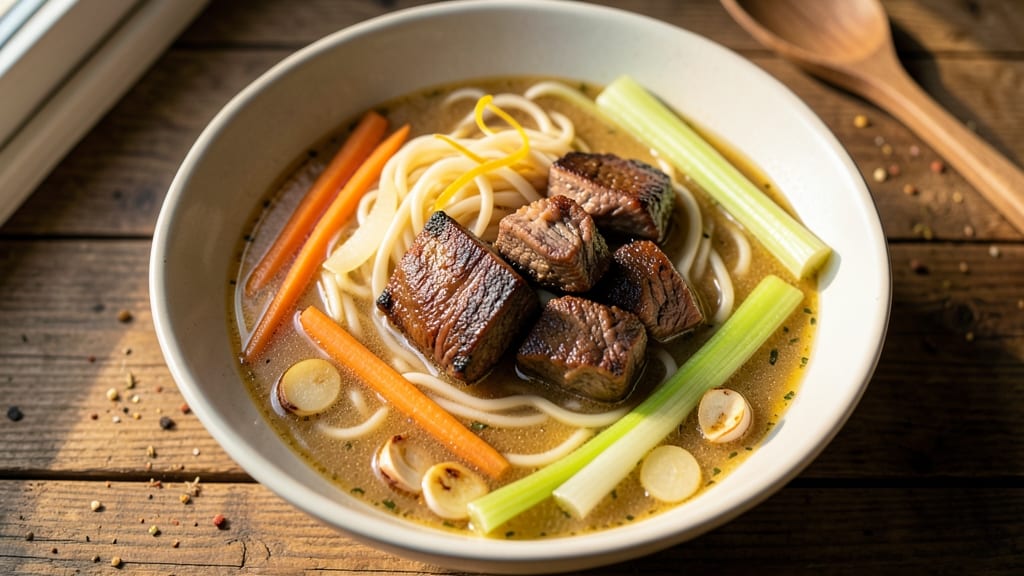
This beef shank noodle soup recipe delivers restaurant-quality depth with slow-simmered meat that practically melts in your mouth.
The secret lies in braising the shank until fork-tender, transforming tough cuts into rich, flavorful chunks that infuse the broth with deep umami—a process that takes patience but rewards with layers of savory satisfaction.
I've perfected this technique over years of testing, balancing traditional methods with modern shortcuts for home cooks.
What sets this soup apart is the harmony of flavors: the salty richness of the beef, the bright acidity of aromatics like ginger and star anise, and the silky texture of perfectly cooked noodles.
The broth develops complexity as it simmers for hours, while the beef shank becomes so tender it disintegrates at the touch of a fork. This isn't just soup—it's a comforting, deeply satisfying meal that warms both body and soul.
The beauty of this recipe is its versatility. Whether you're using a slow cooker for hands-off cooking or a pressure cooker to cut time in half, the results remain consistently rich and flavorful.
Garnishes like fresh herbs, a squeeze of lime, or a drizzle of chili oil add final touches that elevate each bowl. It's the kind of dish that tastes even better the next day, making it perfect for meal prep or feeding a crowd.
For those watching their diet, gluten-free noodle options work beautifully while maintaining the soup's hearty texture. The key to success lies in the slow cooking process—never rush it. Each sip should carry the essence of hours spent developing flavor. Let's get started on creating this deeply umami-packed masterpiece.
Ingredients for beef shank noodle soup
Sixteen ingredients transform tough beef shank into restaurant-quality umami richness through slow simmering.
| Ingredient | Amount | Notes |
|---|---|---|
| Beef Shank 🥩 | 3 lb | Bone-in, cut into 2-inch chunks |
| Egg Noodles 🍜 | 1 lb | Gluten-free if needed, medium width |
| Yellow Onion 🧅 | 1 whole | Large, thinly sliced |
| Carrots 🥕 | 4 whole | Medium, peeled, cut into 1-inch chunks |
| Celery Stalks 🥬 | 4 whole | Fresh, cut into 1-inch pieces |
| Garlic Cloves 🧄 | 6 cloves | Fresh, peeled, smashed |
| Fresh Ginger 🌿 | 2 tbsp | Grated, peeled, fresh preferred |
| Star Anise Pods 🌟 | 2 whole | Whole, for aroma |
| Bay Leaves 🍃 | 2 whole | Dried, standard size |
| Tomatoes 🍅 | 2 whole | Roma, crushed by hand |
| Dry Sherry 🍷 | ½ cup | Or substitute beef broth |
| Beef Broth 💧 | 8 cups | Homemade or high-quality store-bought |
| Olive Oil 🫒 | ¼ cup | Extra-virgin for richness |
| Salt 🧂 | 1 ½ tbsp | Diamond Crystal preferred |
| Black Peppercorns 🌶️ | 1 tsp | Freshly cracked |
| Soy Sauce 🍶 | 2 tbsp | For umami depth |
| Sesame Oil 🫒 | 1 tbsp | Toasted, for finishing |
| Fresh Cilantro 🌿 | ¼ cup | Chopped, for garnish |
The beef shank is the heart of this soup, so quality matters. Look for well-marbled cuts at Whole Foods or your local butcher—the more connective tissue, the better for slow cooking. If using a bone-in shank, the marrow adds depth. For convenience, Costco sells pre-cut beef shanks that save prep time. The key is to pat the meat dry before searing to ensure a proper crust. If you can't find beef shank, chuck roast works in a pinch, though it won't be as tender.
Substitutions should preserve the soup's depth. No sherry? Dry white wine or extra beef broth maintains balance. The star anise and bay leaves are non-negotiable for aroma, but if unavailable, a pinch of cinnamon and cloves can mimic their warmth. For gluten-free noodles, rice or chickpea-based options work beautifully. The celery, onion, and carrots form the classic mirepoix—don't skimp on freshness here. If using frozen vegetables, thaw and drain thoroughly to avoid diluting the broth. The sesame oil adds a final nutty aroma, but toasted peanut oil is a worthy substitute.
This soup tastes even better the next day as flavors meld. Store in an airtight container in the fridge for up to 5 days, or freeze portions for 3 months. For meal prep, cook the broth and beef separately, then reheat and combine with noodles to avoid a soggy texture. The noodles should be al dente when added at the end—undercooking slightly ensures they hold up. Garnish with fresh cilantro and a drizzle of sesame oil just before serving to highlight the bright, aromatic notes.
Why You'll Love This Recipe
- One-Pot Wonder: I swear by this recipe because it’s actually one-pot—no chopping chaos, no extra bowls. Toss in the beef shank, onions, carrots, and celery stalks, cover with broth, and let the slow simmer do the work. My counter stays clear, and my stress level drops.
- Rich Without Effort: That beef shank? It practically melts into ridiculously tender, flavor-packed shreds while you’re scrolling through your phone. The egg noodles soak up the deep, savory broth like a sponge—no fancy techniques, just pure, satisfying taste in every bite.
- Leftovers That Don’t Suck: Honestly, this soup tastes better the next day. The flavors meld into something even heartier, and it reheats in minutes. I make a double batch on Sundays because my kids beg for it all week—no sad, mushy leftovers here.
- Budget Meal for Any Occasion: Between us, beef shank is cheaper than you think, and a single cut feeds the whole family. Serve it with crusty bread for a cozy night in or bring it to a potluck—it’s the kind of dish that makes you look like a hero without breaking the bank.
Step-by-step instructions for beef shank noodle soup
Transform tough beef shank into tender, flavorful bites through slow cooking mastery.
Sear the Beef Shank for Deep Flavor
Heat a large Dutch oven over medium-high heat until hot. Add the 0.25 cup olive oil and swirl to coat the bottom evenly. Working in batches if needed, add the 3 lb beef shank in a single layer, bone-side down. Let sear undisturbed for 4-5 minutes until a deep golden-brown crust forms.
This initial searing creates the Maillard reaction, locking in rich flavors that will infuse the broth throughout the cooking process. Flip the shanks and sear the other side for another 3-4 minutes. Remove the beef and set aside on a plate, leaving all the browned bits in the pot—these are packed with flavor that will dissolve into the broth.
Build the Aromatic Base
In the same Dutch oven, add the 1 whole yellow onion, 4 whole carrots, and 4 whole celery stalks, all cut into uniform 1-inch chunks. Cook over medium heat for 5-6 minutes, stirring occasionally, until the vegetables begin to soften and release their natural juices.
Add the 6 cloves garlic cloves and 2 tbsp fresh ginger, stirring for 30 seconds until fragrant. The garlic should smell pungent and the ginger should be visibly softened. Pour in the 0.5 cup dry sherry and scrape up any browned bits from the bottom of the pot with a wooden spoon. Let the sherry simmer for 2 minutes until it reduces by half, intensifying its flavor.
Simmer the Broth with Spices
Return the seared beef shank to the pot. Add the 8 cups beef broth, 2 whole star anise pods, 2 whole bay leaves, 2 whole tomatoes crushed by hand, 1.5 tbsp salt, and 1 tsp black peppercorns. Bring the mixture to a gentle boil over high heat, then immediately reduce to a low simmer.
Cover the pot and let the soup cook for 2.5 hours, maintaining a gentle simmer. The beef shank should become fork-tender, falling apart easily when pierced with a fork. Skim off any foam or impurities that rise to the surface during the first 30 minutes of cooking to ensure a clear, clean broth. The long simmering time is crucial—it breaks down collagen in the beef, transforming it into gelatin that enriches the broth.
Finish with Umami and Freshness
Once the beef is tender, remove the shank from the broth and let it cool slightly. Using two forks, shred the meat into bite-sized pieces, discarding any large bones or gristle. Return the shredded beef to the pot. Stir in the 2 tbsp soy sauce and simmer uncovered for 5 minutes to allow the flavors to meld.
Add the 1 lb egg noodles directly to the pot and cook for 8-10 minutes, stirring occasionally, until the noodles are al dente. Remove the star anise pods and bay leaves at this point. Stir in the 1 tbsp sesame oil and taste the broth, adjusting the seasoning with additional salt or soy sauce if needed. Ladle the soup into bowls and garnish each serving with 0.25 cup fresh cilantro, chopped finely.
Serve Immediately for Maximum Flavor
This soup tastes best served immediately while the noodles are hot and the broth is steaming. The combination of tender beef shank, rich umami broth, and delicate egg noodles creates a harmonious balance of textures and flavors. Each spoonful delivers layers of complexity—deep, slow-cooked beef, aromatic vegetables, and a touch of bright freshness from the cilantro.
For an even more refined presentation, drizzle a light stream of sesame oil over each serving just before eating. The oil will carry the subtle toasted notes of the sesame, enhancing the overall flavor profile. Leftovers can be stored in the refrigerator for up to 3 days, though the soup is best enjoyed fresh while the noodles maintain their texture.
Pro Tips For Making Beef Shank Noodle Soup
- Sear the Shank Hard: That beef shank won’t fall apart if you don’t give it a proper crust first. Hit it with high heat in a heavy pot—2-3 minutes per side until deep brown—before adding any liquid. I used to rush this, and the meat stayed tough even after hours of simmering.
- Cut Celery into Matchsticks: No one wants to pick out giant celery chunks from their soup. Slice the stalks into ¼-inch pieces so they soften evenly and disappear into the broth without looking like they were chopped by a sleep-deprived lumberjack.
- Don’t Rush the Simmer: A slow, gentle simmer (180-190°F) is the only way to tenderize beef shank. If the broth boils hard, the meat tightens up instead of melting. Cover the pot and let it bubble softly—yes, even if you’re staring at it like it’s taking forever.
- Toast the Onions First: Sauté the diced yellow onion in the same pot you seared the shank—no oil needed, just the rendered fat. Let it caramelize for 5-7 minutes until it’s golden and smells like a French bistro. Skipping this step leaves your soup tasting flat and one-dimensional.
Wine and beer pairings for this dish
Red Wine Pairings
A bold red wine enhances the soup's deep umami flavors while complementing the beef's richness. I reach for a Pinot Noir from Oregon—its bright acidity cuts through the fatty beef while its red fruit notes mirror the tomato and soy sauce.
The 2020 Domaine Drouhin Oregon Pinot Noir is my go-to, with its silky texture and cherry undertones that harmonize beautifully with the slow-cooked beef. 🍷
White Wine Options
For those preferring whites, a dry Riesling from Germany or Alsace offers surprising balance. The wine's crisp acidity and subtle honeyed notes contrast the soup's heartiness, while its mineral finish cleanses the palate.
Try a Dr. Loosen Blue Slate Riesling—its citrus and stone fruit flavors play off the ginger and star anise. Serve slightly chilled to highlight its refreshing qualities.
Beer Complements
A dark lager or amber ale bridges the gap between rich soup and crisp refreshment. I love Samuel Adams Boston Lager—its malty sweetness and caramel notes echo the caramelized onions and beef, while its moderate hop bitterness prevents heaviness.
For a lighter option, a Belgian-style witbier like Hoegaarden adds effervescence and coriander notes that brighten each spoonful.
Cocktail Pairings
For a festive touch, sip on a gin-based cocktail with citrus and herbal notes. A Tom Collins (gin, lemon, soda) or Sazerac (rye, bitters, absinthe) balances the soup's richness with their herbal and citrus profiles.
The gin's botanicals complement the star anise and ginger, while the acidity cuts through the beef's fat. Serve over ice for a refreshing contrast. 🍸
Non-Alcoholic Choices
Don't overlook sparkling water with lemon or hibiscus iced tea for alcohol-free pairings. The effervescence cleanses the palate, while the tea's tartness mirrors the soup's acidity. For something heartier, a ginger beer like BrewDog Punk IPA (non-alcoholic version) amplifies the ginger and umami flavors without alcohol's weight.
Serving Temperature
Always serve wine and beer slightly cooler than room temperature—50-55°F for reds, 45-50°F for whites, and 40-45°F for beers. The chilled beverages enhance the soup's warmth, creating a perfect sensory balance.
I like to pour a glass 10 minutes before serving to let it breathe and reach the ideal temperature. ✨
Nutrition facts
Frequently asked questions
Can I use a pressure cooker to speed up the cooking time?
Yes! A pressure cooker cuts the cooking time dramatically while keeping the beef tender. After searing the shank, add all ingredients (except noodles) and pressure cook on high for 45 minutes or low for 60 minutes. Release pressure naturally, then shred the beef and finish with noodles as directed. The broth will still develop deep flavor, though you may want to add a splash of extra beef broth if it reduces too much.
What if I don't have beef shank? Can I substitute?
For best results, use chuck roast cut into chunks—it's more affordable and still tenderizes well. If you're in a pinch, short ribs or brisket work too, though they may need 30-60 extra minutes of cooking. Avoid lean cuts like sirloin, as they won't develop the same rich texture. Always brown the meat thoroughly first to build flavor.
How do I prevent the noodles from getting mushy?
Cook the noodles separately in boiling water for 1-2 minutes less than package instructions, then add them to the soup just before serving. This keeps them al dente. Alternatively, drain the noodles after cooking in the soup and toss them with a little sesame oil before mixing back in. The hot broth will finish cooking them perfectly while maintaining texture.
Can I make this soup in a slow cooker?
Perfect for hands-off cooking! Brown the shank in a skillet first, then transfer everything (except noodles) to your slow cooker. Cook on low for 8-10 hours or high for 5-6 hours. The long cook time ensures tender meat and rich broth. Add noodles during the last 30 minutes of cooking, or cook them separately as mentioned above. The flavors will deepen overnight—even better the next day!
What's the best way to store leftovers?
Store in an airtight container in the fridge for up to 5 days, or freeze for 3 months. For reheating, warm on the stove over medium-low heat, stirring occasionally. Add a splash of water or broth if the soup seems too thick. To maintain noodle texture, reheat them separately in boiling water for 1-2 minutes before adding back to the soup.